 Skip to content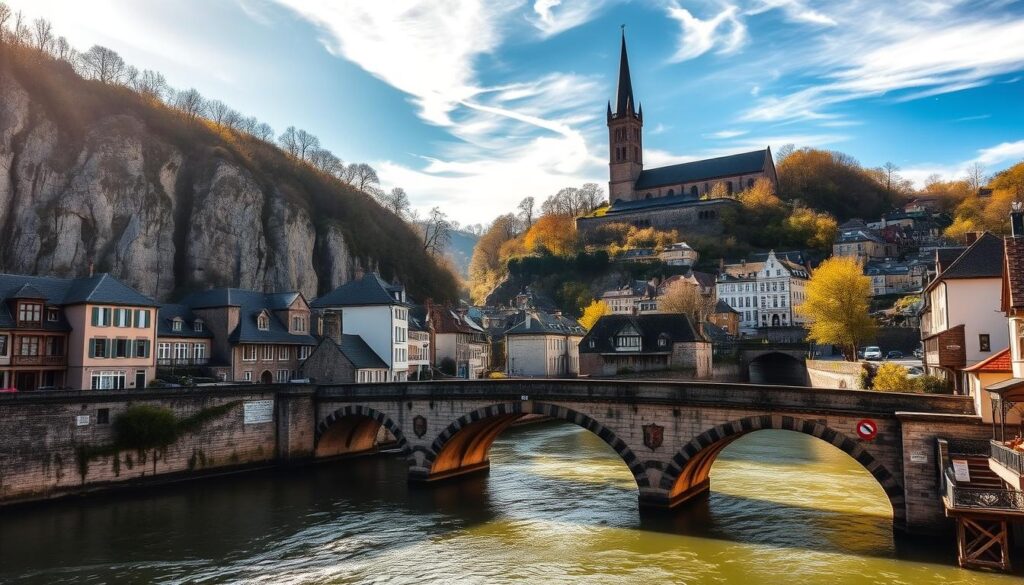
Fewer than 10% of travelers know that a single small European town inspired both iconic musical innovations and centuries of architectural marvels. Nestled between limestone cliffs and the Meuse River, this hidden gem offers more than meets the eye—it’s where creativity and nature collide.
Imagine strolling past vibrant buildings that mirror the river’s shimmer, their colors reflecting centuries of history. A Gothic church towers above, framed by cliffs that seem to guard the town’s secrets. Here, cobblestone streets whisper tales of inventors and artists—including the birthplace of the saxophone in 1840.
Unlike crowded Belgian hotspots, this town lets you breathe. Its compact size means every discovery feels personal. Climb to the fortress for valley views, or linger at cafés where locals share stories over crisp Belgian ales. The blend of dramatic landscapes and cultural legacy creates a rhythm all its own—one that rewards curious explorers.
Key Takeaways
- Discover a riverside destination where cliffs frame medieval architecture and colorful waterfront buildings
- Explore the origin story of the saxophone in its unexpected birthplace
- Experience a quieter alternative to Belgium’s busier tourist hubs
- Walk through history with cliffside fortresses and cobblestone pathways
- Enjoy strategic access to both Belgian culture and nearby French border regions
Intriguing Introduction to Dinant
Picture a place where centuries-old architecture clings to riverbanks like jewels on a necklace—each building mirroring the water’s flow in its colorful façade. This is the essence of a destination where nature and human ingenuity perform a breathtaking duet.
A Charming Riverside Town
The Meuse River carves through the landscape here, its curves cradling a postcard-perfect scene. Limestone cliffs rise like natural skyscrapers, framing 15th-century rooftops that glow amber in the sunlight. Wander cobblestone paths past patisseries where the scent of freshly baked couques de Dinant floats through the air—a sweet reminder of local traditions.
What makes this riverside setting extraordinary? The way water and stone collaborate. Boats glide silently past church spires, creating reflections that double the town’s beauty. Don’t miss the old quarter, hailed as Wallonia’s crown jewel, where every alley reveals hidden courtyards or sudden cliffside vistas.
Best Time to Visit
June through September transforms the riverbanks into a stage for adventure. Cafés spill onto sun-dappled terraces, while kayaks and cruise boats dot the water. Local guides agree: “Summer turns the valley into a living postcard—vibrant, warm, and endlessly photogenic.”
For quieter exploration:
- April-May offers blooming riverside trails
- October brings fiery autumn colors that set the water ablaze with reflections
Winter reveals a different charm—frost-kissed cliffs and steaming mugs of hot chocolate in cozy taverns. But note: many landmarks close from November to March, making crisp autumn days the ideal compromise between access and atmosphere.
History & Cultural Background

Centuries of craftsmanship and conflict shaped this riverside gem into a living museum of human resilience. Beneath its colorful façades lies a story of survival, innovation, and artistic triumph that will deepen your connection to every cobblestone.
Medieval Heritage and Battles
Your footsteps trace paths first walked by Celtic tribes who named this the “divine valley.” By the Middle Ages, artisans forged dinanderie—gleaming brassware traded across Europe. But prosperity came at a cost: repeated invasions left scars still visible in rebuilt structures.
| Period | Event | Impact |
|---|---|---|
| 15th Century | Brasscraft Golden Age | Economic boom through metalwork |
| August 1914 | Battle Destruction | 90% of buildings destroyed |
| Post-WWI | Reconstruction | Medieval architecture revived |
The 1914 devastation tested the town’s spirit. Locals rebuilt stone-by-stone, preserving their timeless character against all odds. Today, the Gothic church stands not just as architecture—but as a testament to unbroken faith.
Birthplace of the Saxophone
In 1814, a musical revolution began in a modest house overlooking the Meuse. Adolphe Sax’s childhood here fueled his genius—by 28, he patented an instrument that would redefine jazz, classical, and pop music.
You’ll find his legacy everywhere: bronze saxophones dotting bridges, street musicians’ melodies, and a museum showcasing original designs. Remarkably, this small town gifted the world an icon heard in every nation—proof that big ideas need not come from big cities.
How to Get to Dinant
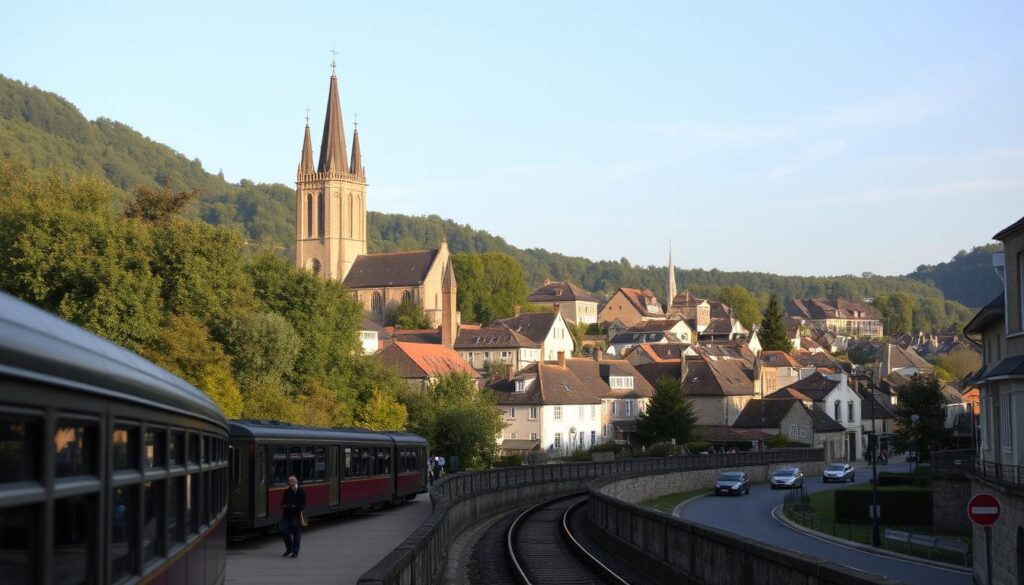
Your adventure begins with smooth connections—this hidden valley rewards explorers who value both convenience and scenic journeys. Whether you prefer watching landscapes unfold through a train window or stopping at countryside vistas, reaching this riverside gem proves half the fun.
Travel Options: Train and Car
Hop aboard direct trains from Brussels that transform your commute into a storybook experience. Departing from Brussels-Midi or Brussels-Luxembourg stations, the two-hour ride serves up rolling hills and quaint villages. Local travelers often remark: “You’ll know you’ve arrived when cliffs rise like castle walls outside your window.”
Prefer steering your own course? The car route south from Brussels unveils the Ardennes’ forested curves. Park near the town centre—just steps from the saxophone-adorned bridge—and let cobblestones guide you onward.
Navigating the Walkable Town
Step off the train and into history—Dinant Railway Station places you five minutes from Gothic spires and riverside cafés. No buses or taxis needed here. Every major landmark clusters along a half-mile stretch of the Meuse, with the citadel’s cliffside path offering panoramic rewards.
Wander freely knowing bakeries, museums, and boat docks connect through pedestrian-friendly lanes. This compact layout means you’ll stumble upon hidden courtyards and brasscraft shops while conserving energy for that 408-step climb to the fortress views.
Top Attractions & Things to Do
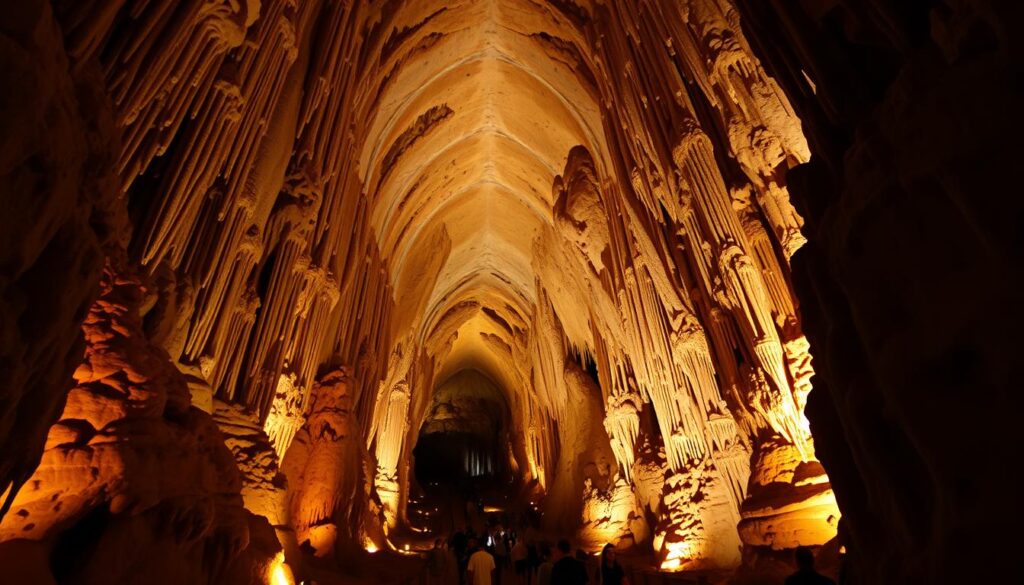
Adventure meets artistry in this riverside destination where every landmark tells a story. From cliffside citadels to underground wonders, prepare to discover why visitors call these experiences “unforgettable”.
Collegiate Church of Notre-Dame de Dinant
Gaze up at the church’s soaring Gothic spire—a phoenix risen from 13th-century rubble. After a rockslide destroyed its predecessor, locals rebuilt this masterpiece with a façade that stretches skyward like a stone symphony. Inside, sunlight filters through stained glass, illuminating vaulted ceilings that echo centuries of devotion.
Citadel of Dinant and Cable Car Adventure
Glide 100 meters above the river in a cable car to reach the citadel’s clifftop perch. History buffs love the fortress’s wartime exhibits, while photographers chase golden-hour views of the valley. Prefer a challenge? The 408-step climb rewards with panoramic payoffs—and bragging rights.
Adolphe Sax Museum and More Cultural Spots
Follow brass melodies to the birthplace of the saxophone. Interactive displays reveal how a local visionary revolutionized music. Nearby, the Abbaye de Leffe pairs medieval architecture with craft beer tastings—a harmonious blend of past and present.
Meuse River Cruises, Grotte La Merveilleuse, & Bayard Rock
Boat tours unveil the town’s beauty from the water, while underground explorers marvel at Grotte La Merveilleuse’s shimmering waterfalls. Don’t miss Bayard Rock—a 40-meter limestone spire where legend claims a magical hoof split the cliffside.
Local guides advise: “Start early to beat crowds at the cave and citadel—you’ll want uninterrupted moments with these wonders.”
Dinant Belgium travel guide: Local Experiences and Day Trips
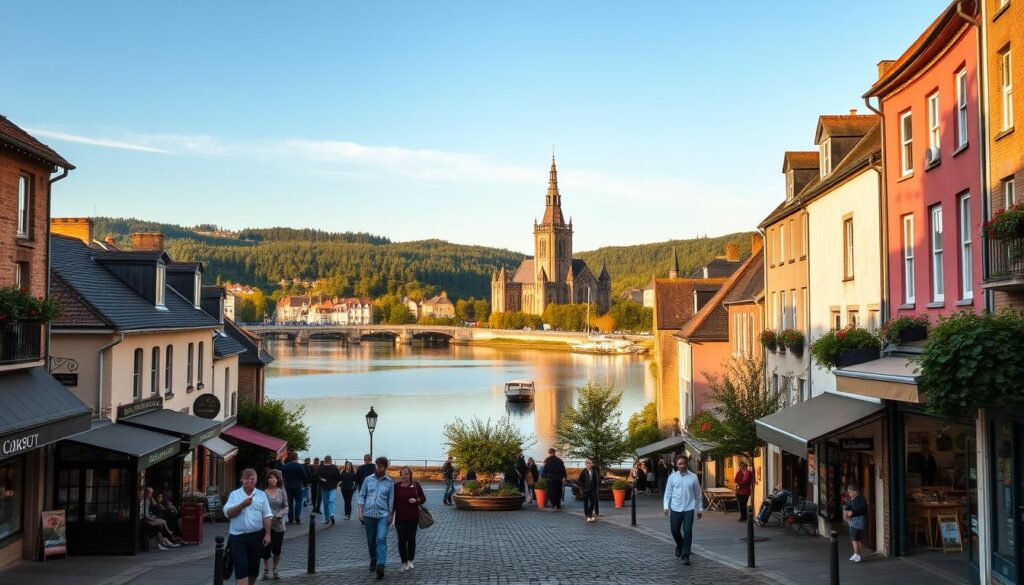
Your journey through this riverside haven isn’t complete without diving into authentic encounters that fuel your adventurous spirit and satisfy your curiosity. Beyond postcard views lies a world where medieval flavors meet adrenaline-pumping trails—and where every meal tells a story.
Outdoor & Adventure Activities
Strap on your hiking boots to conquer the Ardennes countryside, where forested trails reveal hidden waterfalls and limestone cliffs. Cyclists flock to the Meuse River route, a 28-mile path offering panoramic valley views. For thrill-seekers, kayaking through the Lesse River’s twists becomes an unforgettable tour of nature’s raw beauty.
Local Food & Drink Delights
Crack into the Couque de Dinant—a honey-infused biscuit so hard locals joke it survives centuries. At Chez Bouboule, dubbed “The Mussel Temple,” dive into steaming pots of garlic-and-white-wine bivalves perfected since 1968. Pair your lunch with Leffe beer at its birthplace, where monks once brewed salvation in every sip.
Exploring Nearby Day Trips
Cross borders effortlessly with these one-day adventures:
- Namur: Discover Wallonia’s capital, where citadel tunnels meet vibrant street markets
- Givet, France: Stroll along the Meuse’s French banks, sampling cross-cultural pastries
- Bouillon: Roam Europe’s oldest feudal castle ruins surrounded by misty Ardennes forests
Start mornings at riverside cafés with Belgian breakfast classics—strong coffee paired with flaky croissants—before embarking on your chosen experience. As one seasoned traveler notes: “These day trips transform a simple visit into a multi-cultural odyssey.”
Conclusion
As twilight paints the cliffs gold, you’ll realize this riverside gem reveals its magic at every hour. A single day lets you conquer cobblestone paths and citadel heights—yet lingering until nightfall rewards you with lantern-lit bridges and whispers of saxophone melodies drifting from cozy bistros.
Pack light: the walkable layout means comfortable shoes matter more than elaborate plans. Early risers can savor sunrise views from Bayard Rock, while night owls toast to adventures with local brews under starry skies. Though compact, the town’s layered history invites you to slow down—even a brief visit feels like stepping into a living storybook.
Let this article be your starting point, not a rigid itinerary. Whether you’re squeezing in a whirlwind day trip or stretching your time across two nights, the location adapts to your pace. Return home with more than photos—you’ll carry the rhythm of a place where every corner hums with creative life.
FAQ
How do I reach this riverside gem from Brussels?
Hop on a direct train from Brussels—it’s a scenic 90-minute ride along the Meuse River. By car, take the E411 highway for a flexible 1.5-hour drive with stunning valley views.
What’s the best way to explore the town’s historic center?
Lace up your walking shoes! The compact center is pedestrian-friendly, with cobblestone streets leading to landmarks like the Collegiate Church and Adolphe Sax’s birthplace. For hilltop vistas, ride the cable car to the Citadel.
Can I visit the saxophone inventor’s legacy here?
Absolutely. The Maison Adolphe Sax celebrates the creator’s life where he was born. Don’t miss the golden sax sculptures around town—perfect photo ops for music enthusiasts.
Are there unique dining experiences near the river?
Savor local flavors at brasseries overlooking the Meuse. Try couques de Dinant (honey-hardened biscuits) or sip regional beers like Leffe, brewed here since 1240.
What makes the Citadel a must-see attraction?
This 19th-century fortress offers gripping history tours and panoramic views. Access it via 408 steep steps or the cable car—either way, the wartime exhibits and cliffside outlooks will awe you.
Is one day enough to experience everything?
While you can hit highlights in a day trip, stay overnight to unwind. Sunrise kayaking on the Meuse or twilight walks under illuminated bridges reveal the town’s magic beyond daytime crowds.
Are there hidden natural wonders nearby?
Venture to Grotte La Merveilleuse—an underground marvel with stalactite forests just 15 minutes from downtown. For thrill-seekers, rock climbing at Bayard Rock delivers adrenaline and epic valley vistas.

- Maldives Water Villa Guide 2026: Price, Best Resorts & Is It Worth It? (Budget to Luxury)
- Indians Traveling Phu Quoc Advisory 2026: Visa Rules, Hidden Risks & Must-Know Travel Guidelines
- Northeast India Tourism Guide 2026: Best Places, Itinerary, Cost & Hidden Gems
- Thailand Hidden Islands Travel Guide 2026: Secret Islands, Budget Itinerary & Crowd-Free Beaches for Indians
- Sri Lanka Travel Guide 2026 for Indians: ₹50K Budget, 7-Day Itinerary, Visa & Hidden Gems
