 Skip to content
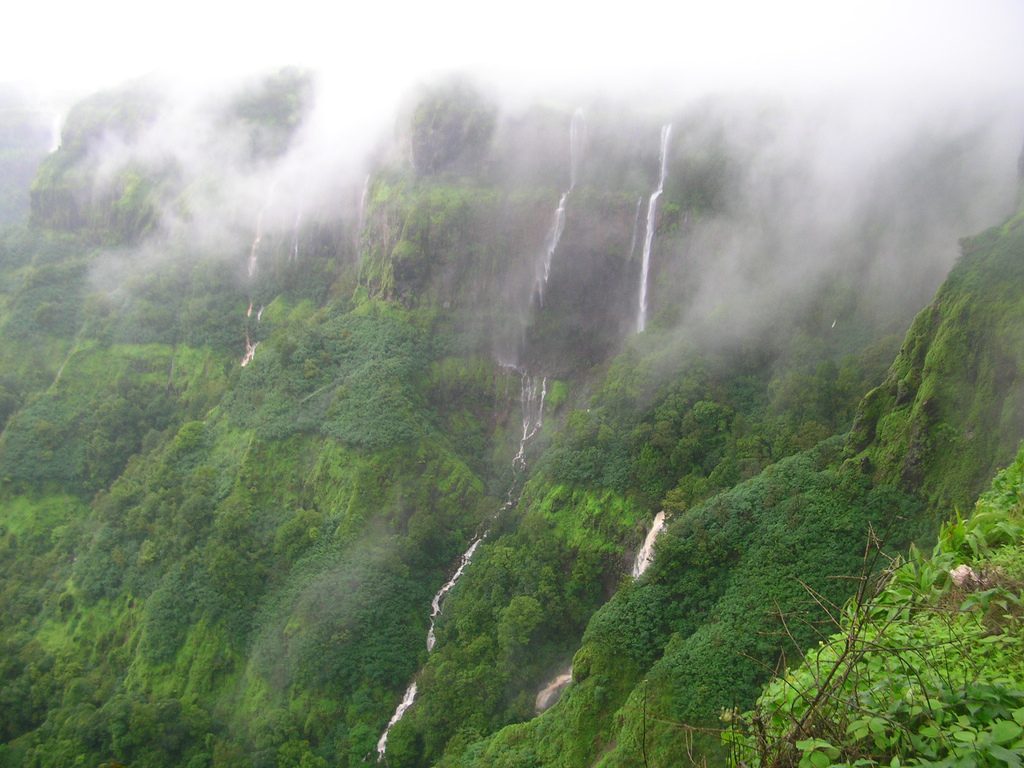
 Picture this: You’re driving through thick mist, waterfalls cascading right next to your car, and suddenly the clouds part to reveal a breathtaking valley stretching endlessly below. Welcome to Amboli Ghat, Maharashtra’s best-kept secret that’s been quietly stealing hearts for decades. Why is Amboli Ghat famous? Simply put, it’s the ‘Cherrapunji of Maharashtra’ – a place where nature puts on its most spectacular show during the monsoons, where biodiversity thrives like nowhere else in the state, and where misty mountain magic meets the dramatic drop to the Konkan coast. This Amboli hidden gem Maharashtra offers isn’t just another hill station; it’s an experience that lingers long after you’ve left.
Tucked away in the Western Ghats Maharashtra, Amboli transforms into a wonderland between June and September. The moment you arrive, you’ll understand why travelers, nature photographers, and adventure seekers can’t stop talking about this place. Whether you’re chasing waterfalls, spotting rare frogs, or simply soaking in the cool mountain air while munching on piping hot bhajis, Amboli delivers experiences that big-name tourist spots simply can’t match.
Quick Information Table: Amboli Ghat at a Glance
| Feature | Details |
| Location | Sindhudurg District, Maharashtra |
| Altitude | Approximately 690 meters (2,264 feet) |
| Famous For | Heavy monsoon rainfall, waterfalls, biodiversity hotspot |
| Nickname | “Cherrapunji of Maharashtra” |
| Annual Rainfall | Over 7,500 mm Source: India Meteorological Department |
| Best Season | June to September (Monsoon) |
| Nearest Airport | Goa International Airport (95 km), Belgaum Airport (90 km) |
| Nearest Railway Station | Sawantwadi Road (32 km) |
| Distance from Mumbai | Approximately 525 km (10-11 hours drive) |
| Key Attractions | Amboli Waterfall, Kavlesad Point, Nangarta Falls, Hiranyakeshi Temple |
| Wildlife Significance | Western Ghats UNESCO World Heritage Site, biodiversity hotspot |
1. Location & Landscape – Why Amboli Ghat Stands Out
Amboli Ghat sits perched at roughly 690 meters above sea level in Maharashtra’s Sindhudurg district, marking the final Amboli hill station before the land dramatically plunges toward the Konkan coast. This isn’t your typical plateau hill station – Amboli is positioned right on the edge, where the mighty Sahyadri range rain forest meets the Arabian Sea’s coastal plains.
What makes this location truly special? It’s all about the geography. The Western Ghats Maharashtra section here acts like a giant natural wall, forcing moisture-laden monsoon winds from the Arabian Sea to rise rapidly. As these winds climb the steep slopes, they cool down and release their moisture – creating the perfect recipe for those legendary rains and the lush green carpet that covers every inch of the landscape Source: Western Ghats Ecology Studies, biodiversityindia.org.
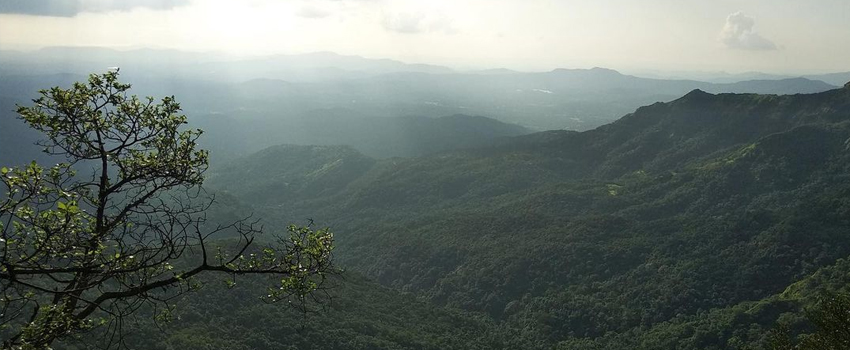
Stand at any viewpoint in Amboli, and you’ll witness nature’s drama unfold. On one side, dense tropical forests climb the mountain slopes, their canopy so thick that sunlight barely touches the forest floor. On the other, the land drops away sharply into the Konkan belt, revealing distant villages, rice paddies, and on clear days, even glimpses of the Arabian Sea shimmering in the distance.
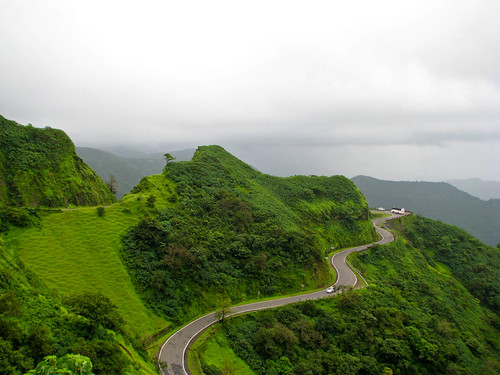
The “ghat” section – meaning mountain pass – winds through this terrain with hairpin bends that challenge even experienced drivers. But these twisting roads are part of Amboli’s charm. Each turn reveals something new: a hidden waterfall, a viewpoint shrouded in mist, or suddenly, an explosion of color from wildflowers clinging to rocky outcrops. The landscape here doesn’t just look pretty; it tells the story of millions of years of geological evolution, where ancient volcanic activity, erosion, and the relentless monsoons have sculpted a masterpiece.
2. Heavy Rainfall & Monsoon Magic – A Major Reason Why Amboli Ghat is Famous
Let’s talk about rain – and not just any rain. Amboli Ghat records an average annual rainfall of over 7,500 mm, earning its well-deserved nickname as the “Cherrapunji of Maharashtra” Source: Indian Institute of Tropical Meteorology. Between June and September, the skies open up with such intensity that the entire region transforms into a living, breathing water world.
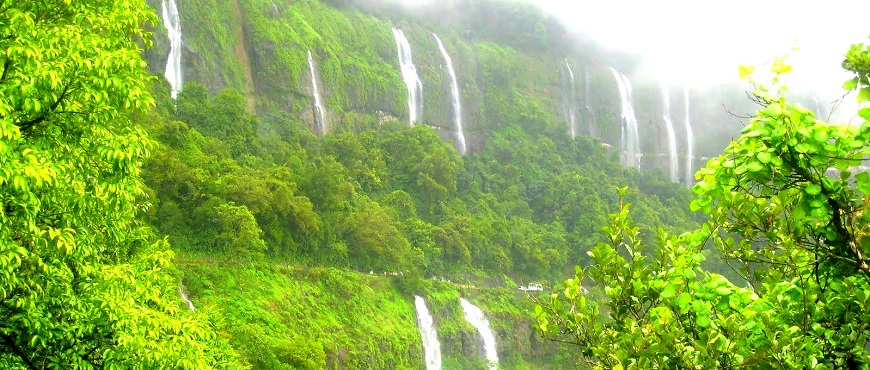
Imagine waking up to the sound of rain drumming on your roof, stepping outside to see waterfalls that weren’t there yesterday now thundering down every cliff face, and watching mist roll through valleys like waves in slow motion. This is Monsoon waterfall Amboli season – when the hill station becomes absolutely magical. The already green landscape turns several shades deeper, streams swell into roaring rivers, and the air fills with the fresh, earthy smell of petrichor mixed with wild flowers.
But here’s the thing about Amboli’s monsoons: they’re not gentle. The rain comes down with purpose, creating conditions that are both spectacular and demanding respect. Roads can become slippery, visibility drops to just a few meters, and those charming streams can turn into powerful torrents within hours.
Your 3-Point Monsoon Safety Guide for Amboli:
- Vehicle Preparation is Non-Negotiable: Before heading up the ghat, get your car’s brakes checked, ensure your wipers work perfectly, and keep headlights on even during daytime. The mist here isn’t like fog elsewhere – it’s thick, wet, and can appear suddenly. Drive in second gear on descents to avoid brake failure, and never attempt the journey during heavy downpours if you’re not an experienced hill driver.
- Waterfall Viewing Protocol: Those Instagram-worthy waterfall photos come with real risks. Never stand directly under or too close to waterfalls during peak monsoon. The water pressure can knock you off your feet, and hidden rocks make the stream beds treacherous. Stick to designated viewing areas, wear shoes with excellent grip (not flip-flops!), and if you must wade through streams, use a walking stick to test depth and stability.
- Weather Monitoring & Backup Plans: Download offline maps and weather apps before you arrive, as mobile signals can be patchy. Always inform someone about your travel plans and estimated arrival times. Keep a backup day in your itinerary – landslides occasionally block roads, and you might need to extend your stay. Pack emergency supplies including a flashlight, basic medicines, and snacks, because shops close early during heavy rains.
The monsoon here isn’t just weather; it’s an event. Local residents celebrate the first rains with festivals, and you’ll find families gathering around steaming cups of chai, sharing stories while the world outside turns silver with rain. This is when Amboli shows its true colors – quite literally, as the waterfalls create rainbow mists in the afternoon sun between showers.
3. Waterfalls & Viewpoints – The Visual Wonders That Make Amboli Ghat Famous
Let’s get to the main attractions that keep cameras clicking and jaws dropping throughout the monsoon season. The Amboli water fall Maharashtra scene isn’t just about one or two cascades – it’s about dozens of waterfalls appearing across the landscape like nature’s own art installation.
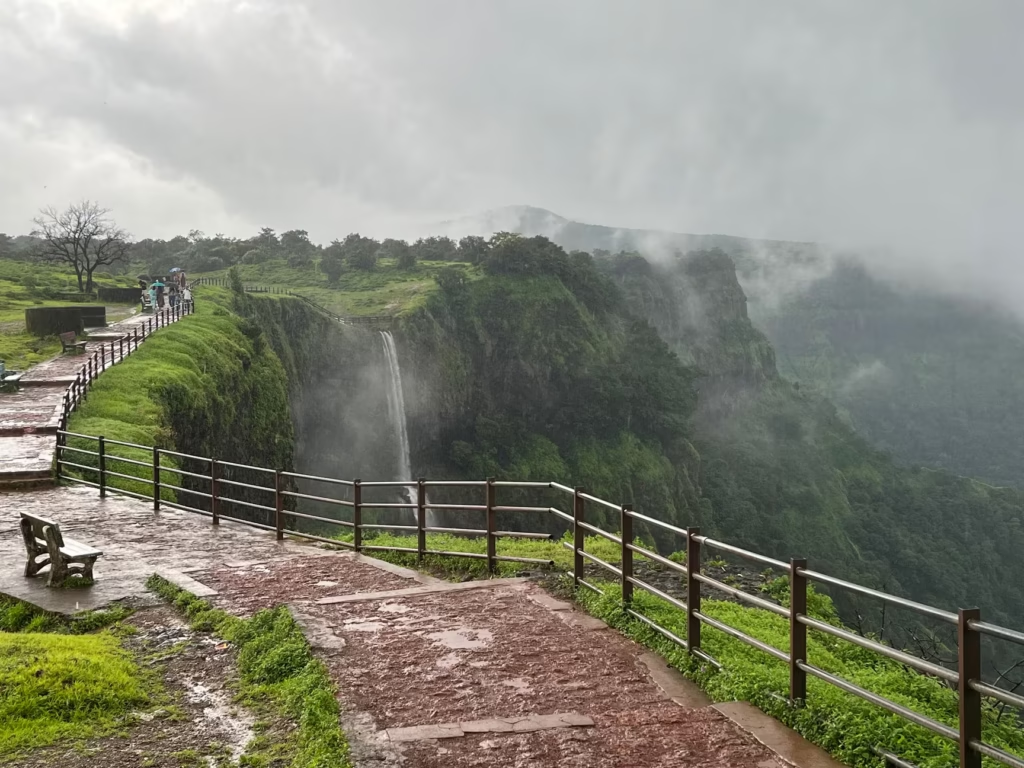
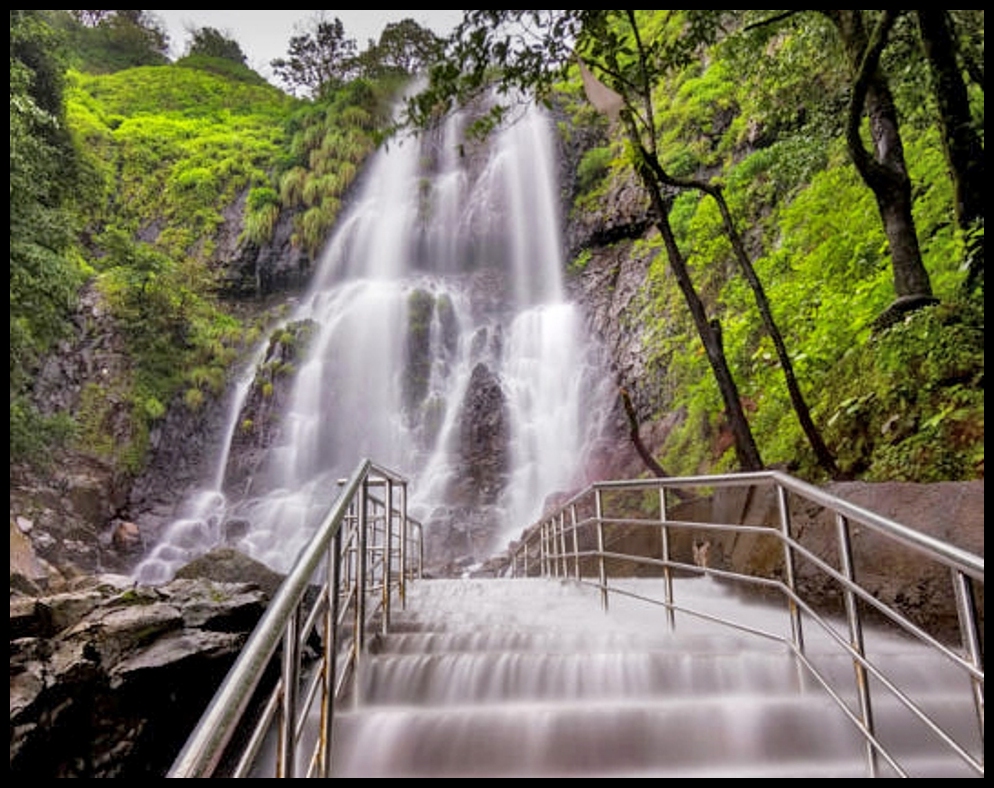
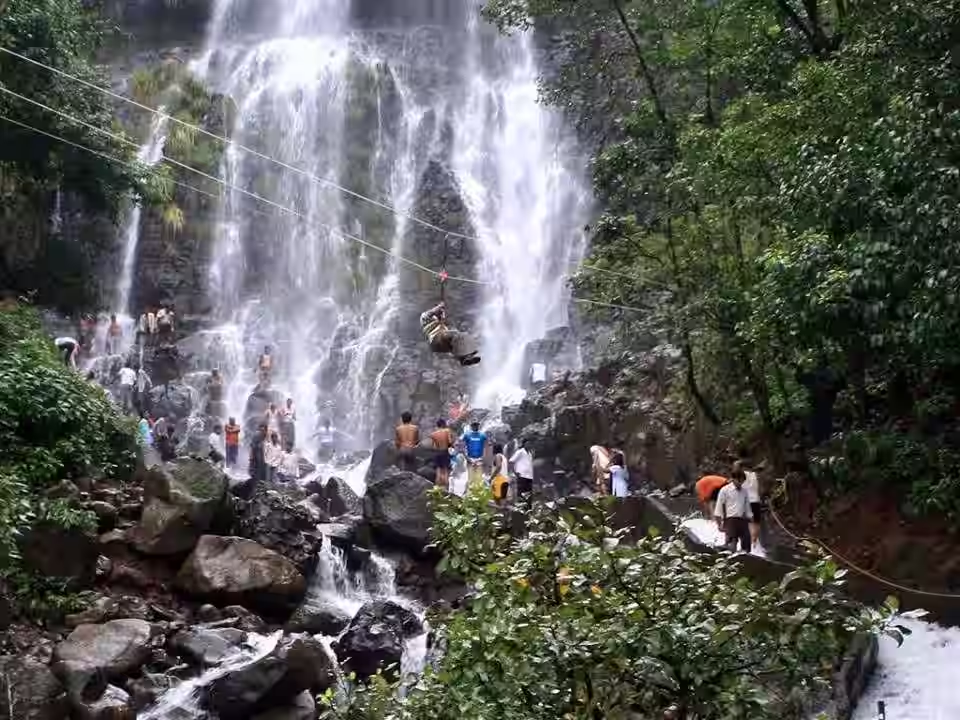
Amboli Waterfall stands as the star performer. Located just 6 kilometers from the main town, this multi-tiered cascade drops approximately 30 meters in a series of steps, creating natural pools where locals and visitors (carefully!) enjoy the cool mountain water. During peak monsoon, the falls swell dramatically, and the spray creates a constant mist that rainbows dance through when sunlight breaks through the clouds. The surrounding area has been developed with viewing platforms and steps, making it accessible while maintaining its natural beauty. Pro tip: Visit early morning around 7 AM to catch the falls in golden morning light and avoid the crowds.
Nangarta Falls, about 4 kilometers away, offers a completely different vibe. Smaller but more intimate, these falls drop into a forested gorge where the water seems to vanish into the green depths below. The walk to the viewpoint takes you through dense forest, and during monsoons, the path itself becomes an adventure as smaller streams cross your trail. What makes Nangarta special is the surrounding biodiversity – you’re likely to spot rare birds, butterflies, and if you’re lucky during evening visits, even some of Amboli’s famous amphibians near the pools.
Now, let’s talk about the viewpoints, starting with the legendary Kavlesad Point. This Amboli viewpoint mist experience has become iconic for one spectacular reason: the reverse waterfall phenomenon. Here’s how it works: Strong winds rushing up from the Konkan plains meet the waterfall cascading down the cliff face, literally pushing the water upward in defiance of gravity. The result? Water flows up instead of down, creating a mesmerizing spectacle that photographers and nature lovers travel hundreds of kilometers to witness Source: Geological Survey of India studies on Western Ghats wind patterns.
The best time to catch this phenomenon is during strong monsoon winds, typically between 3 PM and 6 PM when the sea breeze is at its peak. Bring a macro lens if you’re into photography – the water droplets suspended mid-air create incredible close-up opportunities. The point itself sits at the edge of a steep drop, offering 180-degree views of the Konkan coastline far below, with the Sahyadri ridges stretching endlessly on either side.
Mahadevgad Point, meanwhile, provides sunrise magic. Located slightly away from the main tourist circuit, this viewpoint rewards early risers (we’re talking 5:30 AM starts) with views of the sun rising over the valleys, burning away the morning mist layer by layer. On exceptionally clear post-monsoon mornings, you can see all the way to the Arabian Sea, its surface glinting like hammered silver in the distance.
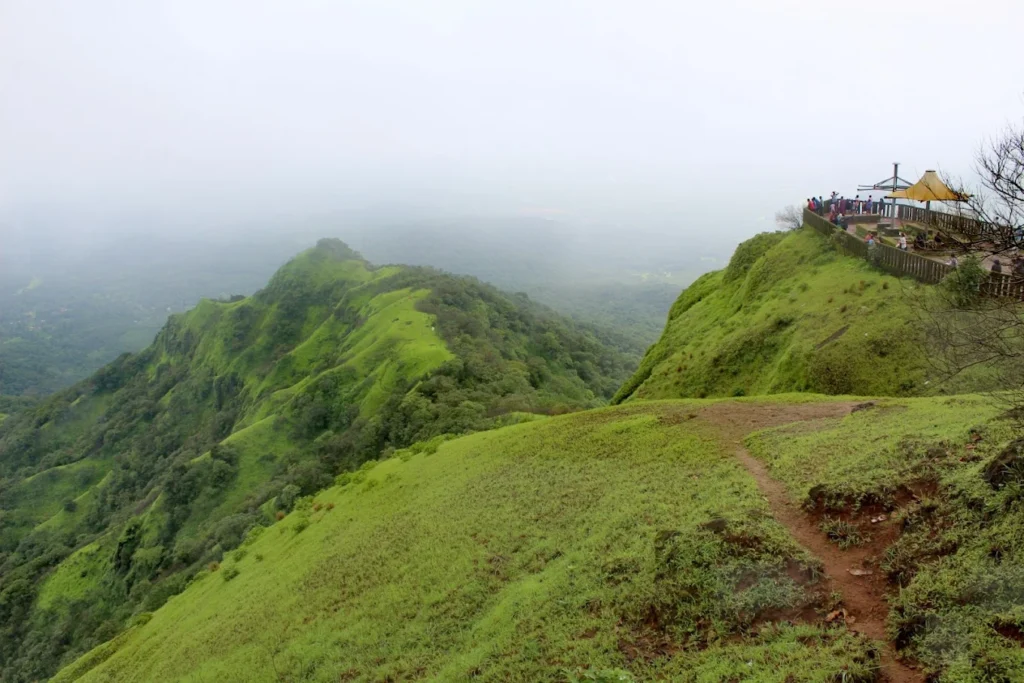
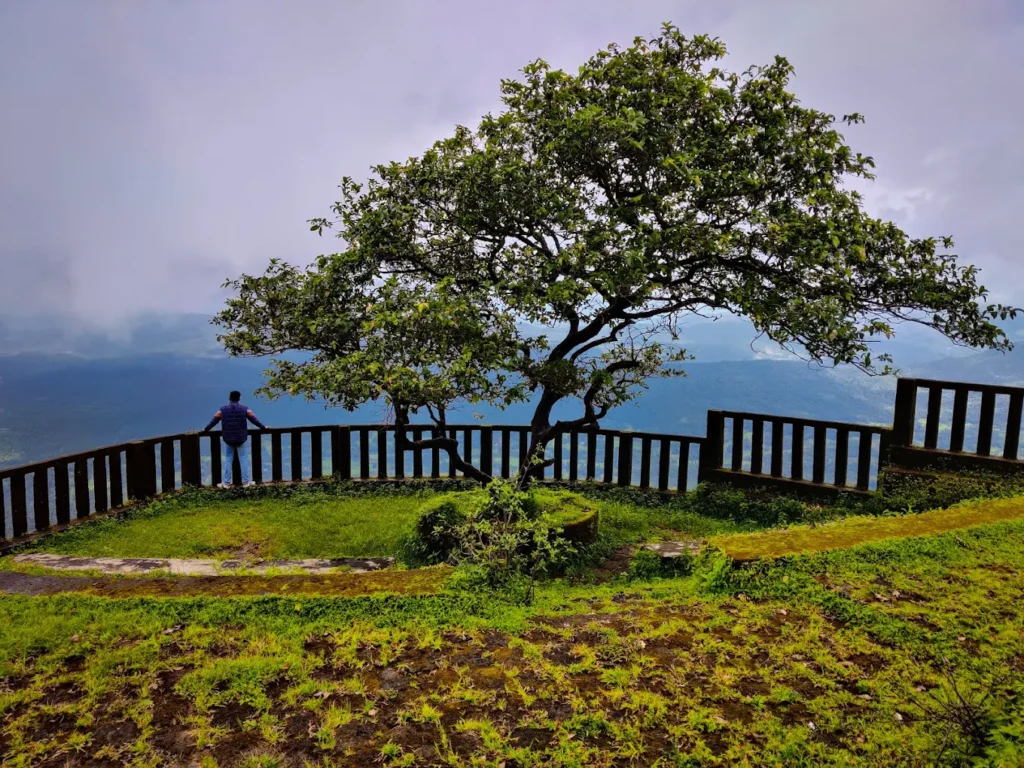
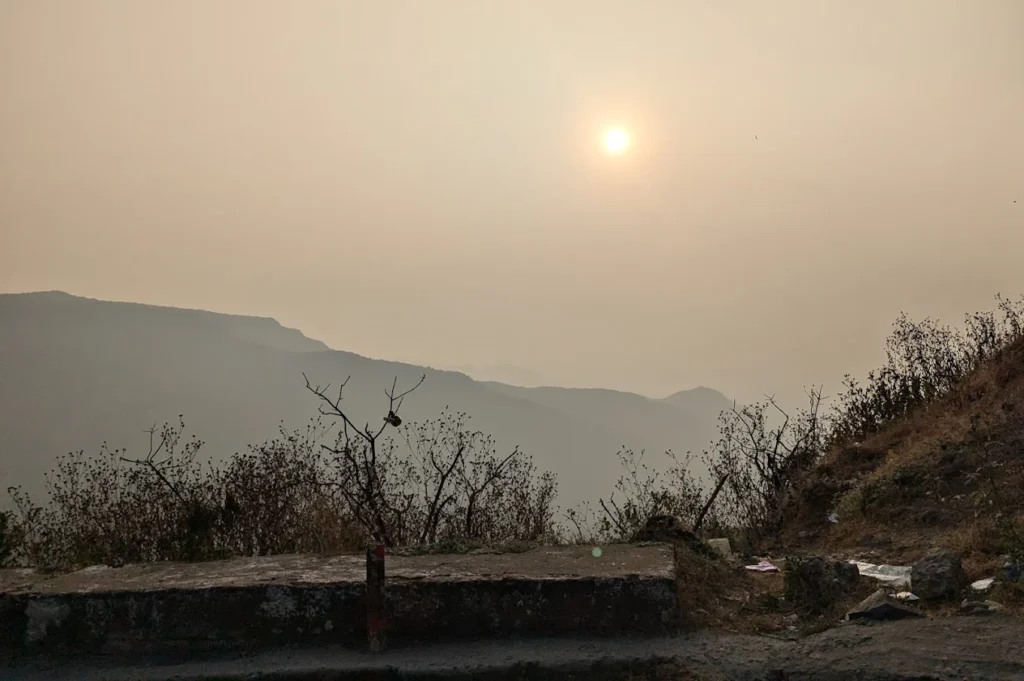
Sunset Point (yes, that’s its actual name – locals keep things simple here!) offers the evening counterpart. As the day winds down, the light turns golden, painting the mist in shades of orange and pink. This is where you’ll find couples, families, and solo travelers alike, all united in silent appreciation as nature puts on its daily farewell show.
Each of these spots has something unique to offer, and honestly, if you have the time, hit them all. They’re relatively close to each other, connected by scenic roads that are attractions in themselves.
4. Biodiversity & Wildlife – Discover Why Amboli Ghat is Famous Among Nature Enthusiasts
Here’s where Amboli truly earns its stripes as a world-class destination. This isn’t just a pretty hill station – it’s an Amboli biodiversity hotspot recognized globally, part of the Western Ghats UNESCO World Heritage Site, and home to species found literally nowhere else on Earth Source: UNESCO World Heritage Centre.
The numbers tell part of the story: over 2,000 plant species, 450 bird species recorded in the broader region, and dozens of endemic amphibians and reptiles. But statistics don’t capture the thrill of spotting a Malabar Gliding Frog launching itself between trees, or hearing the distinctive call of a Malabar Whistling Thrush echoing through misty forests at dawn.
Let me introduce you to three rock stars of Amboli’s wildlife scene:
The Amboli Bush Frog (Pseudophilautus amboli)
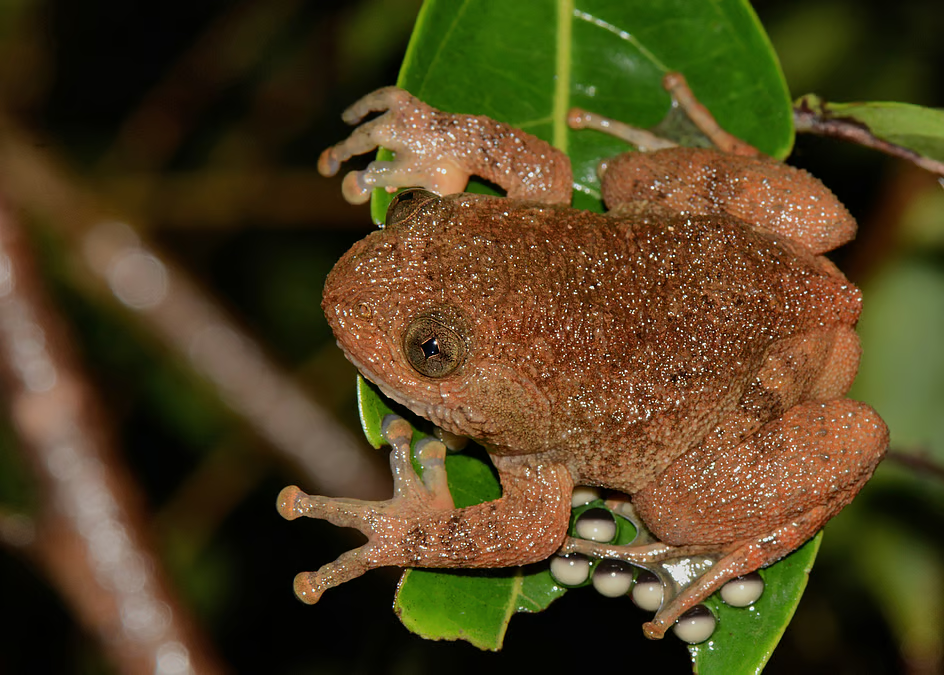
This tiny amphibian – barely the size of your thumbnail – is Amboli’s poster child. Discovered relatively recently, the Amboli Bush Frog exists only in this small patch of Western Ghats, making it critically important for conservation Source: Zoological Survey of India amphibian records. What’s fascinating about this little guy? It skips the tadpole stage entirely – eggs hatch directly into miniature frogs, an adaptation called direct development that helps them survive in temporary rain pools.
Spotting these Amboli amphibians requires patience and a good flashlight. Head out after dark during monsoons, especially after fresh rains, and listen for their high-pitched calls near forest streams. They’re masters of camouflage, blending perfectly with leaf litter, but shine your light low across the forest floor, and you might catch the reflection from their eyes. Respect their space – use red-filtered lights if possible, as white light can disorient them, and never handle them as the oils on human skin can harm their permeable skin.
Malabar Gliding Frog (Rhacophorus malabaricus)
If the Bush Frog is tiny, the Malabar Gliding Frog is the showstopper. Growing up to 9 centimeters, these bright green beauties have enlarged webbing between their toes that acts like parachutes, allowing them to glide up to 12 meters between trees – essentially flying frogs! During breeding season (peak monsoon), males call from high in the trees, creating foam nests on leaves overhanging water. When tadpoles hatch, they drop into the pools below.
The best viewing window is late evening between 7 PM and 9 PM near forest pools. Look up – these frogs spend most of their time in the canopy. You’ll often hear them before seeing them, their calls sounding like a series of low, mechanical clicks. Some local guides offer responsible night walks specifically focused on finding these species, and that’s your best bet for a sighting that doesn’t disturb their natural behavior.
Malabar Grey Hornbill (Ocyceros griseus)
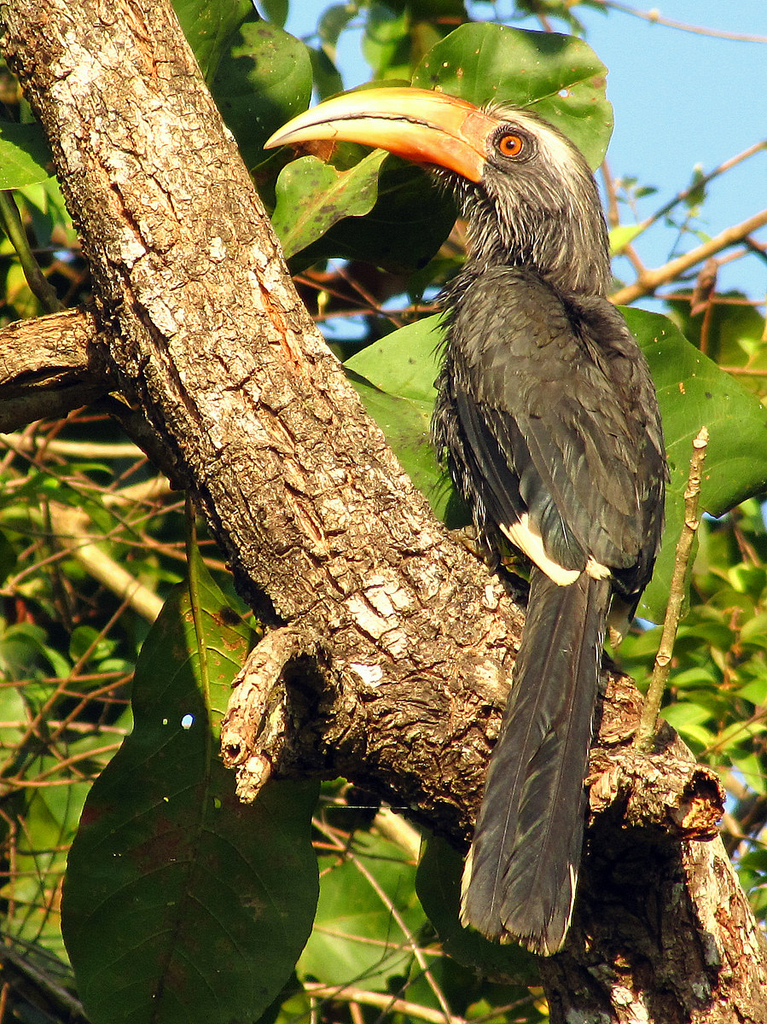
Switching from Amboli amphibians to Amboli bird species, the Malabar Grey Hornbill represents the region’s rich avian diversity. These medium-sized birds, with their distinctive casqued bills and loud calls, are fruit specialists that play crucial roles in seed dispersal throughout the forest Source: Bombay Natural History Society bird studies. Endemic to the Western Ghats, they’re indicators of healthy forest ecosystems.
You don’t need special timing to spot hornbills – they’re active throughout the day and quite vocal. Listen for their loud, cackling calls, often given in duets between mated pairs. Fig trees are hornbill magnets, so scan any fruiting trees you come across. Early morning (6 AM to 8 AM) offers the best light for photography, and you’ll often find them near forest edges where they’re easier to observe. Bring binoculars – even though they’re large birds, they often perch high in the canopy.
Beyond the Stars: Amboli’s biodiversity doesn’t end with these three. The region hosts the stunning Malabar Pit Viper with its bright green scales, the elusive Indian Giant Squirrel (actually reddish-brown and massive compared to regular squirrels), and during migration season, a parade of birds stopping over to refuel on their long journeys.
Night Walk Pro Tips for Amboli Nature Walk Adventures:
- Join organized eco-tourism night walks led by trained naturalists who know where to look without disturbing wildlife
- Wear full-length clothing and sturdy boots – you’re in snake territory, after all
- Keep voices low and movements slow – sudden noise and movement send wildlife scattering
- Use camera flash sparingly and never with amphibians, which have sensitive skin and eyes
- Carry a small field guide or download identification apps before you arrive (spotty internet, remember?)
The forests here operate on their own schedule. Some nights you’ll encounter a dozen species; other nights, the forest stays mysteriously quiet. That unpredictability is part of the magic, and honestly, even unsuccessful searches through Amboli’s monsoon forests become favorite travel memories.
5. Culture, Heritage & Local Life – A Lesser-Known Reason Why Amboli Ghat is Famous
Beyond the waterfalls and wildlife, Amboli carries fascinating layers of history and culture that most visitors barely scratch the surface of. During British colonial rule, Amboli served as a summer retreat for officials stationed in the sweltering coastal regions. The cooler climate and stunning scenery made it a preferred escape, and you can still spot remnants of colonial-era bungalows scattered around town, their architecture mixing British design with local building materials and techniques.
Hiranyakeshi Temple stands as Amboli’s spiritual heart. Dedicated to Lord Shiva, this ancient temple marks the origin point of the Hiranyakeshi River, which emerges from the mouth of a stone cow sculpture within the temple complex – a unique architectural and hydrological feature Source: Archaeological Survey of India Maharashtra records. According to Hindu mythology, the river is named after the demon Hiranyaksha, whom Lord Vishnu defeated here. The temple draws devotees year-round, but visiting during Mahashivratri offers a window into local spiritual traditions, with special prayers and festivities.
The temple architecture itself reflects centuries of renovations, with elements from different periods coexisting harmoniously. The original structure likely dates back several hundred years, though exact records are scarce. What’s certain is that the temple has been a pilgrimage site long before Amboli became a tourist destination, giving it an authentic atmosphere untainted by commercialization.
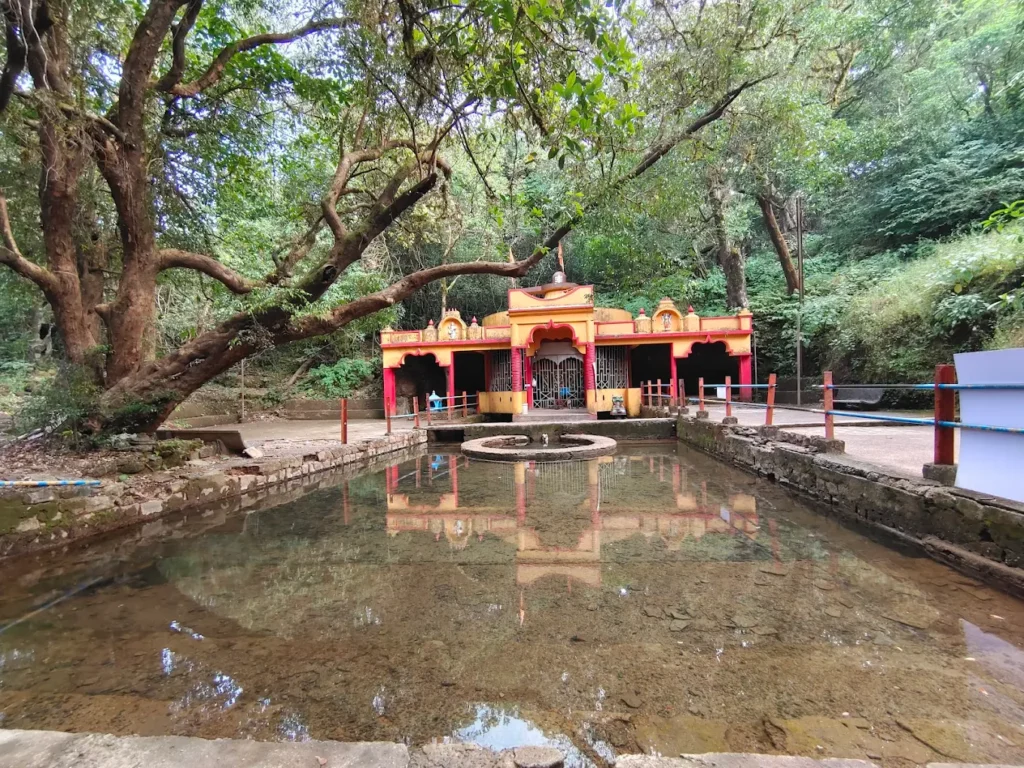
Local life in Amboli revolves around the monsoon rhythm. The Amboli Konkan belt population here is predominantly engaged in agriculture (mostly cashew, mango, and rice cultivation), forest produce collection, and increasingly, tourism. Walk through the small town in the morning, and you’ll see local ladies setting up small stalls selling everything from fresh corn and peanuts to homemade pickles and coconut chikki.
Speaking of food – let’s talk about the legendary bhajis. Every waterfall viewpoint has at least one stall serving piping hot vegetable bhajis (fritters) with spicy chutney and steaming chai. These aren’t your regular fritters; they’re made with seasonal vegetables, coated in chickpea flour spiced with local masalas, and fried to crispy perfection. The most popular varieties include potato, onion, chili (for the brave), and during monsoon, corn bhajis that taste like clouds of savory deliciousness. Eating these in the rain, with waterfalls thundering nearby, ranks among life’s simple but perfect pleasures.
The broader Malvani cuisine influence from the coastal Konkan region makes its way into Amboli’s food scene. Try the sol kadhi (a pink drink made from kokum and coconut milk that’s incredibly refreshing), the fiery Malvani fish curry if you eat seafood, and the ubiquitous vada pav given a local twist with coconut chutney. Many homestays serve authentic home-cooked meals, offering far better cultural immersion than any restaurant can provide.
Local festivals reflect the agricultural calendar. The end of monsoon brings Ganesh Chaturthi celebrations, while Diwali coincides with the harvest season. During these times, the town comes alive with decorations, music, and community gatherings that welcome respectful visitors.
6. How to Reach & Where to Stay – Practical Travel Info Because Amboli Ghat is Famous for Its Getaway Appeal
Let’s get practical. Amboli how to reach depends on where you’re starting from, but here are your main options:
By Air: The nearest airports are Goa International Airport (Dabolim), approximately 95 kilometers away, and Belgaum Airport (Karnataka), about 90 kilometers away. Both offer regular flights from major Indian cities. From either airport, you can hire a taxi (₹2,000-2,500) or use app-based cab services. The drive takes around 2.5 to 3 hours through scenic Western Ghats roads Source: Goa International Airport official website.
By Train: Sawantwadi Road Railway Station, 32 kilometers from Amboli, is your nearest railhead on the Konkan Railway route. This scenic railway line connects Mumbai, Goa, and Mangalore, offering spectacular coastal and forest views. From Sawantwadi, local buses, shared taxis, and private cabs can take you to Amboli in about an hour.
By Road: This is the most popular option, especially from Mumbai (525 km, 10-11 hours) and Pune (450 km, 9-10 hours). The route takes you through the Mumbai-Goa highway (NH66), turning off at Sawantwadi toward Amboli. The roads are generally good, but the final 30-kilometer ghat section requires careful driving, especially during monsoons. Regular state transport buses connect Amboli to Kolhapur, Belgaum, and Sawantwadi.
Where to Stay – Three Options for Different Budgets:
1. Budget Homestay Experience – MTDC Holiday Resort or Local Homestays (₹800-1,500 per night): The Maharashtra Tourism Development Corporation (MTDC) runs a basic but clean resort right in Amboli town, offering no-frills accommodation with essential amenities. Better yet, several local families offer homestays where you’ll get authentic home-cooked meals, insider tips on hidden spots, and genuine Konkani hospitality. These homestays usually don’t have fancy websites – ask locals on arrival or book through eco-tourism collectives. Staying with locals gives you access to stories, secret viewpoints, and food that restaurants simply can’t match.
2. Mid-Range Comfort – Amboli Nature Resorts (₹2,500-4,000 per night): Several mid-range resorts like Woodland Vista Resort, Seven Hills Resort, and others offer comfortable rooms with modern amenities, attached bathrooms with hot water (crucial after rainy treks!), and in-house restaurants. These properties typically feature balconies with forest views, organized activities like bonfires and guided nature walks, and helpful staff who can arrange transportation. They strike a good balance between comfort and proximity to nature, perfect for families or those wanting creature comforts alongside their adventure.
3. Amboli Eco Tourism Lodge – Premium Nature Immersion (₹4,500-7,000 per night): For those seeking luxury within nature, premium eco-resorts like the Forest Hills Resort offer upscale cottages with modern amenities while maintaining environmental consciousness. These properties often use solar power, rainwater harvesting, and organic waste management, proving that comfort and sustainability can coexist. Expect spacious rooms, sunrise-view balconies, curated nature experiences with trained naturalists, and multi-cuisine restaurants. These resorts book up quickly during peak season (July-August), so reserve well in advance.
Booking Tips:
- Reserve at least 30-45 days ahead for monsoon season weekends
- Many smaller properties don’t appear on major booking websites – call directly
- Check cancellation policies carefully, as weather can force plan changes
- Ask about package deals that include meals and guided tours
7. Best Time to Visit & Travel Tips – Smart Ways to Visit Because Amboli Ghat is Famous … And Unique
Amboli best season to visit depends entirely on what experience you’re chasing, so let’s break it down:
Monsoon (June to September) – The Blockbuster Season: This is when Amboli becomes the destination you see in photos and videos. Waterfalls at peak flow, lush green everywhere, mist creating dramatic landscapes, and the entire ecosystem bursting with life. However, it’s also challenging: heavy rains, slippery roads, limited visibility, and occasional landslides. July and August receive the heaviest rainfall. Best for: Nature photographers, waterfall enthusiasts, and those seeking dramatic landscapes.
Post-Monsoon (October to November) – The Sweet Spot: The rains taper off, skies begin clearing, and the landscape stays green while conditions become more comfortable. Waterfalls still flow (though less dramatically), roads are safer, and the weather is pleasantly cool. This period offers the best of both worlds – monsoon’s aftermath without monsoon’s challenges. Best for: Families with children, first-time visitors, and those wanting comfortable exploration.
Winter (December to February) – The Cool & Dry Season: Temperatures drop (sometimes to 10°C at night), skies are clear, and visibility is excellent. Perfect for trekking and long nature walks. However, waterfalls reduce to trickles or dry up completely, and the landscape loses that emerald green intensity. Best for: Trekkers, bird watchers (migration season), and those preferring comfortable weather over dramatic scenery.
Summer (March to May) – The Quiet Season: It gets warm (though never as hot as plains regions), the landscape turns brownish-green, and most waterfalls are dry. Amboli sees very few tourists during this period. Best for: Budget travelers (heavy discounts), those seeking solitude, and visitors interested purely in the biodiversity and viewpoints rather than waterfalls.
Your Traveler’s Checklist for a Successful Amboli Trip:
1. Rain Gear & Clothing:
- Sturdy, waterproof hiking shoes with excellent grip (skip regular sneakers)
- At least two quick-dry pants and shirts (cotton takes forever to dry here)
- A quality raincoat or windcheater (umbrellas are useless in the wind)
- Zip-lock bags for electronics and important documents
- Extra pairs of socks – your feet will get wet, guaranteed
2. Camera & Photography Essentials:
- Waterproof camera cover or underwater housing
- Lens cleaning cloth and air blower (constant moisture is your camera’s enemy)
- Macro lens for wildlife close-ups (50mm or 100mm)
- Wide-angle lens (16-35mm) for landscapes and waterfalls
- Sturdy tripod for long exposures of waterfalls
- Extra batteries and memory cards (limited charging opportunities during power cuts)
3. Health & Safety Items:
- Basic first-aid kit with band-aids, antiseptic cream, and pain relievers
- Insect repellent (mosquitoes and leeches are active during monsoons)
- Prescription medications in waterproof containers
- ORS packets for hydration
- Torch/flashlight with extra batteries
4. Miscellaneous Must-Haves:
- Power bank (fully charged)
- Offline maps downloaded on your phone
- Cash (ATMs are limited, and card machines often don’t work)
- Reusable water bottle
- Snacks for the road (limited food options on ghat roads)
- Portable phone charger for car
8. Sustainable Tourism & Responsible Travel – Why Amboli Ghat’s Fame Comes with Responsibility
Amboli’s increasing popularity brings challenges. This fragile Sahyadri ecosystem, recognized as a UNESCO World Heritage Site, faces threats from increased tourist footfall, plastic pollution, and habitat disturbance Source: Wildlife Institute of India conservation reports. The very biodiversity that makes Amboli special could disappear if we’re not careful.
Responsible travel here isn’t optional – it’s essential. Simple actions multiply when thousands of visitors make conscious choices. Carry reusable bags and water bottles, dispose of waste properly (better yet, carry it back with you), stay on marked trails to prevent soil erosion and habitat destruction, and respect wildlife by observing from a distance without flash photography or touching.
The Amboli Eco-Promise – Your Personal Commitment:
“During my visit to Amboli Ghat, I promise to:
- Carry back all my plastic and non-biodegradable waste
- Stay on designated trails and not disturb wildlife or plants
- Support local communities by buying from local vendors and staying in local accommodations
- Minimize noise pollution, especially during early morning and late evening when wildlife is most active
- Share these principles with fellow travelers I meet”
Screenshot this promise, share it on social media with #ResponsibleAmboli, and actually follow through. Future travelers deserve to experience the same pristine beauty you’re witnessing today.
9. Hidden Gems & Off-Beat Experiences – The Extra Edge That Makes Amboli Ghat Even More Famous to the In-the-Know
Beyond the main attractions, Amboli rewards explorers willing to venture slightly off the beaten path. Organized Amboli night walks with trained naturalists reveal a completely different world – fireflies creating natural light shows, nocturnal creatures emerging from hideouts, and the forest transforming into a symphony of sounds and movements invisible during daylight hours.
Several Amboli trekking routes cater to different fitness levels. The Madhavgad Fort trek, a moderate 2-hour climb, takes you to ancient fort ruins with panoramic views. The Shirgaonkar Waterfall trek, slightly more challenging, leads through dense forest to a secluded cascade that sees maybe a dozen visitors per week. Always hire a local guide for these treks – they know the terrain, weather patterns, and can spot wildlife you’d otherwise miss entirely.
Your Off-Beat Day in Amboli – A 3-Point Mini-Itinerary:
Morning (6 AM – 10 AM): Start at Mahadevgad Point for sunrise, then head to a local’s recommended spot for authentic Malvani breakfast. Skip the touristy cafes; ask your homestay host where they eat. After breakfast, take the Amboli nature walk to Shirgaonkar Waterfall with a guide, focusing on spotting birds and learning about medicinal plants the locals use.
Afternoon (12 PM – 4 PM): Return for lunch and rest (the smart traveler’s strategy in the monsoon heat!). Around 3 PM, visit a local cashew processing unit – many families welcome visitors during non-peak seasons and explain the entire process from harvest to edible nut. Buy some fresh, authentic cashews (far superior to store-bought varieties) and support the local economy directly.
Evening (4 PM – 7 PM): Position yourself at Kavlesad Point by 4:30 PM to catch the reverse waterfall phenomenon as winds pick up. Stay through sunset, then head to Hiranyakeshi Temple for the evening aarti (prayer ceremony). End your day with bhajis and chai at a roadside stall, chatting with locals about everything from weather predictions to cricket.
This itinerary completely avoids the typical tourist circuit while giving you authentic, memorable experiences that reveal Amboli’s soul beyond its scenic surface.
Conclusion
So, why is Amboli Ghat famous? Because it’s where the Western Ghats reveal their most dramatic personality – a place where monsoons create liquid symphonies, where tiny endemic frogs cling to existence found nowhere else on Earth, where mist-wrapped viewpoints offer windows into landscapes that have remained essentially unchanged for millennia, and where the simple pleasure of hot bhajis in the rain becomes a cherished memory.
Amboli Ghat isn’t about grand hotels or curated experiences. It’s about raw nature doing its thing spectacularly well, about biodiversity quietly thriving in rain-soaked forests, about waterfalls that defy gravity, and about finding yourself surrounded by beauty so overwhelming that your phone stays in your pocket because no photograph could possibly capture what you’re feeling.
Whether you’re standing at the Amboli hill station viewpoints watching clouds perform their daily dance, tracking rare Amboli amphibians through wet forests, or simply sitting quietly as the Sahyadri range rain forest comes alive around you – Amboli delivers experiences that big-name tourist destinations struggle to match.
This Amboli hidden gem Maharashtra guards isn’t staying hidden much longer. As word spreads and more travelers discover this Western Ghats masterpiece, the time to visit responsibly is now. Plan your trip, pack that checklist, embrace the rain, and get ready for one of India’s most underrated natural wonders to completely reset your definition of what a hill station can be.
Ready to explore Amboli Ghat? Start planning your monsoon adventure today, and when you visit, share your experiences and tag #XploreHeaven #AmboliGhat – we’d love to see how this magical place captures your heart just like it’s captured ours!
FAQ Section – Your Amboli Ghat Questions Answered
Q1: Why is Amboli Ghat famous in Maharashtra?
Amboli Ghat is famous primarily for being the ‘Cherrapunji of Maharashtra,’ receiving over 7,500 mm of annual rainfall, creating spectacular monsoon waterfalls, supporting exceptional biodiversity as a Western Ghats hotspot with endemic species found nowhere else, and offering breathtaking misty viewpoints overlooking the Konkan coast.
Q2: What is the best time to visit Amboli Ghat?
The best time to visit Amboli Ghat is during the monsoon season (June to September) for dramatic waterfalls and lush landscapes, or post-monsoon (October to November) for comfortable weather with still-flowing waterfalls and green scenery. Avoid summer (March to May) if you want to see waterfalls.
Q3: How do I reach Amboli Ghat from Mumbai or Goa?
From Mumbai, drive 525 km (10-11 hours) via NH66 highway, or take a train to Sawantwadi Road station (32 km away) and then a taxi. From Goa, it’s just 95 km (2.5-3 hours) by road from Dabolim Airport. Nearest airports are Goa International (95 km) and Belgaum (90 km).
Q4: Which waterfalls can I see at Amboli Ghat?
The main waterfalls at Amboli Ghat include Amboli Waterfall (the largest and most popular), Nangarta Falls (more secluded in forested area), and numerous seasonal waterfalls that appear during monsoons along the ghat roads and viewpoints. Kavlesad Point features the famous reverse waterfall phenomenon where wind pushes water upward.
Q5: Is it safe to visit Amboli Ghat during monsoon?
Monsoon visits are safe with proper precautions: drive carefully on slippery ghat roads, avoid standing too close to waterfalls during peak flow, wear proper footwear, carry rain gear, monitor weather forecasts, and avoid travel during extremely heavy rainfall warnings. Roads can occasionally be blocked by landslides, so keep backup days in your itinerary.

Read More Articles;
- Northeast India Tourism Guide 2026: Best Places, Itinerary, Cost & Hidden Gems
- Thailand Hidden Islands Travel Guide 2026: Secret Islands, Budget Itinerary & Crowd-Free Beaches for Indians
- Sri Lanka Travel Guide 2026 for Indians: ₹50K Budget, 7-Day Itinerary, Visa & Hidden Gems
- Bali Travel Guide 2026: Best Places, Itinerary, Budget & Hidden Gems (Complete Planner)
- Alleppey Tourist Places: 25 Best Places to Visit in Alleppey Backwaters (2026 Travel Guide)
