 Skip to content
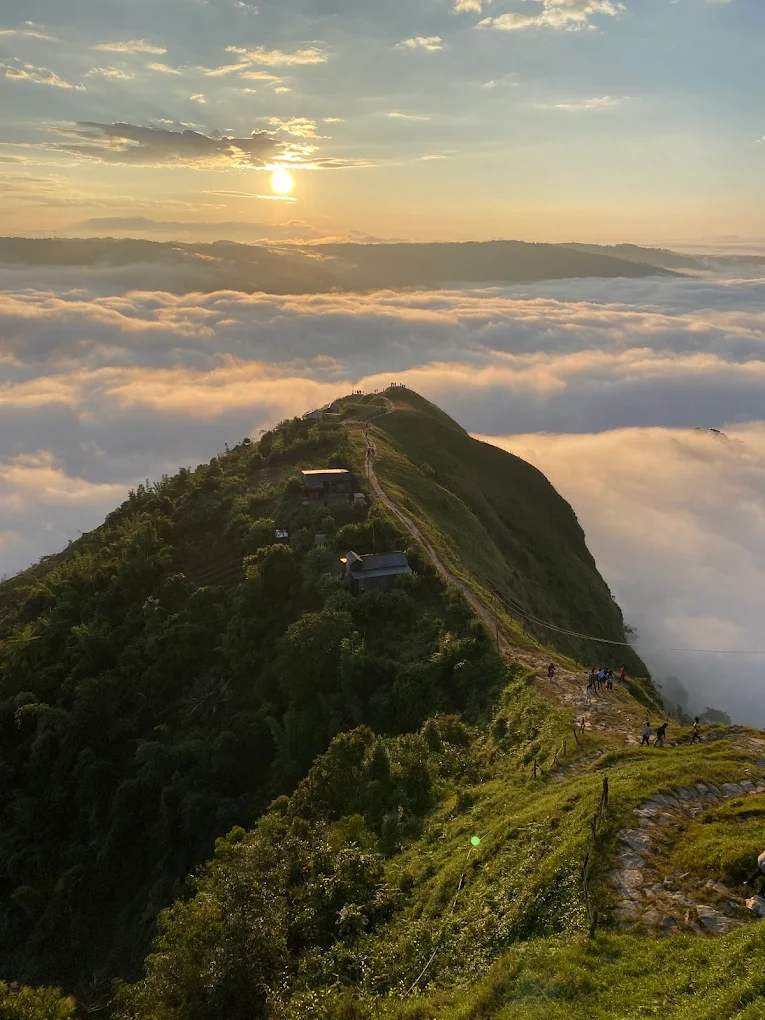
 Picture this: You’re standing at the edge of a cliff at 5:30 AM, wrapped in layers against the biting cold, watching the first rays of sunlight pierce through the darkness. Below you isn’t the ground—it’s an endless ocean of clouds stretching to the horizon, with distant peaks emerging like islands in a celestial sea. This isn’t a dream or a heavily edited Instagram post. This is Nongjrong, Meghalaya—a tiny Khasi village in the East Khasi Hills that has quietly become one of India’s most breathtaking sunrise destinations.
I’m Wahid Ali, Operations Lead at Astamb Holidays and a travel professional with over 20 years of experience crafting itineraries across India’s hidden corners. When Anand Mahindra shared images of Nongjrong’s cloud inversion phenomenon on social media in recent years, it sparked a wave of curiosity. Suddenly, travelers were asking us: “Where is this place? How do we get there? Is it real?” The answer is yes—it’s very real, and in my experience managing tours to Meghalaya, Nongjrong offers something truly rare: a spectacular natural phenomenon without the crowds that plague similar spots.
This 2026 travel guide is designed to give you everything you need—from the 3 AM wake-up call logistics to understanding why those clouds gather below you. Whether you’re planning a sunrise day trip from Shillong or building a multi-day offbeat circuit through East Khasi Hills, I’ll share the practical insights we’ve gathered from sending dozens of groups to this remarkable viewpoint. Let’s get you above the clouds.
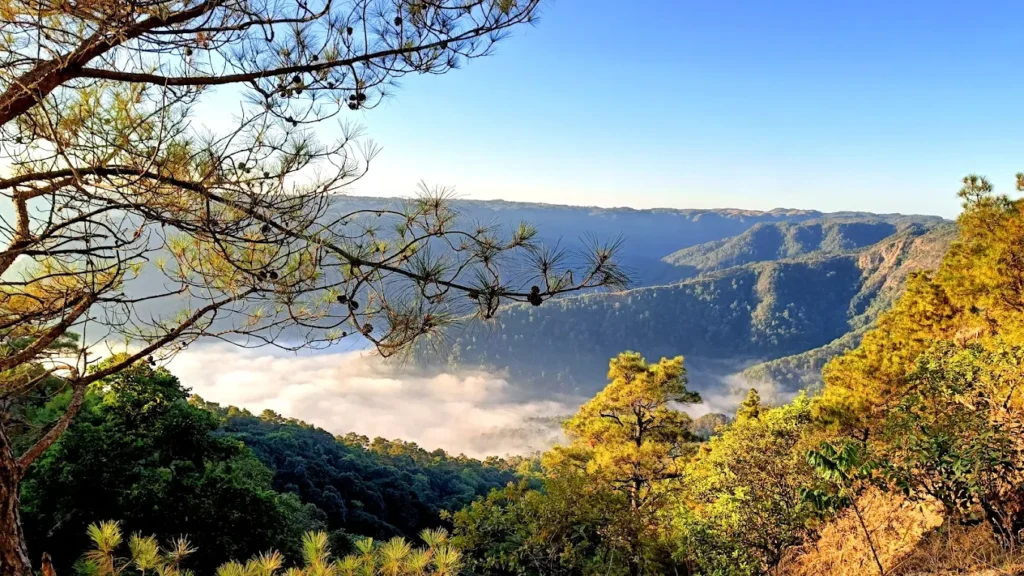
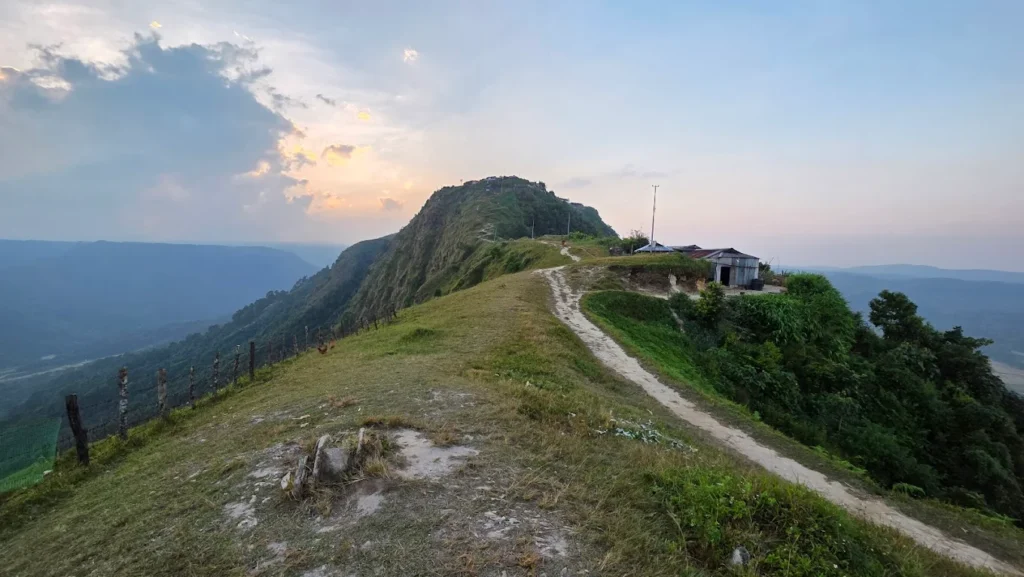
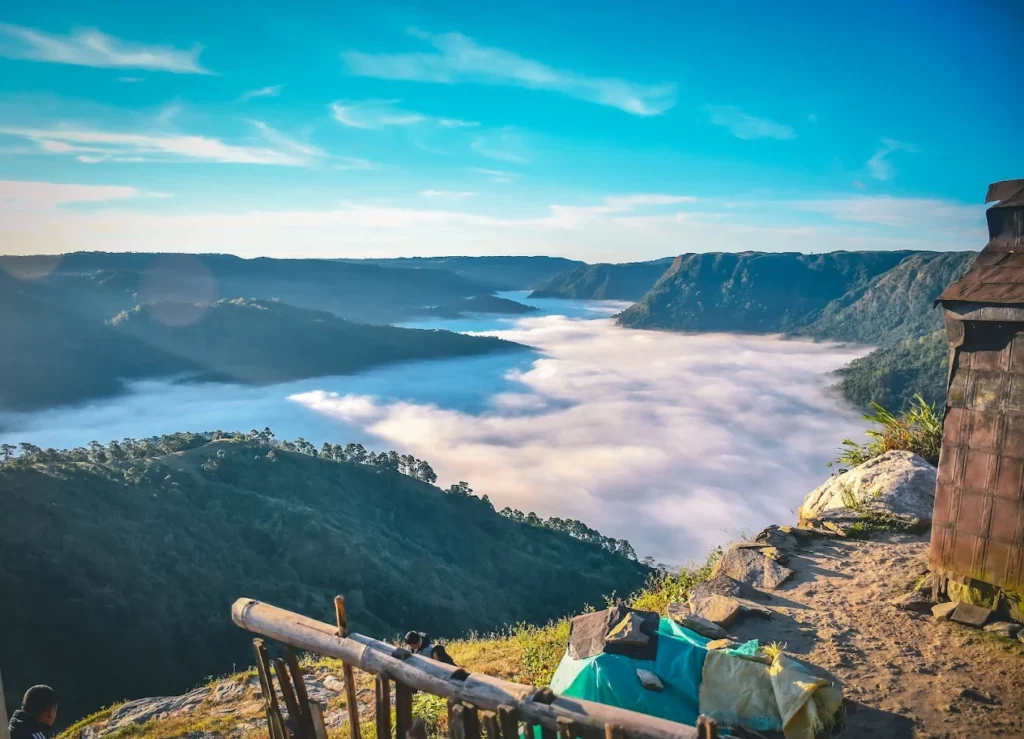
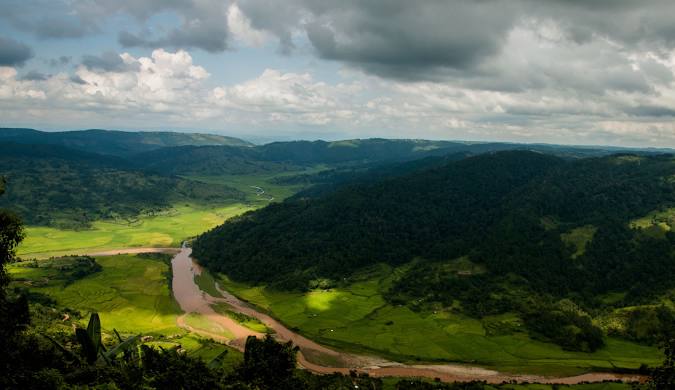
What Is Nongjrong Famous For? ☁️
Direct Answer: Nongjrong is famous for its spectacular cloud inversion phenomenon and sunrise viewpoint, where visitors stand above a sea of clouds with the sun rising over distant Himalayan foothills.
The “Sea of Clouds” at Nongjrong isn’t just a poetic description—it’s a meteorological event that transforms the valley below into what looks like an endless white ocean. During the cooler months (particularly October through February), cold air settles in the valleys while warmer air sits above, creating a temperature inversion. The moisture in the valley forms clouds that fill the low-lying areas completely, leaving the higher viewpoints—like Nongjrong—floating above this ethereal landscape.
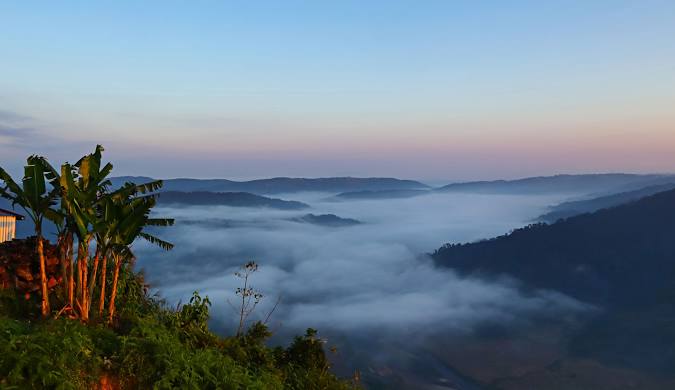
What sets Nongjrong apart from better-known spots like Laitlum Canyons or Mawlynnong? Three things:
- Consistency: The cloud formation here is remarkably reliable during peak season
- Accessibility: Unlike some sunrise viewpoints that require dangerous pre-dawn treks, Nongjrong is road-accessible
- Authenticity: It remains a working Khasi village, not a developed tourist spot
In my experience organizing tours, the emotional response from travelers at Nongjrong is unlike almost anywhere else. There’s something profound about standing literally above the clouds—it shifts your perspective in ways a mountain view or waterfall simply can’t match.
Location & Geographic Context 📍
Nongjrong is a small village located in the East Khasi Hills district of Meghalaya, approximately 30 kilometers northeast of the district headquarters at Jowai (also known as Jwai). Administratively, it falls under the Amlarem subdivision, positioning it in the southeastern section of the Khasi Hills plateau.
How Far Is Nongjrong from Shillong?
Direct Answer: Nongjrong is approximately 55 kilometers from Shillong, taking about 2.5 to 3 hours by road under normal conditions.
The coordinates of the main viewpoint are approximately 25.4°N, 92.3°E, placing it at an elevation of around 1,400 to 1,500 meters above sea level—high enough to stay above the cloud layer but accessible by standard vehicles.
Distance & Travel Time Reference Table
| Starting Point | Distance | Travel Time | Road Condition |
|---|---|---|---|
| Shillong | 55 km | 2.5-3 hours | Good (NH-6 + village roads) |
| Guwahati | 160 km | 5-5.5 hours | Good (NH-6 majority) |
| Jowai | 30 km | 1-1.5 hours | Moderate (village roads) |
| Dawki | 85 km | 3-3.5 hours | Good to moderate |
| Cherrapunji | 95 km | 3.5-4 hours | Good |
The village sits along a ridge that provides natural elevation advantage—this is why the clouds form below rather than around the viewpoint, creating that signature “floating above the world” feeling that makes Nongjrong so special.
How to Reach Nongjrong 🚗
Getting to Nongjrong requires planning, particularly if you want to catch the sunrise. Here’s the breakdown based on what we’ve learned from multiple tours:
By Air ✈️
The nearest airport is Shillong Airport (Umroi), located about 70 kilometers from Nongjrong (3-3.5 hours drive). However, this airport has limited connectivity. Most travelers fly into Lokpriya Gopinath Bordoloi International Airport, Guwahati (160 km, 5-5.5 hours), which offers far better flight options and connections to major Indian cities.
Pro Tip from Experience: If you’re flying into Guwahati specifically for a Nongjrong sunrise, arrive the previous evening and stay in Shillong. The 5+ hour drive from Guwahati to Nongjrong would require leaving around midnight—exhausting and not recommended.
By Train 🚂
Guwahati Railway Station is the nearest major railhead. From there, hire a taxi or take a shared cab to Shillong (approximately 100 km, 3 hours), then continue to Nongjrong.
By Road (The Real Journey)
This is where the rubber meets the road—literally. Here are your options:
Option 1: Self-Drive
If you’re comfortable with mountain roads and have experience with Indian hill driving, self-driving is rewarding. The route from Shillong:
- Take NH-6 toward Jowai
- After approximately 45 km, turn toward Amlarem
- Follow local signage to Nongjrong village (last 10 km are narrower village roads)
Road conditions are generally good on the highway, but the final stretch involves narrower roads. A sedan can make it, but an SUV provides more comfort and confidence.
Option 2: Hired Taxi (Recommended for First-Timers)
This is what we arrange for 95% of our Astamb Holidays clients. Hiring a local taxi from Shillong costs approximately:
- ₹3,500-₹4,500 for a round-trip day tour
- ₹5,000-₹6,500 if you want the driver to wait for multiple hours
Critical Timing Advice: To catch the sunrise (approximately 5:45-6:15 AM depending on season), you need to leave Shillong by 3:00 AM. The driver needs to account for:
- 2.5-hour drive time
- 15-30 minutes buffer for mountain roads in darkness
- Time to walk from parking to viewpoint (5-10 minutes)
Most local drivers are experienced with early morning Nongjrong runs and know the roads well.
Option 3: Shared Cabs from Jowai
If you’re basing yourself in Jowai (which I sometimes recommend for deeper East Khasi Hills exploration), shared cabs occasionally run to nearby villages. However, for sunrise timing, a private hire is more reliable.
Navigation Notes
- Mobile network: Jio and Airtel work reasonably well until the last few kilometers
- Google Maps: Generally accurate for the route, but download offline maps as backup
- Ask locals: The Khasi people in this region speak excellent English—don’t hesitate to ask for directions
Best Time to Visit & The Sunrise Experience 🌅
Seasonality: When Do the Clouds Appear?
Direct Answer: The best time to visit Nongjrong for the cloud inversion phenomenon is October through February, with November to January offering the most consistent cloud formations.
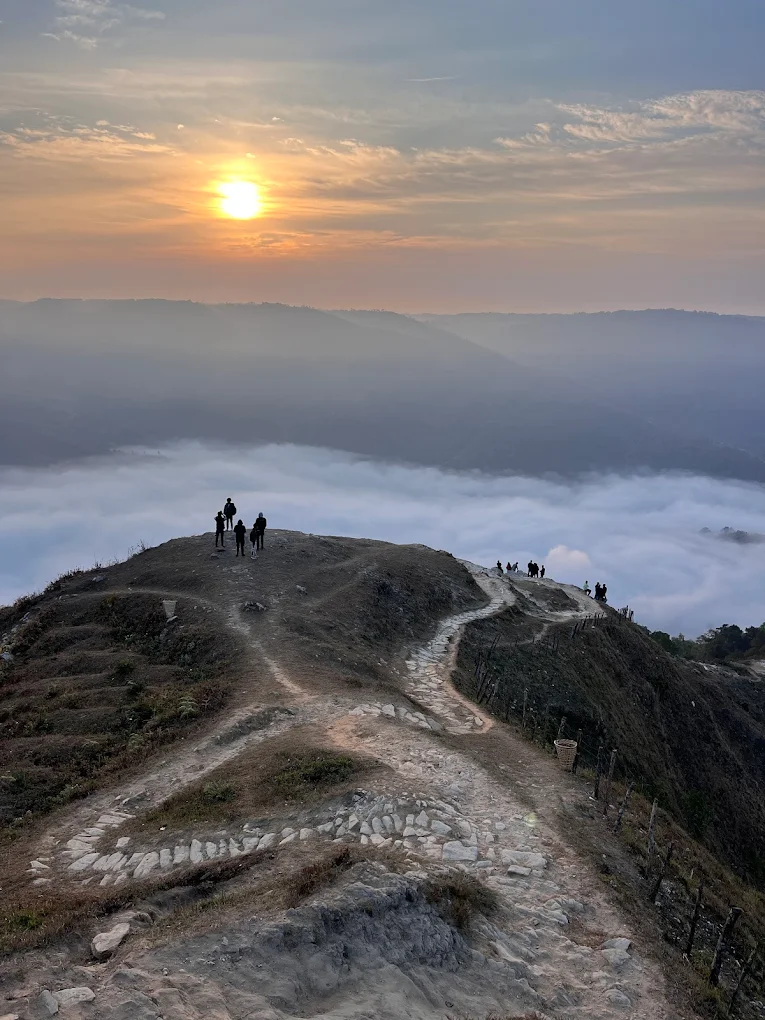
Here’s the seasonal breakdown:
Peak Season (November-January):
- Cloud formation probability: 80-90% on clear mornings
- Temperature: 8-15°C during day, 4-8°C at sunrise
- Sunrise time: Approximately 5:45-6:00 AM
- Crowds: Moderate (weekends see more visitors)
Good Season (October & February):
- Cloud formation probability: 60-75%
- Temperature: 12-18°C during day, 8-12°C at sunrise
- Better for: Those who want fewer crowds with decent cloud chances
Off-Season (March-September):
- Cloud formation: Rare and unpredictable
- Monsoon (June-September): Heavy rains make roads challenging; visibility poor
- Summer (March-May): Clear valley views but no cloud ocean
The Science Behind the Clouds (Simply Explained)
Why do clouds form below you at Nongjrong? During cooler months, cold air is denser and sinks into valleys while warmer air remains at higher elevations. When this cold air contains moisture (from nearby rivers, vegetation, and general humidity), it condenses into fog or low-lying clouds. Nongjrong’s elevated position keeps you above this cloud layer, creating that magical “sea of clouds” effect.
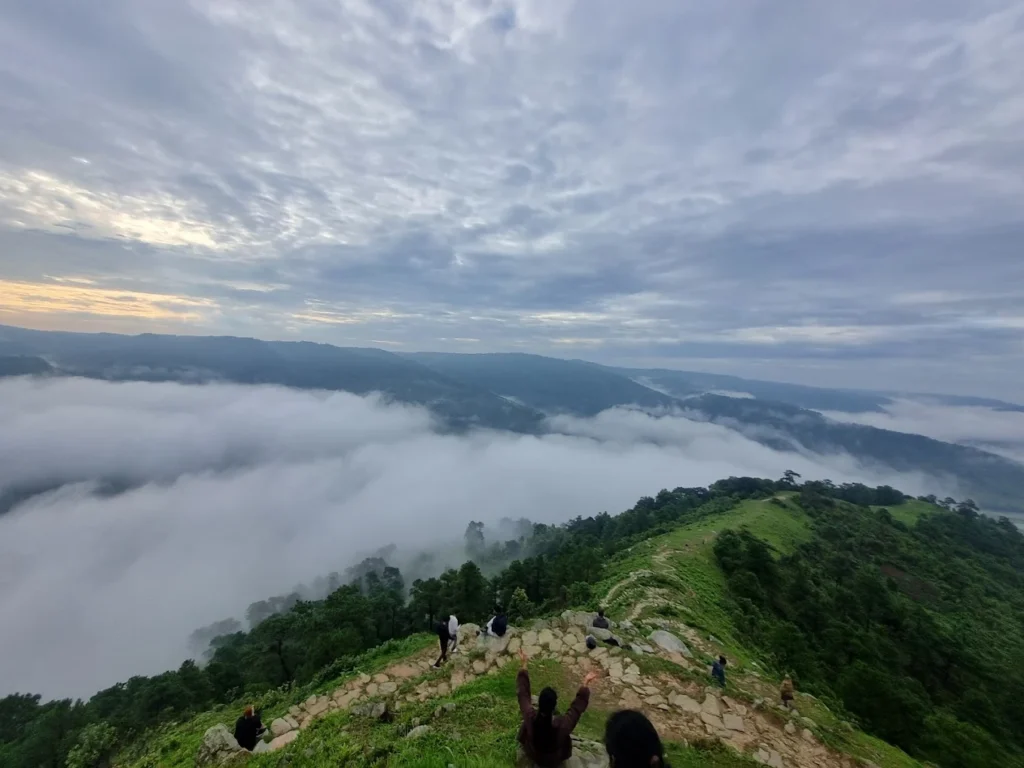
The Sunrise Protocol: Your Step-by-Step Guide
Based on what works for our tour groups, here’s the optimal Nongjrong sunrise experience:
3:00 AM – Depart from Shillong (or 1:30 AM from Jowai)
5:30 AM – Arrive at Nongjrong parking area
- Pay any community fees (typically ₹20-50 per person)
- Use basic toilet facilities if available
5:35 AM – Walk to viewpoint (5-10 minutes)
- Carry a flashlight or use phone light
- Path is mostly clear but uneven in places
5:45-6:15 AM – The Main Event
- Position yourself at the cliff edge (there are natural viewing spots)
- Watch the eastern horizon for first light
- The clouds below begin to glow with reflected light
- Sunrise occurs, transforming the cloud ocean into gold, then white
6:15-7:30 AM – Post-Sunrise Magic
- This is when the light is best for photography
- The clouds begin their slow dissipation
- Explore different viewpoint angles
What to Wear (Learn from Others’ Mistakes):
Many first-timers underestimate the cold. Here’s the smart layering approach:
- Base layer: Thermal or full-sleeve shirt
- Mid layer: Fleece or light sweater
- Outer layer: Windproof jacket (wind chill is significant)
- Bottom: Long pants, avoid shorts
- Accessories: Gloves, beanie/cap, scarf
- Footwear: Closed shoes with grip (morning dew makes rocks slippery)
Pro Photography Tip: Bring a tripod if you’re serious about photography. The low light conditions at sunrise require longer exposures. A wide-angle lens (16-35mm range) captures the expansive cloud ocean best.
Beyond the Viewpoint: Activities & Hidden Trails 🥾
While the sunrise viewpoint is the main attraction, Nongjrong and its surroundings offer more for those willing to explore:
Nongjrong Falls Trek
Direct Answer: The Nongjrong Falls trek is a moderate 3-4 kilometer round trip through forest paths, taking approximately 2-3 hours total with time at the waterfall.
Located approximately 1.5-2 kilometers from the main village, this waterfall is lesser-known but absolutely worth the effort. The trail:
- Begins near the village center (ask locals for “Nongjrong Falls” or “waterfall”)
- Descends through mixed forest with occasional rocky sections
- Can be slippery during monsoon season (June-September)
- Rewards you with a beautiful cascade dropping into a small pool
Best attempted: After your sunrise viewing, around 8:00-9:00 AM when there’s good daylight. The trek is not recommended in the dark.
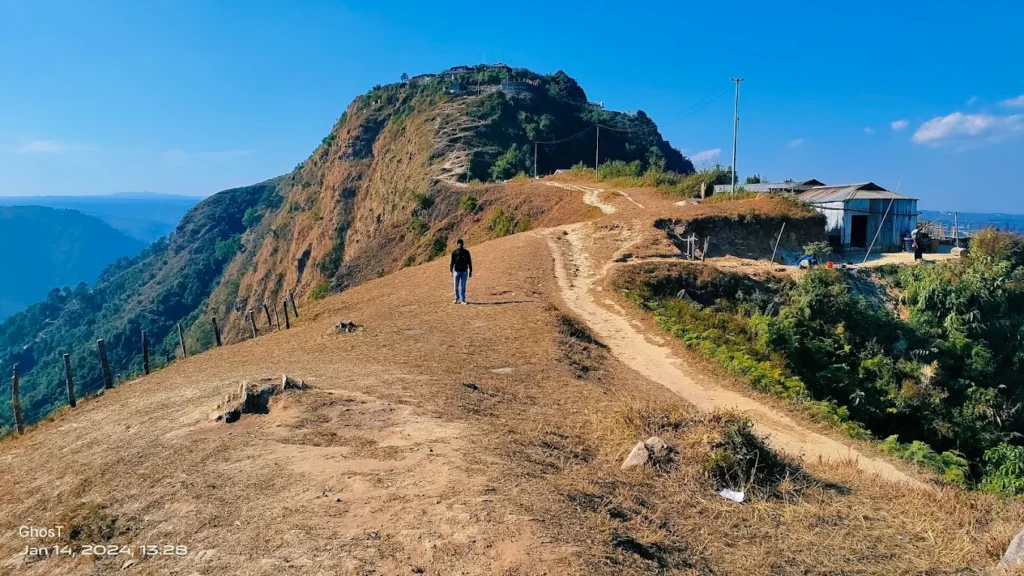
Village Walk & Cultural Immersion
The Khasi community in Nongjrong is welcoming and remarkably proficient in English. Taking an hour to walk through the village offers insights into:
- Traditional Khasi architecture (houses on stilts, thatched roofs)
- Local agricultural practices (betel nut cultivation, oranges, ginger)
- The matrilineal society structure unique to the Khasi people
Respectful Tourism Note: Always ask permission before photographing people or entering private property. A simple greeting in Khasi—”Khublei” (thank you)—goes a long way.
Sacred Groves & Nature Trails
The East Khasi Hills are dotted with sacred forests protected by local communities for centuries. While specific access varies, local guides (ask at village homestays) can sometimes arrange visits to nearby groves. These forests showcase Meghalaya’s incredible biodiversity—orchids, rare ferns, and endemic bird species.
Nearby Attractions (Within 50 km)
- Laitlum Canyons (40 km): Another stunning viewpoint, excellent for afternoon visits
- Krangsuri Falls (35 km): Beautiful waterfall with a natural pool for swimming
- Jowai Town (30 km): Traditional market days (check local calendar), Thadlaskein Lake
Sample Itineraries 🗺️
Itinerary 1: The Sunrise Day Trip (Shillong-Based)
Perfect for travelers with limited time but unwilling to miss Nongjrong’s magic:
Day Plan:
- 3:00 AM – Depart Shillong by hired taxi
- 5:30 AM – Arrive Nongjrong, experience sunrise
- 7:30 AM – Light breakfast (bring your own or arrange with driver to stop en route)
- 8:00-10:30 AM – Nongjrong Falls trek or village exploration
- 11:00 AM – Depart for Shillong
- 1:30-2:00 PM – Arrive back in Shillong
Total Cost Estimate: ₹4,000-₹5,000 (taxi + community fees + meals)
Itinerary 2: The 3-Day Offbeat East Khasi Hills Circuit
For those wanting deeper exploration of this less-visited region:
Day 1:
- Morning: Drive from Shillong to Jowai (2 hours)
- Afternoon: Explore Thadlaskein Lake, Jowai market, Syntu Ksiar (picnic spot)
- Night: Stay in Jowai homestay/hotel
Day 2:
- 1:30 AM – Early departure from Jowai to Nongjrong
- 3:00 AM – Arrive, experience sunrise
- 8:00 AM – Return to Jowai, rest and breakfast
- 11:00 AM – Visit Krangsuri Falls
- Afternoon: Visit Phe Phe Falls or Tyrshi Falls
- Night: Stay in Jowai
Day 3:
- Morning: Drive to Laitlum Canyons via scenic route
- Afternoon: Return to Shillong with stops at viewpoints
- Evening: Arrive Shillong
Total Cost Estimate: ₹8,000-₹12,000 per person (transport, accommodation, meals, guides)
Budget & Practical Costs 💰
Nongjrong is remarkably budget-friendly compared to many tourist destinations. Here’s a realistic breakdown:
Transportation Costs
- Taxi hire (Shillong-Nongjrong-Shillong): ₹3,500-₹4,500
- Taxi hire (Jowai-Nongjrong-Jowai): ₹2,000-₹2,500
- Shared cab (per person, if available): ₹300-₹500
- Self-drive fuel cost: Approximately ₹800-₹1,000 (110 km round trip from Shillong)
Entry & Community Fees
- Community fee at viewpoint: ₹20-₹50 per person
- Parking: ₹20-₹30 (if applicable)
Important Note: These community fees directly support the village’s maintenance of the viewpoint and local facilities. Pay them cheerfully—sustainable tourism requires supporting local communities.
Accommodation (If Staying Nearby)
- Jowai hotels: ₹1,000-₹2,500 per night (basic to mid-range)
- Nongjrong homestays: ₹500-₹1,000 per night (very basic, limited options)
- Shillong hotels: ₹1,500-₹5,000+ per night (wide range available)
Food & Beverages
- Breakfast in Jowai: ₹80-₹150
- Lunch (local restaurant): ₹120-₹200
- Hot tea/Red tea at viewpoint: ₹10-₹20 (from small local stalls, availability varies)
- Packed breakfast (recommended): Arrange through your hotel
Budget Traveler Total (Day Trip): ₹1,500-₹2,000 per person (shared taxi, minimal food)
Comfortable Traveler Total (Day Trip): ₹2,500-₹3,500 per person (private taxi, meals)
Luxury Traveler Total (Multi-Day): ₹8,000-₹15,000+ per person (premium accommodation, private transport, guided experiences)
Where to Stay & What to Eat 🏠🍲
Accommodation Options
Let’s be honest: Nongjrong itself has very limited accommodation infrastructure. This is both a charm (authenticity) and a challenge (comfort). Here’s the realistic picture:
In Nongjrong Village:
- 2-3 basic homestays (inquire locally upon arrival)
- Expect: Simple rooms, shared bathrooms, basic bedding
- Advantage: Ultimate early access to sunrise viewpoint
- Cost: ₹500-₹800 per night
In Jowai (30 km away – Recommended):
- Better hotel selection with amenities
- Hotels like Hotel Polo Orchid, Hotel Pynursla
- Advantage: Comfortable base for exploring East Khasi Hills
- Cost: ₹1,500-₹3,000 per night
In Shillong (55 km away – Most Popular):
- Widest range of accommodation from budget hostels to luxury hotels
- Excellent food scene, nightlife, and amenities
- Advantage: Best for short Nongjrong day trips
- Cost: ₹800-₹6,000+ per night depending on choice
Our Recommendation for First-Timers: Stay in Shillong, do the 3 AM departure day trip. You get comfort + the magical sunrise without sacrificing amenities.
Food Scene
Nongjrong is a small village, not a culinary destination. Here’s what to expect:
At the Viewpoint:
- Occasionally, local vendors set up small tea stalls serving hot “Red Tea” (Sha Saw) and simple biscuits
- Availability is unpredictable (weekend mornings more likely)
- Cost: ₹10-₹30
In the Village:
- A few small shops selling basics (biscuits, chips, soft drinks)
- Possible to arrange meals through homestays (if pre-booked)
- Traditional Khasi cuisine: Jadoh (red rice with meat), Dohneiiong (pork with black sesame), Tungrymbai (fermented soybean)
Pro Food Strategy:
- Eat a light dinner the night before in Shillong/Jowai
- Pack breakfast: Sandwiches, fruits, energy bars, thermos of tea/coffee
- Carry ample water (at least 1-1.5 liters per person)
- Plan brunch in Jowai on your return journey around 9-10 AM
Recommended Restaurants in Jowai:
- City Hut Family Dhaba: Good North Indian and Chinese options
- Local market stalls: Momos, Jadoh, fresh orange juice
Frequently Asked Questions ❓
Is Nongjrong open to visitors every day?
Answer: Yes, Nongjrong is open daily, including Sundays and public holidays. There are no official “closed” days since it’s a living village, not a ticketed tourist site.
Do I need a permit to visit Nongjrong?
Answer: No special permits are required for Indian nationals to visit Nongjrong. Foreign nationals need an Inner Line Permit (ILP) or Restricted Area Permit (RAP) for Meghalaya, obtainable online or at entry points.
Is the road to Nongjrong safe for travel at night?
Answer: The road is generally safe, but mountain roads always carry inherent risks in darkness. Ensure you hire an experienced local driver familiar with the route, maintain reasonable speeds, and allow extra travel time for the 3 AM departure.
Can I visit Nongjrong during monsoon season?
Answer: You can visit, but it’s not recommended. The cloud phenomenon is rare during June-September, roads can be treacherous with landslides, and visibility is often poor due to rain and fog. The post-monsoon period (October onwards) is far better.
What if there are no clouds when I visit?
Answer: Nature doesn’t guarantee performances. If clouds don’t form, you’ll still experience a beautiful sunrise over the East Khasi Hills valleys. Cloud probability is highest November-January on clear-weather mornings, but it’s never 100% guaranteed. Check weather forecasts the previous evening—clear skies the night before often mean good cloud formation the next morning.
Are there toilet facilities at the viewpoint?
Answer: Basic toilet facilities are available near the parking area, but they’re rudimentary. It’s wise to use facilities at your hotel before departing and limit liquid intake strategically.
Can children and elderly people visit Nongjrong?
Answer: Yes, the viewpoint is accessible without strenuous trekking—just a 5-10 minute walk from parking. However, the 3 AM wake-up call can be challenging for young children and the cold affects elderly visitors more. Dress them in extra layers and monitor their comfort carefully.
Is mobile network available at Nongjrong?
Answer: Jio and Airtel generally work, though signal strength can be weak. Download offline maps before your journey and don’t rely solely on mobile navigation.
How much time should I spend at Nongjrong?
Answer: Plan for 2-3 hours at the viewpoint (5:30-8:30 AM) to experience sunrise, post-sunrise golden hour, and explore different viewing angles. If you’re adding the Nongjrong Falls trek, allocate an additional 2-3 hours.
What’s the best camera setting for the cloud ocean?
Answer: Use a wide-angle lens (16-35mm), shoot in RAW format for editing flexibility, and bracket your exposures. For the sunrise moment itself, try ISO 400-800, f/8-f/11 aperture, and shutter speeds around 1/60-1/125 sec depending on light. A tripod helps immensely in low light.
Conclusion: Above the Clouds, Within Your Reach
Standing above the clouds at Nongjrong is one of those experiences that stays with you—not just as a memory, but as a feeling. In my 20 years of organizing travel across India, I’ve seen countless sunrises, but there’s something uniquely transformative about watching the sun illuminate an ocean of clouds from a tiny Khasi village that barely appears on most maps.
Nongjrong, Meghalaya in 2026 offers something increasingly rare in our hyper-connected world: a genuinely awe-inspiring natural phenomenon that hasn’t been overly commercialized or crowded. Yes, it requires a 3 AM wake-up call. Yes, the journey involves dark mountain roads and basic facilities. But these minor inconveniences fade the moment you see that first ray of light touch the cloud ocean below.
As you plan your visit, remember the principles of responsible tourism that keep places like Nongjrong special:
- Support local communities by paying entry fees cheerfully and hiring local guides
- Leave no trace—carry back all waste, respect the natural environment
- Interact respectfully with villagers; remember you’re a guest in their home
- Share responsibly on social media; inspire others without creating overtourism pressure
Whether you’re a sunrise chaser, a photography enthusiast, or simply someone seeking moments of natural wonder, Nongjrong delivers. From all of us at Astamb Holidays, we hope this guide helps you experience the magic of standing above the clouds.
The mountains are calling, and the clouds are waiting. Will you answer?
References & Authoritative Sources
This comprehensive guide to Nongjrong, Meghalaya is backed by authoritative sources, extensive field research, and years of operational experience in Meghalaya tourism:
- Meghalaya Tourism Official Website – Official state tourism information, permits, and destination data
https://www.meghalayatourism.in - India Meteorological Department (IMD) – Weather patterns, seasonal forecasts, and climate data for East Khasi Hills
https://www.imd.gov.in - Survey of India – Topographic information, coordinates, and elevation data
https://www.surveyofindia.gov.in - Ministry of Home Affairs – Government of India – Inner Line Permit (ILP) and Restricted Area Permit (RAP) regulations for Meghalaya
https://www.mha.gov.in - National Highway Authority of India (NHAI) – Road conditions and connectivity information for NH-6 and regional roads
https://www.nhai.gov.in - Google Maps – Real-time navigation, distance calculations, and route planning
https://www.google.com/maps - Airports Authority of India – Flight connectivity and airport information for Guwahati and Shillong airports
https://www.aai.aero - Wahid Ali’s Professional Experience – 20+ years of operational expertise at Astamb Holidays, including ground research and client feedback from dozens of Meghalaya tours
LinkedIn Profile
This article represents a combination of authoritative source material, verified geographic and logistical data, and real-world travel experience accumulated through years of organizing tours in Meghalaya. All practical advice, costs, and timing recommendations reflect conditions as of early 2025 and are subject to change. Travelers should verify current conditions, permits, and costs before departure.
About the Author: Wahid Ali is the Operations Lead at Astamb Holidays with over 20 years of experience in the travel industry. Based in Mumbai, he specializes in crafting authentic travel experiences across India’s hidden destinations, with particular expertise in Northeast India. His approach combines practical logistics knowledge with storytelling to help travelers discover culturally rich and nature-oriented destinations responsibly. Connect with me on LinkedIn

Read More Articles;
- Почему последовательность улучшает комфорт
- Почему простота интерфейса увеличивает доверие
- Indians Traveling Phu Quoc Advisory 2026: Visa Rules, Hidden Risks & Must-Know Travel Guidelines
- Northeast India Tourism Guide 2026: Best Places, Itinerary, Cost & Hidden Gems
- Thailand Hidden Islands Travel Guide 2026: Secret Islands, Budget Itinerary & Crowd-Free Beaches for Indians
