 Skip to content
 Picture standing on ancient rock that’s older than the Himalayas, watching the sunrise paint red cliffs in shades of gold. That’s the Ikara-Flinders Ranges — and it’s calling your name for 2026.
I’m Wahid Ali, and in my 20 years managing tours at Astamb Holidays, I’ve sent countless travellers to Australia’s outback. But the Ikara-Flinders Ranges National Park holds a special place in my recommendations. Why? Because it delivers what most people only dream about: genuine wilderness, deep Aboriginal culture, and landscapes that make you feel tiny in the best possible way.
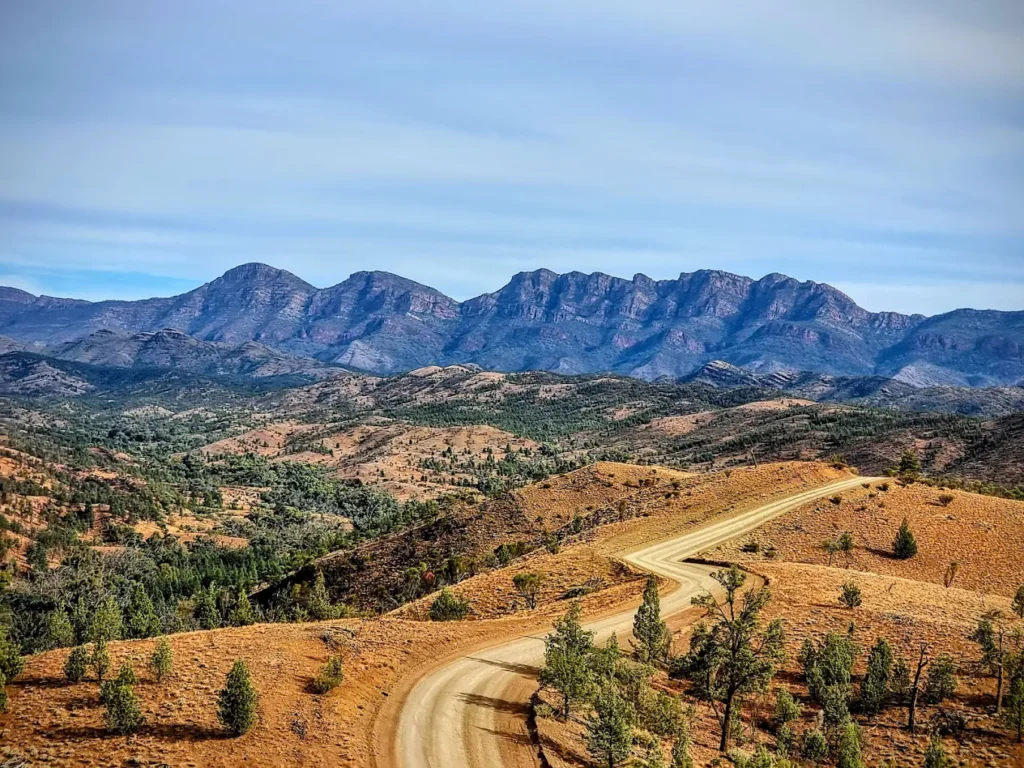
This isn’t your typical tourist trap. The Flinders Ranges stretch across 95,000 hectares of South Australia’s outback, about 430 kilometres north of Adelaide. Here’s everything you need to know before you go.
What Is Ikara-Flinders Ranges?
The Ikara-Flinders Ranges National Park sits in South Australia’s outback, roughly 5 hours’ drive from Adelaide. Think rugged mountain ranges, deep gorges carved over millions of years, and wildlife you won’t see anywhere else.
The landscape here started forming 800 million years ago — making it one of Earth’s oldest mountain ranges. You’re literally walking through geological history.
What does Ikara mean in Aboriginal language?
Ikara means “meeting place” in the Adnyamathanha language. The word specifically refers to Wilpena Pound, which has served as a traditional gathering spot for the Adnyamathanha people for thousands of years.
The Adnyamathanha people — whose name translates to “rock people” or “hills people” — have called this land home for over 49,000 years. In 2016, the park was officially renamed to honour this heritage. Today, it’s co-managed by Parks South Australia and the Adnyamathanha Traditional Lands Association, ensuring their stories and sacred sites are properly protected.
| Quick Facts | Details |
|---|---|
| Official Name | Ikara-Flinders Ranges National Park |
| Size | 95,000 hectares (234,717 acres) |
| Distance from Adelaide | 430 km (267 miles) |
| Drive Time | 5 hours (non-stop) |
| Traditional Owners | Adnyamathanha people |
| Established | January 1, 1945 |
Why Visit Ikara-Flinders Ranges?
Here’s what makes this place different from your average national park:
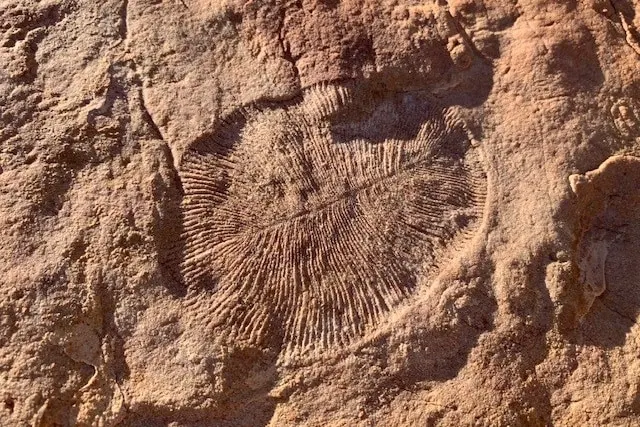
The geology is mind-blowing. These mountains are older than the Himalayas. The park contains Ediacaran fossils — some of the oldest evidence of complex life on Earth. Scientists from around the world come here to study rocks that tell stories from 650 million years ago.
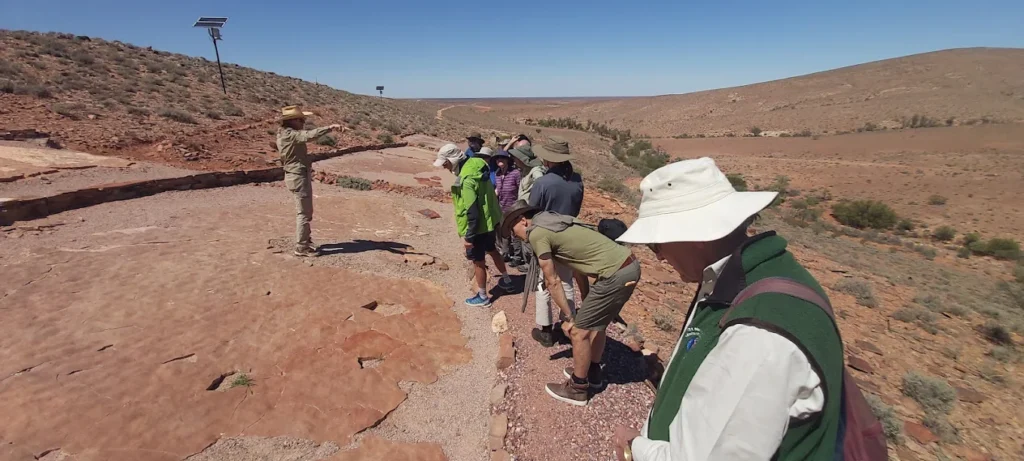
It’s culturally significant. This isn’t just a pretty landscape. Sacred sites like Arkaroo Rock and Sacred Canyon hold ancient rock art and carvings dating back tens of thousands of years. The Adnyamathanha community shares their stories through guided tours, and trust me — you’ll never look at the land the same way after hearing creation stories told by traditional custodians.
The experiences are unique. Where else can you:
- Watch sunrise from inside a natural amphitheatre (Wilpena Pound)
- Drive the “Corridor Through Time” at Brachina Gorge (120 million years of Earth’s history in one road)
- Spot yellow-footed rock wallabies bouncing across cliffs
- Sleep under some of the darkest skies in the Southern Hemisphere
Lonely Planet recently highlighted the Flinders Ranges as a must-visit destination, but honestly, locals have known this secret for decades.
Best Time to Visit Ikara-Flinders Ranges
Timing is everything in the outback. Get it wrong, and you’ll be miserable. Get it right, and you’ll have the trip of a lifetime.
What is the best time of year to go to the Flinders Ranges?
The best time to visit is April to October (autumn through spring), with August to October being ideal for wildflowers and comfortable hiking temperatures. Daytime temperatures range from 15°C to 25°C (59°F to 77°F), perfect for bushwalking without melting.
Here’s my honest breakdown by season:
Autumn (March-May): Brilliant choice. Days are warm (20-30°C), nights are cool but not freezing. The landscape shows off in oranges, reds, and browns. Easter can get busy, so book ahead.
Winter (June-August): This is peak season for good reason. Days are clear and sunny (13-18°C), perfect for hiking. Nights drop to near 0°C, so pack warm layers. Campfires are allowed (bring your own wood — collection is prohibited). Wildlife is active, and you’ll spot more animals near water sources. The trade-off? Higher accommodation prices and more tourists, especially during school holidays.
Spring (September-November): Wildflower season! After winter rains, the desert blooms in yellows, purples, and reds. September and October offer the best of both worlds — warm days, wildflowers, and decent availability. Just note: fire ban season typically starts mid-October.
Summer (December-February): Only for the brave or foolish. Temperatures regularly hit 33-40°C+. Many hiking trails close for safety between December and March. If you must visit in summer, restrict activities to early morning and late evening. Seriously — the outback sun is no joke.
Pro tip from my tour operations experience: Book April-May or September if you want fewer crowds but still excellent weather. July-August is beautiful but expect company.
How Big Is Ikara-Flinders Ranges?
The park covers 95,000 hectares — or if you prefer, about 370 square kilometres. To put that in perspective, that’s roughly 1.5 times the size of Singapore.
But here’s what that really means for travellers: You can’t “do” this park in a day. The terrain is vast and varied. You’ve got:
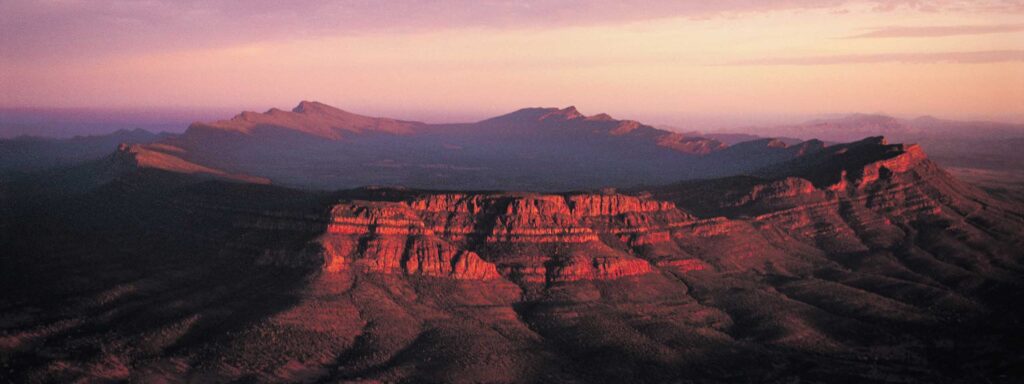
- Wilpena Pound: A natural amphitheatre nearly 80 square kilometres in size
- Multiple gorges (Brachina, Bunyeroo, Wilkawillina)
- Mountain ranges including Heysen Range and ABC Range
- Countless hiking trails from 30 minutes to full-day treks
How many days do you need? Minimum 2-3 days to see the highlights. Give yourself 4-5 days if you want to really explore and do some longer hikes. A week lets you add in Arkaroola Wilderness Sanctuary to the north.
Where to Go & What to Do
Let me walk you through the must-see spots and hidden gems:
Wilpena Pound (Ikara)
This is the star attraction. Wilpena Pound is a massive natural amphitheatre — imagine mountains forming a near-perfect oval 17 kilometres long and 8 kilometres wide. From the outside, it looks like a line of peaks. From inside, you realize you’re in this enormous basin.
The only way to get your vehicle inside is via the Wilpena Pound Resort shuttle (runs at 9am, 11am, 1pm, and 3pm). Otherwise, it’s a 3-hour, 8-kilometre return walk to the lookout.
St Mary Peak (1,170 metres) is the highest point in the Flinders Ranges. The hike is challenging (20 kilometres return, 8-10 hours), but the views are extraordinary. Important cultural note: The Adnyamathanha people ask that you stop at Tanderra Saddle rather than summiting, as the peak holds sacred significance.
Brachina and Bunyeroo Gorges
The Brachina Gorge Geological Trail is nicknamed the “Corridor Through Time” — and it’s not marketing fluff. The 20-kilometre unsealed road cuts through rock layers representing 120 million years of Earth’s history. Signs explain what you’re looking at, from ancient sea beds to fossil sites.
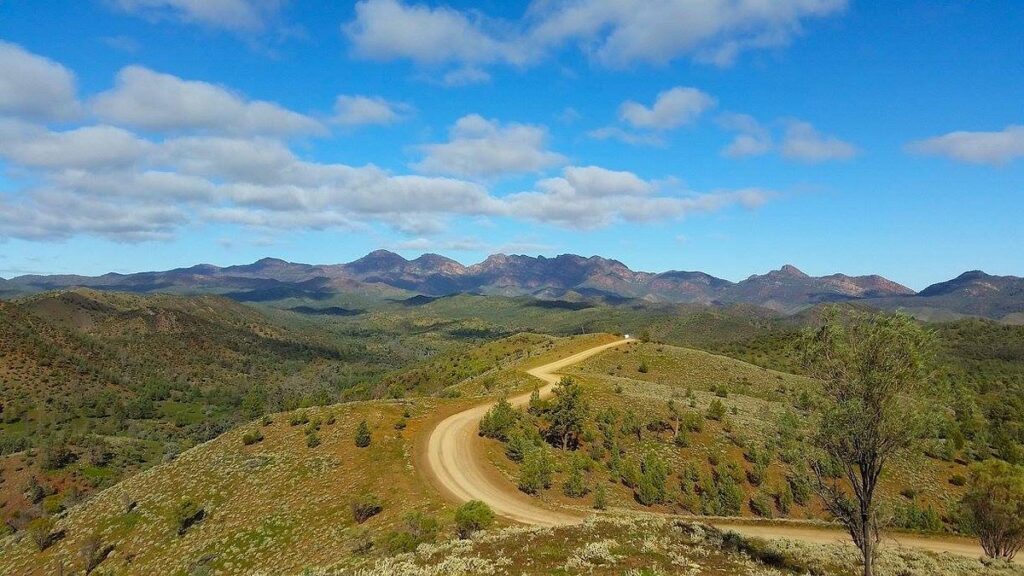
Bunyeroo Gorge offers dramatic scenery with red cliffs, river red gums, and wildlife. The road requires a 4WD or high-clearance vehicle due to creek crossings.
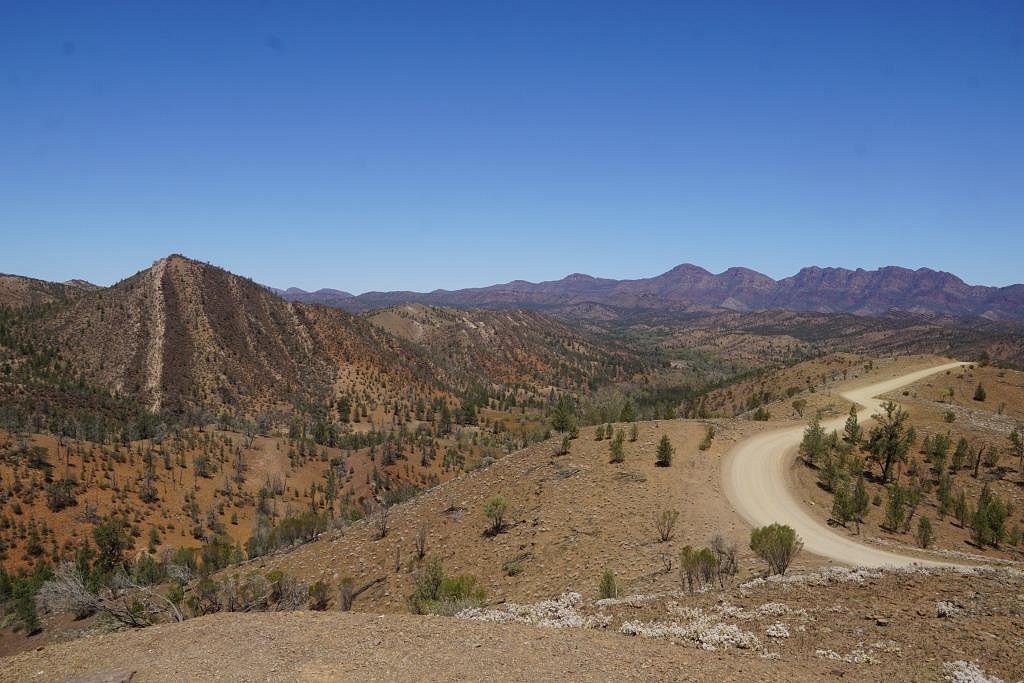
In my experience managing tours, I always tell people: If you only have time for one scenic drive, make it the Bunyeroo-Brachina loop (about 3-4 hours). Start early morning for the best light and wildlife spotting.
Are Flinders Ranges scorpions venomous?
Yes, Flinders Ranges scorpions (Urodacus elongatus) are venomous, but their venom is mild and poses no serious threat to humans. A sting will be painful but rarely requires medical attention. No scorpion species in Australia has fatal venom.
Still, take sensible precautions:
- Shake out boots and clothing before putting them on
- Don’t put hands in dark crevices
- Use a torch at night when walking
- Check sleeping bags before climbing in
These scorpions are actually quite impressive — they’re one of Australia’s largest species, growing up to 12 centimetres long. They fluoresce bright green under UV light, which is pretty cool to see on night walks.
Hidden Gems
Arkaroo Rock: Ancient rock art site with paintings estimated to be thousands of years old. Accessible from a 1.2-kilometre walking trail near Hawker.
Sacred Canyon (Yura Mulka): Only accessible on guided tours with Adnyamathanha guides. The canyon walls hold rock engravings up to 65,000 years old — some of the oldest in the world. Book through Wilpena Pound Resort.
Stokes Hill Lookout: Sunset spot with panoramic views of Wilpena Pound and surrounding ranges. Worth the unsealed access road.
Dark sky stargazing: The Flinders Ranges offers some of the clearest night skies in Australia. On moonless nights, the Milky Way is so bright you can read by it.
Practical Travel Planning
Getting There
From Adelaide, take the M2 North-South Motorway, then A1 Port Wakefield Highway toward Port Augusta (about 2.5 hours). Turn onto B83 Flinders Ranges Way northeast to Hawker, then continue on Wilpena Road to the park.
Total drive time: 5 hours non-stop, but budget 6-7 hours with breaks and photo stops.
Alternative scenic route: Drive through Clare Valley (wine region) and Melrose for a more leisurely journey with lunch stops.
Vehicle Requirements
Do you need a 4WD? No — but it helps.
The main roads (Flinders Ranges Way and access to Wilpena Pound) are fully sealed and accessible to any vehicle. However:
4WD opens up more options:
- Gorge drives (Bunyeroo, Brachina)
- Moralana Scenic Drive
- Creek crossings
- Remote camping areas
2WD limitations:
- Stick to sealed roads
- Some lookouts will be inaccessible
- Gorge drives require 4WD tours instead
Most rental companies prohibit unsealed road driving, so read your agreement carefully.
Costs
| Item | Cost (AUD) |
|---|---|
| Park Entry (Day Pass) | $11 per vehicle |
| Multi-Park Pass (2 months) | $44 |
| Multi-Park Pass (12 months) | $99 |
| Camping (unpowered) | $13-18 per person/night |
| Camping (powered) | $25 per person/night |
| Wilpena Resort Rooms | From $193/night |
| Glamping Tents | From $310/night |
| Scenic Flight (30 min) | From $195/person |
| Sacred Canyon Tour | $45/person |
Money-saving tip: Purchase park passes online in advance through the Parks South Australia website.
Are dogs allowed in Flinders Ranges?
No, dogs and other pets are not allowed in Ikara-Flinders Ranges National Park, including at Wilpena Pound Resort. This is standard policy for South Australian national parks to protect native wildlife.
Alternatives if travelling with pets:
- Rawnsley Park Station (just outside park boundary) — dog-friendly with kennel service ($20/day)
- Arkaroola Wilderness Sanctuary — pets allowed with restrictions
- Various pastoral stations around the region
You can drive through the park with a dog in your vehicle, but you cannot stop or let them out within park boundaries.
Packing Checklist
Essential items:
- Water: Carry at least 4 litres per person for walks over 2 hours
- Sun protection: Hat, sunscreen (SPF 50+), sunglasses
- Layers: Temperatures swing 20-30°C between day and night
- Offline maps: Phone reception is limited
- First aid kit
- Insect repellent
- Sturdy hiking boots
- Torch/headlamp
Summer additions:
- Extra water (seriously, double it)
- Wide-brimmed hat
- Cooling towel
Winter additions:
- Warm sleeping bag (rated to -5°C)
- Thermal layers
- Beanie and gloves
- Firewood (collection prohibited, buy at resort)
Local Culture & Safety Protocols
Respecting Sacred Sites
The Adnyamathanha people generously share their land, but some sites remain sacred and off-limits:
- Never climb on rock art
- Follow designated paths at cultural sites
- Photography restrictions apply at some locations
- Book guided tours for restricted areas
- Listen to and respect traditional custodian guidance
Outback Safety Rules
The Golden Rule: If your vehicle breaks down, stay with it. Don’t try walking for help in the outback.
Other critical safety tips:
- Tell someone your plans and expected return time
- Carry more water than you think you need
- Check weather forecasts before hiking
- Start hikes early (aim for 6-7am in warm months)
- Turn back if conditions deteriorate
- Carry a personal locator beacon for remote hikes
Wildlife: Snakes are present, especially in warmer months. Wear boots, watch where you step, and give wildlife space.
Heat management: Even in winter, sun exposure is intense. Dehydration happens faster than you expect. If you feel dizzy, nauseous, or stop sweating, you’re in trouble — find shade immediately.
Ikara-Flinders Ranges Itineraries
2-Day Highlights Trip
Day 1:
- Drive from Adelaide (leave by 7am)
- Stop at Hawker for lunch
- Check in at Wilpena
- Wangara Lookout short walk (2.5 kilometres)
- Sunset from campground lookout
Day 2:
- Mount Ohlssen Bagge hike (early start, 6.5 kilometres, 4-5 hours)
- Drive Brachina Gorge Geological Trail
- Return to Adelaide (evening arrival)
3-Day Standard Itinerary
Add to 2-day: Day 3:
- Bunyeroo Gorge drive and short walk
- Stokes Hill sunset
- Evening stargazing
5-Day Deep Dive
Add to 3-day: Day 4:
- St Mary Peak hike (full day, experienced hikers only)
- OR Sacred Canyon tour + shorter walks
Day 5:
- Arkaroo Rock cultural site
- Wilkawillina Gorge (4WD track)
- Yellow-footed rock wallaby spotting
- Return to Adelaide
Hidden gem addition: Old Wilpena Station — explore historic buildings including one of the oldest structures in the Flinders Ranges. Free entry, self-guided.
Frequently Asked Questions
Is Wilpena Pound sacred for Indigenous people?
Yes, absolutely. Wilpena Pound (Ikara) holds deep spiritual significance for the Adnyamathanha people as a traditional meeting place and features in their Dreaming stories. The entire landscape is considered part of their living culture, not just a geological feature.
Can you visit Ikara-Flinders Ranges without a 4WD?
Yes. The main attractions — Wilpena Pound Resort, Wangara Lookout, several hiking trails, and the sealed scenic drives — are all accessible with a 2WD vehicle. You’ll miss the gorge drives, but tours can fill that gap.
What wildlife should I watch out for in the outback?
The main hazards are snakes (especially brown snakes and red-bellied blacks in warmer months), scorpions, and spiders. Snakes are shy and will move away if they hear you coming. Make noise while hiking, watch where you put hands and feet, and shake out boots before wearing them.
How many days do I really need?
Minimum 2 days for highlights only. 3-4 days gives you a proper experience without rushing. 5-7 days lets you slow down, do longer hikes, and add in Arkaroola or surrounding areas.
Is it safe to hike solo in the Flinders Ranges?
Popular trails like Mount Ohlssen Bagge and the Wilpena walks are generally safe solo if you’re experienced and prepared. Tell someone your plans, carry plenty of water, take a PLB or satellite communicator, and start early. Remote trails or multi-day hikes are better done with companions or through guided tours.
Travel Verdict
So, who is Ikara-Flinders Ranges perfect for?
Ideal for:
- Hikers and outdoor enthusiasts
- Photography lovers (especially sunrise/sunset shooters)
- Cultural tourism seekers
- Geology and nature nerds
- Couples wanting unique experiences
- Families with older kids (8+)
Maybe skip if you:
- Can’t handle basic camping facilities
- Need constant connectivity (phone reception is patchy)
- Want luxury resort amenities
- Are looking for beach vacations
The Flinders Ranges rewards those who slow down and pay attention. This isn’t a tick-box destination — it’s a place to feel small under massive skies, to understand deep time through ancient rocks, and to connect with one of the world’s oldest living cultures.
Ready to start planning? Download an offline map from the Parks SA website, book your accommodation early (especially for Easter and school holidays), and pack those hiking boots.
The Ikara-Flinders Ranges has been waiting 800 million years. It can wait a bit longer while you organize, but honestly — don’t make it wait too long.
About the Author
Wahid Ali is a seasoned travel professional and operations lead in the tourism industry with extensive experience in crafting travel experiences and destination insights. Based in Mumbai, he heads operations at Astamb Holidays, where he combines practical travel logistics expertise with engaging storytelling to help travellers explore hidden gems across India and beyond. His work blends expert travel planning with a passion for culturally rich and nature-oriented destinations.
📍 Connect: LinkedIn Profile
References & Citations
This article is backed by authoritative sources and research:
- Parks South Australia – Ikara-Flinders Ranges National Park Official Information
https://www.parks.sa.gov.au/parks/ikara-flinders-ranges-national-park - South Australian Tourism Commission – Flinders Ranges Travel Guide
https://southaustralia.com/products/flinders-ranges-and-outback/attraction/ikara-flinders-ranges-national-park - Tourism Australia – Official Flinders Ranges Guide
https://www.australia.com/en-us/places/adelaide-and-surrounds/guide-to-the-flinders-ranges.html - Wikipedia – Ikara-Flinders Ranges National Park
https://en.wikipedia.org/wiki/Ikara–Flinders_Ranges_National_Park - Mobile Language Team – Adnyamathanha Language & Culture
https://mobilelanguageteam.com.au/languages/adnyamathanha/ - Australian Geographic – Guide to Australian Scorpions
https://www.australiangeographic.com.au/nature-wildlife/2016/05/scorpions-of-australia/ - Bureau of Meteorology – South Australia Climate Data
http://www.bom.gov.au/climate/ - Beyond Wild Places – Complete Guide to Ikara-Flinders Ranges National Park
https://beyondwildplaces.com/guide-to-the-ikara-flinders-ranges-national-park/ - Intrepid Travel – Wilpena Pound Cultural Significance
https://www.intrepidtravel.com/adventures/wilpena-pound/ - AllTrails – Ikara-Flinders Ranges Hiking Trails
https://www.alltrails.com/parks/australia/south-australia/ikara-flinders-ranges-national-park
Last Updated: February 2026 Destination: Ikara-Flinders Ranges National Park, South Australia

Read more exciting travel destination;
- Bali Travel Guide 2026: Best Places, Itinerary, Budget & Hidden Gems (Complete Planner)
- Alleppey Tourist Places: 25 Best Places to Visit in Alleppey Backwaters (2026 Travel Guide)
- Munnar Tourist Places: 20 Best Places to Visit in Munnar, Tea Gardens, Itinerary & Hidden Gems (2026 Travel Guide)
- Is Sardinia Worth Visiting? Complete Travel Guide to Sardinia, Italy
- What to Do in Gozo: 25 Best Things to Do in Gozo Malta (Hidden Gems + Local Tips)
