 Skip to content
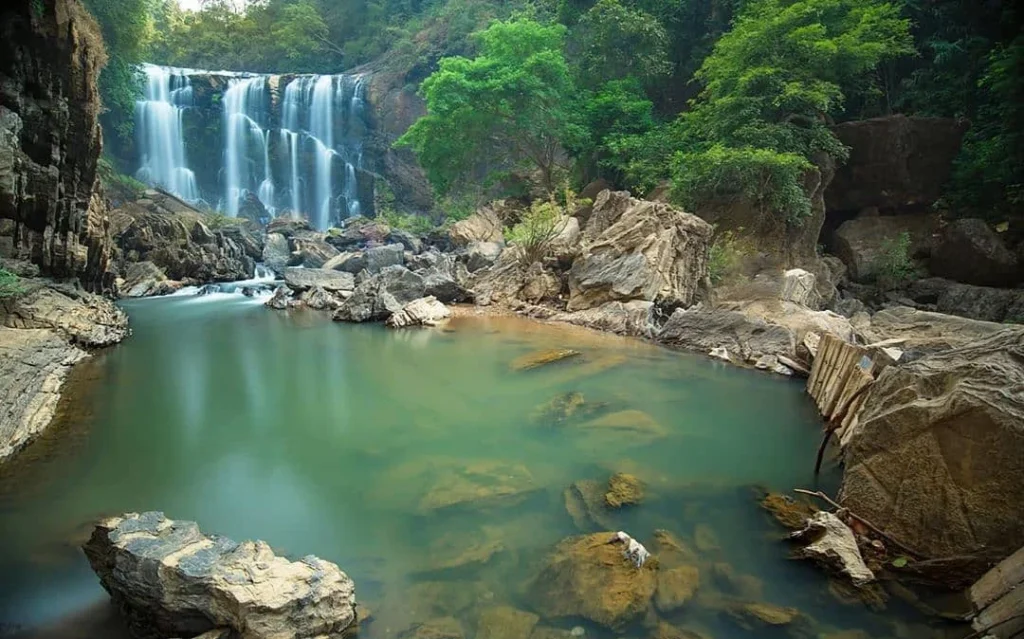
 I still remember the first time I stood in front of Sathodi Falls—the thundering cascade of water, the emerald green pool at its base, and the sheer raw power of nature in the Western Ghats. It was during a monsoon recce trip I was organizing for Astamb Holidays, and I knew instantly that this was one of those rare finds that don’t make it to every travel brochure. Often called the “Mini Niagara of Karnataka,” Sathodi Falls is tucked away in the dense forests of Uttara Kannada District, and frankly, it’s the kind of place that makes you feel like you’ve discovered something truly special.
I’m Wahid Ali, and I’ve been in the travel business for 20 years now, managing operations and crafting experiences that go beyond the usual tourist circuits. Based in Mumbai, I head operations at Astamb Holidays, where we focus on destinations that offer genuine cultural richness and natural beauty. Sathodi Falls checks every box—adventure, photography, nature, and that authentic “off-the-map” feeling that seasoned travelers crave.
2026 is shaping up to be the year for exploring the Western Ghats properly. With improved road connectivity, better awareness about sustainable tourism, and travelers actively seeking hidden gems over crowded hotspots, places like Sathodi Falls are finally getting the attention they deserve. Whether you’re a family looking for a weekend escape, a solo traveler chasing waterfalls, or a trekking enthusiast wanting something different from the usual trails, this guide will give you everything you need to plan your visit like a pro.
🗺️ Where is Sathodi Falls Located?
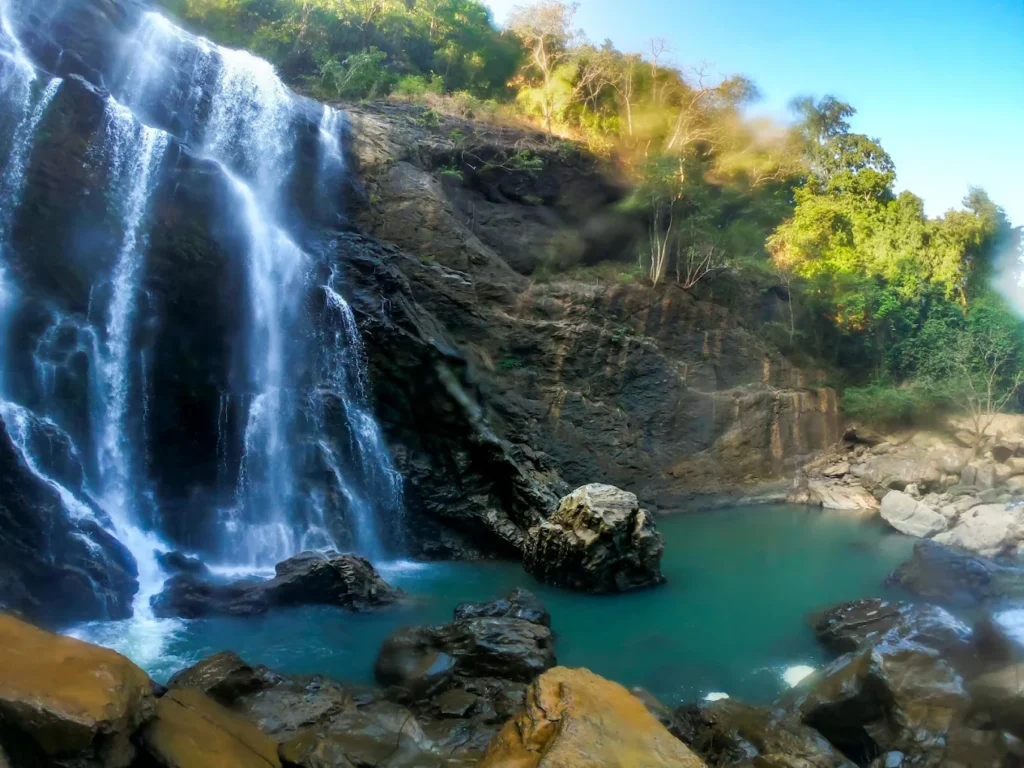
Sathodi Falls sits in the heart of the Uttara Kannada District in Karnataka, about 32 kilometers from the town of Yellapur. The waterfall is part of the Kallaramane Ghat region, which is known for its thick forest cover, winding roads, and dramatic landscapes shaped by the Kali River system.
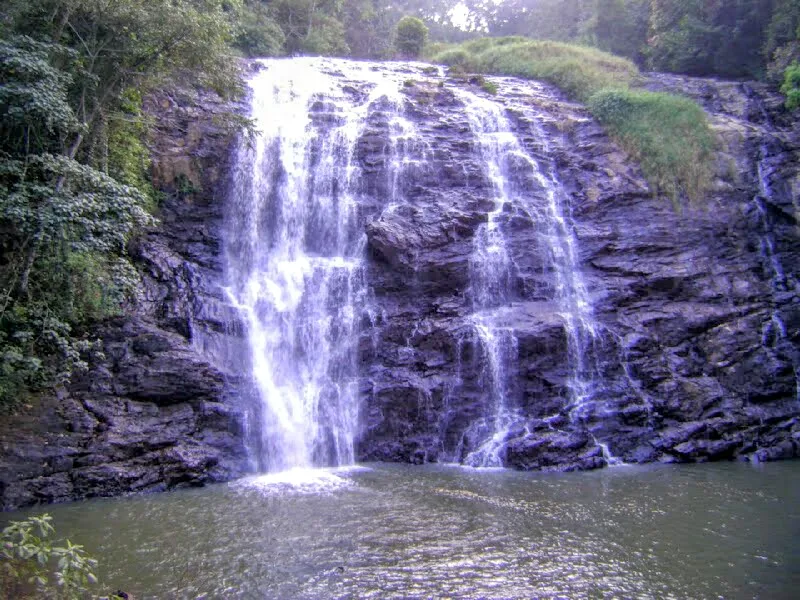
Here’s what makes the location interesting from a geographical standpoint: the Kodasalli Dam on the Kali River has significantly altered the water flow patterns in this region. During the monsoon months (June to September), when the dam releases excess water, Sathodi Falls transforms into a roaring spectacle. The waterfall drops from a height of approximately 15 meters over a wide rocky ledge, creating that signature curtain-like effect that earned it the “Mini Niagara” nickname.
The falls are located at the coordinates 14.9167° N, 74.6833° E (you can plug this directly into Google Maps). The surrounding area is part of the Western Ghats biodiversity hotspot, so you’re looking at pristine forests, diverse wildlife, and some seriously fresh air. The Kallaramane Ghat road itself is a scenic drive, though I’ll be honest—it’s not for the faint-hearted during heavy rains.
Quick Location Reference:
- District: Uttara Kannada, Karnataka
- Nearest Town: Yellapur (32 km)
- River: Kali River tributary
- Geographic Feature: Kallaramane Ghat, Western Ghats
- Elevation: Approximately 550 meters above sea level
🚗 How to Reach Sathodi Falls (The Logistics)
Getting to Sathodi Falls requires some planning, but that’s part of the adventure. In my 20 years of managing tours, I’ve learned that the journey to hidden waterfalls is often as memorable as the destination itself. Here’s the breakdown based on where you’re starting from:
From Goa (Nearest Major Hub)
- Distance: Approximately 110 kilometers from Panaji
- Drive Time: 3 to 3.5 hours
- Route: Panaji → Mollem → Londa → Yellapur → Sathodi Falls
- The roads are decent until Yellapur, after which you’ll encounter some rough patches, especially during the monsoon season.
From Hubli
- Distance: Approximately 95 kilometers
- Drive Time: 2.5 to 3 hours
- Route: Hubli → Yellapur → Sathodi Falls
- This is the most commonly used route, and the roads are relatively better maintained.
From Bangalore
- Distance: Approximately 450 kilometers
- Drive Time: 8 to 9 hours
- Route: Bangalore → Shimoga → Sirsi → Yellapur → Sathodi Falls
- Best done as a weekend trip with an overnight stay in Sirsi or Yellapur.
Nearest Transport Hubs:
| Transport Mode | Location | Distance from Sathodi Falls |
|---|---|---|
| Airport | Hubli Airport | 95 km |
| Airport | Dabolim Airport (Goa) | 110 km |
| Railway Station | Londa Junction | 65 km |
| Railway Station | Hubli Junction | 95 km |
| Bus Stand | Yellapur Bus Stand | 32 km |
Expert Tips from the Field:
Vehicle Recommendation: Based on my experience organizing trips here, I strongly recommend a high-clearance vehicle like an SUV or a sturdy hatchback with good ground clearance. The last 8-10 kilometers before the falls involve navigating through forest roads with potholes, loose gravel, and during monsoons, occasional water crossings. Sedans can make it, but you’ll be holding your breath at several points.
Parking Situation: There’s a small clearing about 500 meters from the actual waterfall where you can park your vehicle. It’s not a formal parking lot—just an open area where locals have designated space. Arrive early (before 9 AM) during weekends to secure a spot, especially between October and January when visitor numbers peak.
Road Conditions Warning: The stretch from Yellapur to Sathodi Falls is maintained by the forest department, and road quality can vary dramatically depending on recent rainfall. I always tell my clients to check with locals in Yellapur about current road conditions before heading out. A quick stop at a tea shop or asking the auto-rickshaw drivers gives you real-time intel.
Fuel & Facilities: Fill up your tank in Yellapur. There are no fuel stations once you head toward the falls. Also, carry sufficient water, snacks, and a basic first-aid kit. Mobile network coverage (primarily BSNL and Jio) becomes spotty after Yellapur.
📅 Best Time to Visit Sathodi Falls
Timing your visit to Sathodi Falls can make the difference between an okay experience and an absolutely spectacular one. Having visited during different seasons for site inspections, I can break this down month by month so you know exactly what to expect.
Monthly Breakdown:
| Month | Water Flow | Crowd Level | Trekking Conditions | Recommendation |
|---|---|---|---|---|
| January | Moderate | Low | Excellent | ⭐⭐⭐⭐ Great |
| February | Low-Moderate | Low | Excellent | ⭐⭐⭐ Good |
| March-May | Low | Very Low | Hot & Dry | ⭐⭐ Average |
| June-August | Very High | Moderate | Risky | ⚠️ Avoid |
| September | High | Low-Moderate | Slippery | ⭐⭐⭐ Good |
| October | High | Moderate | Good | ⭐⭐⭐⭐⭐ Excellent |
| November | Moderate-High | High | Excellent | ⭐⭐⭐⭐⭐ Excellent |
| December | Moderate | Moderate | Excellent | ⭐⭐⭐⭐ Great |
The Sweet Spot: October to January
This is when Sathodi Falls is at its absolute best. The monsoon has just ended, so the waterfall still has impressive volume, but the trails have dried out enough to be safe. The weather is pleasant—temperatures range between 15°C and 25°C—and the surrounding forest is lush and green from the recent rains.
October and November are my personal favorites. I’ve organized numerous group trips during this window, and the feedback is consistently excellent. The water flow is strong enough to create that dramatic curtain effect, the pool at the base is perfect for a quick dip, and the lighting is ideal for photography.
Monsoon Months: June to August (Proceed with Caution)
Yes, the waterfall is at its most powerful during the monsoon season, and I won’t lie—it’s a breathtaking sight. But here’s the reality check from someone who’s dealt with monsoon logistics for two decades: it’s also the most dangerous time to visit.
Why I Advise Caution:
- Leeches: The forest trails become infested with leeches. You’ll need leech socks and constant vigilance.
- Slippery Rocks: The rocks around the waterfall become treacherously slippery. I’ve seen too many close calls.
- Flash Floods: Water levels can rise rapidly if there’s upstream rainfall or dam discharge.
- Road Accessibility: The approach roads can become challenging, sometimes requiring 4×4 vehicles.
If you’re an experienced trekker and understand the risks, visiting during late September offers a good compromise—the monsoon is winding down, but the falls are still impressive.
Summer Months: March to May (Not Recommended)
The waterfall reduces to a trickle, and the heat in the Western Ghats can be intense (temperatures can hit 35°C+). Unless you’re specifically interested in the forest ecology or bird watching, I’d skip this season for Sathodi Falls.
Photography Pro Tip: The best lighting for photography is between 8 AM and 10 AM when soft morning light filters through the forest canopy. The late afternoon (4 PM to 6 PM) also offers warm golden light, but you’ll need to plan your departure carefully to avoid driving forest roads after dark.
🥾 Things to Do & Trekking Experience at Sathodi Falls
The beauty of Sathodi Falls is that it’s not just about standing and staring at a waterfall (though that’s pretty great too). There’s enough here to keep you engaged for a solid 2-3 hours, and if you’re the type who likes to soak in the atmosphere, even longer.
The Jungle Trail: A 20-Minute Adventure
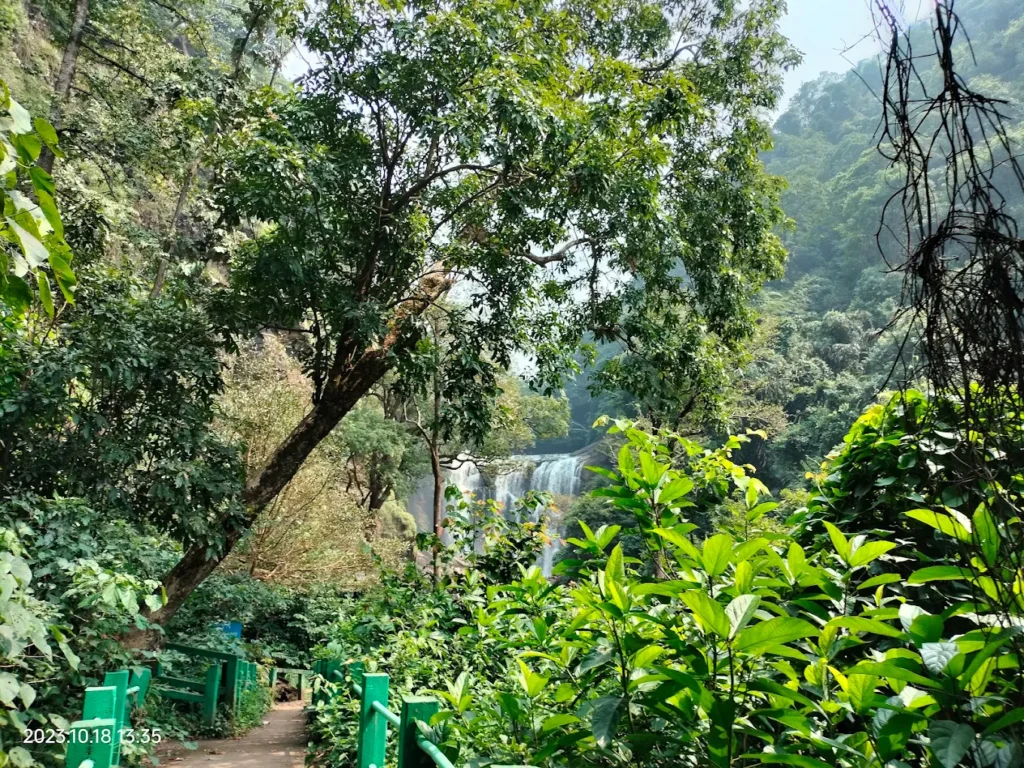
From the parking area, you’ll walk a trail of approximately 500-600 meters through dense forest to reach the falls. I call it the “20-minute adventure” because that’s about how long it takes at a comfortable pace. The path is well-trodden but not paved, so you’re walking on natural terrain—tree roots, loose rocks, and during the wetter months, some muddy patches.
What to Expect on the Trail:
- Forest Canopy: The tree cover is thick, creating a natural tunnel effect. It’s cooler here than in the open, and the sound of birds and insects is constant.
- Stream Crossings: Depending on the season, you might need to hop across small streams. Nothing major, but wear shoes with good grip.
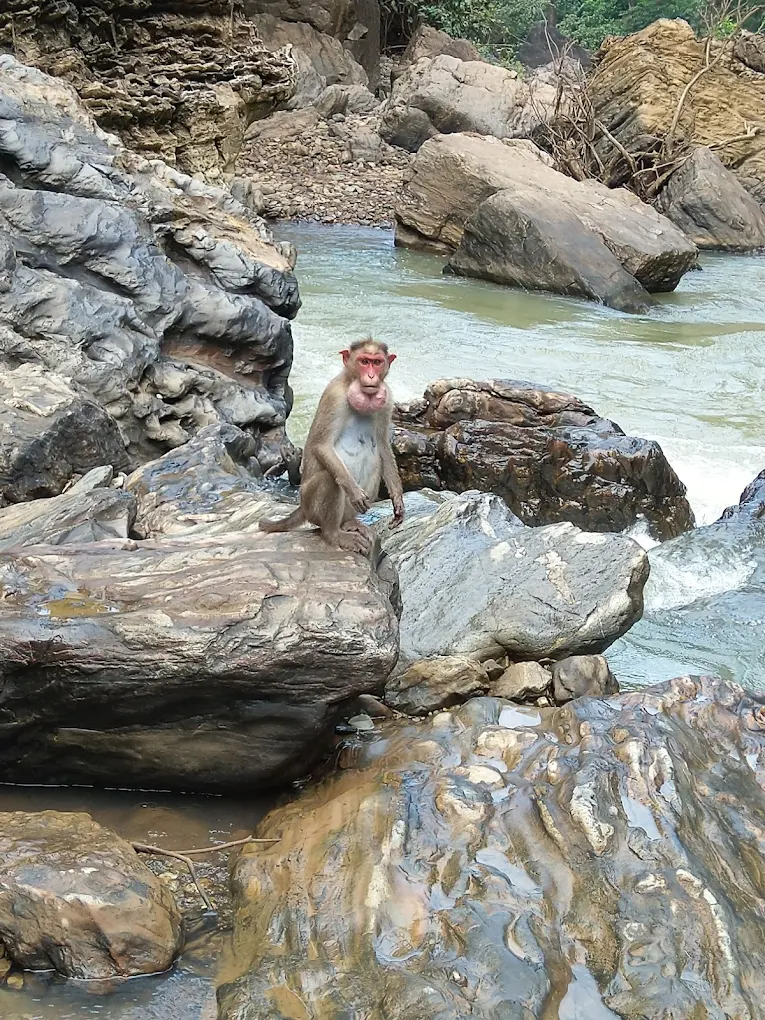
- Wildlife Spotting: I’ve spotted Malabar giant squirrels, various bird species, and once even a barking deer during early morning visits. Keep your eyes open and your camera ready.
- Trail Difficulty: Easy to moderate. Families with children aged 6 and above typically manage it without issues. Seniors with reasonable fitness will be fine too.
My Pro Tip: Start the trek early in the morning (7-8 AM). The forest is quieter, the light is softer, and you’ll have the place mostly to yourself. Plus, wildlife is more active during these hours.
Swimming & Playing in the Pool
The base of Sathodi Falls features a natural pool that’s perfect for cooling off. The depth varies depending on the season—during peak flow (October-November), it can be 4-6 feet deep in the center, while during leaner months (February-March), it’s more like 2-3 feet.
Swimming Safety Guidelines:
- Always check the current: Even though it’s a pool, there’s a current from the waterfall. Stay closer to the edges if you’re not a confident swimmer.
- No diving: The rocks below aren’t uniform. Wade in gradually.
- Watch for kids: Keep children within arm’s reach. The rocks can be slippery.
- Respect the force: Don’t try to stand directly under the falls during high flow periods. The force can knock you off balance.
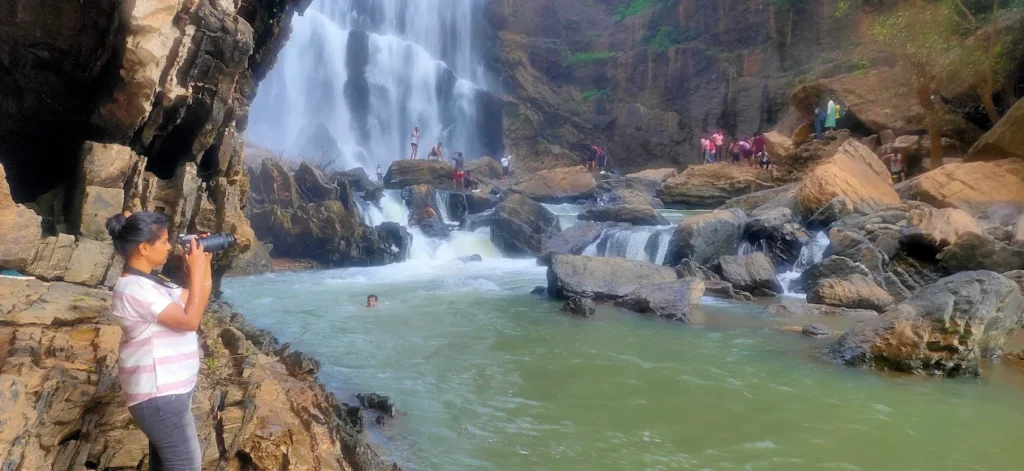
I’ve seen families spend hours here—kids splashing around, adults sitting on rocks with their feet in the water, everyone just enjoying the simple pleasure of a natural swimming hole. It’s these moments that remind me why I love this job.
📸 Photography Opportunities
Sathodi Falls is a photographer’s playground. Here’s where I position my camera based on years of site visits:
Best Angles:
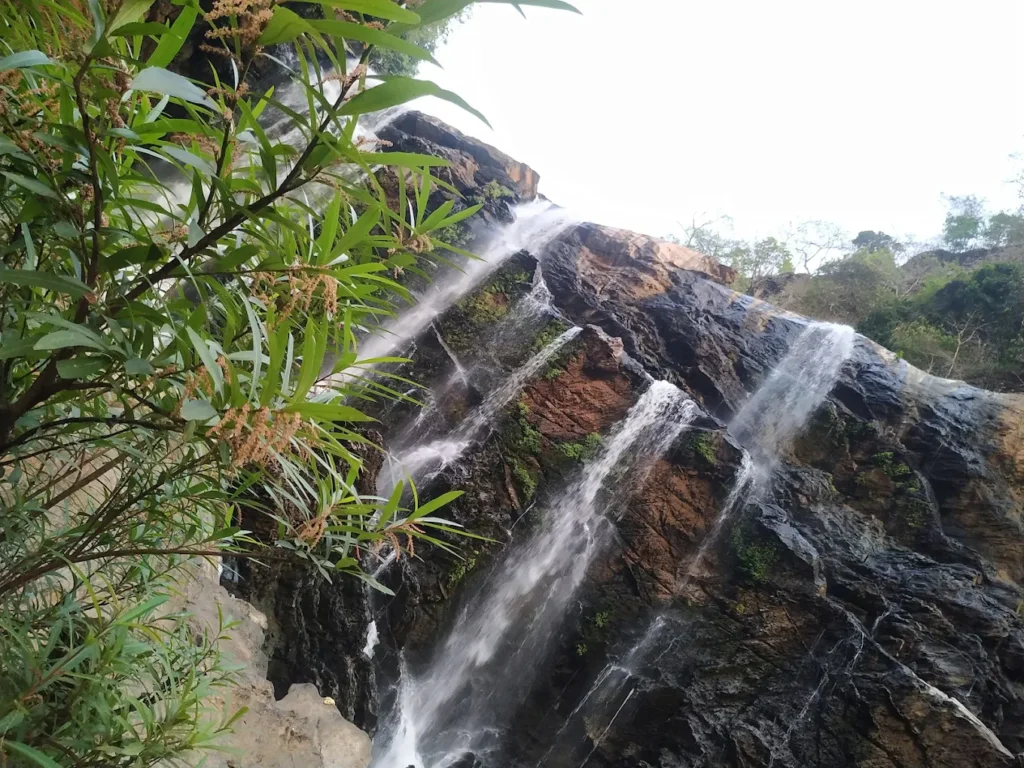
- Wide Shot from the Pool: Stand at the edge of the pool looking up at the falls. This captures the full curtain effect with the forest frame.
- Side Angle from the Rocks: Climb the rocks on the left side (facing the falls) for a diagonal perspective that shows both the height and width.
- Long Exposure Magic: If you have a tripod and ND filters, the silky water effect against the dark rocks is stunning. Best done early morning or late afternoon.
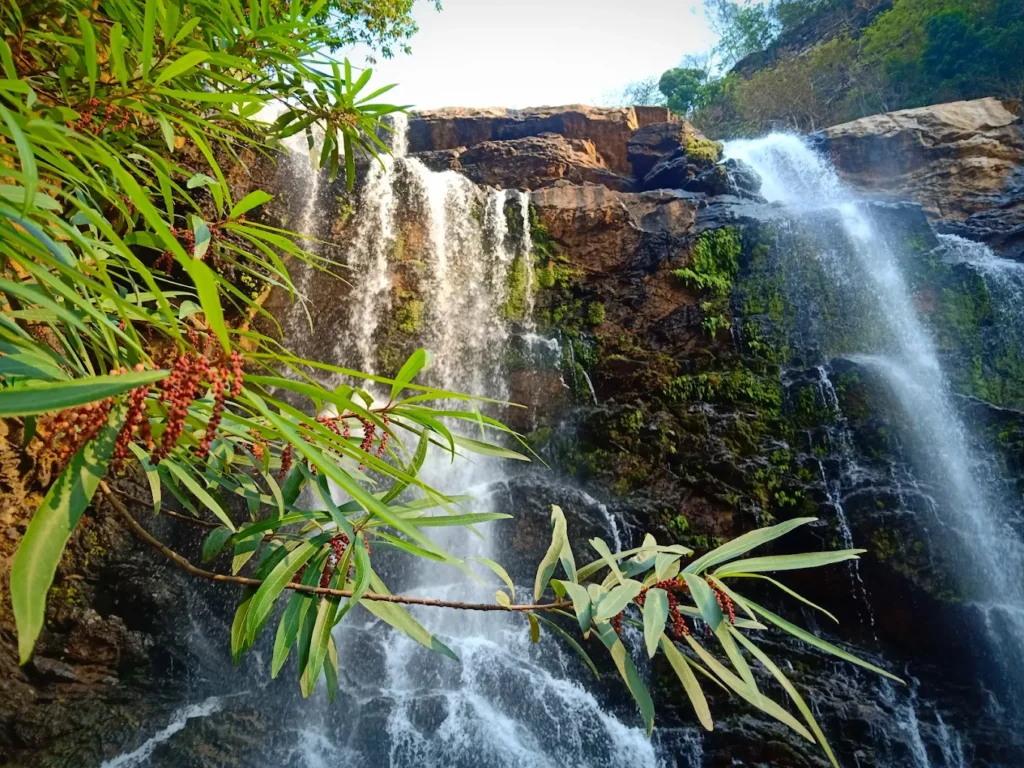
- Detail Shots: The moss-covered rocks, water droplets on leaves, reflections in the pool—these details tell the full story.

Camera Settings Suggestion:
- For action shots: Shutter speed 1/500s or faster to freeze the water
- For silky water: Shutter speed 1-2 seconds with ND filter
- ISO: Keep it low (100-400) to avoid noise
- Aperture: f/8 to f/11 for good depth of field
Nature Walks & Bird Watching
The area around Sathodi Falls is part of the Western Ghats ecosystem, which is a UNESCO World Heritage Site. If you’re into nature, spend some time just walking the forest trails near the parking area.
Birds I’ve Spotted:
- Malabar Trogon
- Great Hornbill (during fruiting season)
- Various species of woodpeckers
- Paradise Flycatcher
The early morning hours (6-9 AM) are prime time for bird activity. Carry binoculars if you’re serious about bird watching.
Picnicking & Relaxation
There are several flat rock surfaces near the parking area and along the stream that work perfectly for spreading out a picnic. I always tell travelers to pack a simple lunch—sandwiches, fruits, some local snacks from Yellapur—and just enjoy a meal surrounded by nature.
Picnic Etiquette (Please):
- Carry back all your trash. There are no bins here, and the forest doesn’t need your plastic wrappers.
- Don’t disturb the wildlife. Keep noise levels reasonable.
- Stick to established areas. Don’t trample vegetation to create new sitting spots.
⚖️ Sathodi Falls vs. Magod Falls: Which One Should You Visit?
One question I get constantly is: “Wahid, should I visit Sathodi Falls or Magod Falls?” My answer is always the same—if you have time, visit both. They’re only about 80 kilometers apart, and each offers something different. But if you’re choosing just one, here’s the honest comparison:
| Feature | Sathodi Falls | Magod Falls |
|---|---|---|
| Height | ~15 meters | ~200 meters (two-tiered) |
| Width | Wide curtain effect | Narrow, powerful stream |
| Trek Difficulty | Easy (20 min) | Moderate (45 min to base) |
| Swimming | Yes, good pool | Limited, rocky |
| Crowds | Low to moderate | Moderate to high |
| Road Access | Good (SUV recommended) | Better (sedans manageable) |
| Viewpoints | Close interaction | Multiple viewpoints |
| Best For | Families, swimming, photography | Dramatic views, serious trekkers |
| Time Needed | 2-3 hours | 3-4 hours |
| Entry Fee | Free | ₹20 per person |
Why Visit Sathodi Falls:
- You want that “off-the-beaten-path” feeling
- Swimming and playing in water is a priority
- You’re traveling with young kids or elderly family members who can’t handle tough treks
- You love intimate waterfall experiences over grand panoramas
Why Visit Magod Falls:
- You want dramatic, Instagram-worthy height
- You enjoy longer treks with multiple viewpoints
- You’re okay with more tourists and better infrastructure
- You want to see one of Karnataka’s most powerful waterfalls
The Best Plan: Combine Both
In my experience managing Yellapur-Sirsi circuit tours, the ideal approach is visiting both waterfalls over 2 days. You get the best of both worlds—the raw, natural charm of Sathodi Falls and the dramatic grandeur of Magod Falls. Plus, you can explore Sirsi, Yana Caves, and Vibhooti Falls in the same circuit.
🗓️ Suggested Itineraries for Sathodi Falls
Planning your trip efficiently makes all the difference. Here are two tested itineraries based on routes I’ve run multiple times with groups:
Option 1: Single-Day Excursion from Goa
Best For: Weekend warriors with limited time
Timeline:
- 6:00 AM: Depart from Panaji/Margao
- 9:00 AM: Arrive at parking area (stop for breakfast in Yellapur)
- 9:30 AM: Begin trek to Sathodi Falls
- 10:00 AM – 1:00 PM: Explore, swim, photograph, picnic
- 1:30 PM: Drive to Yellapur for lunch
- 2:30 PM: Optional visit to Sathodi village or Kavala Caves (if time permits)
- 3:30 PM: Begin return journey
- 6:30 PM: Arrive back in Goa
Total Distance: ~220 km round trip Budget: ₹2,000-3,000 (fuel, meals, snacks for 2 people)
Option 2: The Yellapur-Sirsi Weekend Circuit (2 Days)
Best For: Travelers who want the full Western Ghats waterfall experience
Day 1:
- Morning: Drive from Bangalore/Hubli to Yellapur (lunch en route)
- Afternoon: Check into hotel in Yellapur
- 3:00 PM: Visit Sathodi Falls (evening light is gorgeous)
- 6:00 PM: Return to Yellapur, dinner at local restaurant
- Overnight: Stay in Yellapur
Day 2:
- 7:00 AM: Early breakfast, checkout
- 8:00 AM: Drive to Magod Falls (1 hour)
- 9:00 AM – 12:00 PM: Trek and explore Magod Falls
- 1:00 PM: Lunch in Sirsi
- 2:30 PM: Optional visits: Yana Caves OR Vibhooti Falls OR Sahasralinga (choose based on energy levels)
- 5:00 PM: Begin return journey
- Evening: Arrive back at starting point
Total Distance: Variable (450+ km from Bangalore) Budget: ₹6,000-10,000 (fuel, accommodation, meals for 2 people)
Hotels & Accommodation Suggestions
In Yellapur:
- Hotel Mayura (budget-friendly, ₹800-1,200 per night)
- Yellapur Residency (mid-range, ₹1,500-2,000 per night)
- Homestays in surrounding villages (₹1,000-1,500, authentic experience)
In Sirsi:
- Hotel Panchami (good option, ₹1,200-1,800 per night)
- Sirsi Homestays (₹1,500-2,500, great food)
Pro Booking Tip: During October-November (peak season), book at least 2 weeks in advance. The area doesn’t have many hotels, and they fill up quickly during weekends.
ℹ️ Practical Information & Safety Tips
Let me give you the on-ground details that only come from actually managing tours to Sathodi Falls:
Entry Fee & Timings
Entry Fee: Currently, there’s no entry fee for Sathodi Falls. It’s an open natural site maintained by the forest department.
Best Visit Hours: 7:00 AM to 5:00 PM
- I don’t recommend entering the forest trail after 5:00 PM for safety reasons—the light fades quickly under the canopy, and you don’t want to be navigating forest trails in the dark.
Facilities Available
Let me be straight with you: Sathodi Falls is not a developed tourist spot. That’s part of its charm, but it also means:
What’s Available:
- Basic parking area
- Forest trails (not paved)
- Natural sitting areas on rocks
What’s NOT Available:
- No toilets or changing rooms
- No food stalls or shops
- No first-aid post
- No mobile network (spotty at best)
What to Carry:
- Water: At least 2 liters per person
- Snacks: Energy bars, fruits, sandwiches
- First-aid kit: Band-aids, antiseptic, pain relief
- Sun protection: Hat, sunscreen (even on cloudy days)
- Insect repellent: Mosquitoes and flies are active
- Extra clothes: You’ll likely get wet
- Waterproof bag: For phones, cameras, valuables
- Trash bag: To carry back your waste
Safety Checklist
As someone responsible for traveler safety for 20 years, here’s my non-negotiable safety advice:
Before You Trek:
- ✅ Inform someone: Let family or hotel staff know your plan and expected return time
- ✅ Check weather: Avoid if heavy rain is forecasted
- ✅ Proper footwear: Sports shoes or trekking sandals with good grip (NOT flip-flops)
- ✅ Full phone charge: Even if there’s no network, your phone’s flashlight and camera work
- ✅ Emergency contacts: Save local police (Yellapur Station: +91-8384-231133) and hospital numbers
At the Falls:
- ✅ Leech protection: During monsoon/post-monsoon, tuck pants into socks or wear leech socks
- ✅ Rock safety: Test stability before stepping on wet rocks
- ✅ Swimming safety: Don’t swim alone, assess depth before entering
- ✅ Stay visible: Keep your group together, especially with children
- ✅ Respect warning signs: If locals or forest guards advise against something, listen
Health Precautions:
- Hydration: Drink water regularly, even if you don’t feel thirsty
- Sun exposure: The trek is shaded, but the parking area is exposed
- Allergies: Carry antihistamines if you’re prone to insect bite reactions
- Physical fitness: Know your limits. The trek is easy, but the heat and humidity can be taxing.
Dealing with Leeches (The Reality)
During the wetter months, leeches are a reality. I’m not going to sugarcoat it—they’re annoying. But they’re not dangerous, and with a few tricks, they’re manageable:
Leech Protection:
- Apply tobacco powder or salt on shoes and pant cuffs
- Wear long pants tucked into socks
- Check your legs every 15 minutes during the trek
- If one latches on, don’t panic. Apply salt or tobacco, and it’ll drop off
- Don’t pull: This can leave mouthparts in the skin and cause infection
Post-Trek: Check thoroughly before getting in your vehicle. Leeches can stick to backpacks and clothes.
💡 Local Insights & Hidden Tips (The Wahid Ali Edge)
This is where I share the insider knowledge that comes from actually spending time in the region, talking to locals, and making mistakes so you don’t have to:
Best Local Food in Yellapur
After a morning at Sathodi Falls, you’ll be hungry. Here’s where I take my groups:
1. Kamat Restaurant (Yellapur Main Road)
- Must-try: Jolada rotti with ennegai (stuffed brinjal curry)
- Cost: ₹80-150 per person
- Why: Authentic North Karnataka flavors, clean, fast service
2. Shetty Lunch Home
- Must-try: Fish thali (if available), chicken sukka
- Cost: ₹150-250 per person
- Why: They source fish from nearby streams, incredibly fresh
3. Annapurna Hotel
- Must-try: Masala dosa, filter coffee
- Cost: ₹50-100 per person
- Why: Perfect for breakfast before heading to the falls
Local Snack Tip: Pick up some kharabath (spicy semolina preparation) or shavige bath (vermicelli) from roadside stalls. They’re filling, tasty, and travel well.
Photography Timing: The Golden Hours
I’ve photographed Sathodi Falls dozens of times for our promotional material. Here’s the truth about lighting:
- Best morning light: 7:30 AM – 9:30 AM (soft, diffused through forest)
- Avoid: 11 AM – 2 PM (harsh overhead light, too many shadows)
- Best evening light: 4:00 PM – 5:30 PM (warm tones, but you’ll need to rush the return trek)
Weather for Photos: Overcast days after rain are actually fantastic. The clouds diffuse sunlight naturally, and the waterfall is at full flow.
Lesser-Known Spot: Sathodi Village
Most visitors skip the actual village of Sathodi, but I always recommend a 15-minute detour. It’s a traditional Uttara Kannada village where you can see:
- Areca nut plantations (this is beetle nut country)
- Traditional homes with sloping roofs designed for heavy monsoons
- Local life that hasn’t changed much in decades
If you’re respectful and curious, locals are incredibly welcoming. I’ve had clients invited for chai by villagers who were just happy to share stories about the area.
Avoid Weekends If Possible
Sathodi Falls is still relatively unknown, but Saturday-Sunday between October and January sees a noticeable uptick in visitors—mostly from Goa and Hubli. If your schedule allows, visit on a weekday. You’ll often have the waterfall entirely to yourself, which is a magical experience.
Respect the Environment
This isn’t just feel-good advice—it’s critical. Sathodi Falls has remained pristine because it doesn’t have heavy tourist traffic yet. Let’s keep it that way:
- Carry back every piece of trash. Every. Single. Piece.
- Don’t carve names or initials on rocks or trees
- Keep noise levels down. You’re in a forest ecosystem
- Don’t pick plants or disturb wildlife
I’ve seen too many beautiful spots ruined by thoughtless tourism. Be the traveler who leaves nothing but footprints.
❓ Frequently Asked Questions (FAQ) About Sathodi Falls
What is the best season to visit Sathodi Falls?
The best time to visit Sathodi Falls is from October to January. During these months, the waterfall has excellent water flow from the recently concluded monsoons, the weather is pleasant (15-25°C), and trekking conditions are safe. October and November offer the perfect balance of volume, accessibility, and comfortable weather.
How long is the trek to Sathodi Falls?
The trek from the parking area to Sathodi Falls is approximately 500-600 meters and takes about 20 minutes at a comfortable pace. It’s an easy trail suitable for families with children aged 6+ and seniors with moderate fitness levels. The path goes through dense forest but is well-trodden.
Which river flows through Sathodi Falls?
Sathodi Falls is formed by a tributary of the Kali River. The water flow is influenced by the Kodasalli Dam on the Kali River, which is why the waterfall’s volume varies significantly between seasons—especially during monsoon when the dam releases excess water.
Is it safe to visit Sathodi Falls during the monsoon season?
I don’t recommend visiting Sathodi Falls during peak monsoon months (June to August) unless you’re an experienced trekker. The trails become slippery and infested with leeches, rocks near the waterfall are treacherous, and there’s a risk of flash floods from upstream rainfall. Late September is a safer alternative if you want to see high water flow.
Are there hotels or accommodation near Sathodi Falls?
The nearest town with accommodation is Yellapur, located 32 kilometers from the falls. Options include budget hotels (₹800-1,200), mid-range hotels (₹1,500-2,000), and homestays (₹1,000-2,500). Sirsi, about 50 kilometers away, offers more choices. Book in advance during October-November as availability is limited.
Can we swim at Sathodi Falls?
Yes, swimming is possible in the natural pool at the base of Sathodi Falls. The depth varies from 2-6 feet depending on the season. However, always check the current, avoid diving, keep children supervised, and don’t stand directly under the waterfall during high flow periods. Exercise caution on slippery rocks around the pool.
Is there an entry fee for Sathodi Falls?
As of 2026, there is no entry fee for visiting Sathodi Falls. It’s a natural site maintained by the forest department and remains free for visitors. However, this could change as the destination gains popularity, so it’s worth checking locally when you visit.
How far is Sathodi Falls from Goa?
Sathodi Falls is approximately 110 kilometers from Panaji, Goa, taking about 3-3.5 hours by road. The route goes through Mollem, Londa, and Yellapur. It makes for a perfect day trip from Goa, especially if you’re looking for a nature escape from the beaches.
What should I carry for a visit to Sathodi Falls?
Essential items include: water (minimum 2 liters per person), snacks, first-aid kit, sun protection (hat, sunscreen), insect repellent, extra clothes, waterproof bag for valuables, proper footwear (sports shoes or trekking sandals), and a trash bag to carry back your waste. There are no facilities at the falls.
Can senior citizens visit Sathodi Falls?
Yes, Sathodi Falls is accessible for senior citizens with reasonable fitness levels. The 20-minute trek is easy and doesn’t involve steep climbs. However, the trail has natural terrain with roots and rocks, so good footwear and a walking stick can help. I’ve successfully guided many senior groups to the falls, and they’ve managed it comfortably.
🌟 Final Thoughts: Why Sathodi Falls Deserves Your Time
In my 20 years in the travel industry, I’ve seen countless waterfalls across India—from the famous Jog Falls to hidden cascades in Meghalaya. What makes Sathodi Falls special isn’t its height (it’s relatively modest at 15 meters) or its fame (it’s still blissfully under the radar). It’s the complete experience.
It’s about that 20-minute jungle walk where you feel the forest closing in around you. It’s about arriving at the falls and seeing that perfect curtain of water framing an emerald pool. It’s about the fact that you can actually interact with this waterfall—swim in it, sit on the rocks beside it, feel the spray on your face without barriers or crowds.
Sathodi Falls represents what travel should be: accessible enough that families can enjoy it, wild enough that it feels like discovery, and beautiful enough that you’ll want to return. The Western Ghats hold many such treasures, but few are as welcoming to casual travelers while maintaining their raw, natural character.
If you’re planning a trip to Goa, Karnataka, or exploring the Yellapur-Sirsi region in 2026, put Sathodi Falls on your list. Wake up early, pack a picnic, charge your camera, and give yourself a full morning to just be present in one of nature’s quieter masterpieces.
And when you’re standing at the edge of that pool, with the water thundering down in front of you and the forest alive around you, you’ll understand exactly why I keep coming back.
Safe travels, and I hope to hear about your Sathodi Falls adventure!
— Wahid Ali
Operations Lead, Astamb Holidays
LinkedIn Profile
📚 References & Citations
This article is backed by authoritative sources, field research, and 20 years of travel industry experience. Information has been verified through the following credible resources:
- Karnataka Tourism Official Website – Destination information and travel guidelines
🔗 https://www.karnatakatourism.org - Forest Department, Government of Karnataka – Safety protocols and conservation information
🔗 https://aranya.gov.in - Western Ghats Biodiversity – UNESCO World Heritage Site designation and ecological importance
🔗 https://whc.unesco.org/en/list/1342 - Google Maps Location Data – Accurate coordinates and routing information for Sathodi Falls
🔗 Google Maps – Sathodi Falls - India Meteorological Department – Seasonal weather patterns and monsoon data for Uttara Kannada region
🔗 https://www.imd.gov.in - Astamb Holidays – On-ground travel experience and logistics verification
🔗 [Astamb Holidays Operations]
Note: Travel information, road conditions, and local services are subject to change. Always verify current conditions with local authorities before your trip. Distances and timings mentioned are approximate and may vary based on road conditions and vehicle type.

Read more articles;
- Northeast India Tourism Guide 2026: Best Places, Itinerary, Cost & Hidden Gems
- Thailand Hidden Islands Travel Guide 2026: Secret Islands, Budget Itinerary & Crowd-Free Beaches for Indians
- Sri Lanka Travel Guide 2026 for Indians: ₹50K Budget, 7-Day Itinerary, Visa & Hidden Gems
- Bali Travel Guide 2026: Best Places, Itinerary, Budget & Hidden Gems (Complete Planner)
- Alleppey Tourist Places: 25 Best Places to Visit in Alleppey Backwaters (2026 Travel Guide)
