Picture this: you’re standing in a landscape that feels like Mars decided to host an African wildlife show. The ground beneath your feet is 260 million years old, ancient rock art covers canyon walls, and somewhere in the distance, a family of elephants navigates the desert like they own the place (spoiler: they do). Welcome to Damaraland, where nature wrote its most dramatic script and forgot to add any other tourists to the scene.
If you’re wondering what to do in Damaraland, you’ve landed in the right corner of the internet. This isn’t your standard safari destination with paved roads and gift shops. Damaraland is raw, remote, and ridiculously beautiful—a place where geological wonders meet prehistoric art and wildlife that shouldn’t survive here somehow thrives.
Located in Namibia’s rugged Kunene Region, Damaraland stretches across roughly 42,000 square kilometers of rock formations, dry riverbeds, and stark desert beauty. This isn’t a place you’ll stumble upon by accident. It takes effort to reach, but that’s exactly what keeps it special. You won’t find safari traffic jams here—just you, the landscape, and animals that adapted to survive where others couldn’t.
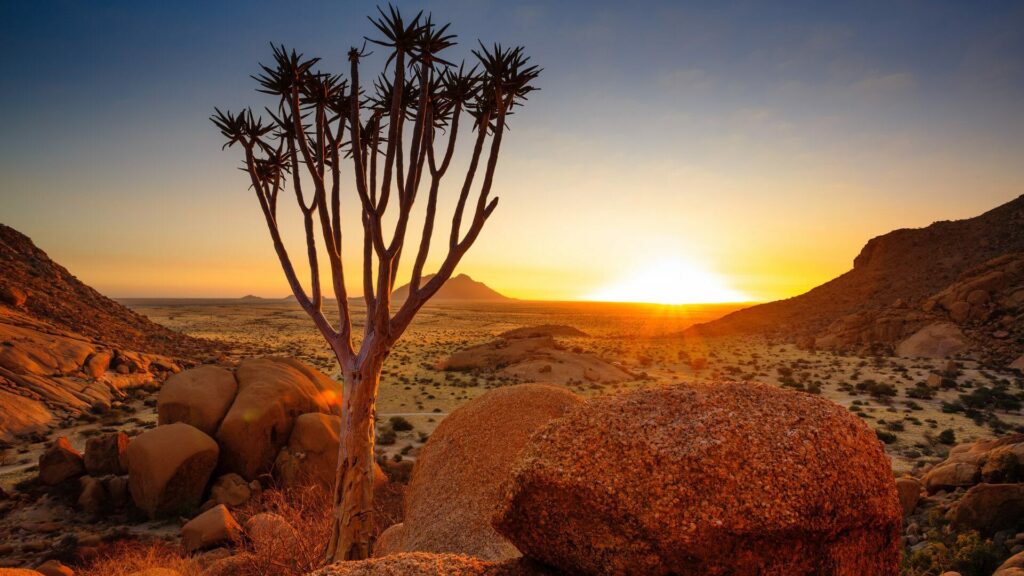
This guide breaks down everything you need to know: the ancient rock engravings that’ll make you rethink human history, the wildlife that defies desert logic, the geological formations that look computer-generated but are entirely natural, and the practical stuff like when to visit and whether you actually need that 4×4 everyone keeps talking about.
Quick Reference: Damaraland Travel Essentials
| Essential Info | Details |
| Location | Kunene Region, northwestern Namibia |
| Best Time to Visit | May to October (dry season) |
| Must-See Attractions | Twyfelfontein rock art, desert elephants, Brandberg Mountain |
| Wildlife Highlights | Desert-adapted elephants, black rhino, oryx, mountain zebra |
| Recommended Duration | 3-4 days for full experience |
| Getting There | Self-drive from Windhoek (5-6 hours) or fly to Palmwag |
| Vehicle Needed | 4×4 recommended for most areas |
| Accommodation Types | Eco-lodges, tented camps, camping sites |
| Average Daily Budget | $80-250 USD (mid-range) |
| Terrain Type | Rocky desert, gravel roads, mountain passes |
Best Time to Visit & How to Reach Damaraland
Timing can make or break your Damaraland adventure, and getting there requires a bit more planning than booking a flight to a beach resort.
When Should You Go?
The best time to visit Damaraland runs from May through October during Namibia’s dry season. Here’s why these months work so well:
Dry Season (May-October): Temperatures hover between 20-25°C (68-77°F) during the day, dropping to 5-10°C (41-50°F) at night. Wildlife congregates around permanent water sources, making animal spotting significantly easier. The roads are in better condition, and you won’t need to worry about flash floods blocking your route. According to the Namibia Tourism Board, this period sees the clearest skies for stargazing—a legitimate highlight in this low-light-pollution zone.
Green Season (November-April): Summer brings occasional rains, temperatures climbing to 35°C (95°F), and vegetation that transforms the landscape into something greener but less Mars-like. Wildlife disperses as water becomes available everywhere. Roads can become challenging, sometimes impassable. However, if you’re a photographer chasing dramatic storm clouds over red rocks, this season delivers.
January through March is particularly hot and humid. Unless you enjoy feeling like you’re hiking inside a hair dryer, save these months for somewhere with air conditioning.
Getting to Damaraland
By Air: Fly into Windhoek’s Hosea Kutako International Airport. From there, you can take a chartered flight to smaller airstrips near Palmwag or Damaraland Camp (if your accommodation arranges it), or drive. Some visitors fly into Walvis Bay and drive north.
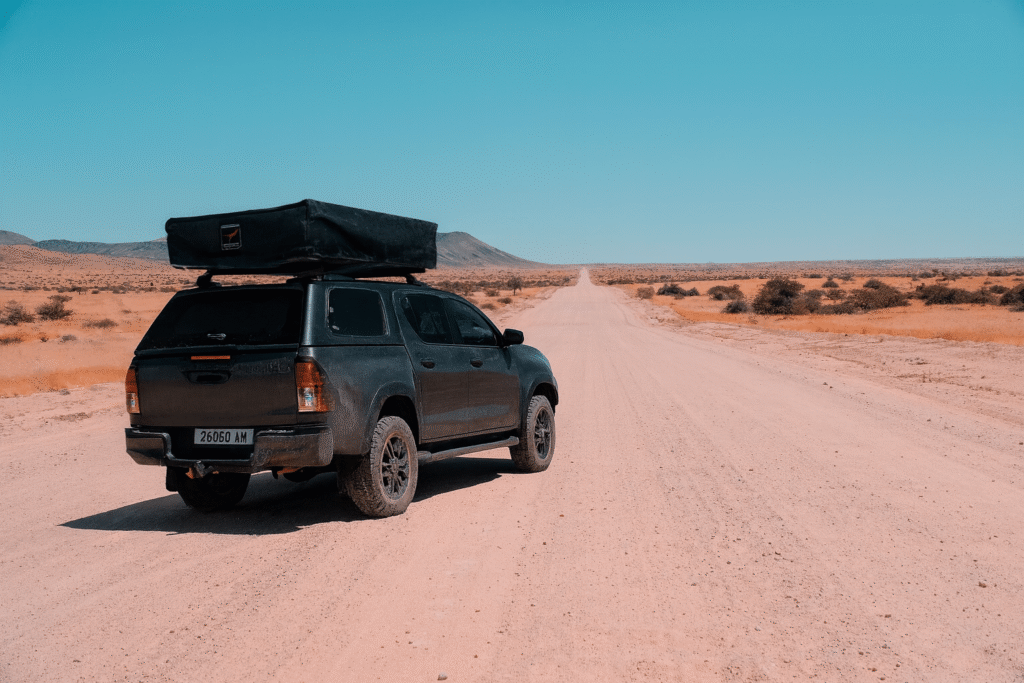
By Road: Most people self-drive from Windhoek, which takes 5-6 hours covering roughly 350-400 kilometers depending on your exact destination. The C39 and C43 gravel roads are your main arteries through the region. These aren’t highways—expect washboard surfaces, occasional sharp rocks, and the need to drop your speed significantly.
Vehicle Requirements: Here’s the honest answer about the 4×4 question: you can reach some main attractions like Twyfelfontein with a high-clearance 2WD sedan, but a 4×4 opens up significantly more territory. For wildlife tracking, visiting the Petrified Forest, or accessing remote camps, you’ll want four-wheel drive. Rental costs in Namibia run $50-120 USD daily for 4x4s depending on the season and vehicle type.
Guided Tours vs Self-Drive: Self-driving gives you freedom and flexibility. Guided tours provide expert wildlife tracking and cultural context you’d otherwise miss. Companies like Wilderness Safaris and Natural Selection operate excellent guided experiences through the region. Budget $300-500 USD per person daily for full-service guided tours.
🎨 Top Must-See Attractions: Rock Art & Geological Wonders
Damaraland’s attractions read like someone challenged nature to show off. Between UNESCO World Heritage rock art and geological formations that science teachers use as textbook examples, you’ll need more memory cards than you packed.
Twyfelfontein Rock Engravings
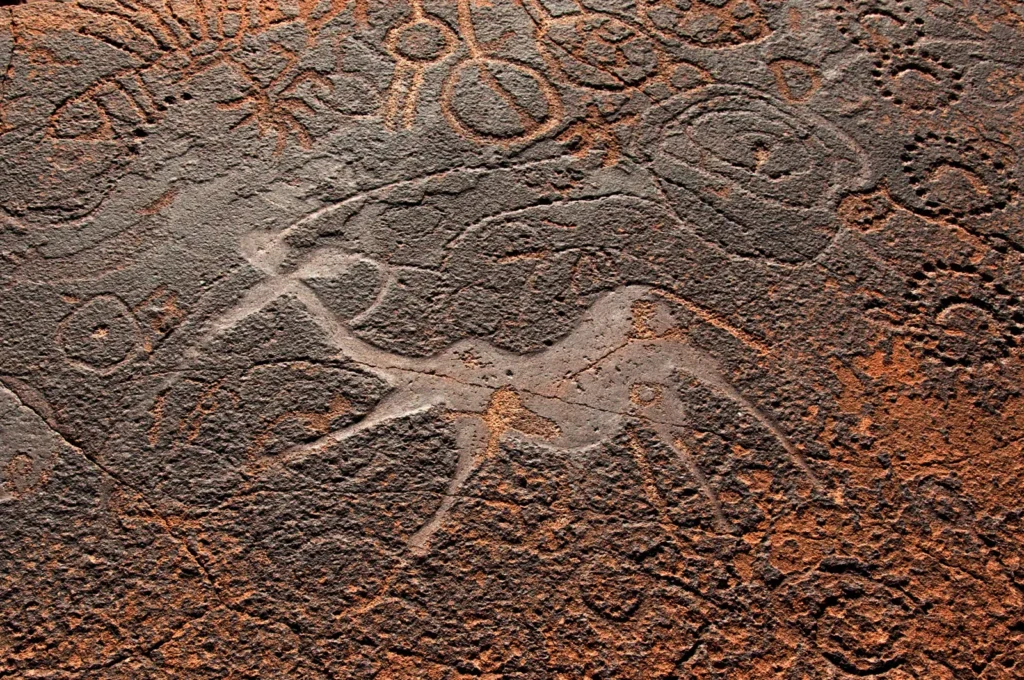
Twyfelfontein holds Africa’s largest concentration of rock petroglyphs and paintings, with over 2,500 individual works created by San hunter-gatherers roughly 6,000 years ago. UNESCO declared it a World Heritage Site in 2007, and standing among these ancient artworks feels like reading humanity’s first travel blog.
The engravings cover hunting scenes, animal tracks, and geometric patterns etched into sandstone slabs. You’ll spot giraffes, elephants, ostriches, and the famous “swimming lion”—though why ancient artists depicted a lion swimming in a desert remains delightfully mysterious.
Visiting Tips: You must join a guided walk (required by law to protect the site). Tours cost approximately $10-15 USD per person and last 45-60 minutes. Mornings before 10 AM offer the best light for photography and cooler temperatures. The site has basic facilities but no restaurant, so bring water and snacks.
Brandberg Mountain & The White Lady Painting
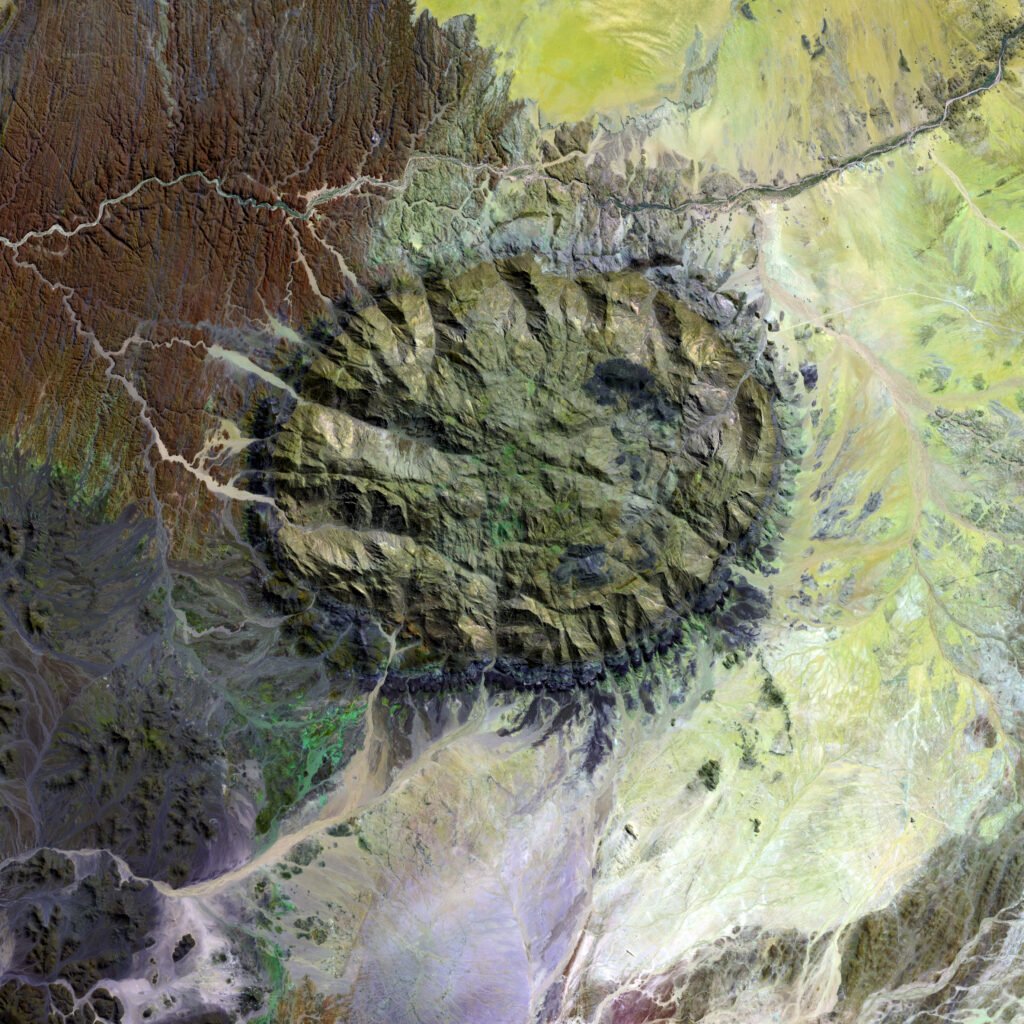
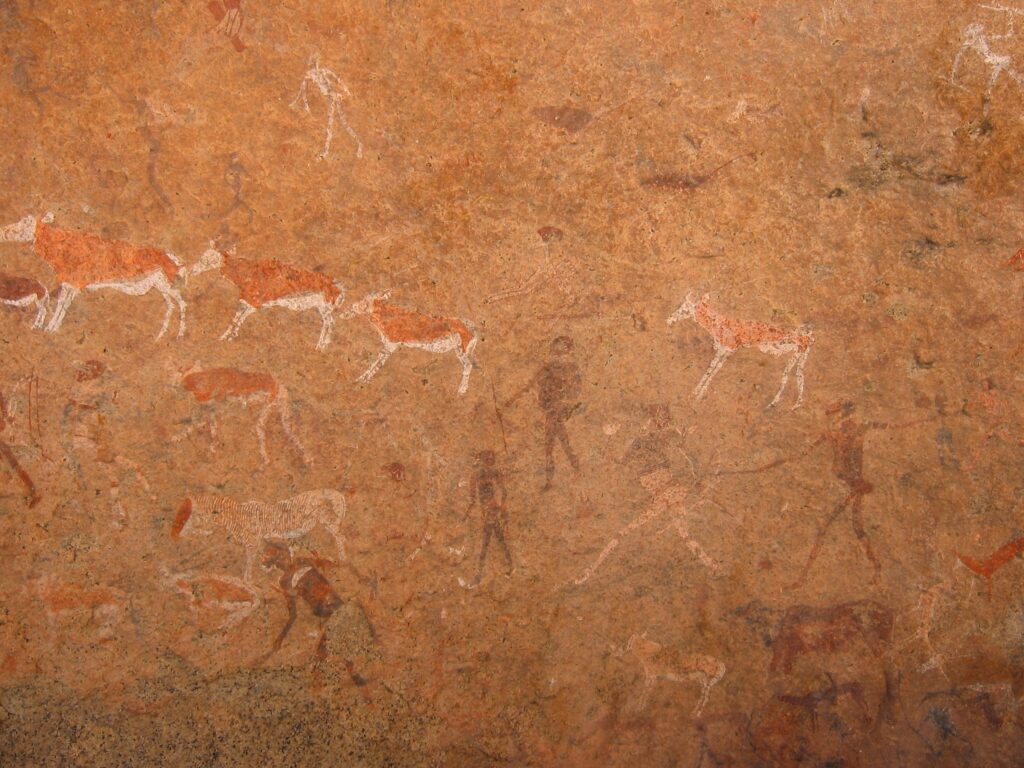
Brandberg Massif rises 2,573 meters above sea level, making it Namibia’s highest peak. The granite mountain glows orange-red at sunrise—hence “Brandberg” (Fire Mountain). Hidden in a gorge on its slopes sits the famous White Lady rock painting, discovered in 1918 by German surveyor Reinhard Maack.
Despite the name, the figure probably isn’t female or white—it’s likely a San shaman painted with white clay as part of a ceremonial scene. The painting dates back roughly 2,000 years and remains remarkably well-preserved thanks to the overhang protecting it from direct weather.
Getting There: Access requires a 45-minute hike from the parking area. The trail follows the Tsisab Gorge and involves some boulder scrambling. Hire a local guide at the trailhead (around $10-15 USD)—they’re required and provide valuable context about the paintings and surrounding landscape. According to South African History Online, over 43,000 rock art sites exist across southern Africa, but few remain as accessible and impressive as Brandberg’s collection.
Geological Wonderland: Ancient Landscapes Frozen in Time
Petrified Forest: These aren’t trees that got scared—they’re 260-million-year-old tree trunks turned to stone through mineralization. When ancient conifers fell, volcanic activity and mineral-rich water transformed their organic material into solid rock. The largest specimens measure over 30 meters long and 6 meters in circumference. You need a local guide to visit (approximately $10 USD per person), as the area sits on communal land.
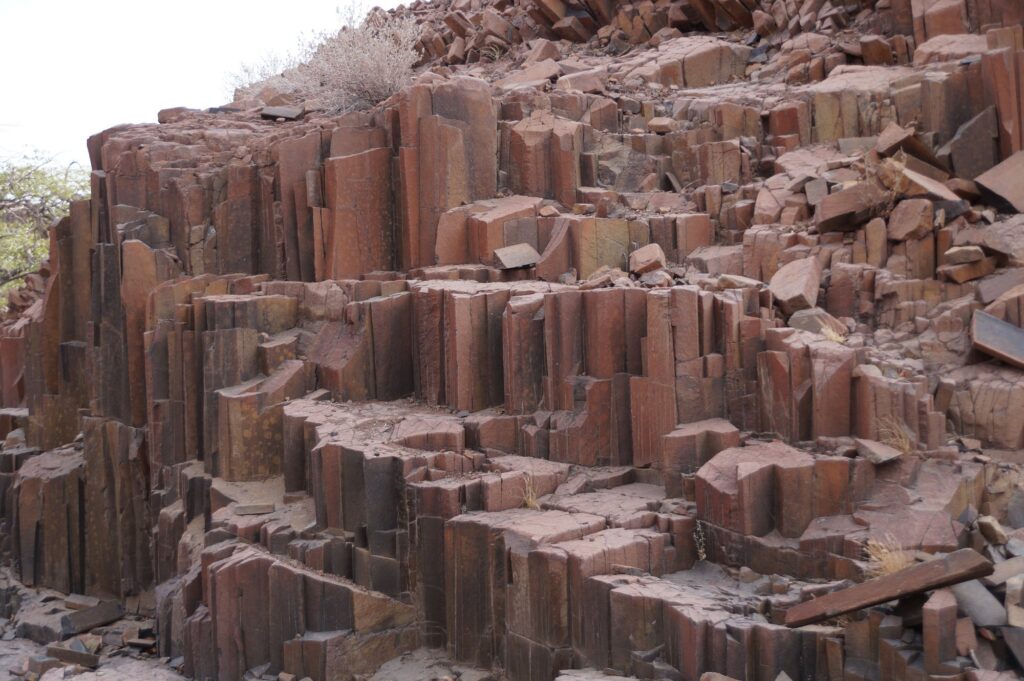
Organ Pipes: These vertical columns of dolerite rock formed when molten lava squeezed into cracks in the earth’s crust roughly 120 million years ago. As the magma cooled and contracted, it fractured into geometric columns that look like someone installed an enormous church organ in the middle of nowhere. The formation stands about 4-5 meters tall along a dry riverbed, easily accessible from the main road between Twyfelfontein and Khorixas.
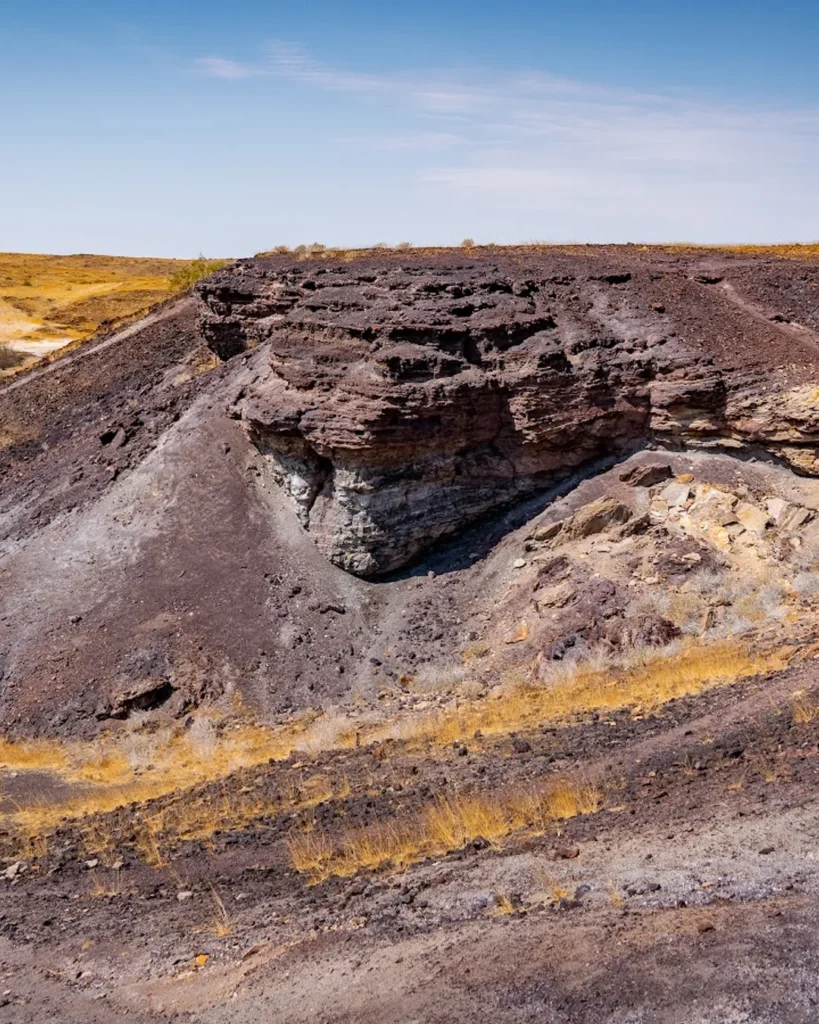
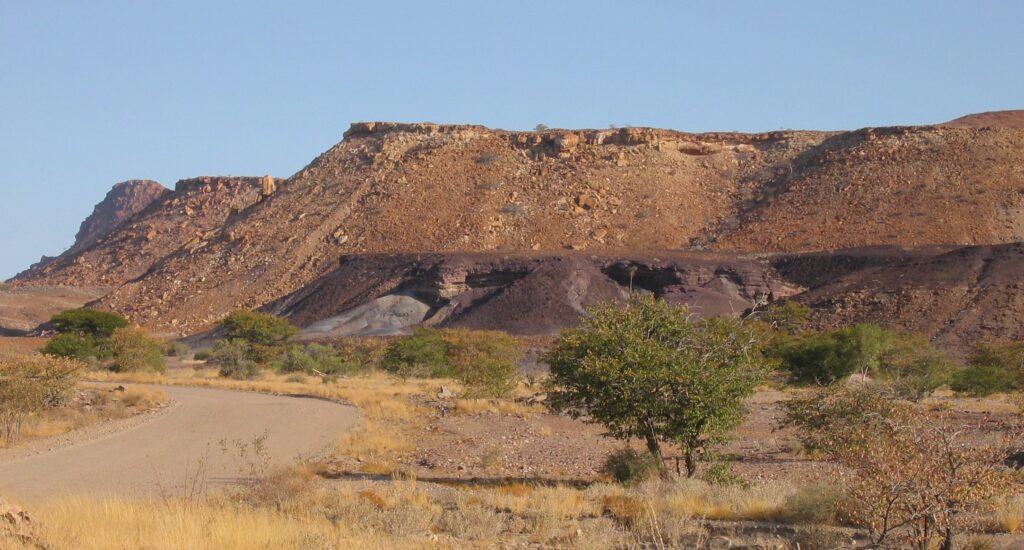
Burnt Mountain: This 12-kilometer-long formation looks like someone torched an entire mountainside and left it smoking. The dark browns, blacks, and charcoal colors come from ancient lava flows and manganese deposits. Visit at sunrise or late afternoon when side-lighting makes the colors pop dramatically.
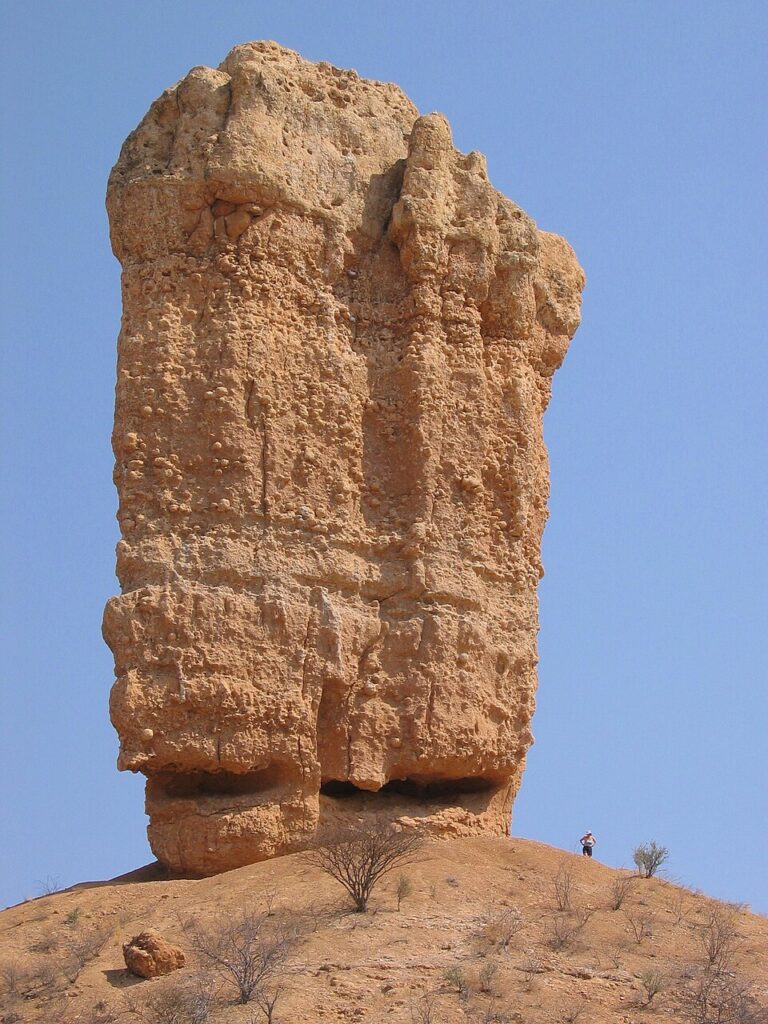
Vingerklip (Finger Rock): A 35-meter limestone pillar stands alone on a plateau like nature’s exclamation point. This erosional remnant formed when the surrounding softer rock wore away over millions of years, leaving this resistant column. It’s visible from the road, but drive up to the viewpoint for photographs. The site has a small entry fee (around $5 USD) and basic facilities.
🐘 Wildlife & Desert Safari: What to Spot and Where
Damaraland wildlife shouldn’t exist. The region receives less than 100mm of rain annually, temperatures swing wildly between day and night, and water sources are scattered and unreliable. Yet elephants, rhinos, and other megafauna not only survive here—they thrive through remarkable adaptations.
Desert-Adapted Elephants
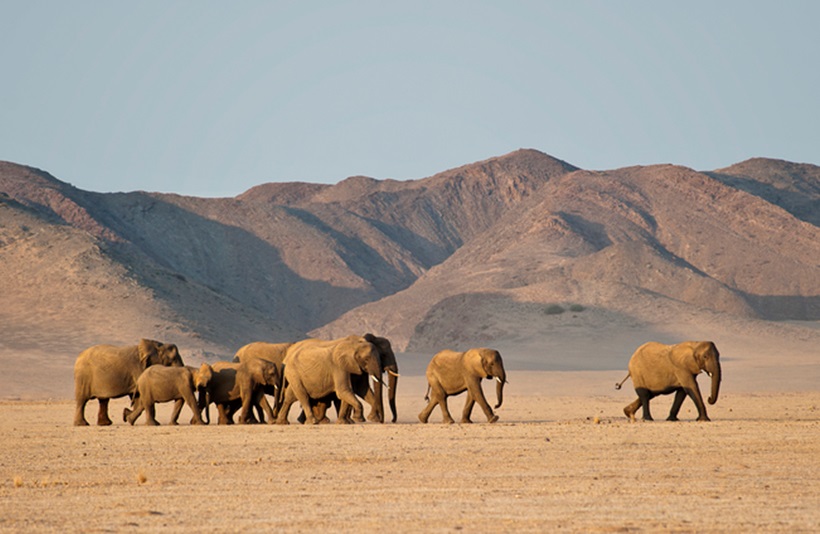
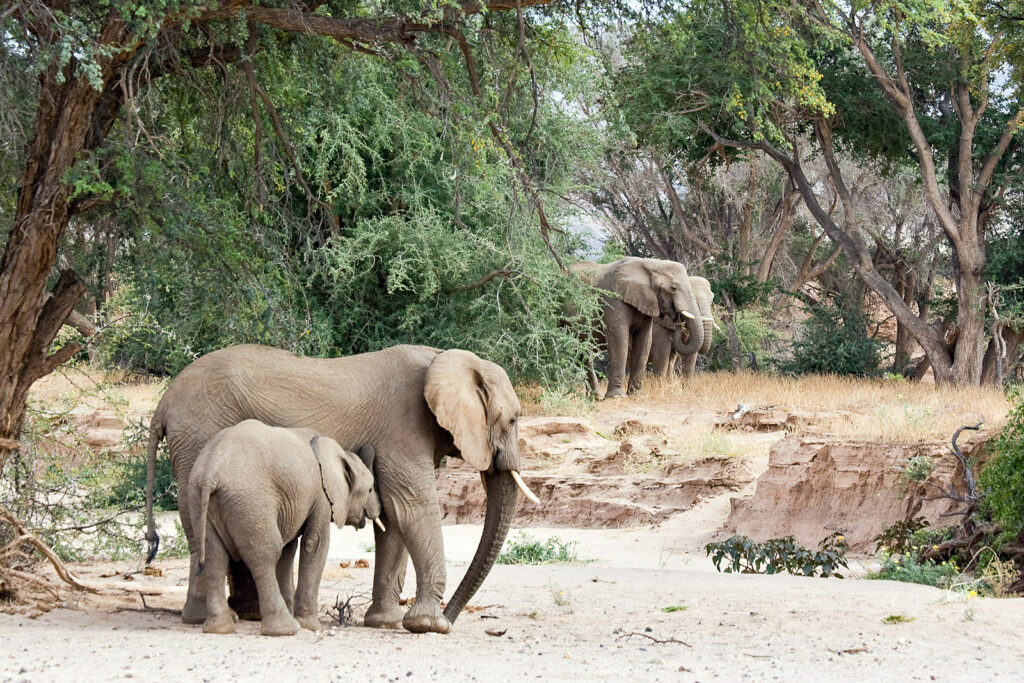
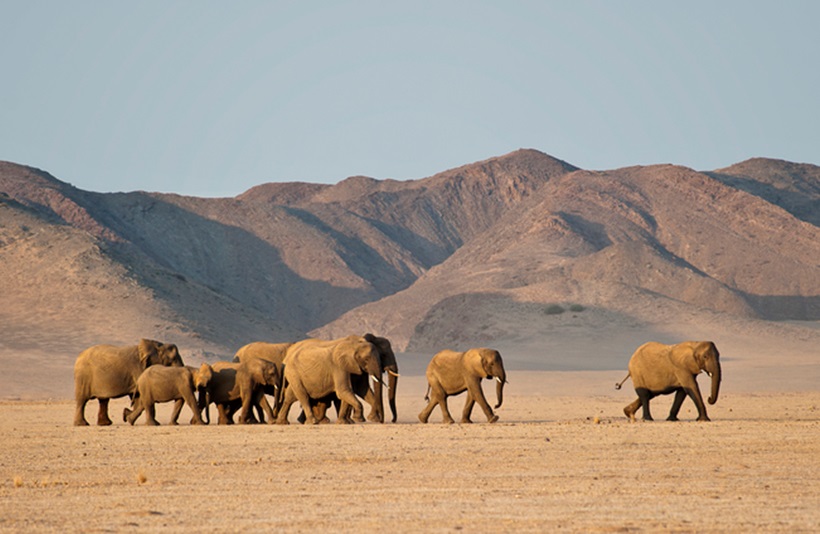
These elephants (genetically identical to African savanna elephants) developed behaviors that let them survive extreme desert conditions. They travel up to 70 kilometers daily searching for food and water, have larger feet for walking on sand, and can go 3-4 days without drinking by eating moisture-rich plants like wild melons.
Current population estimates suggest roughly 150 desert-adapted elephants remain in the Kunene Region, down from historical highs due to poaching pressures in the 1980s-90s. Conservation efforts by organizations like Elephant-Human Relations Aid (EHRA) focus on protecting critical water points and reducing human-wildlife conflict.
Where to See Them: Elephants frequent the Huab, Aba-Huab, and Hoanib river valleys. Early morning and late afternoon drives along these dry riverbeds offer the best chances. Hiring a local guide or tracker dramatically increases your odds—these guides read footprints like GPS coordinates.
Black Rhino Tracking
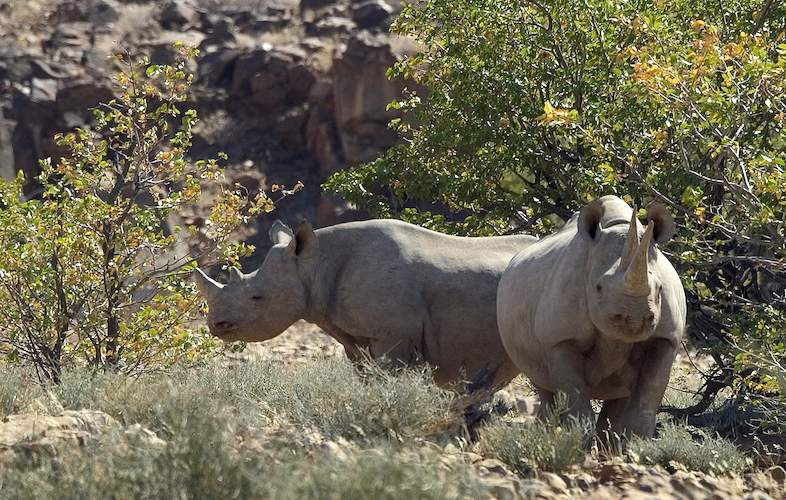
Damaraland hosts one of Africa’s few free-roaming black rhino populations. These critically endangered animals (classified as “Critically Endangered” by the IUCN) number roughly 40-50 individuals in the region. Rhino tracking here isn’t a zoo experience—it’s the real deal, requiring patience, stealth, and a lot of bumpy driving.
Reputable operators like Desert Rhino Camp run conservation-focused tracking experiences. A portion of fees supports Save the Rhino Trust Namibia’s anti-poaching efforts. Expect to pay $400-600 USD for full-day tracking experiences.
Important Ethics: Never approach wildlife on foot without an experienced guide. Maintain 50+ meter distances from elephants and rhinos. Never chase animals for photos or block their access to water sources.
Other Wildlife You’ll Encounter
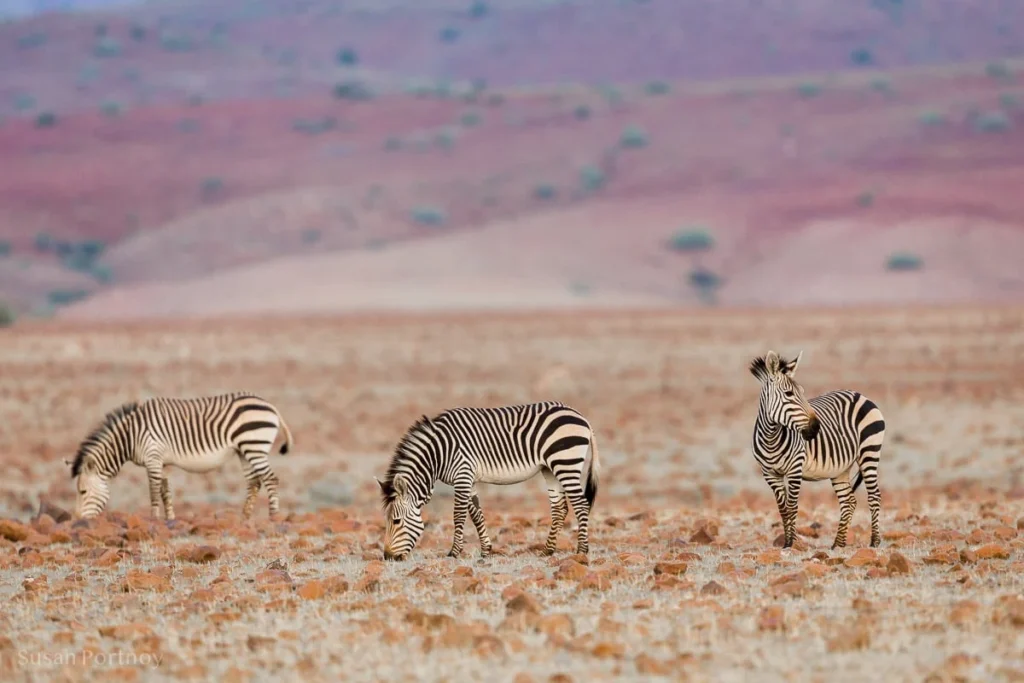
- Hartmann’s Mountain Zebra: Endemic to Namibia and Angola, these zebras have narrower stripes and different patterns than plains zebras. They’re exceptionally agile on rocky terrain.
- Oryx (Gemsbok): These antelopes with their rapier-straight horns can survive indefinitely without drinking water, getting moisture entirely from plants.
- Springbok: Namibia’s national animal, recognizable by their tan coats and distinctive “pronking” jumps when alarmed.
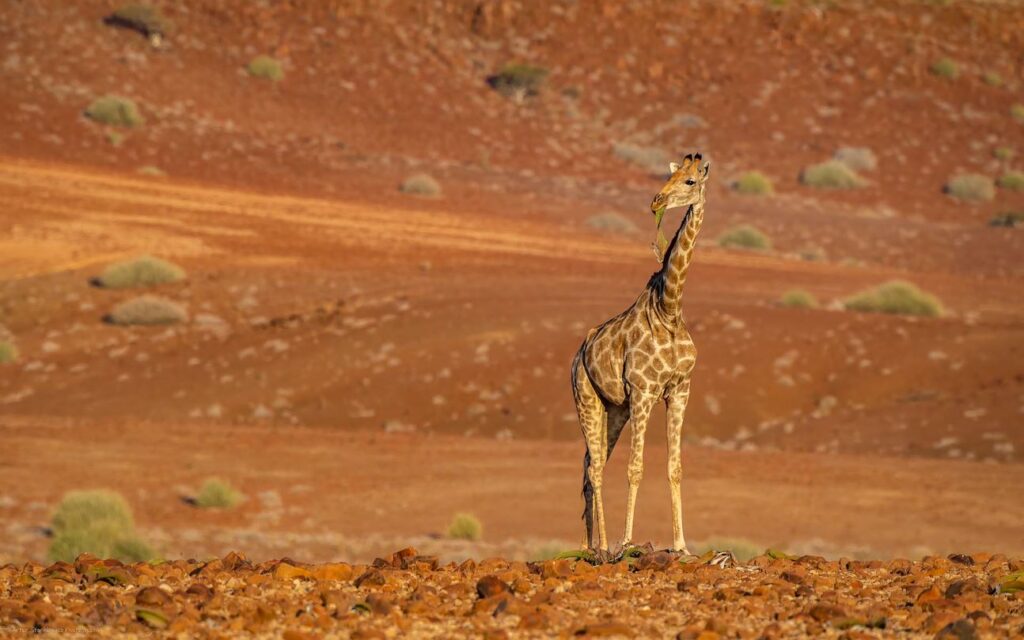
- Giraffe: Smaller populations than elephant country, but present in some valleys and plains areas.
- Desert Lion: Extremely rare and mostly found farther north near Skeleton Coast, but occasional sightings occur in Damaraland.
According to Namibia’s Ministry of Environment, Forestry and Tourism, the country pioneered community-based natural resource management (CBNRM) programs that returned wildlife management rights to local communities—a model that’s proven remarkably successful for conservation.
🏛️ Cultural & Heritage Experiences
Damaraland’s human history stretches back thousands of years, and you can still connect with living cultures that maintain ancient traditions.
Damara Living Museum
Located near Twyfelfontein, the Damara Living Museum offers an interactive cultural experience where Damara community members demonstrate traditional skills, crafts, music, and daily life practices. You’ll see blacksmithing techniques, traditional fire-making, hide-tanning, and hear about medicinal plants used for generations.
This isn’t a tourist trap—it’s a community-run initiative that preserves cultural knowledge while providing income to local families. Entry costs approximately $10-12 USD per person, with all proceeds supporting the community. The museum typically operates mornings and early afternoons; call ahead to confirm hours.
Who Are the Damara People?
The Damara (or Dama) are one of Namibia’s oldest ethnic groups, though their exact origins remain debated among historians. They traditionally practiced a mix of hunting, gathering, and livestock herding. Unlike surrounding groups, they spoke a Khoisan language featuring click consonants, suggesting ancient connections to San peoples.
Colonial periods and apartheid-era policies disrupted traditional Damara life significantly. Today, many Damara people work in tourism, conservation, and community development projects that blend modern life with cultural preservation.
Understanding the Rock Art Legacy
The San (also called Bushmen—though this term is considered outdated by many) created most of Damaraland’s rock art between 6,000-2,000 years ago. These weren’t casual doodles—the art held spiritual and practical significance.
Many paintings depict trance dances where shamans entered altered states to connect with the spirit world. Animal engravings might record successful hunts, mark territory, or serve educational purposes for younger generations. The red ochre pigments came from iron-rich soils mixed with animal fat or plant resins.
Respectful Engagement: When visiting rock art sites, never touch the paintings or engravings. Oils from human skin accelerate deterioration. Don’t use flash photography at close range. Consider purchasing authentic San crafts from certified community cooperatives rather than roadside vendors selling mass-produced items.
🗺️ Suggested Itineraries & Routes
1-Day “Greatest Hits” Route
If you’re seriously time-crunched, this route hits the essentials:
Morning (7:00-12:00):
- Start at Twyfelfontein rock engravings (arrive 8:00 AM for the first guided walk)
- Visit Organ Pipes (20-minute stop, 15 km from Twyfelfontein)
- Stop at Burnt Mountain viewpoint (10-minute photo stop)
Afternoon (12:00-6:00):
- Lunch break at your lodge or packed lunch
- Afternoon game drive in Aba-Huab River valley (3-4 hours)
- Return for sunset at your accommodation
Total driving: Approximately 120-150 km depending on your base location. This itinerary assumes you’re staying somewhere like Twyfelfontein Country Lodge or similar.
3-4 Day “Full Immersion” Itinerary
Day 1: Arrival & Geological Wonders
- Arrive midday from Windhoek (5-6 hour drive)
- Afternoon visits: Petrified Forest, Organ Pipes, Burnt Mountain
- Sundowner drinks at your lodge
- Evening: Stargazing session
Day 2: Rock Art & Culture
- Morning: Twyfelfontein guided walk (8:00 AM)
- Mid-morning: Damara Living Museum
- Afternoon: Rest during heat, or visit Vingerklip
- Late afternoon: Game drive attempt #1 for elephants
Day 3: Wildlife Focus
- Full-day elephant tracking expedition with guide
- Pack lunch and spend 6-8 hours in Huab or Aba-Huab valleys
- Optional: Night drive if your lodge offers it
Day 4: Brandberg & Departure
- Early morning hike to White Lady painting (start 7:00 AM)
- Return to lodge for breakfast and checkout
- Depart for next destination or return to Windhoek
Driving Notes: Gravel road speeds average 60-80 km/h. Budget extra time for wildlife sightings, photography stops, and slower sections. Fuel stations are sparse—fill up at Khorixas or Palmwag. Download offline GPS maps (Maps.me works well) as cell service is extremely limited.
🏕️ Accommodation & Travel Tips
Where to Stay
Luxury Eco-Lodges ($300-500 USD per person/night):
- Damaraland Camp offers elevated tented rooms with incredible valley views
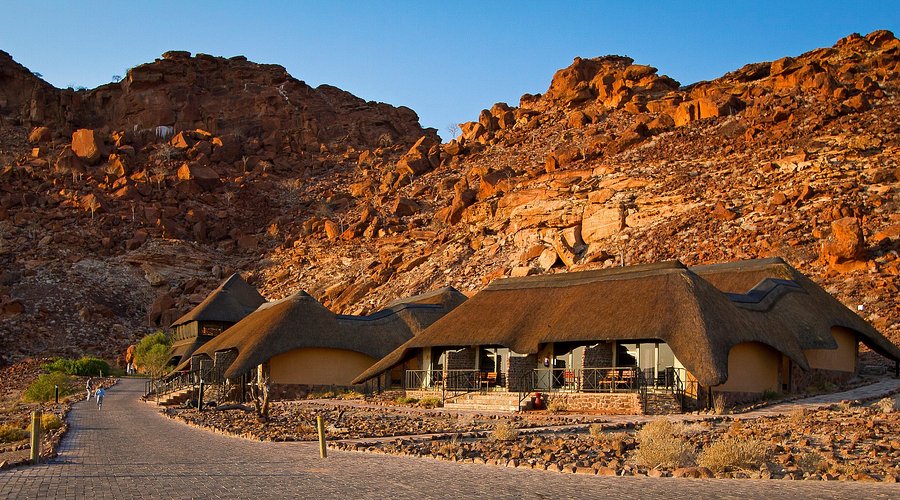
- Mowani Mountain Camp provides luxury chalets built into boulder formations
- Desert Rhino Camp (conservation-focused, includes rhino tracking)
These lodges include meals, guided activities, and contribute directly to conservation programs. They’re typically booked through tour operators rather than direct booking sites.
Mid-Range Camps ($80-150 USD per room/night):
- Twyfelfontein Country Lodge (comfortable, great location)
- Camp Kipwe (uniquely designed rooms blending into rock formations)
- Mopane Village Lodge (budget-friendly option with good facilities)
Camping ($15-30 USD per site/night):
- Aba-Huab Campsite (remote, basic facilities, incredible location)
- Palmwag Campsite (more facilities, still relatively remote)
- Bring all supplies from larger towns—no shops nearby
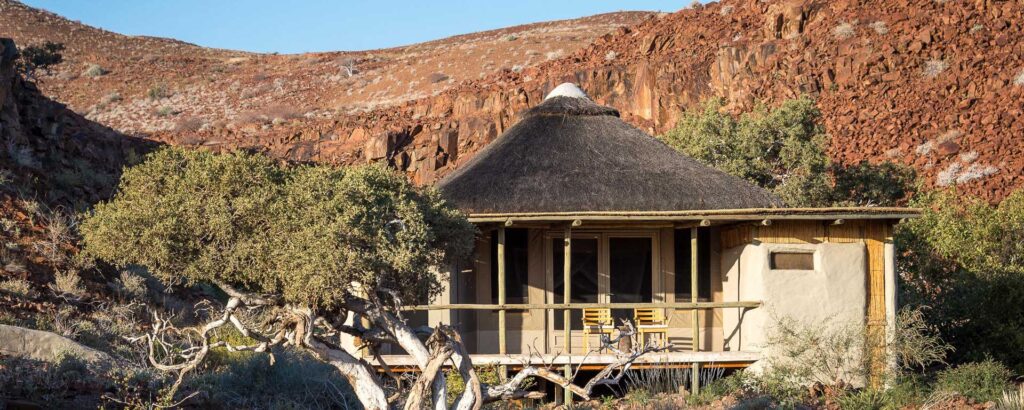
What’s It Like Staying in a Remote Tented Camp?
Imagine sleeping in a proper bed with a duvet, but when you unzip your tent at 6:00 AM, you’re staring at a prehistoric landscape with zero signs of modern civilization. That’s Damaraland’s tented camps.
Most luxury camps use permanent tents with wooden decks, en-suite bathrooms (yes, with hot showers), and comfortable furnishings. The “tent” part means you’ll hear everything—wind rushing through valleys, jackals calling, and the spectacular silence of true remoteness. Solar power runs the camps, so lights operate on scheduled hours and there’s no WiFi (embrace it).
Temperatures swing dramatically. November-April nights might stay warm, but May-October requires layers. Camps provide extra blankets, and some have hot water bottles for your bed.
Health & Safety Essentials
Climate Management: Days get hot (35°C+ in summer), nights can drop near freezing in winter. Layer clothing: technical fabrics that wick sweat during day hikes, warm fleece for evenings. UV radiation is intense—50+ SPF sunscreen isn’t optional.
Water: Tap water at lodges is generally safe (filtered), but many travelers stick to bottled water. Carry 3-4 liters per person when driving between locations. Dehydration happens fast in desert climates.
Medical: Nearest hospitals are in Khorixas or Outjo—neither offers advanced trauma care. Windhoek is 5-6 hours away. Carry a comprehensive first aid kit. Emergency medical evacuation insurance is strongly recommended.
Malaria: Damaraland sits in a low-risk malaria zone, but cases occur during rainy season (November-April). Consult your doctor about prophylaxis. The CDC Travel Health site provides current recommendations.
Road Safety: Gravel roads cause most tourist accidents. Slow down on corners, watch for wildlife (kudu darting across roads cause serious crashes), and avoid driving after dark. Carry two spare tires—Namibian rocks are sharp.
Packing Checklist:
- Binoculars (essential for wildlife viewing)
- Headlamp with red light mode (preserves night vision)
- Dust protection for cameras and electronics
- Warm jacket and beanie (winter months)
- Wide-brimmed hat and sunglasses
- Offline GPS maps downloaded
- Physical map as backup
- Basic tools and tire pump if self-driving
- Emergency food and water supplies
📸 Photography & Experience Tips
Capturing the African Desert Landscape
Golden Hours: Sunrise (6:00-7:30 AM) and sunset (5:00-6:30 PM) transform Damaraland’s red rocks and stark landscapes into something otherworldly. The low angle light creates dramatic shadows and brings out colors that disappear during harsh midday sun.
Best Locations for Landscape Photography:
- Burnt Mountain: Sunrise side-lighting on the dark formations
- Vingerklip: Sunset golden hour with the pillar silhouetted
- Any elevated viewpoint over valleys: Late afternoon shadows define the terrain
- Organ Pipes: Morning light hits the formations directly
Wildlife Photography Tips: Bring a telephoto lens (at least 200mm, ideally 400mm+) for ethical wildlife photography. Shoot in early morning and late afternoon when animals are most active and light is optimal. Set your camera to shutter priority mode with speeds around 1/1000 second for sharp animal shots. Be patient—sometimes you’ll wait hours for the right moment.
Namibia Stargazing: Some of Earth’s Darkest Skies
Damaraland’s remoteness and lack of light pollution create exceptional stargazing conditions. The International Dark-Sky Association recognizes Namibia as having some of Africa’s best night skies.
What You’ll See: The Milky Way core appears as a bright cloud stretching across the sky (best viewing April-October). Planets like Jupiter and Saturn shine brightly enough to cast shadows. The Southern Cross constellation points toward the South Celestial Pole. During new moon periods, you can spot the Andromeda Galaxy with naked eyes.
Photography Settings: Manual mode, 15-30 second exposures, widest aperture your lens allows (f/2.8 or wider ideal), ISO 3200-6400. Use a sturdy tripod and remote shutter release or timer to avoid camera shake. Focus manually on a bright star using live view zoomed in.
Practicing Sustainable Travel
Leave No Trace: Pack out all trash, including biodegradable items like orange peels (they don’t belong in this ecosystem). Use designated bathroom facilities or bury waste 20+ cm deep, 100+ meters from water sources.
Water Conservation: Damaraland is a desert—every drop matters. Take short showers, reuse towels, and report any leaks to lodge staff.
Support Local Economy: Buy crafts directly from artists at community cooperatives. Use local guides whenever possible. Choose accommodations and operators that employ and partner with local communities.
Wildlife Respect: Never feed wild animals (it habituates them to humans and can be fatal). Keep noise levels reasonable. Stay in vehicles when animals are present unless with professional guides. According to Save the Rhino Trust, human disturbance is a significant stress factor for desert-adapted wildlife.
Cultural Sensitivity: Always ask permission before photographing people. Understand that some communities charge small fees for photos—this isn’t a scam, it’s respecting their image rights. Learn a few basic greetings in local languages (though English is widely spoken).
🌍 Why Damaraland Matters: Conservation, Geology & Cultural Legacy
Conservation Success Story
Damaraland represents one of Africa’s most significant conservation achievements. In the 1980s, poaching nearly eliminated the region’s elephant and rhino populations. Community-based conservation programs fundamentally changed the approach by giving local communities legal rights to manage and benefit from wildlife on communal lands.
The results speak clearly: rhino numbers have stabilized, elephant populations are slowly recovering, and local communities now actively protect wildlife as an economic asset rather than viewing animals as threats or resources to exploit. According to research published by the IUCN, Namibia’s CBNRM model has become a template copied across Africa.
Tourism revenue flows directly to conservancies, funding schools, healthcare, and employment. Farmers receive compensation for crop damage by elephants. Community game guards monitor wildlife and report poaching incidents. This isn’t perfect—human-wildlife conflict still occurs, and poaching remains a threat—but it’s working better than traditional “fortress conservation” approaches that excluded local people.
Geological Time Machine
Damaraland’s rocks tell Earth’s story across hundreds of millions of years. The Damara Sequence rocks formed 750-550 million years ago when this area sat at the bottom of an ancient ocean. Tectonic forces later compressed and metamorphosed these sediments into the resistant formations you see today.
The Etendeka Plateau’s volcanic rocks (including the formations at Burnt Mountain) formed roughly 132 million years ago during the breakup of the supercontinent Gondwana. When South America and Africa separated, massive volcanic eruptions covered the landscape with lava flows hundreds of meters thick.
The Petrified Forest’s trees grew during the Permian Period (260 million years ago) when this region was a humid forest before dinosaurs existed. Their fossilization required precise conditions: rapid burial, mineral-rich groundwater, and millions of years of chemical replacement.
Understanding this geological context transforms casual sightseeing into something profound—you’re literally walking through time, seeing rocks that formed before complex life existed on land.
Cultural and Historical Significance
The rock art scattered across Damaraland represents humanity’s earliest attempts to record experience, belief, and knowledge. The San people who created this art lived as hunter-gatherers for thousands of years, developing intimate knowledge of this harsh environment.
Their descendants still live throughout southern Africa, though few maintain fully traditional lifestyles. Colonial exploitation, forced relocations, and marginalization nearly destroyed their cultures. The rock art sites serve as tangible connections to that heritage—irreplaceable archaeological records that require protection.
The Damara people’s history is equally significant but less documented. Their traditional knowledge about desert survival, medicinal plants, and metalworking represents cultural wisdom developed over centuries. Tourism initiatives like the Living Museum help preserve and transmit this knowledge to younger generations while providing economic opportunities.
❓ FAQs — Common Traveller Questions
What is the best time to visit Damaraland?
May through October offers the best overall experience. These dry season months provide cooler temperatures (20-25°C days), easier wildlife spotting around water sources, better road conditions, and clearest skies for stargazing. June-August is peak tourist season but rarely feels crowded given the region’s size. November-April brings heat (35°C+), occasional rain, dispersed wildlife, and challenging road conditions, though photographers appreciate the dramatic storm clouds and greener landscapes.
Do I need a 4×4 or guided tour to explore Damaraland?
A 4×4 significantly expands your options but isn’t absolutely necessary for main attractions. You can reach Twyfelfontein, Organ Pipes, Burnt Mountain, and some lodges with a high-clearance 2WD sedan. However, wildlife tracking, remote campsites, the Petrified Forest, and most river valley routes require four-wheel drive. Guided tours provide expert wildlife tracking, cultural insights, and logistical ease, but self-driving offers flexibility and typically costs less. Many visitors compromise: self-drive between destinations but book guided activities for wildlife tracking and cultural experiences.
Is Damaraland safe for solo travelers or families?
Yes, Damaraland is generally safe for both solo travelers and families. Crime rates in this remote region are low. The main safety concerns are environmental: heat exhaustion, dehydration, and vehicle accidents on gravel roads. Solo travelers should inform someone of their itinerary and carry emergency communication devices (satellite phones or Garmin inReach devices work where cell phones don’t). Families should choose appropriate accommodations—some remote camps aren’t ideal for young children due to open designs and nearby wildlife. Most lodges welcome families and can arrange child-friendly activities.
What wildlife can I realistically expect to see?
Realistic expectations prevent disappointment. You’ll almost certainly see oryx, springbok, and various birds. Hartmann’s mountain zebra are common. Giraffe sightings are probable with a few days in the region. Desert-adapted elephants require luck, good timing, and ideally an experienced guide—see them as a bonus rather than guaranteed. Black rhino sightings are rare without dedicated tracking experiences. Desert lions are extremely uncommon (don’t count on seeing them). The region hosts over 240 bird species, including endemics like the Rüppell’s korhaan.
Can I visit Damaraland on a tight budget?
Yes, but it requires compromises. Camp instead of staying at lodges ($15-30 vs $80-500 per night). Self-drive rather than booking guided tours (rental 4×4 about $70-120 daily vs $300-500 daily for guided experiences). Bring all food from larger towns and cook at campsites. Book self-guided walks at Twyfelfontein rather than expensive tracking experiences. A bare-bones 3-day trip might cost $300-400 per person including vehicle rental, fuel, camping, and basic activities. Luxury lodge-based trips typically run $1,000+ per person for three days.
How many days are enough to explore Damaraland properly?
Three to four days provides a satisfying experience covering major attractions without rushing. One day barely scratches the surface. Two days works if seriously time-constrained. Five to seven days allows for serious wildlife tracking, multiple rock art sites, cultural experiences, and hiking Brandberg. Most visitors include Damaraland as part of a larger Namibia itinerary (Sossusvlei, Etosha National Park, Skeleton Coast), spending 3-4 days here before moving to the next region.
✨ Conclusion & Final Travel Advice
Damaraland doesn’t make travel easy—and that’s exactly the point. This isn’t a destination where you’ll find smoothly paved roads, abundant cell service, or crowds of tourists cluttering your photos. What you will find is something increasingly rare: raw, authentic wilderness where nature still operates by its own rules.
The desert elephants that somehow survive here teach resilience. The rock art spanning millennia reminds us that humans have always been driven to explore and document their world. The geological formations that took hundreds of millions of years to form put our brief lives into humbling perspective.
If you’re asking what to do in Damaraland, you’ve already shown the curiosity that makes this place rewarding. Come prepared: bring patience for long drives on rough roads, flexibility when elephant herds disappear into valleys, and openness to experiences that can’t be scheduled in 30-minute blocks.
Support the conservation organizations protecting these desert-adapted species. Respect the communities maintaining their cultural heritage in challenging conditions. Take more photos of landscapes than selfies. Listen to the silence at 3:00 AM when you step out of your tent and see the Milky Way stretching overhead.
Damaraland rewards those willing to work for their experiences. You’ll leave sunburned, dusty, possibly frustrated by that elephant family you spent six hours tracking but never quite saw, and absolutely certain you want to return.
Start planning your trip now—this isn’t a destination to leave until “someday.” The window for experiencing truly wild places keeps shrinking. Damaraland is still here, still wild, still waiting for travelers who understand that the best destinations are the ones that don’t try to be easy.
Ready to book your Damaraland adventure? Check accommodation availability, secure that 4×4 rental, and prepare for one of Africa’s most underrated destinations.
References & Resources for Planning:
- Namibia Tourism Board – Official tourism information, entry requirements, travel advisories
- Wilderness Safaris – Luxury lodge bookings and guided experiences
- Save the Rhino Trust Namibia – Conservation information and supporting rhino protection
- Elephant-Human Relations Aid – Desert-adapted elephant conservation
- CDC Travel Health – Namibia – Health recommendations and malaria information
- UNESCO World Heritage – Twyfelfontein – Rock art site details and significance
- Namibia Ministry of Environment, Forestry and Tourism – Conservation policies and park regulations
This comprehensive guide to Damaraland provides everything needed for trip planning, from logistics and accommodations to wildlife viewing and cultural experiences. For the most current road conditions, accommodation availability, and seasonal wildlife patterns, always check with local operators and tourism boards before finalizing your travel dates.

Read More Articles;
- Alleppey Tourist Places: 25 Best Places to Visit in Alleppey Backwaters (2026 Travel Guide)
- Munnar Tourist Places: 20 Best Places to Visit in Munnar, Tea Gardens, Itinerary & Hidden Gems (2026 Travel Guide)
- Is Sardinia Worth Visiting? Complete Travel Guide to Sardinia, Italy
- What to Do in Gozo: 25 Best Things to Do in Gozo Malta (Hidden Gems + Local Tips)
- What to Do in Bali: Ultimate Travel Guide 2026 (Top Activities, Itineraries & Hidden Gems)