Tartu, Estonia’s vibrant second city and the 2024 European Capital of Culture, is brimming with incredible things to do. Whether you have one day or a long weekend, you’ll want to focus on its historic Old Town, creative neighbourhoods, and world-class museums.
The absolute best things to do in Tartu include exploring the historic Toome Hill with its magnificent Cathedral Ruins, visiting the excellent Estonian National Museum, wandering through the charming wooden house districts of Supilinn and Karlova, and soaking up the atmosphere at the central Raekoja Plats (Town Hall Square).
But knowing what to do is only the first step. To make the most of your trip, you’ll need the details: how to group these sights into a perfect itinerary, where to find the best local food, and how to get around the city like a pro. Read on for my complete guide, including a 2-day itinerary and practical travel tips to help you plan your perfect adventure in this Baltic gem.

| Feature | Detail |
| Country | Estonia |
| Population | ~ 97,759 (2024) |
| Location | 186 km SE of Tallinn |
| River | Emajõgi River runs through the city |
| Famous For | University of Tartu (founded 1632) |
| Cultural Role | Known as Estonia’s “cultural heart & student city” |
| 2024 Highlight | One of European Capitals of Culture 2024 |
Introduction: Why Tartu Should Be on Your Baltic Itinerary
While medieval Tallinn often steals the spotlight, Estonia’s true intellectual and cultural heart beats in its second city: Tartu. Tucked away in the country’s southeastern corner on the banks of the Emajõgi river, Tartu is home to the nation’s oldest and largest university, infusing the city with a youthful, vibrant energy. It’s a captivating place where grand 19th-century neoclassical buildings stand alongside charming traditional wooden homes, creating a cityscape distinctly different from Tallinn.
As the European Capital of Culture in 2024, there has never been a more compelling time to visit. Tartu offers a rich tapestry of excellent museums, art galleries, and a year-round calendar of festivals and concerts. It’s a city that promises a deep and authentic Estonian experience, away from the largest tourist crowds.
Why You’ll Love Tartu
- Intellectual Vibe: A student city full of trendy cafes and a palpable creative energy.
- Architectural Charm: A unique mix of stately neoclassical architecture and colourful wooden houses.
- Thriving Arts Scene: A celebrated street art culture and world-class museums.
- Fewer Crowds: A more relaxed and authentic alternative to the capital, Tallinn.
Best time to visit:
| Period | Why It’s Good | Things to Watch Out / Notes |
| Late June to mid-August | Warmest weather, long daylight, ideal for outdoor activities. | Peak tourist season, prices higher, occasional rain showers. |
| May & September | Mild weather, fewer crowds, good balance. | Cooler nights, more chance of rain. |
| Winter (Dec – Feb) | Quiet, snowy landscapes, cozy indoor experiences | Very cold, short daylight, many outdoor sites may be closed |
Getting Your Bearings: A Quick Guide to Tartu’s Neighborhoods
Tartu is a wonderfully compact city, with most sights within easy walking distance. To help you get oriented, here are the main areas you’ll be exploring:
- Old Town (Vanalinn): The historic heart of the city. This is where you’ll find the central Raekoja Plats (Town Hall Square) and the historic Toome Hill.
- Supilinn (Soup Town): A quirky and colourful neighbourhood famous for its traditional wooden homes and streets named after soup ingredients.
- Karlova: Another historic district featuring larger, more stately wooden villas and a high concentration of incredible street art.
- Raadi: Located slightly outside the centre, this area is home to the magnificent Estonian National Museum and the historic Raadi Manor Park.
Top 10 Things to See and Do in Tartu’s Old Town
Your adventure begins in the beautifully preserved historic centre.
1. Start at Raekoja Plats (Town Hall Square)
This central square is the perfect place to start your exploration. Historically a major trading area, it is now framed by beautiful 18th and 19th-century buildings constructed after the Great Fire of 1775. The square hosts events year-round, from summer festivals to a charming Christmas market and ice rink in winter.
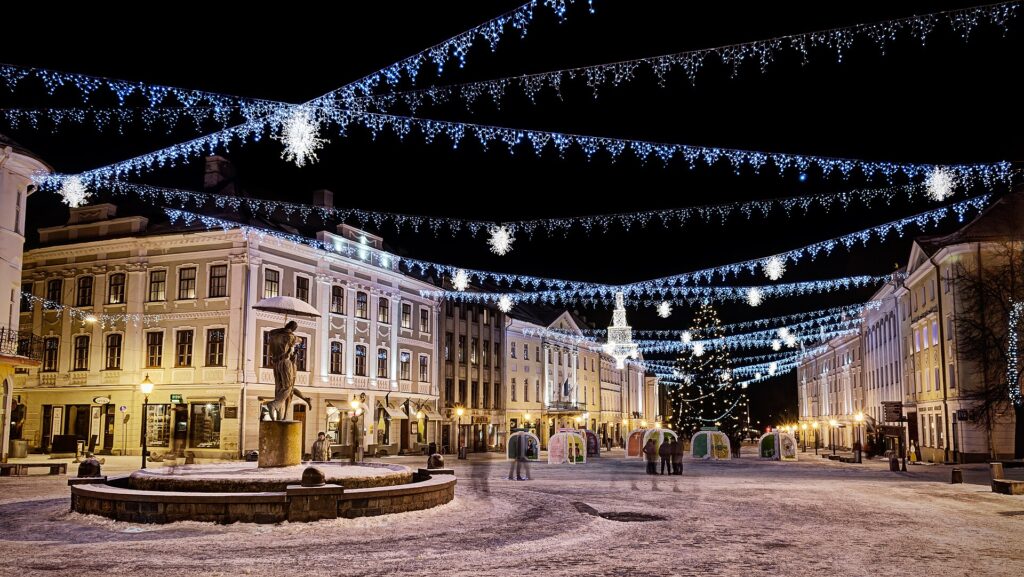
2. Marvel at the Tartu Town Hall
Dominating the square is the colourful, neoclassical Town Hall. In front of it stands one of Tartu’s most iconic symbols: the statue of the kissing students, a nod to the city’s academic soul.
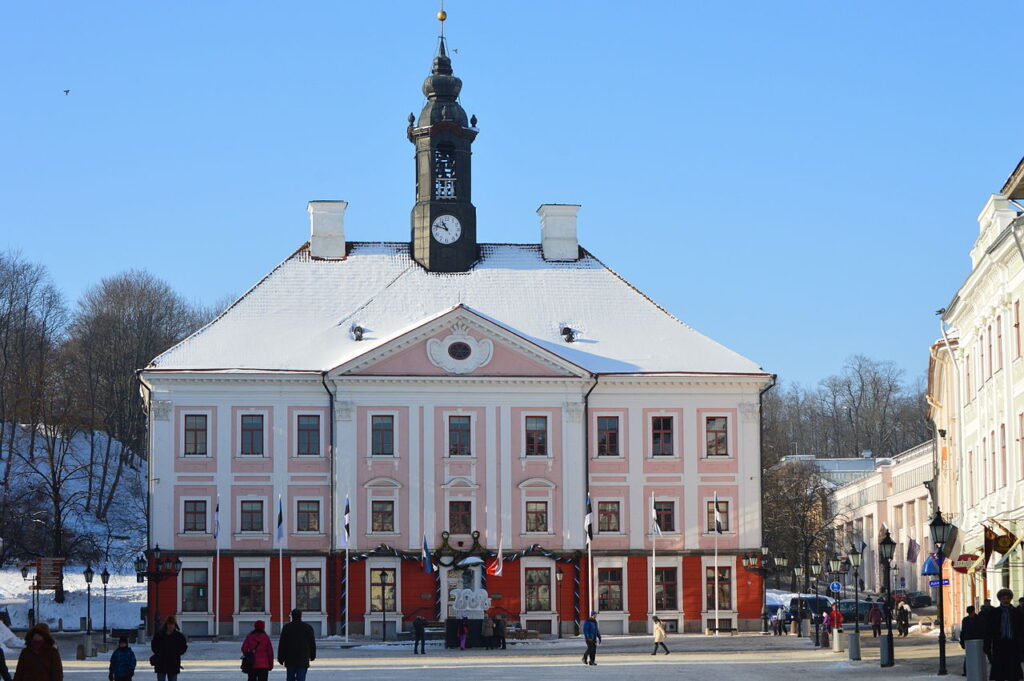
3. Admire the Leaning House of Tartu
Just off the square, you’ll find an architectural oddity. The Leaning House of Tartu tilts noticeably because it was built on unstable ground—one side rests on the old city wall’s foundations, while the other was built on logs that sank over time.
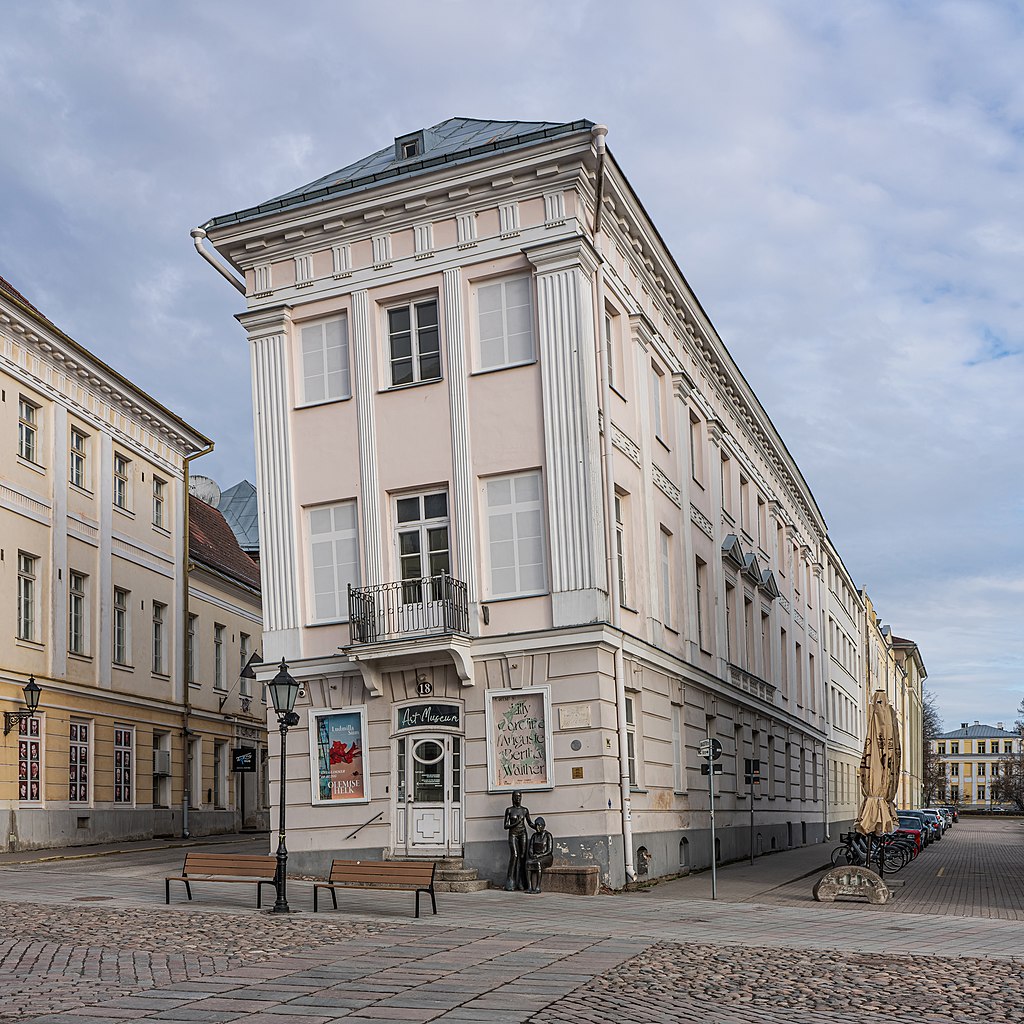
4. Climb Toome Hill for History and Views
A short walk from the square leads to Toome Hill, a historic stronghold since the 7th century. Emperor Paul I gifted the hill to Tartu University in the 19th century, and it was transformed into a park with academic buildings. Today, it’s a peaceful green space offering fantastic views.
5. Explore the Tartu Cathedral Ruins
On Toome Hill stand the impressive ruins of Tartu Cathedral. Once one of the largest churches in Eastern Europe, this 13th-century Gothic masterpiece was destroyed during the Livonian War. Its towering remains are a powerful sight.
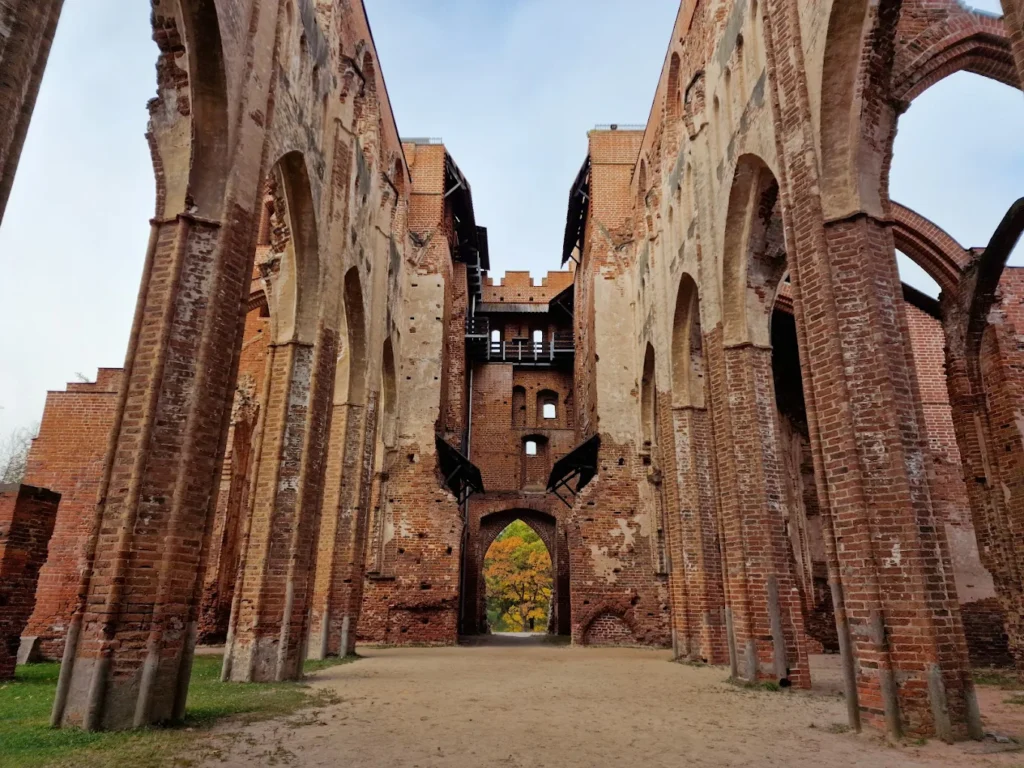
6. Dive into History at the University of Tartu Museum
Housed within a restored section of the cathedral ruins, this excellent and interactive museum is a must-visit. It chronicles the history of the university since the 17th century, which is intrinsically linked to the history of Tartu itself.
7. Gaze at the Stars at the Tartu Old Observatory
Also located on Toome Hill, the Old Observatory was an active astronomical facility until 1964 and now serves as a fascinating museum dedicated to the history of science.
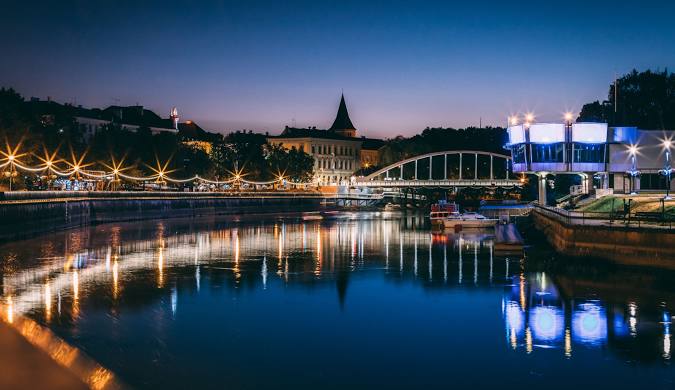
8. Stroll Along the Emajõgi Riverfront
The banks of the Emajõgi river offer a lovely place for a walk, with green park areas on both sides and plenty of outdoor cafes to enjoy during the summer months.
9. Taste Local Life at the Tartu Market Hall
Housed in its original 1938 Soviet building, the recently renovated market hall is the perfect place to find local products. Sample smoked fish from the river, browse homemade pickles, or pick up some delicious Estonian honey.
10. Confront the Past at the KGB Cell Museum
Like in Tallinn, Tartu’s former KGB headquarters now houses a museum in its cellars. This informative and sobering exhibit covers Estonia’s difficult 20th-century history, including the Nazi and Soviet occupations, deportations, and the local resistance movement.
Beyond the Centre: Exploring Tartu’s Creative Soul
To truly understand Tartu, you need to wander beyond the Old Town.
11. Get Lost in Supilinn (Soup Town)
One of Tartu’s most unique features is its abundance of traditional wooden homes, and Supilinn is the best place to see them. This 18th-century neighbourhood earned its name from its streets, which are named after soup ingredients like peas, beans, and potatoes. Once a poor area built on soggy land, it’s now a vibrant district of colourful houses and neat gardens, popular with students.
12. Wander Through Karlova’s Wooden Villas and Street Art
The nearby district of Karlova also developed in the 18th century but features larger, more stately wooden homes as the land was more expensive. It’s also a hotspot for incredible street art, making it a wonderful area to explore on foot.
13. Hunt for Street Art by Edward von Lõngus
Tartu has a noteworthy street art scene, with colourful and creative works found on everything from giant murals to small electricity boxes. Although officially illegal, the art form is promoted by the city through a yearly festival. Keep an eye out for the distinctive black-and-white stencil work of famed local artist Edward von Lõngus.
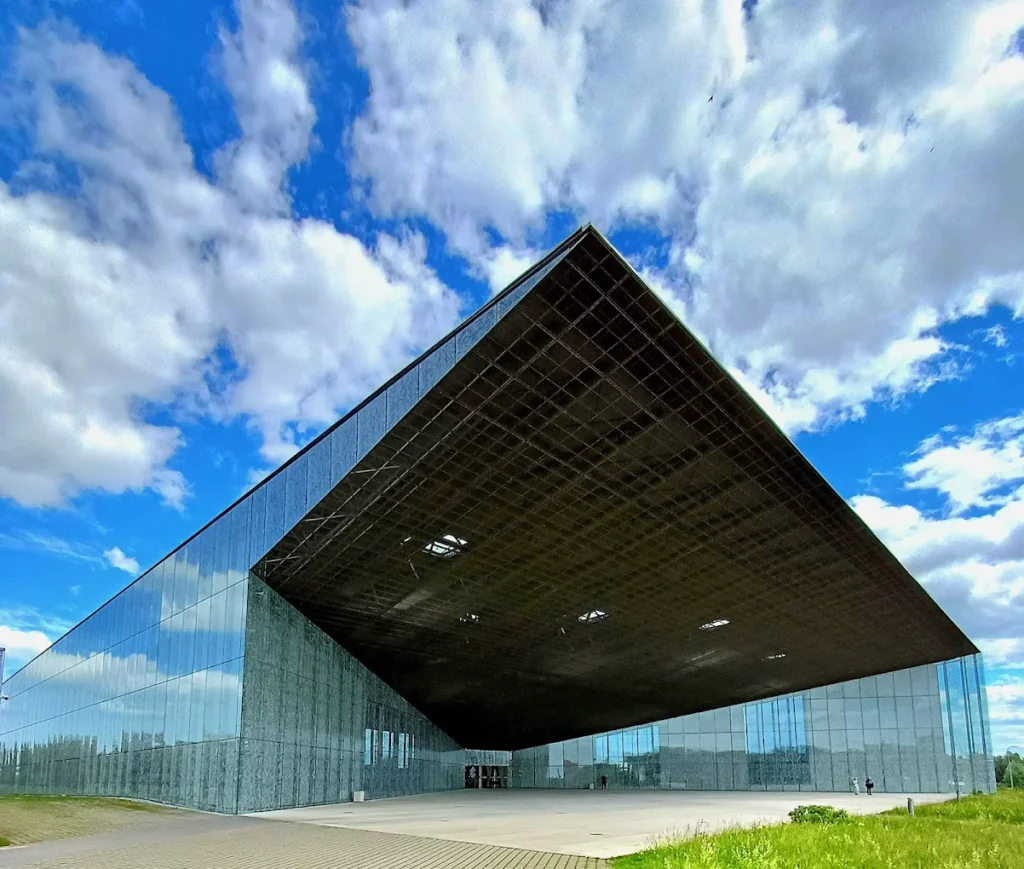
14. Immerse Yourself in the Estonian National Museum
Even if you only visit one museum in Estonia, make it this one. The Estonian National Museum is a vast, modern, and interactive institution covering every aspect of the country’s history and culture, including a fascinating exhibition on the Finno-Ugric people. The building itself is an architectural marvel; be sure to set aside plenty of time to explore it fully.
15. Walk Through an Old Soviet Airfield at Raadi Manor Park
The National Museum is located in Raadi Manor Park, the former estate of the von Liphart family. After the manor was destroyed in WWII, the Soviets built a large airfield here. You can still walk through the park and see the abandoned hangars, a surreal reminder of a more recent past.
A Perfect 2-Day Tartu Itinerary
To make the most of your trip, I recommend spending at least two full days in the city. Here’s a suggested plan:
- Day 1: History and Old Town Charm. Dedicate your first day to the historic core. Start at Raekoja Plats, then spend a few hours exploring all the sights on Toome Hill. In the afternoon, visit the KGB Cell Museum before enjoying a walk along the Emajõgi riverfront.
- Day 2: Culture, Art, and Neighbourhoods. Start your day at the magnificent Estonian National Museum and Raadi Manor Park. In the afternoon, get lost in the charming wooden house districts of Supilinn and Karlova, keeping an eye out for street art.
Tartu Travel Guide: Your Practical Planner
Where to Stay
- Tampere Maja: This charming guesthouse is set in a traditional wooden house and is perfectly located near Toome Hill and Raekoja Plats. It serves a delicious breakfast and even has a sauna available for guests.
Where to Eat and Drink
- Estonian Classics: For good food in a lively atmosphere, head to the Gunpowder Cellar of Tartu, a student favourite where you can try Estonian dishes like mulgipuder. A bit further from the centre, Hansa Tall and Hansa Hoov offers some of the best Estonian food in the city, with a helpful picture menu.
- Sweet Treats: Crepp specializes in massive, delicious sweet and savoury pancakes that make for a very filling meal.
- Budget Lunch: The Dorpat Hotel, located near the bus station, offers an excellent value-for-money lunch.
Getting to Tartu Tartu is well-connected. Frequent and comfortable Lux Express buses run from Tallinn, Pärnu, and Narva. You can also take a modern Elron train from Tallinn, a pleasant journey that takes about 3 hours.
Getting Around Tartu is best explored on foot, as most things to do are within walking distance. For longer distances, the city has a good public bus network.
When to Visit
- Summer: Peak season with warm weather and long daylight hours, but also more crowds and higher prices.
- Spring & Autumn: Quieter seasons with mild temperatures perfect for exploring.
- Winter: Cold and often snowy, but the city looks magical. If you visit in winter, consider a side trip to Estonia’s nearby winter capital, Otepää.
Responsible Travel in Tartu
As tourism in Tartu grows, it’s important to be a conscious traveller. You can support the local community by eating at local restaurants, buying products from the market, and staying in small-scale guesthouses. The city’s excellent public transport system and walkability make it easy to reduce your carbon footprint.
Of course. Here is a comprehensive list of frequently asked questions and their answers, designed to help users with the search intent “things to do in Tartu” by drawing directly from the provided sources.
Frequently Asked Questions About Visiting Tartu
1. What is Tartu and why should I visit?
Tartu is Estonia’s second-biggest city, located in the southeastern part of the country on the Emajõgi river. It is known as the academic centre of Estonia, home to the nation’s oldest and largest university. You should visit because it offers a different experience from medieval Tallinn, with a unique blend of 19th-century neoclassical architecture and traditional wooden homes. It has a young, vibrant feel due to its student population, along with excellent museums, a noted street art scene, and a rich cultural calendar, which led to it being named the European Capital of Culture in 2024.
2. How many days do I need in Tartu?
It is recommended to spend at least two full days in Tartu to properly experience what the city has to offer. A good plan is to dedicate one day to exploring the Old Town and Toome Hill, and a second day to visiting some of the city’s excellent museums, like the Estonian National Museum.
3. What are the absolute must-do things in Tartu?
The top attractions and activities in Tartu include:
- Raekoja Plats (Town Hall Square): The city’s central square, home to the Town Hall and the famous kissing students statue.
- Toome Hill: A historic park area featuring the impressive Tartu Cathedral Ruins, the University of Tartu Museum, and the Tartu Old Observatory.
- Wooden House Districts: Wander through the charming neighbourhoods of Supilinn (Soup Town) and Karlova to see traditional wooden homes and street art.
- Estonian National Museum: Considered one of the best museums in Estonia, it offers interactive exhibitions on Estonian culture and history.
4. What is the best way to get to Tartu?
Tartu is well-connected to other Estonian cities. You can take a frequent and comfortable Lux Express bus from Tallinn, Pärnu, or Narva. Alternatively, you can take a modern train from Tallinn, which is a comfortable 3-hour journey.
5. How do I get around in Tartu?
The best way to get around Tartu is on foot, as most of the main sights are within walking distance of each other. For longer distances, the city has a good public bus network. You can purchase a bus card with credit from the tourist information centre.
6. When is the best time of year to visit Tartu?
The best time to visit depends on your preference:
- Summer: The peak season with warm weather and long daylight hours, but also more crowds and higher accommodation prices.
- Spring and Autumn: Quieter seasons with mild and pleasant temperatures, ideal for exploring the city.
- Winter: It can be very cold with temperatures below freezing, but the city is beautiful under a blanket of snow. This is also a great time to take a side trip to Otepää, Estonia’s winter capital.
7. Where should I eat in Tartu?
Tartu has a range of great dining options:
- For Estonian Food: Try the Gunpowder Cellar of Tartu, a student favourite known for dishes like mulgipuder and pork ribs. Hansa Tall and Hansa Hoov is another excellent choice located a bit outside the centre.
- For a Filling Meal: Crepp specializes in huge sweet and savoury pancakes.
- For a Budget Lunch: The Dorpat hotel near the bus station offers very good value for money.
8. Are there any unique neighborhoods to explore?
Yes, two of the most unique neighbourhoods are Supilinn and Karlova. Supilinn, or “Soup Town,” is a historic district known for its colourful wooden homes on streets named after soup ingredients like peas and beans. Karlova also features stately 18th-century wooden homes and is a great place to discover Tartu’s vibrant street art scene.
9. Is Tartu a good destination for museum lovers?
Absolutely. Tartu has several excellent museums. The top recommendations are:
- Estonian National Museum: A must-visit, modern museum covering all aspects of Estonian history and culture.
- University of Tartu Museum: Located in the cathedral ruins, this interactive museum chronicles the history of the university and the city.
- KGB Museum: Housed in former KGB cellars, this museum offers a sobering look into Estonia’s 20th-century history under Nazi and Soviet occupation.
- Tartu Old Observatory: A fascinating museum on Toome Hill dedicated to the history of astronomy.
Resources mentioned:
• Bus Travel (Lux Express): The article recommends Lux Express for comfortable bus travel in Estonia. You can find their timetables and book tickets on their official website: https://luxexpress.eu/en/
• Train Travel (Elron): For train travel from Tallinn, the source mentions Elron. Their official website for schedules and tickets is: https://elron.ee/en
• Vegetarian/Vegan Dining (HappyCow): The article suggests using HappyCow to find vegetarian and vegan restaurants in Tartu. You can search for options on their website: https://www.happycow.net/
Disclaimer: The information in this article has been carefully compiled based on the travel experiences detailed in the provided source, “The Best Things to do in Tartu, Estonia – Backpack Adventures”. This content reflects the author’s visit, and every effort has been made to present accurate and up-to-date information. However, travel details such as opening hours, prices, and bus schedules can change. It is always a good practice to verify key information with official sources before your trip.

Read More Articles;
- Okinawa Japan Travel Guide 2026: Culture, Beaches & Seasonal Blossoms (Ultimate Itinerary + Local Tips)
- Madeira Travel Guide 2026: Top Things to Do, Best Itineraries & Insider Tips
- Tinajani Canyon Peru: Ultimate Travel Guide to the Valley of Stone Giants, Elevation, Trails & FAQs
- Isla Suasi: The Complete Guide to Peru’s Private Lake Titicaca Island
- Ikara-Flinders Ranges — Complete Travel Guide for 2026
Hi there very cool website!! Guy .. Excellent .. Wonderful .. I will bookmark your web site and take the feeds alsoKI am happy to find a lot of useful information here in the publish, we want work out extra techniques in this regard, thank you for sharing. . . . . .
What i do not understood is in reality how you are now not really much more neatly-appreciated than you may be right now. You're so intelligent. You already know thus significantly in the case of this topic, made me in my view consider it from so many varied angles. Its like women and men are not interested unless it?¦s something to do with Woman gaga! Your individual stuffs excellent. At all times handle it up!
Useful information
Smart take