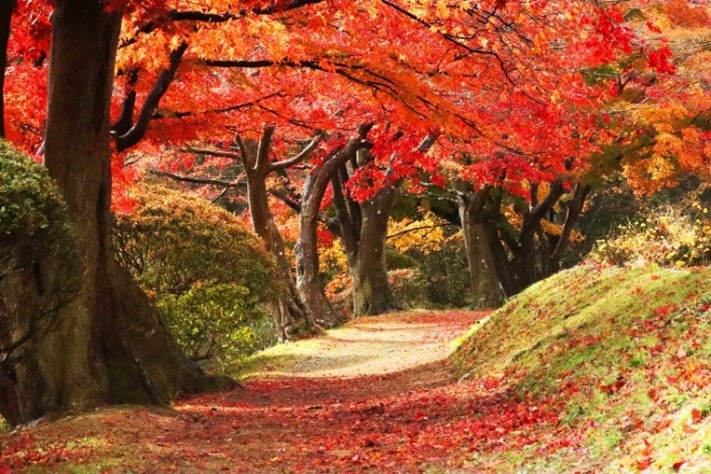
Best Places to See Autumn Leaves in Japan: The Ultimate Regional Guide to Koyo Season
The best places to see autumn leaves in Japan stretch from volcanic peaks in the far north to lantern-lit temple gardens in the old capital. Every region colors at a different time, which is exactly why most first-time visitors end up booking the wrong dates for the wrong city. I’ve spent years building autumn itineraries for clients at Astamb Holidays, and the question I get most often isn’t “where should I go” — it’s “when.” Japan calls this season koyo, the gradual turning of leaves from green to gold, orange, and deep red. The tradition of actively chasing this color, known as momijigari (literally “maple hunting”), goes back centuries to Kyoto’s imperial court. Today it pulls travelers across the entire country, from late September in Hokkaido to early December in Kyushu. This guide breaks Japan into five autumn regions, gives you exact peak windows, and tells you precisely how to reach each spot by train, bus, or rail pass. I’ve also added the crowd-avoidance tactics and budget notes I share directly with travelers planning their own koyo trips through Astamb Holidays. 🍁 Understanding Japan’s Autumn Foliage (Koyo) Calendar Japan’s foliage moves in the opposite direction of cherry blossom season. Sakura starts in the south and travels north; koyo starts in the cold mountains of Hokkaido and slowly works its way down to Kyushu over roughly ten weeks. The shift begins in mid-September around Hokkaido’s highest peaks. By early December, the last maples are still glowing in southern cities like Kagoshima and Fukuoka, even as Tokyo’s parks have already dropped their leaves. The Difference Between Koyo and Momiji These two words get mixed up constantly, so it helps to separate them clearly. A garden labeled a “momiji viewing spot” will lean heavily red. A spot known for koyo might be a mixed palette of yellow ginkgo avenues and orange maple canopies. Climate Patterns and Estimated Peak Dates Elevation drives almost everything here. Mountain regions above 1,500 meters can hit peak color a full month before lowland cities at the same latitude, since cooler night temperatures trigger the chlorophyll breakdown that produces autumn pigments. Coastal cities like Tokyo and Osaka sit in a warmer microclimate, which is why their parks color weeks after inland mountain towns at similar latitudes. Heavy rainfall years can also mute color intensity, while a sharp early cold snap tends to produce sharper, more vivid reds. Featured Snippet: When is the best time to see autumn leaves in Japan? The best time to see autumn leaves in Japan ranges from mid-September to early December depending on the region. Hokkaido peaks earliest in mid-to-late October, the central mountain areas of Tohoku and Chubu peak in October, while major cities like Tokyo and Kyoto experience their peak foliage from late November to early December. If your travel dates are fixed and not flexible, picking the region matters more than picking the destination. A trip locked into late November should center on Kansai and Kanto, not Hokkaido, where the leaves will already be gone. For a broader seasonal breakdown across the whole year, our best time to visit Japan guide is worth cross-checking against your travel window. 🗺️ Best Places to See Autumn Leaves in Japan: Region-by-Region Breakdown Here’s where the best places to see autumn leaves in Japan actually sit on the map, organized from the earliest-peaking region to the latest. Hokkaido: The Early Autumn Vanguard (Mid-September to Mid-October) Hokkaido kicks off the entire koyo season weeks before anywhere else in the country. The island’s volcanic terrain and early winter mean color arrives fast and fades fast too, so timing here is tighter than anywhere else on this list. Daisetsuzan National Park (Mount Asahidake) is the earliest and highest-altitude foliage spot in Japan. Color typically peaks in late September, with alpine shrubs turning deep red against bare volcanic rock and active steam vents. Jozankei Onsen, just outside Sapporo, gives travelers a gentler alternative — a hot spring town wrapped in maple-lined gorges that peaks slightly later, around early to mid-October. Hokkaido University’s Ginkgo Avenue in central Sapporo offers an urban contrast: a 380-meter row of ginkgo trees that turns bright yellow in late October, easily reached on foot from Sapporo Station. 🍁 Local Insight Tip by Wahid Ali: When we route clients through Hokkaido in early October at Astamb Holidays, I always tell them to check the Daisetsuzan ropeway operating status before flying in — strong mountain winds shut it down without much notice, and there’s no real backup plan once you’re already in Asahikawa. Tohoku: Underrated Gorges and Mountain Passes (October) Tohoku rarely makes the front page of Japan travel content, which is exactly why it’s worth the detour. This region trades temple crowds for river gorges and centuries-old mountain temples. Oirase Gorge, inside Towada-Hachimantai National Park, runs a 14-kilometer walking trail along a forest stream lined with maple and beech. Peak color here usually lands in mid-to-late October, with golden canopies reflecting directly off the slow-moving water. Naruko Gorge in Miyagi Prefecture is famous for its 100-meter-deep ravine, best viewed from the Ofukazawa Bridge walkway. Reds and oranges typically peak in mid-October, drawing far smaller crowds than Kansai’s equivalents. Yamadera Temple, perched on a cliffside near Yamagata, requires climbing roughly 1,000 stone steps — a workout rewarded by sweeping views of maple-covered valleys from the summit hall. Late October is the sweet spot here. 🍁 Local Insight Tip by Wahid Ali: Tohoku is the region I push hardest for repeat travelers at Astamb Holidays who tell me Kyoto felt too crowded the first time around. Oirase Gorge in particular gives you that classic Japanese-maple-over-water photo with maybe a tenth of the foot traffic you’d see in Arashiyama. Kanto & Tokyo: Urban Parks and Mountain Day Trips (Mid-November to Early December) Tokyo’s color change happens much later than the rest of the country because of its coastal warmth, which actually works in travelers’ favor — it extends the koyo season for anyone splitting time between the capital and
Best Places to See Autumn Leaves in Japan: The Ultimate Regional Guide to Koyo Season Read More »