When you step off the plane at Tokyo Haneda, the city greets you before you even exit the terminal. Digital signage cascades across corridors in four languages. Escalators move in precise formation. A rail system so complex it has its own instruction booklets whisks you toward one of the world’s largest cities in under 35 minutes. Landing at Muscat International Airport is an entirely different conversation — a low-rise spread of white limestone, the scent of dry sea air, and a city that feels composed rather than urgent. Wide roads, unhurried drivers, and the faint outline of the Al Hajar Mountains in the distance.
The gap between Japan vs Oman as travel destinations isn’t just geographic — it’s philosophical. One country has compressed an ancient culture into the most efficient urban machine ever built. The other has kept its landscape and heritage deliberately, beautifully unhurried. Both are safe, both are strikingly beautiful, and both reward travelers who pay attention. But they are asking you to travel in entirely different ways.
🗾 Japan vs Oman: Contrasting the Far East with the Arabian Peninsula
The Arrival: Neon Networks vs. Low-Rise White Fortresses
Japan operates at altitude. Tokyo is vertical — a skyline of stacked expressways, glass towers, and glowing signs that somehow coexist with wooden temples and micro-gardens tucked into alleyways. The density is the point. In a country of 125 million people living on an archipelago roughly the size of California, space is a resource, and Japan has engineered its way around the shortage.
Muscat sits horizontally. Oman’s capital is spread across rocky inlets and coastal plains, with building heights regulated so that the landscape isn’t overwhelmed. There are no skyscrapers here. The Sultan Qaboos Grand Mosque — completed in 2001 — is the architectural centrepiece, its white marble dome visible from across the city. The pace of arrival itself tells you how each country wants you to experience it.
Both airports are modern and well-organized. Tokyo Haneda and Narita connect to a web of trains and express buses. Muscat International connects you to… a car park. Hiring a vehicle in Oman isn’t a recommendation — it’s a practical necessity.
How They Differ on the Travel Spectrum
Japan is a walk-and-rail country. You arrive in Tokyo, load an IC card (Suica or Pasmo), and the city opens itself to you without a map. Subway lines, bullet trains, and regional rail reach nearly every attraction on most standard itineraries.
Oman is a road-trip country. Getting to Wadi Shab, Wahiba Sands, or the canyon rim of Jebel Shams requires putting kilometres behind you on an open highway. This is, for the right kind of traveler, a joy rather than an inconvenience.
Travelers drawn to the philosophy of slow travel will find Oman more naturally aligned with that pace. Japan suits travelers who want rich cultural and urban immersion punctuated by mountain escapes. Neither is inferior — they simply attract different ambitions.
Featured Snippet: Should you travel to Japan or Oman? Choose Japan if you prefer hyper-efficient public transit, neon cities, ancient Shinto shrines, alpine forests, and world-class culinary diversity. Choose Oman if you prefer rugged desert road trips, swimming in turquoise wadis, exploring historic mud-brick forts, and experiencing a peaceful, uncrowded Arabian coast under vast desert skies.
🏯 Cultural Heritage: Ancient Shrines vs. Fortresses of the Sand
Japan: Zen, Shintoism, and the Preservation of Craft
There is a concept in Japanese culture called wabi-sabi — the appreciation of imperfection, impermanence, and incompleteness. It shows up everywhere. In the asymmetry of a tea bowl. In the deliberate emptiness of a Zen garden. In the faded cedar of a 1,200-year-old Shinto shrine.
Kyoto is the heartland of this tradition. The city holds over 1,600 Buddhist temples and 400 Shinto shrines, including Fushimi Inari Taisha — its famous gates climbing a forested mountainside in an unbroken corridor of vermillion. Kinkaku-ji (the Golden Pavilion) reflects itself in still water. Arashiyama’s bamboo grove turns green light into something close to religious experience.
But Japan’s cultural depth isn’t limited to Kyoto. The city of Nara offers free-roaming deer considered sacred messengers of the gods. Nikko has mausoleums so ornate they feel almost excessive by Japanese aesthetic standards. Even Tokyo — hypermodern on the surface — contains Senso-ji in Asakusa, an 8th-century temple surrounded by incense smoke and wooden market stalls.
For travelers curious about Japan’s incredible places to visit, the cultural range across the country’s main islands is genuinely staggering.
💡 Local Insight Tip: In my experience planning Japan tours at Astamb Holidays, first-time visitors consistently underestimate how much time Kyoto needs. Budget a minimum of three full days. Trying to cover Fushimi Inari, Arashiyama, and the Higashiyama temple district in a single day means running rather than absorbing. — Wahid Ali
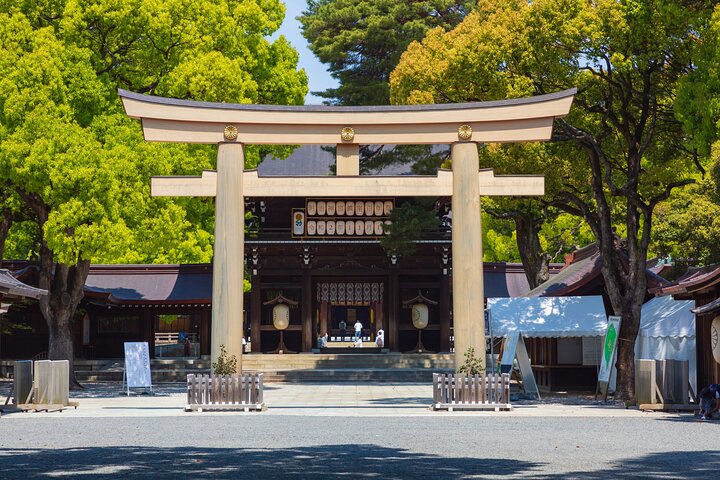
The tea ceremony — chado — is one of the most direct access points to Japanese philosophy. A properly conducted session can last nearly four hours and covers choreographed movement, seasonal aesthetics, and silence used as communication. It isn’t a performance; it’s a practice.
Japan’s craft traditions — lacquerware, hand-dyed indigo textiles, kintsugi (the art of repairing broken pottery with gold) — are living industries, not museum exhibits. Most cities have studios where you can observe or participate.
Oman: Bedouin Hospitality, Mud-Brick Forts, and the Frankincense Trail
Oman’s cultural identity is built on hospitality as obligation. Refusing refreshment at an Omani home or shop is considered mildly insulting. Coffee — kahwa, laced with cardamom and rosewater — arrives within minutes of any visit, accompanied by dates. This isn’t ceremony; it’s reflex.
The country’s built heritage is extraordinary in its concentration. Bahla Fort, a UNESCO World Heritage Site in the Al Dakhliyah region, is a massive mudbrick complex dating to the pre-Islamic period, with walls stretching for kilometres around an ancient oasis town. The adjacent falaj irrigation system — channels that have carried water from mountain springs to date palms for over a millennium — is also UNESCO-listed, a feat of hydraulic engineering that still functions today.
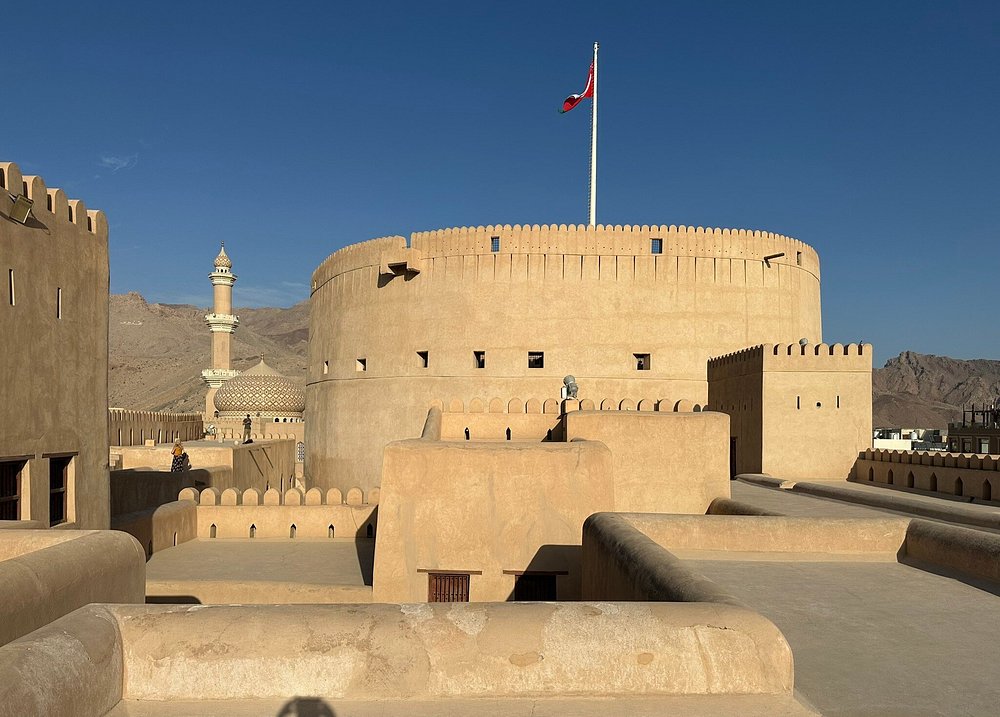
Nizwa Fort, built in the 17th century, is perhaps Oman’s most photogenic historical structure. Its massive circular tower once served as a defensive stronghold; now it anchors a Friday livestock market where goats are traded with the same energy as a stock exchange. The Bait Al Zubair Museum in Muscat provides context for all of this — a private collection of Omani artifacts, costumes, and weaponry assembled to preserve a culture that modernized fast.
In the far south, the Dhofar region around Salalah traces the ancient Frankincense Trail, a UNESCO-listed route connecting the frankincense-producing trees of the Dhofar highlands to the ports that shipped this resin across the ancient world. The Land of Frankincense site near Khor Rori is one of Arabia’s most significant archaeological discoveries.
💡 Local Insight Tip: Plan the Nizwa Friday souq for very early — ideally by 7 AM. The livestock market gets going at dawn and winds down by 9 AM. By mid-morning, it’s just another shopping street. The experience of watching Omani traders, children, and farmers all crowded into the same space around tethered goats is unlike anything I’ve seen elsewhere. — Wahid Ali
Daily Life and Etiquette: Onsen Protocol vs. Majlis Customs
In Japan, the onsen (hot spring bath) is a near-sacred social institution. Rules are non-negotiable: tattoos are prohibited in most facilities, bathers enter fully unclothed, and washing thoroughly before entering the communal pool is mandatory. Noise is kept minimal. Towels stay outside the water. The protocol can feel strict to first-timers, but it creates an atmosphere of genuine peace.
In Oman, the social equivalent is the majlis — a sitting room where guests are received, tea is served, and conversation unfolds slowly. Dress modestly (shoulders and knees covered for both genders, especially outside Muscat). Greet elders first. Accept food and drink when offered. Photography of local women without explicit permission is a firm social boundary.
Both countries are extremely tolerant of foreign visitors who make an honest effort. A simple bow in Japan and a hand-over-heart greeting in Oman go a long way.
🌋 Natural Wonders: Bamboo Groves vs. Desert Canyons
The Japanese Wilderness: Volcanoes, Cherry Blossoms, and Snow Fields
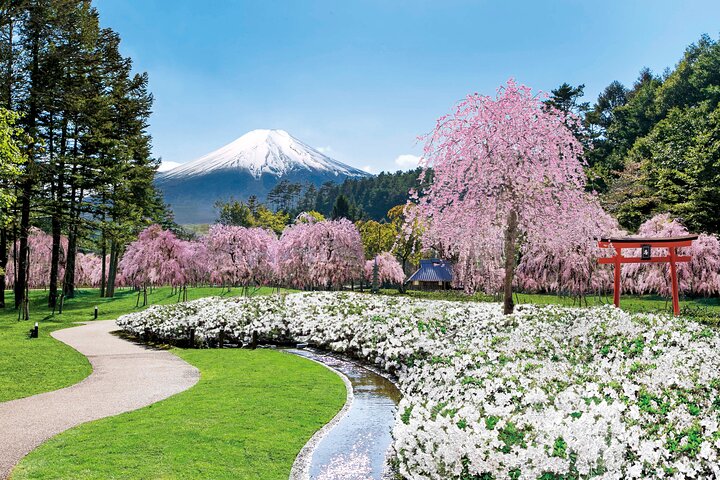
Japan’s geography is restless. The country sits on the Pacific Ring of Fire, which means active volcanoes, regular seismic activity, and hot springs emerging from the earth across nearly every prefecture. Mt. Fuji at 3,776 metres is the obvious icon — a near-perfect stratovolcano that appears on everything from Hokusai woodprints to bullet train windows. The official climbing season runs July to early September, and roughly 300,000 people make the ascent each year.
The Japanese Alps — specifically the Kita, Hida, and Akaishi mountain ranges — offer serious high-altitude hiking for those willing to move beyond the main tourism trail. The Tateyama Kurobe Alpine Route in Toyama Prefecture is open only from April to November and passes through a snow corridor that can rise over 20 metres in height during peak season.
Hokkaido in the north is a different country environmentally — bear territory, vast national parks, lavender fields around Furano, and the world’s second-largest snowfall rates in Sapporo. Okinawa in the far south is subtropical, with coral reefs, pristine beaches, and a distinct Ryukyuan cultural heritage quite separate from mainland Japan.
Cherry blossom season — sakura — runs from late March through April and moves north as spring progresses. It lasts roughly one to two weeks in each city, and its timing is uncertain enough that the Japan Meteorological Corporation publishes annual forecasts. Autumn leaf season (koyo) from mid-October through November provides an equally spectacular palette of red, orange, and gold.
💡 Local Insight Tip: Japan’s cherry blossom season books out six months in advance, especially in Kyoto. If your dates fall in late March or early April, secure accommodation in Kyoto and Hakone by October the previous year. Don’t try to wing it. — Wahid Ali
The Omani Terrains: Emerald Wadis, Jebel Shams, and Endless Dunes
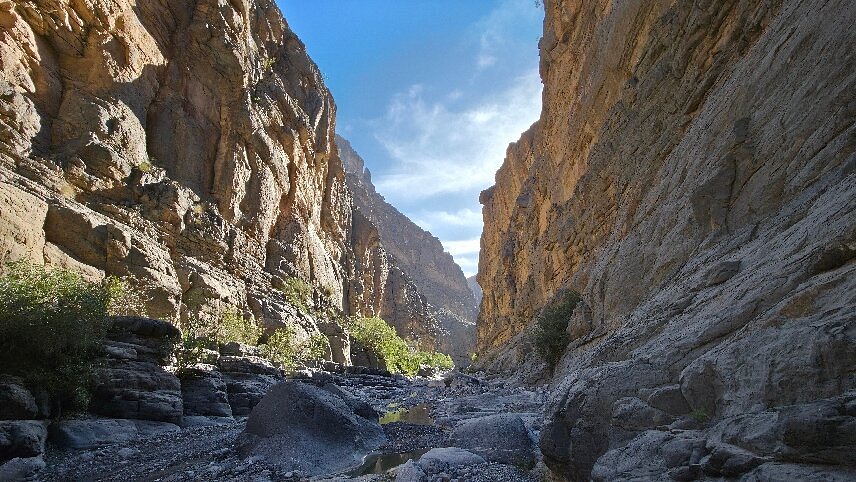
Oman’s geography is equally theatrical, but quiet about it. The country doesn’t announce its landscapes — you drive around a bend in the Al Hajar Mountains and suddenly the ground drops away into the Wadi Nakhr gorge, a canyon that plunges nearly 1,000 metres and has earned the regional nickname of Arabia’s Grand Canyon.
Jebel Shams — meaning “Mountain of the Sun” — is Oman’s highest peak at 3,009 metres. Its summit is restricted military territory, but the plateau below it offers the extraordinary Balcony Walk, a trail along the canyon rim with views that stretch across broken escarpments and ancient terraced villages. A standard 4×4 vehicle handles the approach road comfortably, though the final kilometres involve tight switchbacks with steep drops.
Wadi Shab, located near the coastal town of Tiwi, is arguably Oman’s most rewarding single-day experience. You reach the trailhead by a short boat crossing for 1 OMR (approximately ₹220), then hike for two hours through a valley of turquoise pools, date palms, and goat tracks until you reach a hidden cave accessible only by swimming through a narrow rock passage. The water is cold, clear, and surreal.
Wahiba Sands — or the Sharqiya Sands — is a compact desert region southeast of Muscat covering roughly 12,500 square kilometres. The dunes here are photogenic rather than overwhelming, making it excellent for first-time desert visitors. Sunrise from the crest of a dune, desert camps offering traditional dinners under stars, and optional dune-bashing by 4×4 make it a reliable itinerary anchor.
The Bimmah Sinkhole (Hawiyat Najm Park), about 130 kilometres from Muscat, is a circular pool of turquoise-green water formed by a natural limestone collapse. Entry is free and swimming is permitted. It’s a 20-minute stop on the coastal drive south, and worth it.
💡 Local Insight Tip: Don’t let the Wahiba Sands itinerary be rushed. Most organised tours spend just one night there. Push for two. The second morning — when the light hits the dunes differently and the camps are quieter — is the one you’ll photograph. — Wahid Ali
Seasonal Reality Check: When to Go Where
| Season | Japan | Oman |
|---|---|---|
| January–March | Cold; excellent skiing in Hokkaido; snow festivals; cherry blossoms begin late March | Peak season; ideal 20–28°C; all regions accessible |
| April–May | Cherry blossom season; mild, beautiful; very crowded | Getting warm; April still comfortable |
| June–September | Hot and humid; typhoon risk; Okinawa monsoon | Extremely hot (40°C+) in interior; Salalah Khareef monsoon (green hills, mist) |
| October–November | Autumn leaves (koyo); cooler; excellent weather | Good; temperatures dropping; October ideal |
| December | Cold; illumination festivals; fewer tourists | Peak season resumes; comfortable across the country |
The best overlap window for visiting both countries in one season is November through March. Both destinations are pleasant, and this avoids Japan’s peak summer humidity and Oman’s punishing interior heat.
For those drawn to alpine travel timing, the seasonal patterns here are comparable to Bhutan’s best travel windows, where the shoulder seasons before and after monsoon offer the clearest mountain visibility.
🚄 Navigating the Terrain: Rail Mastery vs. Desert Overlanding
The Japanese Transit System: Shinkansen and IC Cards
Japan’s rail network is arguably the most efficient in the world. The Shinkansen — bullet train — connects Tokyo to Osaka in 2 hours 15 minutes, covering approximately 515 kilometres. The Nozomi service is the fastest at speeds up to 320 km/h, though it isn’t covered by the standard JR Pass. The Hikari and Kodama services are included in the pass and still run at around 270 km/h.
The 7-day JR Pass (as of 2025) costs approximately ¥50,000 (roughly ₹28,000 at current exchange rates), covering unlimited travel on most JR-operated trains and shinkansen. For a 10-day Tokyo–Kyoto–Osaka–Hakone loop, it pays for itself comfortably.
Within cities, IC cards — Suica (Tokyo) and ICOCA (Kansai region) — are rechargeable transit cards that work on subways, buses, and even convenience store purchases. Load them at station kiosks. A single Tokyo subway ride runs approximately ₹115–₹230 (¥200–₹400 yen), while day passes cost around ₹450–₹600.
Signage across Japan’s stations is multilingual (Japanese, English, Chinese, Korean). Even first-time visitors rarely get truly lost. This is part of Japan’s deliberate hospitality infrastructure — the assumption that you should be able to navigate independently.
Driving in Oman: Why a 4×4 is Essential
Oman’s highways are wide, smooth, and frequently empty. The Muscat–Nizwa highway (roughly 140 kilometres) takes under two hours. The Sur coastal road is a beautiful drive with sea on one side and rock escarpments on the other. Driving in Oman is not stressful — traffic is light outside Muscat, petrol is cheap, and road quality in the main corridor is genuinely good.
The complications begin when you leave the tarmac. Reaching Jebel Akhdar requires a 4×4 with low-range gearing — this is enforced at a checkpoint at the base of the mountain. Ascending Jebel Shams involves steep, narrow gravel sections where a standard sedan will spin out. Exploring the Wahiba Sands beyond the perimeter camps without a 4×4 means getting stuck.
A standard compact 4×4 rental (Toyota Prado class) runs approximately OMR 35–50 per day (₹7,500–₹11,000), depending on the season and insurance level. Fuel in Oman is inexpensive — roughly OMR 0.20/litre (approximately ₹44/litre). Budget OMR 150–200 (₹32,000–₹43,000) in total fuel costs for a 10-day itinerary.
Navigation is straightforward with Google Maps and a local SIM. Ooredoo and Omantel are the two main providers; a data SIM with adequate coverage costs around OMR 3–5 (₹650–₹1,100) for 10 days.
Travel Logistics Comparison Table
| Category | Japan Travel Model | Oman Travel Model |
|---|---|---|
| Primary Transit | Shinkansen (bullet trains) and city subways | Self-drive rental cars (preferably 4×4) |
| Ease of Solo Travel | Exceptional; multilingual public signage throughout | High, but requires confident driving skills |
| Road Conditions | Narrow urban streets; tolled expressways | Wide modern highways; off-road desert and mountain tracks |
| Connectivity | Pocket Wi-Fi, eSIMs, extensive public hotspots | Local SIMs (Ooredoo/Omantel) essential for remote areas |
| Daily Transport Cost | ₹500–₹2,000 (IC card + subway) | ₹1,500–₹2,500 (car rental share + fuel) |
| Car Rental Needed | No — not recommended for first-timers | Yes — essential for most attractions outside Muscat |
| Navigation Difficulty | Low — signage is clear and multilingual | Low on highways; moderate on mountain/desert tracks |
💰 Financial Breakdown: Budgeting for Kyoto vs. Muscat
Accommodation Styles: Capsule Hotels to Ryokans vs. Desert Camps & Luxury Resorts
Japan offers one of the widest accommodation spectrums in travel. Capsule hotels in Tokyo and Osaka run from approximately ₹1,800–₹3,000 per night (¥3,000–₹5,000) — clean, functional, and genuinely interesting for solo travelers who’ve never tried one. Standard business hotels in central Tokyo (think APA Hotel, Dormy Inn) run ₹5,500–₹9,000 per night and typically include breakfast.
The ryokan is the full Japanese hospitality experience — wooden rooms with tatami flooring, a futon laid out by staff, seasonal multi-course kaiseki dinner, and an onsen bath. A mid-range ryokan in Hakone or Nikko runs ₹12,000–₹25,000 per person per night (including dinner and breakfast). High-end ryokans in Kyoto can exceed ₹60,000 per night.
In Oman, the accommodation spread is different. Budget guesthouses in Muscat or Nizwa start around OMR 15–20 per night (₹3,300–₹4,400). Mid-range hotels typically run OMR 35–60 (₹7,600–₹13,000). The country’s luxury properties — Alila Jabal Akhdar, Six Senses Zighy Bay — are world-class, with nightly rates easily crossing OMR 200+ (₹44,000+).
Desert camp accommodation in Wahiba Sands is the Oman equivalent of the ryokan experience — a fixed camp with traditional Bedouin-style tents, communal dinner under stars, and sunrise camel walks. Mid-range camps run OMR 30–60 per person (₹6,500–₹13,000) including dinner and breakfast.
Food Dynamics: Konbini Meals vs. Traditional Shuwa Feasts
Japan’s convenience store food — the konbini — is a legitimate culinary phenomenon. A well-assembled breakfast of onigiri (rice ball), yakitori, and iced green tea from a 7-Eleven or FamilyMart costs under ₹400 (¥700). Ramen at a stand-up counter costs ₹800–₹1,400. A proper dinner at an izakaya (casual gastropub) with drinks runs ₹2,000–₹3,500 per person.
Oman’s local food is inexpensive and generous. A shawarma from a roadside stall costs OMR 0.5–1 (₹110–₹220). A full rice plate with grilled chicken at a local restaurant runs OMR 1.5–3 (₹330–₹660). The ceremonial shuwa — lamb slow-cooked in underground sand pits for up to 48 hours, then served on saffron-infused rice — is typically reserved for festivals and family occasions, though some heritage restaurants in Muscat offer it on weekends.
Daily Expense Estimates
| Budget Level | Japan (per person/day) | Oman (per person/day) |
|---|---|---|
| Budget | ₹4,800–₹8,000 (~$55–100) | ₹7,000–₹11,000 (~$85–130) |
| Mid-Range | ₹11,500–₹17,000 (~$140–200) | ₹12,000–₹20,000 (~$145–240) |
| Luxury | ₹25,000–₹45,000 (~$300–540) | ₹28,000–₹55,000 (~$340–660) |
Note: Oman’s higher floor costs reflect the near-mandatory car rental. For a couple sharing, costs drop significantly. Japan’s budget floor benefits from its exceptional cheap-eat infrastructure.
Visa context for Indian travelers: Japan issued the eVisa for Indians starting April 1, 2024, processed through VFS Global India for a single-entry tourism stay of up to 90 days (₹500 government fee plus service charges). Oman offers an online eVisa for Indian citizens (30-day tourist visa) and a 14-day visa-free entry for Indian passport holders with a valid US, UK, Schengen, Canada, or Australia visa or residence permit.
🛡️ Safety and Hospitality in Japan vs Oman
The Safety Standards: Low Crime in Both Hemispheres
Both countries consistently rank among the safest travel destinations on earth — but for slightly different structural reasons.
Japan’s safety is infrastructural. Lost wallets get turned in to police boxes. Trains run on schedules measured in seconds. Emergency services are responsive and well-distributed. Crime rates in Japan are among the lowest in the G7, and violent crime against tourists is statistically near zero. Solo travel at 2 AM in Tokyo carries less ambient risk than most European city centers at the same hour.
Oman’s safety is cultural. The country’s tribal social structure and Islamic values create a strong ambient code of behavior. Hospitality toward guests — including strangers — is considered a duty. Violent crime is extremely rare, and Oman consistently ranks as one of the safest countries in the Middle East and globally. That said, traffic accidents on mountain roads are a real consideration, particularly for drivers unfamiliar with steep gravel ascents.
Both destinations record minimal incidents involving tourists. For a comparable discussion of safety in emerging or lesser-known destinations, the North Macedonia travel context offers interesting parallels on how smaller, lesser-visited countries often maintain exceptional safety records.
Family Travel: Theme Parks and Clean Streets vs. Outdoor Escapades and Beach Resorts
Japan is supremely family-engineered. Universal Studios Japan in Osaka has dedicated Harry Potter and Super Nintendo World zones. Tokyo Disneyland and DisneySea are consistently rated among the top theme parks globally. Public toilets across Japan are clean, plentiful, and frequently heated. Pushchairs navigate smoothly on elevator-equipped subway systems.
Children in Japan are respected as travelers. Most restaurants have high chairs. Convenience stores have microwaves and hot water for formula. Pharmacies are everywhere. The infrastructure assumes families exist.
Oman offers families an entirely different kind of engagement. Ras al Jinz Turtle Reserve on the eastern tip of the country is a significant wildlife experience — green sea turtles nest here between July and November, with organized night viewing supervised by rangers. Dolphin watching trips off the Muscat coast run year-round and are reliable enough for families with children. The Bimmah Sinkhole swimming pool is safe, supervised, and genuinely fun for kids.
For families interested in outdoor adventure rather than structured entertainment, Oman’s desert camps, night sky experiences, and coastal activities offer memories that no theme park can replicate.
🍜 Culinary Showdown: Umami Precision vs. Spiced Arabian Generosity
The Japanese Food Scene: Beyond Sushi
Japan has more Michelin stars than any country in the world. But the most revealing food in Japan isn’t in a starred restaurant — it’s in a basement ramen shop in Fukuoka, or a standing sushi counter in Tsukiji Outer Market, or an Osaka takoyaki stall where the octopus balls are still bubbling when they reach your hands.
Regional ramen variations alone require a week to properly sample: Sapporo miso ramen, Hakata tonkotsu (Fukuoka’s pork-bone broth), Tokyo shoyu ramen, Kyoto chicken ramen. Each has its own dedicated establishments and loyal debates. A bowl costs ₹800–₹1,400 almost anywhere.
The izakaya culture — casual communal dining with small plates and beer, sake, or highballs — is the best way to eat in Japan on a budget. Plates run ₹300–₹800 each, and the combination of karaage (fried chicken), edamame, grilled yakitori skewers, and cold Sapporo beer for around ₹2,000 per person is a consistent nightly highlight.
Kaiseki — the formal multi-course seasonal tasting menu associated with Kyoto — represents Japan’s highest culinary art. A kaiseki dinner at a respected Kyoto establishment costs ₹8,000–₹20,000 per person but presents an experience as much architectural as gastronomic.
Omani Flavors: Cardamom Coffee, Dates, and Fire-Cooked Shuwa
Omani food is built around generosity of portion rather than precision of technique. The guiding principle is abundance.
Kahwa — the spiced cardamom-rosewater coffee served in small handleless cups — arrives at every social interaction and most hotel lobbies. It’s thin, lightly bitter, and served with sticky dates. Declining three consecutive refusals is the accepted signal that you’re done.
Majboos is Oman’s everyday rice dish — basmati cooked with dried limes (loomi), onions, and slow-cooked chicken or lamb, carrying a sweet-sour warmth that becomes addictive. Harees — slow-cooked wheat and meat ground to a porridge-like consistency — is traditional but genuinely filling, particularly in colder months.
The ceremonial shuwa involves marinating a whole lamb in a paste of spices (cinnamon, cardamom, cloves, dried chillies), wrapping it in banana leaves, and cooking it underground in a sealed pit for up to 48 hours. The result is meat that falls from the bone and carries smoke and spice with no effort of chewing. It appears at Eid celebrations, weddings, and increasingly at heritage restaurants in Muscat.
Mashuai — spit-roasted kingfish served alongside lemon rice and a tamarind dipping sauce — is the coastal Omani dish that most surprises visitors. Order it in any Muscat fish restaurant near Muttrah Corniche.
🗺️ How to Choose Your Next Adventure
The 10-Day Japan Blueprint
A focused first-timer loop connecting Japan’s four most essential regions:
| Day | Location | Highlights |
|---|---|---|
| Days 1–3 | Tokyo | Senso-ji, Shibuya crossing, Shinjuku, teamLab, day trip to Nikko |
| Days 4–6 | Kyoto | Fushimi Inari, Arashiyama, Kinkaku-ji, Nishiki Market, tea ceremony |
| Days 7–8 | Osaka | Dotonbori street food, Osaka Castle, Kuromon Market, Universal Studios |
| Days 9–10 | Hakone | Mt. Fuji views, open-air museum, ryokan with onsen, Shinkansen return |
Transit between all cities uses the JR Pass (7-day). Internal Kyoto movement by local bus and bicycle. Book the Hakone ryokan months in advance.
Estimated total trip cost (mid-range, Indian traveler): ₹1,80,000–₹2,40,000 per person for 10 days including flights from Mumbai, accommodation, food, and the JR Pass.
The 10-Day Oman Road Trip
A classic self-drive circuit covering Oman’s four essential terrain types:
| Day | Location | Highlights |
|---|---|---|
| Days 1–2 | Muscat | Sultan Qaboos Grand Mosque, Muttrah Souq, Bait Al Zubair Museum, Corniche |
| Days 3–4 | Nizwa | Nizwa Fort, Friday livestock souq, Jebel Akhdar rose terraces, Bahla Fort |
| Days 5–6 | Wahiba Sands | Desert camp, dune sunset, stargazing, camel walk at dawn |
| Days 7–8 | Wadi Shab & Sur | Wadi Shab hike and swim, Bimmah Sinkhole, Ras al Hadd turtle beach |
| Days 9–10 | Coastal return to Muscat | Wadi Bani Khalid optional, Daymaniyat Islands snorkeling, final Muscat dinner |
Rent a Toyota Prado or equivalent 4×4 from Muscat airport. Book desert camp at least two weeks ahead in peak season.
Estimated total trip cost (mid-range, Indian traveler): ₹1,50,000–₹2,00,000 per person for 10 days including flights from Mumbai, accommodation, food, 4×4 rental, and fuel.
Packing Essentials for Both Climates
For Japan:
- Comfortable walking shoes (you’ll cover 15–20 km daily in cities)
- Lightweight layers for transitional weather
- IC card and pocket Wi-Fi or eSIM
- Small day pack; luggage forwarding (takuhaibin) handles heavy bags between cities
- Modest clothing for temple visits (no bare shoulders or very short skirts)
For Oman:
- Modest clothing covering shoulders and knees (especially in interior towns and mosques)
- High-SPF sunscreen and UV-protective clothing
- Sturdy closed-toe shoes for wadi hiking
- Reef-safe swimwear and a quick-dry towel
- Physical cash (OMR) for small purchases; cards not always accepted at roadside stops
- Downloaded offline maps — signal drops in mountain and desert areas
🏆 The Verdict: Which Haven Awaits You?
Choosing between Japan and Oman is really a question of what kind of energy you want to carry on a trip.
Japan rewards urban curiosity, cultural depth-seeking, and the joy of a system that works flawlessly. It’s a country where you can spend a week in Kyoto and feel you’ve barely scratched the surface, or eat your way across Osaka for three days and leave with a permanent opinion on ramen. Its beauty is precise, considered, and layered.
Oman rewards patience, landscape hunger, and the specific pleasure of a road stretching to a horizon you can’t quite see. It’s a country where Wednesday morning at Wadi Shab might belong entirely to you — just the water, the palm trees, and the sound of your own footsteps on wet rock. Its beauty is raw, ancient, and generous.
Both countries are remarkably clean, exceptionally safe, and genuinely hospitable. Neither is overcrowded to the point of exhaustion. Both will send you home with photographs that feel honest.
If you’re traveling with a family that includes young children and enjoys structured entertainment, Japan has the infrastructure. If your group is drawn to outdoor adventure, wildlife, and nights under desert stars, Oman is the better call. Solo travelers thrive in both.
In my experience at Astamb Holidays, the travelers who come back most satisfied from Oman are those who gave themselves permission to slow down. And the ones who remember Japan longest are those who resisted the urge to tick off every temple and instead spent a full afternoon watching the light change in a Kyoto garden.
Both deserve more than a checklist. Explore more curated destination guides and itineraries at Xplore Heaven to plan either journey with the depth it deserves.
❓ Frequently Asked Questions
Is Japan or Oman more expensive to visit?
Japan generally offers a wider range of budget options — particularly in transit, food (convenience store meals and ramen), and affordable capsule hotels. Oman tends to cost more per day at the floor level because public transportation is minimal, requiring a 4×4 rental plus mid-range accommodation to access most major landscapes. A mid-range solo traveler should budget roughly ₹11,500–₹17,000 per day in Japan versus ₹12,000–₹20,000 in Oman.
What is the best month to travel to Japan and Oman?
The best overlap season for both destinations is November to March. Oman enjoys warm, pleasant temperatures ideal for desert exploration and wadi hiking, while Japan offers crisp winter skies, fewer tourist crowds, and excellent visibility. Japan’s cherry blossom season (late March to April) and autumn leaves (October to November) are separately compelling, but don’t overlap with Oman’s optimal season.
Is Oman safe for solo female travelers compared to Japan?
Both destinations are exceptionally safe for solo female travelers. Japan’s low crime rate and clear infrastructure make independent navigation easy at any hour. Oman carries a strong culture of respect and hospitality, with violent crime against tourists being extremely rare. Solo women in Oman should dress modestly — shoulders and knees covered — particularly outside Muscat and in interior towns. Neither country presents significant safety concerns for women traveling alone.
Do I need a rental car to travel in Oman and Japan?
You do not need a rental car in Japan. Its bullet trains, city subways, and regional rail services cover virtually every major attraction on most itineraries efficiently. A rental car in Japan actually adds complications in dense cities. In Oman, a rental car — ideally a 4×4 — is effectively required to access mountain passes, desert camps, coastal wadis, and most inland attractions outside Muscat.
About the Author
Wahid Ali is a seasoned travel professional and Operations Lead at Astamb Holidays, Mumbai. With extensive experience in crafting travel experiences and destination insights, Wahid combines practical travel logistics expertise with engaging storytelling to help travelers explore hidden gems across India and beyond. His work blends expert travel planning with a passion for culturally rich and nature-oriented destinations.
Connect with Wahid Ali on LinkedIn | xploreheaven.com
References
This article is backed by authoritative sources and research.
- Japan National Tourism Organization — Official Travel Guide
- Japan Rail Pass Official Site — Prices and Pass Types
- Ministry of Foreign Affairs of Japan — eVISA System
- Embassy of Japan in India — eVISA Launch Information
- Oman Ministry of Foreign Affairs — Entry Visa Information
- Rough Guides — Jebel Shams Travel Guide
- Much Better Adventures — Jebel Shams and Wadi Ghul Hiking Guide
- Oman Wanderlust — Wadi Shab Visitor Guide
- Budget Your Trip — Japan Daily Travel Costs
- Budget Your Trip — Oman Daily Travel Costs
- Rough Guides — Oman Travel Tips and Budget
- Travel With Hello — Oman Travel Budget Guide 2026
- Live Japan — Japan Travel Budget Guide
- Gulf News — Oman Tourism Statistics 2024
- UNESCO World Heritage — Aflaj Irrigation Systems of Oman