By Imran Mulla — Founder, TravelJunctions.in | Contributor, XploreHeaven.com
Seventeen years in the travel business have taught me one golden rule: the smartest trips are not always the most expensive ones. And right now, in May 2026, that rule has never been more relevant. Your city is hitting 38°C to 43°C. International airfare has gone through the roof. The Indian rupee is under pressure. And PM Narendra Modi just made a heartfelt public appeal — on May 10, 2026 — asking Indians to skip foreign travel for at least a year and invest that money back home. You know what? I think he’s onto something.
The Maharashtra hill stations are waiting for you — cooler, greener, more affordable, and honestly more refreshing than any crowded European square or overpriced Southeast Asian resort. Before you reach for your passport, let me share what 17 years of sending families, couples, and solo travelers to these mountains has taught me.
Quick Answer: The best Maharashtra hill stations to visit in May 2026 include Mahabaleshwar, Matheran, Panchgani, Igatpuri, and Toranmal because they offer cooler temperatures ranging from 14°C to 28°C, stunning scenic landscapes, and easy road or rail access from Mumbai, Pune, and Thane.
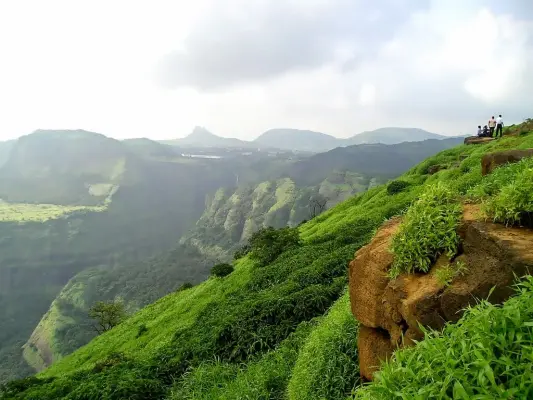
Why Maharashtra Hill Stations Are Trending in Summer 2026
Let me be straight with you — this trend was already building before Modi said a word.
Indian millennials and Gen Z travelers have quietly been doing the math. A 4-night trip to Bali or Thailand for a couple, by the time you include visa fees, return flights, hotel, and food, costs somewhere between ₹1.5 lakh to ₹2.5 lakh easily. A 4-night workcation at a well-appointed villa or boutique resort in Mahabaleshwar or Igatpuri? You are looking at ₹25,000 to ₹60,000 for two — and that includes your meals, scenic drives, and a proper digital detox.
The numbers back this up. Maharashtra received 189.4 million domestic tourist visits in 2024, up 17% from the previous year, according to the Ministry of Tourism’s India Tourism Data Compendium 2025. And the Skift India Travel Report 2026 confirms that Indian travelers now prefer 4 mini-breaks over one long holiday, with couples making up 40% of weekend bookings at hill destinations close to Mumbai.
The workcation culture has also permanently changed travel habits. Professionals from Mumbai and Pune IT corridors are booking hill station stays for 5 to 7 days, not just weekends, because stable Wi-Fi and cooler air genuinely improve productivity. Social media is amplifying this — reels from Igatpuri’s Vipassana-adjacent retreats and sunrise shots from Mahabaleshwar’s Wilson Point are racking up millions of views and pulling younger crowds who want an experience worth sharing.
Why PM Modi’s Domestic Travel Appeal Is Boosting Maharashtra Hill Stations
On May 10, 2026, at a BJP event in Hyderabad, Prime Minister Narendra Modi made a direct appeal to the Indian middle class. He asked citizens to avoid foreign travel, foreign destination weddings, and excessive gold purchases for at least one year, citing the need to protect India’s foreign exchange reserves amid geopolitical pressure and a crude oil surge of nearly 50%.
This was not just a political statement. It was economic common sense packaged as a patriotic nudge.
His appeal aligns perfectly with the government’s long-running “Dekho Apna Desh” initiative and the “Vocal for Local” vision — both aimed at making domestic tourism a first choice, not a fallback. And here is the thing: Maharashtra is uniquely positioned to benefit.
The state’s Maharashtra Tourism Policy 2024 is already focused on enhancing tourism infrastructure and boosting regional tourism. When you travel to a Maharashtra hill station, every rupee you spend — at the local dhaba, the strawberry stall, the homestay run by a tribal family — stays in the Indian economy and creates real livelihoods. That is the kind of multiplier effect no international resort booking can replicate.
Which Maharashtra Hill Stations Are Best to Visit in May 2026?
Short answer: For May 2026, the top picks are Mahabaleshwar, Matheran, Lonavala, Panchgani, Toranmal, Igatpuri, and Amboli — each suiting a different type of traveler.
Mahabaleshwar — Best Overall Pick
At 1,353 metres above sea level in the Western Ghats, Mahabaleshwar remains the queen of Maharashtra hill stations, and for good reason. In May, temperatures hover between a very comfortable 19°C to 24°C. That alone is enough to make you pack your bags when Mumbai is sweltering at 37°C.
Located 123 km from Pune and 243 km from Mumbai, it is accessible and fully loaded with things to do. Arthur’s Seat, Wilson Point, Kate’s Point — these viewpoints are genuinely spectacular, not just tourist-brochure words. The strawberry farms around Mapro Gardens are still operational in early May, and the freshly made strawberry ice cream there is something I personally look forward to every season. Venna Lake is perfect for a quiet evening boat ride with family.
My tip: Leave Mumbai or Pune by 5:30 AM on a weekday. Avoid the weekend rush. You will get the viewpoints almost to yourself before 9 AM.
Matheran — The Vehicle-Free Escape
If there is one place that truly forces you to slow down, it is Matheran. Asia’s only completely automobile-free hill station, it sits 80 km from Mumbai and offers something no other destination can — silence.
Park your car at Dasturi Naka and walk the 2.5 km to the main market, or hire a horse (₹500–800). Better still, take the heritage Neral–Matheran toy train (₹75, a delightful 2-hour journey through thick forest). With temperatures around 22°C to 26°C in May, it is one of the most peaceful summer retreats in the state.
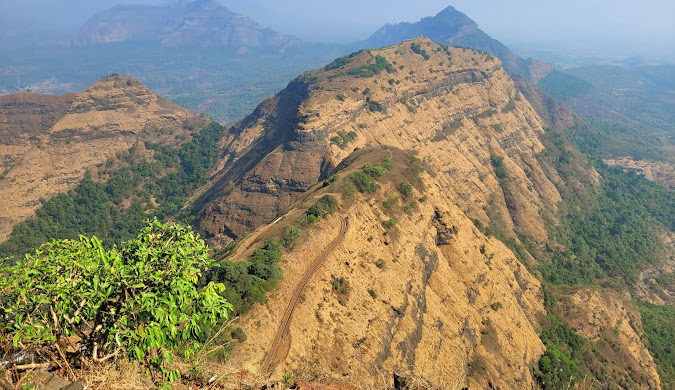
Best for: Families with young children, digital detox seekers, photography enthusiasts.
Lonavala — The Weekend Getaway King
Lonavala sits just 95 km from Mumbai and 67 km from Pune on the expressway. You can be there in 90 minutes if you leave early. That proximity is its biggest strength.
Yes, it gets crowded on weekends — but go on a Tuesday or Wednesday and Bhushi Dam, Karla Caves, Rajmachi Point, and Lohagad Fort are genuinely enjoyable without the shoulder-to-shoulder crowds. The chikki shops alone are worth the drive. May is drier here compared to its spectacular monsoon avatar, making it great for trekking without the mud.
Panchgani — Best for Families
Sitting at 1,334 metres and located 100 km from Pune, Panchgani is the destination I recommend most for families with school-going children. The famous Table Land — Asia’s second-largest volcanic plateau — is where kids can run freely, cycle, and take pony rides with sweeping valley views all around.
The Mapro Gardens on the road from Mahabaleshwar to Panchgani has a great café where the family can sit and enjoy fresh fruit products. Devil’s Kitchen, Rajpuri Caves, and Sydney Point add layers of history and nature to the trip. Panchgani stays pleasantly cool in May at around 20°C to 26°C, making it ideal for outdoor activities without the heat stress.
Toranmal — The Hidden Gem with the Coolest Temperatures
Here is my personal favourite for May 2026 if you want to escape the crowds entirely.
Toranmal sits at 1,100 to 1,425 metres in the Satpura range of Nandurbar district — which is northern Maharashtra, far from the usual Pune-belt circuit. It records some of the lowest summer temperatures in the entire state, with lows touching 14°C and a pleasant average of around 23°C in May.
Yashwant Lake is postcard-perfect. Gorakhnath Temple draws the spiritually inclined. Khadki Point offers panoramic views with virtually no crowds. This is a place where you will hear birds more than car horns.
It is 510 km from Mumbai (8–9 hours), so plan it as a long weekend trip of 3 nights minimum. Combine it with a drive through the tribal villages of Nandurbar district for a truly off-grid cultural experience.
Igatpuri — Best for Wellness and Meditation
Igatpuri has quietly become Maharashtra’s wellness capital. Located 120 km from Mumbai, it is home to the globally renowned Vipassana International Academy and surrounded by the lush Sahyadri forests that make it feel like a completely different world.
In May, temperatures stay around 20°C to 28°C. The Vaitarna River and nearby Bhatsa Dam area are great for nature walks. Igatpuri is also a gateway to some excellent trekking routes — Kalsubai Peak (the highest point in Maharashtra at 1,646 metres) is a serious but achievable day trek from here.
Best for: Solo travelers, wellness seekers, yoga retreaters, serious trekkers.
Amboli — The Offbeat Southern Jewel
Sitting at 690 metres in the Sindhudurg district, near the Karnataka border, Amboli is one of those destinations that most Mumbai and Pune travelers have heard of but never actually visited. That is exactly why it belongs on this list.
In May, before the Konkan monsoon fully arrives in mid-June, Amboli offers temperatures of around 22°C to 28°C with early pre-monsoon mists starting to roll in. The biodiversity here is extraordinary — the area hosts over 2,000 species of plants and rare endemic amphibians. Amboli Falls, Nangartas Falls, and Madhavgad Fort are the top draws.
It is about 510 km from Mumbai (9 hours) — best combined with a coastal Konkan road trip through Malvan or Tarkarli en route.
Which Maharashtra Hill Station Has the Coolest Weather in May?
Direct answer: Toranmal and Chikhaldara record the lowest May temperatures in Maharashtra. Mahabaleshwar is the coolest option that is easily accessible from both Mumbai and Pune.
| Hill Station | Avg. Temp in May | Best For |
|---|---|---|
| Toranmal | 14°C – 28°C | Offbeat, solitude, tribal culture |
| Chikhaldara | 15°C – 30°C | Coffee estates, wildlife, families |
| Mahabaleshwar | 19°C – 24°C | Overall best, couples, families |
| Panchgani | 20°C – 26°C | Families, cycling, plateau views |
| Igatpuri | 20°C – 28°C | Wellness, meditation, trekking |
| Matheran | 22°C – 26°C | Car-free retreat, digital detox |
| Lonavala | 22°C – 26°C | Weekend getaway, adventure |
| Amboli | 22°C – 28°C | Offbeat, biodiversity, pre-monsoon |
Which Hidden Maharashtra Hill Stations Are Still Underrated in 2026?
Most travelers pile into Mahabaleshwar and Lonavala every summer. Fair enough — they are great. But if you want something quieter and just as rewarding, here are five underrated picks:
Jawhar (Palghar district, 160 km from Mumbai) is Maharashtra’s only tribal princely state and a treasure trove of Warli tribal art. The Dabhosa Waterfall and Jai Vilas Palace are highlights. It rarely appears on mainstream travel lists, which is precisely why it should be on yours.
Bhandardara (Ahmednagar district, 185 km from Mumbai) sits along the Pravara River near Arthur Lake and is famous for fireflies arriving in late May — one of the most magical natural spectacles in the region.
Chikhaldara (Amravati district) is in the Vidarbha region and doubles as a gateway to Melghat Tiger Reserve. At 1,118 metres, it is the only coffee-growing hill station in Maharashtra — and that alone makes it interesting.
Suryamal (near Bhiwandi, just 40 km from Thane) is practically a secret — a tiny hamlet perched in the hills offering incredible sunrise views with almost zero tourist infrastructure, making it perfect for a sunrise day trip.
Malshej Ghat (Pune district, 130 km from Mumbai) is less a traditional hill station and more a high-altitude pass through the Sahyadri, where the roads themselves become the experience. In May, flamingos start arriving at the nearby lakes, making it a surprising birding destination.
Why Travelers Are Choosing Maharashtra Hill Stations Instead of International Trips
It is not complicated. Here is the real math:
The Indian rupee has been under pressure in 2026, driven by crude oil prices spiking nearly 50% due to West Asia tensions. According to RBI data, spending under the Liberalised Remittance Scheme (LRS) on foreign travel accounted for $15.3 billion between April 2025 and February 2026 — already 3.1% lower than the same period the previous year. Indians were already voting with their wallets before Modi’s appeal.
An international trip is not just expensive — it is stressful in ways domestic travel is not. Visa delays. Foreign exchange queues. Flight cancellations with complicated insurance claims. Time zones that disrupt your sleep. When you drive to Mahabaleshwar, the worst that happens is a small traffic delay at Khopoli. You arrive, breathe fresh mountain air, eat comfort food, and feel like yourself again.
Flexible planning is another huge advantage. Domestic travel lets you book 3 to 7 days in advance without penalties. International travel requires months of advance planning to get decent prices. Maharashtra hill stations have enough variety that you can choose your destination based on mood, budget, and weather — all in the same week.
How to Plan a Budget-Friendly Maharashtra Hill Stations Trip
You do not need to spend big to travel well. Here is how I plan trips for budget-conscious travelers:
By Train: The Mumbai–Pune Intercity Express drops you at Pune for as little as ₹150 in sleeper class, and from Pune you can take an ST bus to Mahabaleshwar or Panchgani. For Matheran, take the Karjat local from Mumbai CSMT and then the toy train from Neral. Total cost from Mumbai to Matheran: under ₹300 return.
By Road: The Mumbai–Pune Expressway is one of India’s best highways. If you are driving, leave before 6:30 AM on weekdays to skip the tolls, I mean the traffic. Fuel costs Mumbai to Mahabaleshwar and back: approximately ₹2,000 to ₹2,500 in a hatchback.
Weekday Hack: Friday–Sunday hotel rates in popular hill stations are routinely 30% to 50% higher than Sunday–Thursday rates. Book a Monday–Wednesday stay and you will save significantly. This works especially well for remote workers and those with flexible leave.
Stay Options: Do not overlook MTDC (Maharashtra Tourism Development Corporation) resorts. They offer clean, government-run accommodations at Mahabaleshwar, Matheran, and Panchgani at very reasonable rates — often ₹1,500 to ₹3,500 per night for a double room.
How to Travel Sustainably to Maharashtra Hill Stations
Here is something I feel strongly about after nearly two decades in this business: the hills do not owe you a beautiful experience. You owe the hills responsible behavior.
Carry your plastic back. Maharashtra hill stations, especially Mahabaleshwar and Matheran, have strict regulations against single-use plastic. Matheran enforces this aggressively — and rightly so. Bring reusable water bottles and cloth bags.
Respect the no-vehicle zones. Matheran’s no-vehicle policy is what keeps it pristine. Do not try to find workarounds. Park at Dasturi Naka and walk — it is part of the experience.
Support local businesses. Buy your strawberries directly from the farmers near Mahabaleshwar, not from the highway resellers. Eat at local dhabas. Stay at homestays run by local families rather than always defaulting to large chain hotels. Your spending decisions shape local livelihoods.
Stick to marked trails. With trekking becoming increasingly popular around Igatpuri and Kalsubai, trail damage is a growing concern. Stay on marked paths and avoid creating shortcuts through forest cover.
The Western Ghats is a UNESCO World Heritage Site and one of the world’s most biodiverse ecosystems. Every traveler has a role to play in keeping it that way.
Frequently Asked Questions About Maharashtra Hill Stations in May 2026
Q1. Which is the coldest Maharashtra hill station in May 2026?
Toranmal records the lowest May temperatures, with lows touching 14°C. Chikhaldara is a close second at 15°C to 30°C. Among the more accessible options, Mahabaleshwar stays between 19°C and 24°C, making it the coolest easily reachable destination from Mumbai and Pune.
Q2. How crowded are Maharashtra hill stations in May?
Mahabaleshwar and Lonavala get quite busy on weekends, especially during school holidays in the first two weeks of May. If you visit on weekdays (Tuesday to Thursday), the difference is dramatic — genuinely peaceful. For genuinely low crowds, head to Toranmal, Jawhar, Bhandardara, or Chikhaldara — these see far less footfall year-round.
Q3. Can I do a workcation at Maharashtra hill stations?
Absolutely. Igatpuri, Mahabaleshwar, and Lonavala now have several properties with reliable high-speed Wi-Fi, dedicated workspaces, and co-working-friendly setups. Look for boutique stays or villa rentals that specifically advertise “workcation” packages — many offer weekly rates that work out cheaper per night than a standard booking.
Q4. What is the best hill station near Mumbai for a 2-day trip?
Matheran (80 km) and Lonavala (95 km) are your best bets for a quick Saturday–Sunday getaway. If you want something slightly less crowded for the same distance, try Karjat (62 km) for river rafting and a riverside resort experience.
Q5. Are Maharashtra hill stations safe in May?
Yes — May is one of the safest months to visit. Roads are dry and clear (unlike monsoon season). The weather is cool and manageable. There are no major hazards specific to this month. Standard travel precautions apply: stay hydrated, carry basic medicines, and check MTDC or local weather updates before a trek.
Q6. Which hill station is best for families with children?
Matheran tops the list for families — the car-free environment means children can walk freely without traffic risk. Panchgani is a close second, with Table Land cycling, Mapro Gardens, and plenty of open space for kids. Mahabaleshwar works well too, especially for its varied activities.
Q7. What is the approximate budget for a 3-night Maharashtra hill station trip?
A comfortable 3-night trip for two, including travel, accommodation, and food, can range from ₹8,000 to ₹15,000 on a budget, and ₹25,000 to ₹60,000 for a premium villa or resort experience. This is a fraction of what the same quality of trip would cost internationally.
Q8. Is Toranmal accessible by public transport?
It is doable but takes planning. Take a train from Mumbai or Pune to Nandurbar, and then hire a local auto or shared jeep to Toranmal (approximately 58 km). The road is scenic but winding. A self-drive road trip is the most comfortable option and doubles as part of the experience.
Q9. When should I book to avoid weekend crowds? Book your stay 7 to 10 days in advance for a weekday visit. For weekend visits in May (especially during school holiday season — roughly May 1 to May 20), book at least 3 to 4 weeks ahead as properties in Mahabaleshwar and Lonavala fill up fast.
Q10. Why should I choose a Maharashtra hill station over an international trip in 2026? Three reasons: affordability (domestic trips cost 60–80% less for comparable quality), flexibility (you can plan last minute without visa stress), and impact (your spending directly supports local Indian families and the Maharashtra economy). Add PM Modi’s timely appeal on economic patriotism and the weak rupee making international trips costlier — the case for a Maharashtra hill station trip in May 2026 practically makes itself.
Conclusion: India Has Been Waiting for You
I have sent thousands of travelers abroad over my 17 years in this business. I have booked Bali villas, Maldives overwater bungalows, and Swiss rail passes. I love international travel and always will.
But what I have seen lately — and what I genuinely feel — is that most of us have been so busy looking outward that we have missed what is right here. The cool morning mist rolling over Mahabaleshwar’s valleys. The surreal silence of Matheran’s forest trails. The jaw-dropping view from Toranmal’s Khadki Point with not another tourist in sight. The smell of freshly picked strawberries on a Panchgani morning.
These are not compromise experiences. These are world-class moments that happen to be just a few hours from your door.
PM Modi’s appeal in May 2026 was not just political — it was a reminder. India is extraordinary. Maharashtra is extraordinary. And this summer, you have every reason — economic, emotional, practical — to rediscover it.
Before planning an expensive international vacation, explore the breathtaking Maharashtra hill stations waiting just a few hours away from your city. Your mountains are calling. Answer them.
Ready to plan your Maharashtra hill station trip for May 2026? Connect with me at TravelJunctions.in — let’s build you an itinerary that actually works.
References & Data Sources
This article is backed by authoritative sources and research. The insights shared are grounded in verified tourism data, government policy documents, and credible industry reports.
- Ministry of Tourism, Government of India — India Tourism Data Compendium 2025 (Maharashtra received 189.4 million domestic tourist visits in 2024, up 17% YoY) https://tourism.gov.in/
- Skift India Travel Report 2026 — Indian travelers prefer 4 mini-breaks over one long holiday; couples make up 40% of weekend bookings https://skift.com/
- The Wire — RBI LRS Data Analysis, May 2026 — Foreign travel spending under LRS: $15.3 billion (Apr 2025–Feb 2026), 3.1% lower YoY https://m.thewire.in/article/banking/modi-foreign-travel-appeal-rbi-data/amp
- TravelMail India — PM Modi Domestic Travel Appeal, May 2026 — Coverage of PM Modi’s appeal under the Dekho Apna Desh and Vocal for Local framework https://travelmail.in/pm-modi-urges-indians-to-choose-domestic-tourism/
- Trade Brains — PM Modi’s 7 Appeals, May 2026 — PM Modi’s appeal context: geopolitical pressure, crude oil surge, forex conservation https://tradebrains.in/money/pm-modis-7-appeals-where-should-indians-invest-after-cutting-gold-travel-and-fuel-spending/
- StayVista Blog — 15 Best Hill Stations in Maharashtra for April & May 2026 — Temperature data, distance references, crowd patterns, offbeat picks https://www.stayvista.com/blog/15-best-hill-stations-in-maharashtra-for-april-may-2026-weather-stays-itineraries/
- StayVista Blog — Cool Places to Visit in Maharashtra in Summer 2026 — Comparative temperature data for Toranmal (14–28°C), Chikhaldara (15–30°C), Mahabaleshwar (19–24°C) https://www.stayvista.com/blog/cool-places-to-visit-in-maharashtra-in-summer-18-hill-stations-under-25c/
- Maharashtra Tourism Development Corporation (MTDC) — Official data on Matheran’s vehicle-free policy, MTDC resort pricing, and regional tourism infrastructure https://www.mtdc.co.in/
- Pune Pulse — Best Time to Visit Toranmal, 2025 — Climate data, tourism official quotes, Toranmal’s seasonal weather profile https://www.mypunepulse.com/best-time-to-visit-toranmal-a-hidden-hill-station-in-maharashtra-offers-year-round-charm-2/
- Techmagnate India Tourism Search Trends Report 2025 — Tier 3 city travel searches grew 11.84% year-on-year, indicating rising interest in lesser-known destinations https://www.techmagnate.com/
- Maharashtra Tourism Policy 2024 — Government focus on sustainable tourism, regional revival, and infrastructure investment https://tourism.maharashtra.gov.in/
- IBEF (India Brand Equity Foundation) / WTTC — India Tourism Report 2025 — Domestic tourism accounts for 88% of India’s total tourism spending https://www.ibef.org/industry/tourism-hospitality-india