By Wahid Ali | Operations Lead, Astamb Holidays, Mumbai | LinkedIn | Published on xploreheaven.com
I’ve helped plan trips to some of the most jaw-dropping places on the planet — from the backwaters of Kerala to the glaciers of Patagonia. But when clients ask me about a single destination that stops people in their tracks the moment they arrive, I always say Yosemite National Park. There’s nothing quite like your first look at that valley. The air feels different. Time slows down. And your phone suddenly feels completely irrelevant.
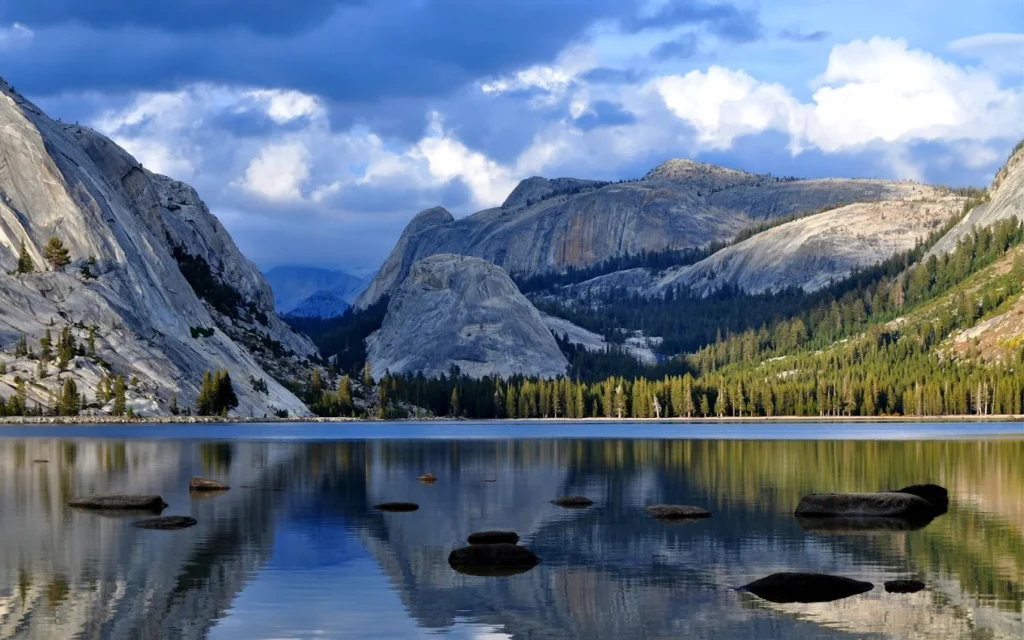
This guide is built from real industry experience, updated research, and a genuine love for helping travelers get the most out of every hour they spend in Yosemite National Park. Whether you’ve got one day or one week, I’ve got your plan sorted — with all the 2026 updates you need, honest crowd advice, and the kinds of tips that don’t make it into mainstream travel lists.
🏔️ Why Is Yosemite National Park So Famous?
Yosemite National Park is famous for its sheer granite cliffs, thundering waterfalls, ancient giant sequoia forests, and some of the most dramatic valley scenery on Earth. Located in California’s Sierra Nevada mountains, it covers 748,000 acres and welcomes roughly 4 to 5 million visitors every year.
The park was recognized as a UNESCO World Heritage Site in 1984 — a designation that acknowledges its outstanding universal value both as a natural landscape and an ecological habitat. But honestly, you don’t need a UNESCO label to feel the magic. Stand at Tunnel View for the first time and the granite walls just speak for themselves.
What makes Yosemite truly special is the combination of scale and accessibility. Within just a few miles, you can look up at El Capitan — a vertical granite wall rising 3,000 feet from the valley floor — and then stroll through a peaceful meadow where deer graze without paying you any attention at all.
Half Dome, the park’s most iconic rock formation, rises 8,839 feet above sea level. It draws hikers, climbers, and photographers from all over the world. Yosemite Falls, one of North America’s tallest waterfalls, drops 2,425 feet in a spectacular three-tiered cascade best seen in spring. And then there’s Mariposa Grove, home to nearly 500 giant sequoias, some over 2,000 years old.
In my two decades in travel, I’ve noticed that Yosemite has a rare quality — it moves people emotionally in a way that very few places do. Clients come back from their first visit and tell me it changed something in them. I believe it.
🗺️ Getting to Yosemite — Location & Logistics
Where Is Yosemite National Park?
Yosemite National Park sits in east-central California, straddling the western slopes of the Sierra Nevada. The main hub is Yosemite Valley, located in the western part of the park.
Distances from Major Cities
| Departure City | Distance to Yosemite Valley | Drive Time (Approx.) |
|---|---|---|
| San Francisco, CA | ~170 miles | 3.5 – 4 hours |
| Los Angeles, CA | ~310 miles | 5.5 – 6.5 hours |
| Las Vegas, NV | ~385 miles | 6 – 7 hours |
| Sacramento, CA | ~165 miles | 3 – 3.5 hours |
| San Jose, CA | ~150 miles | 3 – 3.5 hours |
Nearest Airports
- Fresno Yosemite International Airport (FAT) — ~65 miles from the South Entrance. My top recommendation for those flying in.
- Merced Regional Airport (MCE) — ~75 miles. Smaller airport but good for domestic connections.
- San Francisco International Airport (SFO) — ~180 miles. Major hub with global connections; makes sense if you’re combining SF with Yosemite.
- Los Angeles International Airport (LAX) — ~310 miles. Best paired with a road trip up Highway 395.
Best Driving Routes
- Highway 140 via El Portal — The most popular and scenic year-round route. Follows the Merced River Canyon. Avoid heavy trucks as the road narrows significantly.
- Highway 120 West via Big Oak Flat — Open year-round, good road conditions, brings you through Groveland.
- Highway 41 via Oakhurst (South Entrance) — Good option from Southern California; passes near Mariposa Grove.
- Highway 120 East via Tioga Pass — Only open late May to November depending on snowfall. Spectacular high-altitude drive. Worth planning your trip around if possible.
Pro Tip from Wahid: Download Google Maps offline before you leave your gateway city. Cell signal disappears well before you reach the park boundary. I’ve seen travelers standing at a junction with zero bars and no idea which way to turn. Don’t be that person.
Public Transportation Options
The Yosemite Area Regional Transportation System (YARTS) runs buses from gateway towns including Merced, Sonora, Mariposa, and Mammoth Lakes directly into Yosemite Valley. This is genuinely one of the best ways to visit in 2026, especially with no reservation system in place. Less parking stress, more scenery.
Once inside the park, the free Yosemite Valley Shuttle runs year-round between major stops in the valley. It’s efficient, reliable, and saves you the headache of looking for parking at trailheads.
📅 When to Visit Yosemite — Seasonal Planning
What Is the Best Time to Visit Yosemite?
The best time to visit Yosemite National Park depends on your priorities. Spring (April–June) offers peak waterfall flow and wildflowers. Summer (July–August) gives full trail access but maximum crowds. Fall (September–November) brings golden colors and quieter trails. Winter (December–March) is magical with snow but comes with road closures.
Season-by-Season Breakdown
🌸 Spring (April – June)
This is, without a doubt, my personal favorite time to visit. The waterfalls are absolutely roaring from snowmelt — Yosemite Falls, Bridalveil Fall, and Vernal Fall are at their dramatic best. Wildflowers carpet the meadows. And while Memorial Day weekend gets busy, most of April and May are still manageable.
- Waterfalls at peak flow
- Horsetail Fall “Firefall” phenomenon in mid-to-late February (spectacular)
- Tioga Road typically doesn’t open until late May
- Pack rain gear and expect some cool temperatures
☀️ Summer (July – August)
Summer is peak season, plain and simple. Every trail is open, the weather is warm and reliable, and families are out in full force. But it’s also the time when parking lots fill by 8 AM and trailheads feel like airport terminals.
- All roads and trails open (including Tioga Road)
- Best for families with children
- Highest accommodation prices
- Arrive before 7 AM or after 5 PM if you want any peace
- Perfect time for Tuolumne Meadows — less crowded than the valley
🍂 Fall (September – November)
If I had to recommend one season for solo travelers and photographers, it would be fall. The crowds thin out noticeably after Labor Day. The light turns golden and gorgeous. Black oaks and bigleaf maples put on a brilliant color show in October.
- October is the sweet spot — good weather, fall colors, smaller crowds
- Tioga Road typically closes in November
- Shorter days mean planning sunrise/sunset shoots is easier
- Wildlife activity increases as animals prepare for winter
❄️ Winter (December – March)
Yosemite in winter is breathtaking in a completely different way. Snow-dusted Half Dome, frozen waterfalls, and nearly empty trails create an almost surreal atmosphere. Badger Pass Ski Area offers skiing and snowshoeing.
- Extremely low crowds on weekdays
- Tioga Road and Glacier Point Road closed
- Chains may be required for driving into the park
- Best time for Horsetail Fall Firefall in late February
- Some trails may be icy — traction devices strongly recommended
Best Season Based on Traveler Type
| Traveler Type | Best Season | Why |
|---|---|---|
| Families with kids | Summer (June–Aug) | All trails open, warm weather, full facilities |
| Serious hikers | Spring or Fall | Cooler temps, fewer crowds, better conditions |
| Photographers | Spring & Fall | Peak waterfall flow + golden foliage + soft light |
| Budget travelers | Fall & Winter | Off-peak rates, fewer people |
| Snow & Winter lovers | Dec–Feb | Snowpack, skiing at Badger Pass, Firefall event |
| First-time visitors | May or September | Good balance of access, weather, and crowd levels |
| Wildlife watchers | Spring & Fall | Most active seasons for bears, deer, and birds |
✅ Must-Do Experiences in Yosemite National Park
Yosemite Valley — The Heart of It All
Yosemite Valley is a 7-mile-long, glacier-carved valley that forms the main stage for the park’s greatest hits. The Merced River winds through it, reflecting Half Dome and El Capitan in its glassy surface on calm mornings.
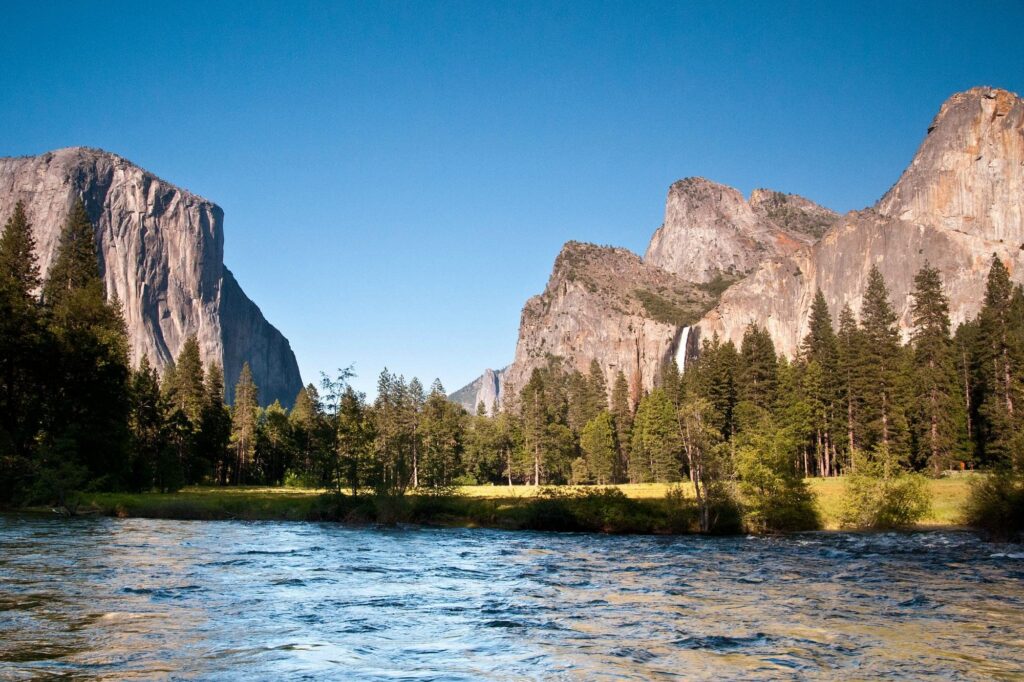
Walk the Valley Loop Trail (13 miles full loop, or do sections) for ground-level views that no overlook can replicate. Stop at Sentinel Bridge at sunrise for that classic Half Dome reflection shot — it’s genuinely one of the most beautiful things I’ve ever seen on a travel itinerary.
Glacier Point — The View That Redefines “Panoramic”
Glacier Point sits at 7,214 feet above sea level and is the best viewpoint in the entire park for most travelers. You can drive there (open May to early November), or hike up via the Four Mile Trail. From the top, you look down on Half Dome, the valley floor, Vernal Fall, and Nevada Fall all at once.
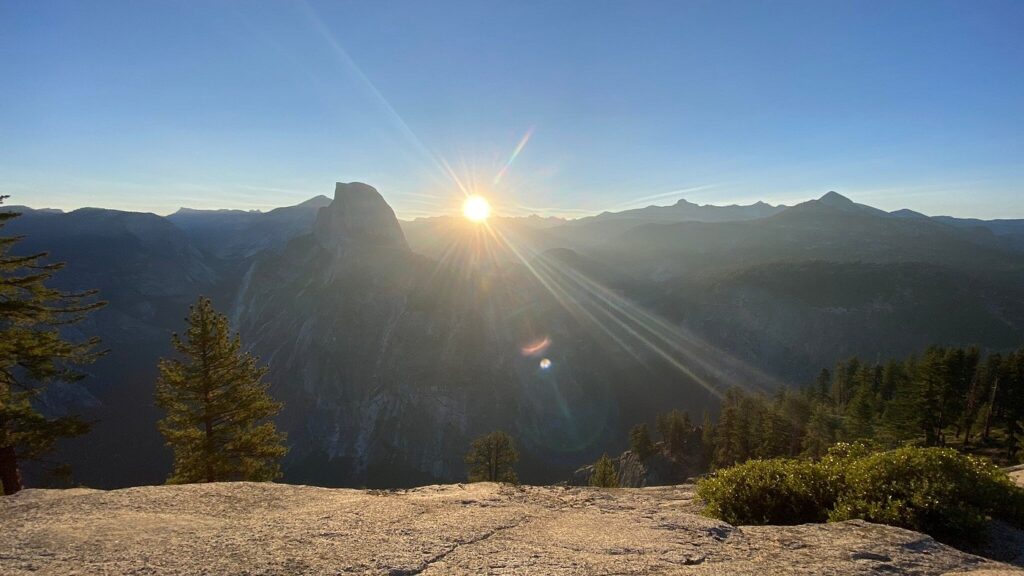
Sunset here is legendary. Bring a jacket — even in August, it can get cold quickly once the sun drops.
El Capitan — The Granite Giant
El Capitan is a monolithic granite wall rising 3,593 feet above the valley floor. It’s the world’s largest granite monolith and the most famous big wall climbing destination on Earth. Even if you’re not a climber, bring binoculars to spot climbers making their way up routes like The Nose.
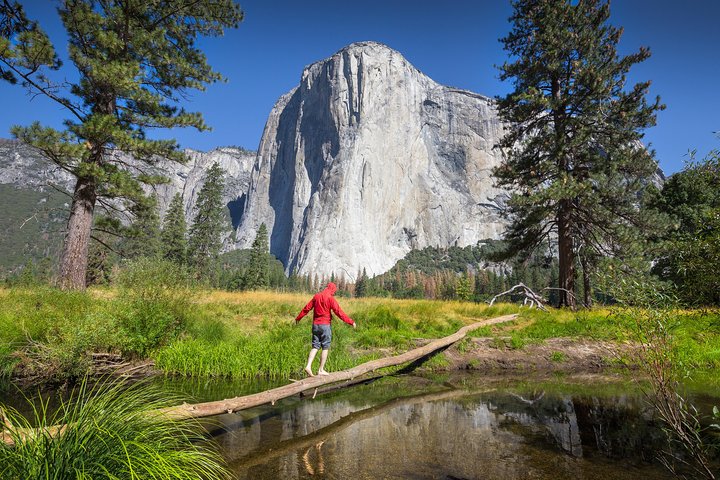
The best viewing spots are El Capitan Meadow (Northside Drive) and Tunnel View, where El Cap forms the left pillar of that classic Yosemite panorama.
Yosemite Falls — North America’s Tallest Waterfall
At 2,425 feet, Yosemite Falls is the tallest waterfall in North America and one of the most impressive in the world. The Lower Yosemite Falls Trail is a short, easy 1-mile loop that brings you right to the base — perfect for all fitness levels.
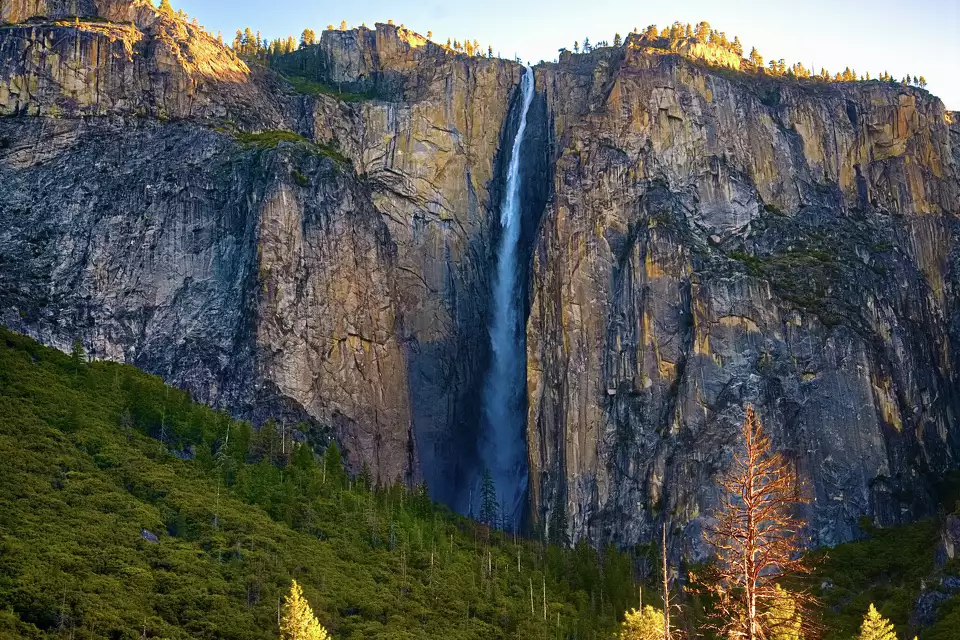
Visit in April or May for peak flow. By late summer, the falls often run dry. The sight of that torrent of water crashing down from the granite wall above is something I’d put on anyone’s bucket list.
Tioga Road — The High Country Highway
Tioga Road (Highway 120) is a 39-mile scenic drive through the high country of Yosemite, reaching elevations above 9,900 feet. It typically opens in late May or early June and closes in November.
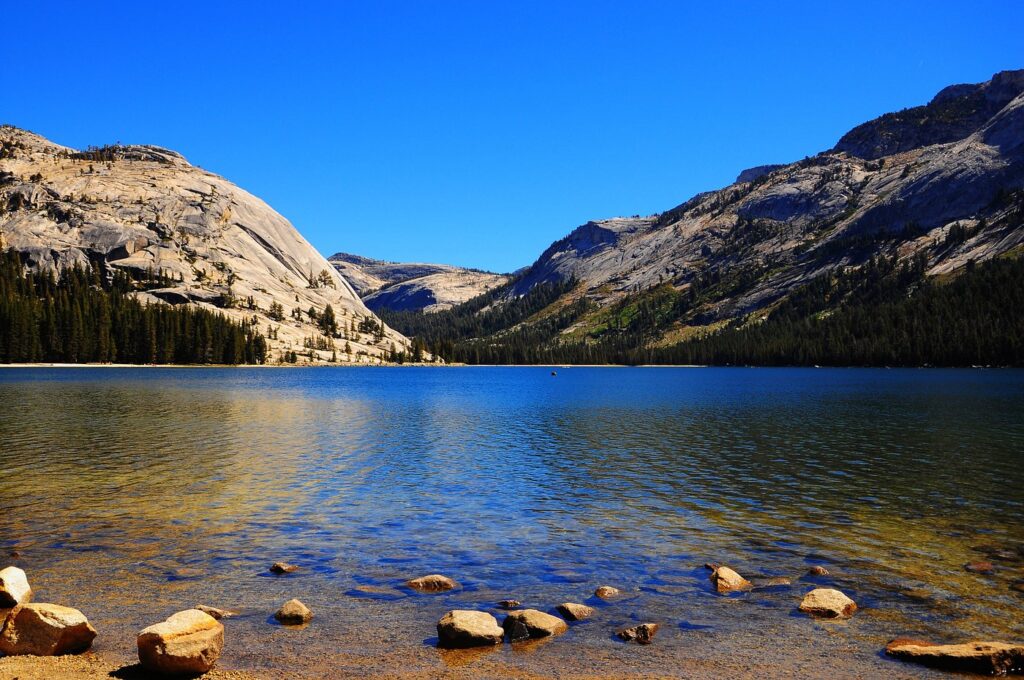
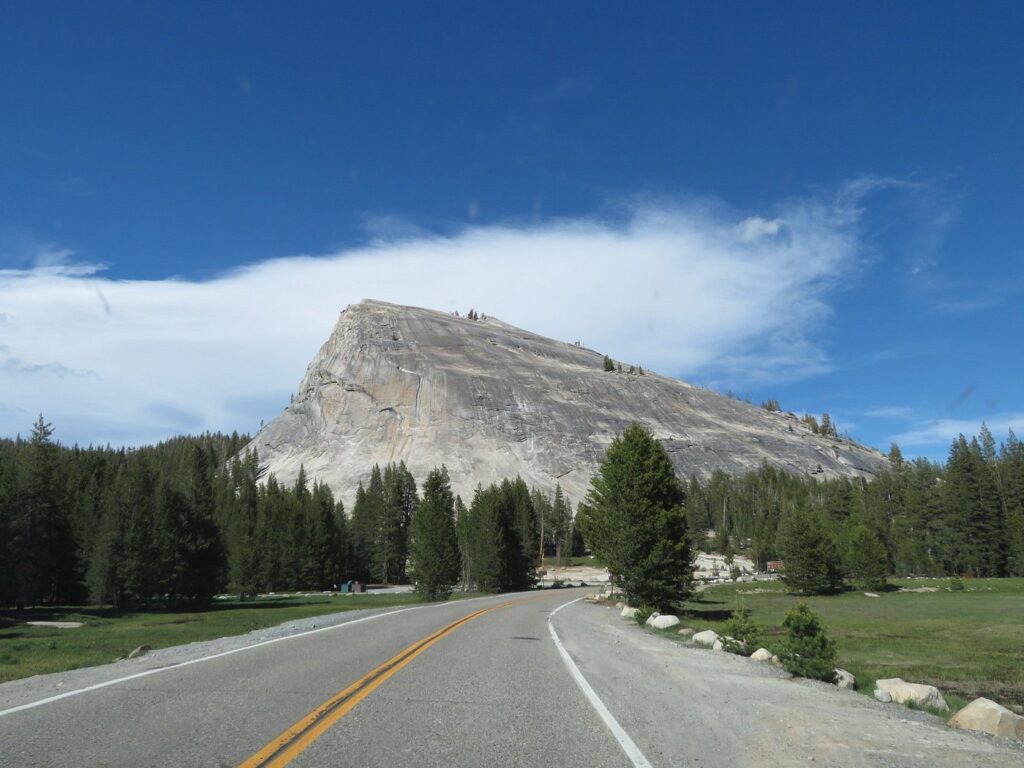
Along the way, stop at Olmsted Point for a stunning view of Tenaya Lake and Half Dome’s north face, and at Tuolumne Meadows — a vast alpine meadow that feels like a completely different park from the busy valley below.
Mariposa Grove — Walk Among Giants
Mariposa Grove contains nearly 500 mature giant sequoias, including the famous Grizzly Giant, estimated to be around 2,700 years old. The shuttle from the parking area runs regularly.
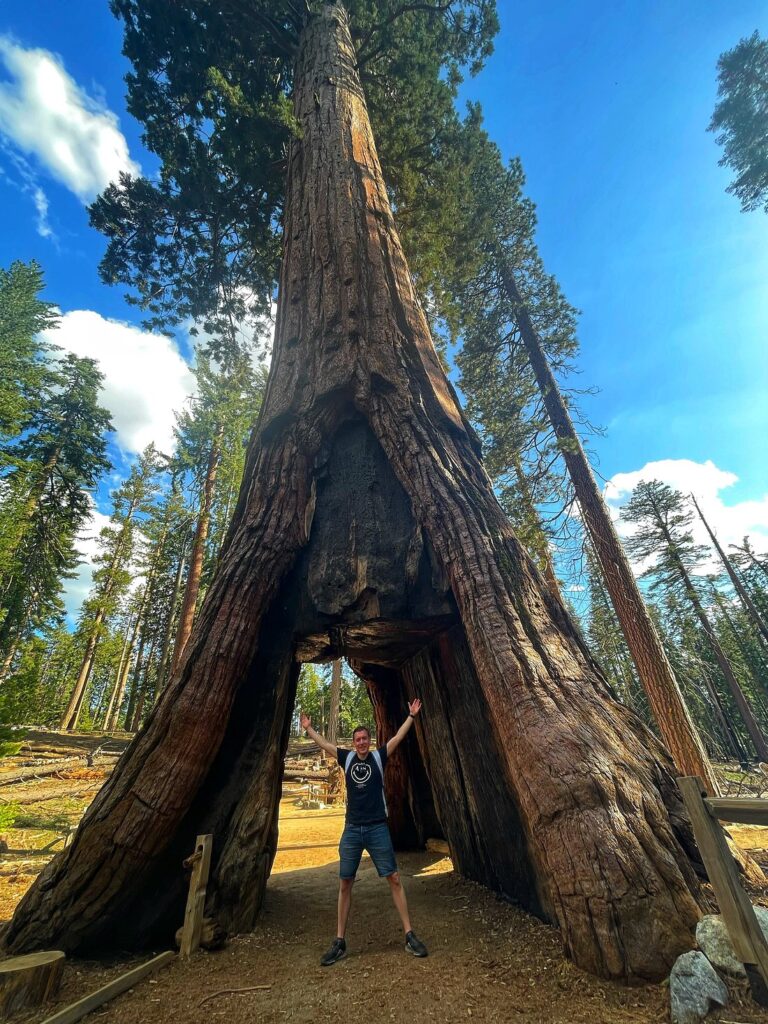
Walk the Big Trees Loop (2 miles, easy) to see the grandest trees, including the California Tunnel Tree — a sequoia with a historic tunnel carved through its base. These trees are humbling in a way that photos simply cannot capture.
Tunnel View — The Postcard Shot
Sitting at the east end of the Wawona Tunnel, Tunnel View is arguably the single most photographed viewpoint in the park. It frames El Capitan on the left, Bridalveil Fall on the right, and Half Dome in the center distance.
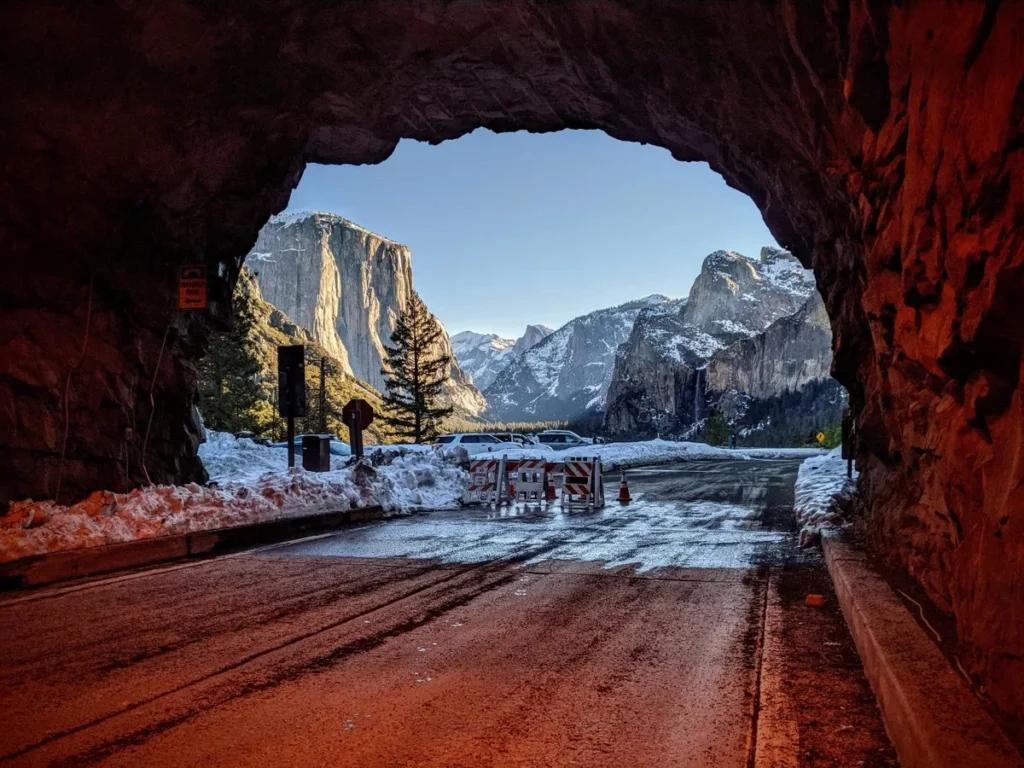
Visit at sunrise or sunset for the best light. The golden hour here turns the granite walls amber and pink. Even seasoned travelers stop and go quiet at this view.
Stargazing in Yosemite
Yosemite is a dark sky paradise far from urban light pollution. Glacier Point, Tuolumne Meadows, and Sentinel Dome are among the best spots for stargazing.
From May through September, the Milky Way is visible overhead on clear nights. The Yosemite Conservancy sometimes organizes ranger-led astronomy programs — check their website before your visit.
🥾 The Hiking Bible — Best Trails in Yosemite
Which Hikes Are the Best in Yosemite?
The best hikes in Yosemite National Park include the Mist Trail (moderate, iconic waterfall views), Half Dome (strenuous, permit required), Lower Yosemite Falls (easy, family-friendly), and Sentinel Dome (moderate, best panoramic views for the effort). Each trail offers a completely different experience of the park.
1. Mist Trail to Vernal Fall & Nevada Fall
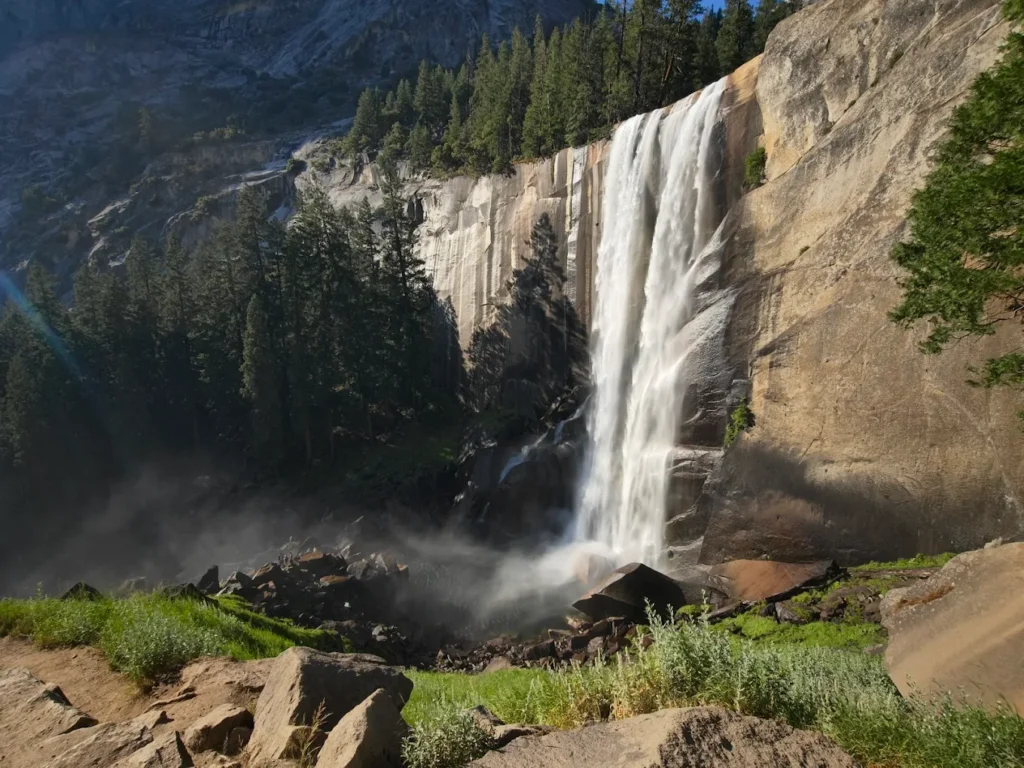
The Mist Trail is Yosemite’s most loved trail, and for good reason. Starting from Happy Isles, the trail takes you along the Merced River, up stone staircases slicked with spray, to the stunning viewpoint above Vernal Fall (317 feet tall). Continue for another 1.5 miles to reach Nevada Fall (594 feet) — a worthy extension if you have the legs for it.
- Distance: 5.4 miles round trip to Nevada Fall | 3 miles to Vernal Fall
- Elevation Gain: ~1,900 feet to Nevada Fall
- Difficulty: Moderate to Strenuous
- Best Season: Spring and early summer (waterfalls are roaring)
- Wahid’s Tip: Wear waterproof shoes or be prepared to get genuinely soaked in the mist section near Vernal Fall. I’ve seen people in flip-flops on this trail. Don’t be that person.
2. Half Dome — The Ultimate Yosemite Challenge
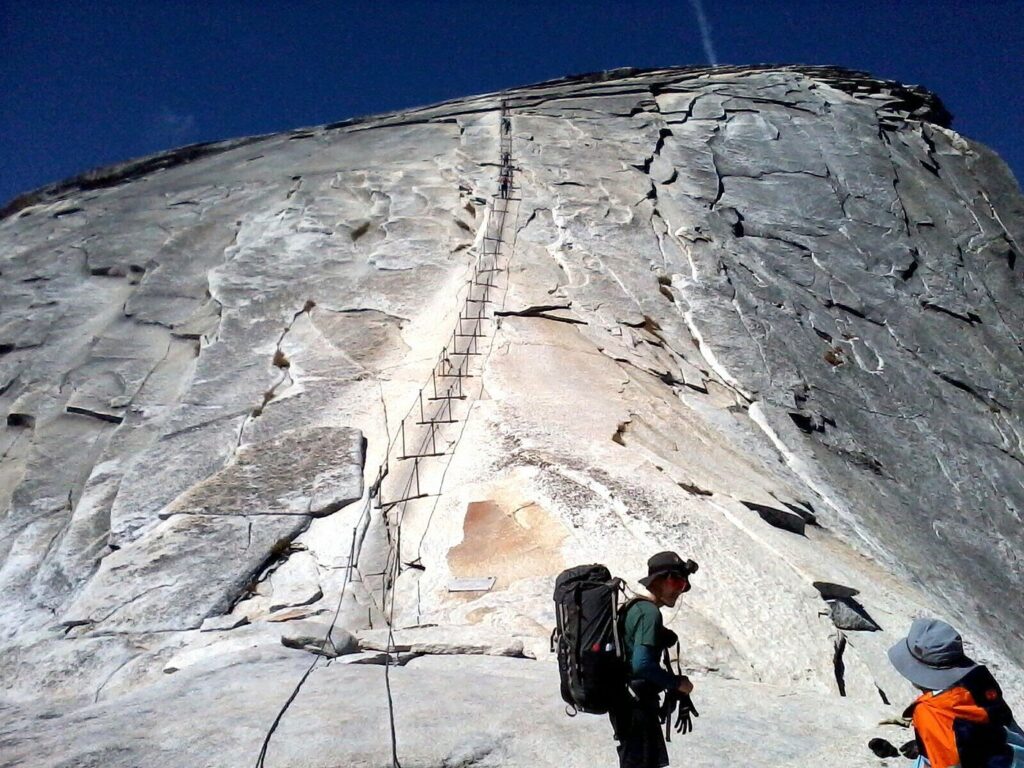
Half Dome is the crown jewel of Yosemite hiking, but it demands serious preparation. The trail is roughly 14–16 miles round trip with 4,800+ feet of elevation gain. The final 400 feet involves climbing metal cables bolted into the rock face — that’s where a permit is mandatory.
- Distance: ~14 miles via Mist Trail
- Elevation Gain: ~4,800 feet
- Difficulty: Very Strenuous
- Permit Required: Yes — via lottery on Recreation.gov
- Cables Season: Approximately May 22 to October 13, 2026
- Wahid’s Tip: Start by 5 AM to be off the summit before afternoon thunderstorms. Bring 2 liters of water minimum, trekking poles, and gloves for the cables.
Half Dome permit strategy for 2026:
- Pre-season lottery: Apply March 1–31; results in mid-April
- Daily lottery: Apply 2 days before your hike, between midnight and 4 PM Pacific
- Application fee: $10 non-refundable; per-person permit fee: $10 if awarded
- Maximum 300 hikers per day allowed on the cables
3. Lower Yosemite Falls Trail — Perfect for Everyone
This 1-mile paved loop is accessible, beautiful, and takes about 20–30 minutes. It brings you to the base of Lower Yosemite Fall, with a direct view of both the lower and upper falls above. This is the trail I recommend to every client regardless of fitness level.
- Distance: 1 mile (loop)
- Elevation Gain: Minimal
- Difficulty: Easy
- Family Friendly: Absolutely yes
- Best Season: Spring (April–June) for full waterfall
4. Sentinel Dome — Maximum Views, Minimum Effort
Sentinel Dome gives you arguably the best 360-degree panorama in the park for the amount of effort required. The trail is just 2.2 miles round trip with 400 feet of elevation gain — but the summit delivers views of Half Dome, El Capitan, Yosemite Falls, Nevada Fall, and the full High Sierra spread out before you.
The trailhead is on Glacier Point Road, open from approximately May to November.
- Distance: 2.2 miles round trip
- Elevation Gain: 400 feet
- Difficulty: Easy to Moderate
- Best Time: Sunset — the golden light is extraordinary
- Wahid’s Tip: Combine this with Taft Point in a 5.4-mile loop for the most rewarding half-day hike in the park.
5. Vernal Fall via John Muir Trail
If the Mist Trail is temporarily closed or crowded, the John Muir Trail offers an alternate route to Vernal Fall with equally stunning views from a different angle. Gentler switchbacks make this slightly more manageable for families.
- Distance: 3 miles round trip to Vernal Fall footbridge
- Difficulty: Moderate
- Best Season: Spring through early summer
Yosemite Trail Comparison Table
| Trail Name | Distance | Difficulty | Est. Time | Family Friendly | Permit Needed | Best Season |
|---|---|---|---|---|---|---|
| Lower Yosemite Falls | 1 mile (loop) | Easy | 30 min | ✅ Yes | No | Spring–Summer |
| Mist Trail (Vernal Fall) | 3 miles RT | Moderate | 2–3 hrs | ⚠️ Caution | No | Spring–Summer |
| Mist Trail (Nevada Fall) | 5.4 miles RT | Strenuous | 4–6 hrs | ⚠️ Older kids | No | Spring–Summer |
| Sentinel Dome | 2.2 miles RT | Moderate | 1.5–2 hrs | ✅ Yes | No | May–Oct |
| Taft Point + Sentinel Loop | 5.4 miles | Moderate | 3–4 hrs | ⚠️ Caution | No | May–Oct |
| Half Dome | 14–16 miles RT | Very Strenuous | 10–14 hrs | ❌ No | Yes | May–Oct |
| Four Mile Trail (Glacier Point) | 9.6 miles RT | Strenuous | 5–8 hrs | ❌ No | No | May–Nov |
| Valley Loop Trail | 13 miles (loop) | Easy | Full day | ✅ Yes | No | Year-round |
🗓️ Master Itineraries — 1, 2 & 3 Days in Yosemite
1-Day Yosemite Itinerary
This works if you’re coming from San Francisco or Sacramento and want the best day possible. Arrive early — I cannot stress this enough.
| Time | Activity |
|---|---|
| 6:00 AM | Arrive at Tunnel View for sunrise — golden light on El Capitan & Half Dome |
| 7:00 AM | Drive to Valley floor, park early at Yosemite Village |
| 7:30 AM | Walk Lower Yosemite Falls Trail (1 mile, 30 min) |
| 9:00 AM | Cook’s Meadow Loop — peaceful meadow walk with iconic Half Dome views |
| 10:30 AM | Breakfast at Village Grill Deck or packed food from your car |
| 11:30 AM | Drive up Glacier Point Road — stop at Washburn Point, then Glacier Point |
| 2:00 PM | Back in valley — Mist Trail to Vernal Fall footbridge |
| 5:00 PM | Sentinel Bridge for golden hour Half Dome reflection |
| 6:30 PM | Return to Tunnel View for sunset |
| After dark | Stargaze at Valley View or head back to your accommodation |
Rain/Weather Backup Plan: If weather is bad at Glacier Point, visit the Yosemite Valley Visitor Center and Ansel Adams Gallery, then do the Valley Floor Loop by shuttle. The valley is beautiful even under cloud cover.
2-Day Yosemite Itinerary
Day 1 — Valley Floor Focus
| Time | Activity |
|---|---|
| 6:00 AM | Tunnel View sunrise |
| 7:30 AM | Bridalveil Fall trail (0.5 miles each way, 20 min) |
| 9:00 AM | El Capitan Meadow — binoculars for climbers on the wall |
| 10:30 AM | Shuttle to Happy Isles — hike Mist Trail to Vernal Fall |
| 2:30 PM | Lunch at Curry Village or packed picnic |
| 4:00 PM | Valley Floor Loop by free shuttle — relaxed sightseeing |
| 6:30 PM | Sentinel Bridge golden hour |
| 8:00 PM | Dinner and rest |
Day 2 — High Country & Giant Trees
| Time | Activity |
|---|---|
| 7:00 AM | Drive to Glacier Point — arrive before 9 AM for parking |
| 9:30 AM | Hike Sentinel Dome + Taft Point loop (5.4 miles) |
| 1:30 PM | Lunch at Glacier Point snack bar or packed food |
| 2:30 PM | Drive south to Mariposa Grove of giant sequoias |
| 4:30 PM | Walk Big Trees Loop (2 miles, easy) |
| 6:30 PM | Sunset at Tunnel View on the way out |
3-Day Yosemite Itinerary
Use Days 1 and 2 from above, then add:
Day 3 — High Country Drive (Tioga Road, May–Oct only)
| Time | Activity |
|---|---|
| 7:00 AM | Early start — drive Tioga Road east from the valley |
| 8:30 AM | Stop at Olmsted Point — unique Half Dome view |
| 9:30 AM | Tenaya Lake — short walk along the shore, stunning reflections |
| 11:00 AM | Tuolumne Meadows — easy meadow walks, far fewer crowds |
| 1:00 PM | Picnic lunch at Tuolumne Meadows |
| 2:30 PM | Cathedral Lakes trailhead (optional moderate hike, 8 miles RT) |
| 5:30 PM | Drive back toward valley |
| 7:00 PM | Stargazing at Glacier Point or Valley View |
If Tioga Road is closed (winter visit): Replace Day 3 with a snowshoe at Badger Pass, visit the Ahwahnee Hotel lobby (open to all visitors), and take a winter walk along the Mirror Lake Loop.
🏨 Where to Stay — Accommodation Guide
What Are the Best Places to Stay Near Yosemite?
Accommodation near Yosemite National Park ranges from luxury lodges inside the park to budget motels in gateway towns. Booking 6–12 months in advance is essential for in-park stays. Gateway towns like El Portal, Mariposa, Oakhurst, and Groveland offer more flexibility and often better value.
Inside the Park
- The Ahwahnee Hotel — Yosemite’s crown jewel. A National Historic Landmark with stunning architecture, fireplaces, and fine dining. Expect to pay $500+ per night in peak season. Presidents and royalty have stayed here. Book a full year in advance.
- Yosemite Valley Lodge — The best all-round in-park option. Central location, walk to trailheads, free shuttle access. Book 6–12 months ahead.
- Curry Village (Half Dome Village) — Tent cabins and basic rooms near the valley floor. Communal bathrooms. Budget-friendly for the location but very basic. Good for hikers who just need a bed.
- Housekeeping Camp — Canvas-walled units right on the Merced River. Bring your own bedding or rent it. Unique experience, popular with families.
Gateway Town Stays
El Portal (Closest to the Park)
- Yosemite View Lodge — Just 2 miles from the Arch Rock Entrance. River views, 4 outdoor pools, kitchenettes. Rates around $285–$347/night. Excellent for families who need space.
Mariposa (~1 hour from the valley)
- Mariposa Lodge — Renovated 3-star hotel in walkable downtown Mariposa. Free WiFi, good value.
- The Yosemite Inn — Across from the visitor center. Large clean rooms, family-run.
- Great for those wanting local restaurant options and flexible pricing.
Oakhurst (South Entrance gateway)
- Tenaya Lodge at Yosemite — Resort-style with spa, pools, and multiple dining options. Great for families wanting resort amenities. Peak rates $300–$450+/night.
- Excellent base if you’re visiting Mariposa Grove first.
Groveland (Big Oak Flat Entrance gateway)
- Evergreen Lodge — Secluded mountain resort with glamping cabins and excellent communal spaces. A real favorite among travelers who want the outdoors experience without roughing it completely.
Camping in Yosemite
Camping inside Yosemite National Park is extremely popular and sites fill up fast. Key campgrounds include:
- Upper Pines, Lower Pines, North Pines — Valley floor campgrounds. Book on Recreation.gov up to 5 months in advance.
- Tuolumne Meadows Campground — High country camping (open summer only). Cooler temperatures and far fewer valley crowds.
- Wawona Campground — Near Mariposa Grove. First-come, first-served part of the year.
RV Travelers: Consider Indian Flat RV Park in El Portal, or check hook-up availability at Wawona. Not all Yosemite campgrounds have electrical hook-ups — plan accordingly.
📋 Reservations & 2026 Updates — What You Need to Know
Do You Need a Reservation to Enter Yosemite in 2026?
No — Yosemite National Park will NOT require vehicle reservations in 2026. This is a major change from the 2024 and 2025 seasons, when a timed entry reservation system was in place. The National Park Service announced this decision in February 2026 following an evaluation of traffic data from the 2025 season.
That said, this doesn’t mean Yosemite will be less busy. Park advocates and operators have already raised concerns about potential overcrowding, particularly on summer weekends. The NPS will use real-time traffic monitoring, active parking management, and additional staffing at key intersections instead.
My strong recommendation: Treat 2026 like reservations are still needed from a planning perspective. Arrive early. Visit on weekdays. Have backup plans. The freedom to enter without a booking is great — but it means everyone else has the same freedom.
Entrance Fees for 2026
For U.S. Residents:
- Private Vehicle (7-day pass): $35
- Annual Pass (Yosemite only): $70
- America the Beautiful Annual Pass (all national parks): $80
For International Visitors and Non-Residents: A new fee structure went into effect on January 1, 2026. International travelers now pay a surcharge at Yosemite and 10 other major parks. Refer to the official NPS Yosemite fees page at nps.gov/yose for current international pricing.
Digital passes are now available through Recreation.gov — purchase in advance to avoid wait times at entrance stations.
Half Dome Permits — 2026 Lottery Guide
Even with no vehicle reservations, Half Dome still requires a permit to hike the cables.
| Permit Type | How to Apply | Dates | Fee |
|---|---|---|---|
| Pre-season Lottery | Recreation.gov | March 1–31, 2026 | $10 application + $10/person |
| Daily Lottery | Recreation.gov (2 days before) | Midnight–4 PM PT | $10/person auto-charged |
| Wilderness Permit add-on | Recreation.gov | Ongoing lottery | $10 permit + $5/person |
- Cables expected up: May 22 – October 13, 2026 (weather dependent)
- 300 hikers per day maximum on the cables
- Preseason lottery win rate: approximately 22% overall
- Weekday dates and late-season dates (September–October) have significantly better odds
Wahid’s Half Dome Strategy: Apply for multiple weekday dates in September during the pre-season lottery. The crowds thin out, the weather is still good, and your odds improve meaningfully. If you miss the pre-season lottery, check the daily lottery two days before any open date in your schedule.
Camping Reservations
- Recreation.gov — Reservations open 5 months before your arrival date
- Popular sites (Upper Pines, Lower Pines) book out within minutes of release
- Set a calendar reminder and be on the site at 7 AM Pacific on your release date
👥 The Crowd Survival Guide
How Do I Avoid Crowds at Yosemite?
The single best strategy for avoiding crowds at Yosemite National Park is to arrive before 7 AM, visit on weekdays, and explore areas outside Yosemite Valley. Popular trailheads like Happy Isles and Glacier Point fill by mid-morning on summer weekends.
Here are the specific strategies I give clients who want a less chaotic experience:
Timing Strategies
- Arrive before 7 AM — Parking at valley trailheads fills by 9–10 AM in summer. Getting there first is the most powerful crowd-avoidance tool you have.
- Visit Tuesday through Thursday — Friday through Sunday, especially in summer, is genuinely brutal. Midweek changes the experience dramatically.
- Go in September or October — After Labor Day, the crowds drop noticeably while conditions remain excellent.
- Explore after 5 PM — Golden hour is magical AND less crowded. Many day visitors have already left.
Hidden and Less-Crowded Spots
- Taft Point — Gets a fraction of the traffic of Glacier Point despite comparable views
- Olmsted Point — On Tioga Road; most valley visitors never make it here
- Wawona area — Historic hotel, Mariposa Grove, and peaceful meadows well south of the valley crowds
- Hetch Hetchy — A stunning valley reservoir in the park’s northwest corner that the vast majority of visitors skip entirely
- Tuolumne Meadows — Even on a busy summer day, this high-country meadow feels peaceful compared to the valley
Shuttle Strategy
Use the free Yosemite Valley Shuttle instead of driving between stops inside the valley. It eliminates parking anxiety and lets you cover more ground. Stop 16 (Happy Isles/Mist Trail) is the most critical — parking there fills immediately.
YARTS Bus
Consider taking YARTS from your gateway town accommodation straight into the valley. It picks up from hotels in Merced, Mariposa, and other towns. You step off in Yosemite Village without ever having dealt with parking.
⚠️ First-Timer Mistakes to Avoid
These are the most common errors I see first-time Yosemite visitors make, and most of them are completely avoidable with a little planning.
1. Wrong Footwear Running shoes on rocky, wet trails are a recipe for slips and blisters. Wear proper hiking boots or trail runners with grip. The Mist Trail in particular has wet, polished granite steps that become genuinely dangerous in flat-soled shoes.
2. Underestimating Altitude Yosemite Valley sits at about 4,000 feet. Glacier Point is at 7,214 feet. Tuolumne Meadows is at 8,600 feet. If you’re coming from sea level, give yourself a day to adjust before attempting strenuous hikes. Altitude-related headaches, fatigue, and shortness of breath are common and often surprise first-timers.
3. No Offline Maps Cell signal in Yosemite National Park is unreliable or non-existent throughout most of the park. Download Google Maps offline and the NPS Yosemite app before you arrive. Carry a paper map as backup.
4. Forgetting Food and Water In-park dining options are limited and expensive. Pack a full day’s worth of snacks and at least 2 liters of water per person for any significant hike. There are water refill stations at major stops, but don’t rely on them as your only source.
5. Leaving Food in Your Car Black bears in Yosemite are intelligent and persistent. They’ve learned to break into cars for food. Use bear-proof food lockers at campgrounds and trailheads — they’re everywhere. Never leave food, scented items, or even food wrappers visible in your car. Violations can result in significant fines.
6. Ignoring Weather Forecasts Yosemite’s weather is unpredictable, especially at altitude. Afternoon thunderstorms are common in summer, particularly June and July. Check the forecast before hiking Half Dome or any exposed route — lightning is a real danger on open granite.
7. Arriving Without a Plan This is the big one. Without a plan, you’ll spend the first two hours of your visit stuck in traffic, hunting for parking, and missing the best light. Know your first stop, your backup plan, and your exit time before you arrive.
8. Skipping the Shoulder Hours Most visitors do everything between 10 AM and 4 PM. That’s also when parking is worst, trails are fullest, and lighting for photos is flattest. The magic happens early and late — plan accordingly.
♿ Visiting Yosemite Without Hiking — Accessibility Guide
Yosemite National Park has genuinely excellent options for visitors who prefer scenic drives, accessible walks, or wheelchair-friendly experiences. You don’t need to hike to have a memorable visit.
Accessible Trails and Walks
- Lower Yosemite Falls Trail — Paved, wheelchair accessible (with some assistance on slight inclines). 1-mile loop.
- Cook’s Meadow Loop — Partially paved boardwalk through the meadow with iconic views of Half Dome and Yosemite Falls. Flat and accessible.
- Happy Isles Nature Center area — Flat walk along the Merced River with great Half Dome views.
- Mariposa Grove Boardwalk — Paved and accessible near the main sequoias.
Scenic Drives
- Yosemite Valley Loop — Drive the one-way road through the valley, stopping at pullouts. El Capitan pullout, Valley View, Bridalveil Fall pullout all have accessible parking.
- Tioga Road (Highway 120) — One of the most stunning drives in California. Stop at Olmsted Point (accessible viewing area) and Tuolumne Meadows.
- Glacier Point Road — Drive up to the overlook for that showstopping Half Dome view without any significant walking.
Shuttle Tours
The Yosemite Valley Shuttle is free, accessible, and stops at all major valley locations. Some private tour companies also offer guided open-air tram tours of the valley — check the official travelyosemite.com for current options.
The Ahwahnee Hotel Lobby
Even if you’re not staying here, the Ahwahnee Hotel lobby is open to all visitors. The massive stone fireplaces, indigenous artwork, and beamed ceilings are architectural wonders worth experiencing. Grab a coffee or a meal and soak it all in.
📸 Photography Masterclass — Best Spots & Pro Tips
What Are the Best Photography Spots in Yosemite?
The best photography spots in Yosemite National Park include Tunnel View (iconic valley panorama), Glacier Point (Half Dome from above), Cook’s Meadow (valley reflections), Taft Point (dramatic cliffside), and Valley View (El Capitan with the Merced River). Arrive at golden hour for the most extraordinary light.
Top Photography Locations
🌅 Tunnel View The most iconic Yosemite shot — El Capitan left, Bridalveil Fall right, Half Dome center. Visit at sunrise (April–September) for soft golden light. Lens: wide-angle (16–35mm) to capture the full sweep. The short hike up to Inspiration Point above the tunnel gives you Ansel Adams’s original vantage point for “Clearing Winter Storm.”
🌄 Glacier Point 7,214 feet up, with Half Dome right in front of you. Best for sunrise (you’ll need to arrive before dawn) and sunset. For astrophotography, this is one of the top spots in California — dark skies, unobstructed horizon, and that iconic Half Dome silhouette. Lens: wide-angle for landscape, telephoto (70–200mm) for isolating Half Dome.
🌊 Valley View (Merced River) Located along Northside Drive, this spot frames El Capitan and Cathedral Rocks with the Merced River in the foreground. Best in spring when the river is full. Early morning or late afternoon for the best reflection and warm light.
🌿 Cook’s Meadow Walk the boardwalk loop for shots of Yosemite Falls in the background and Half Dome peaking above the granite walls. Spring brings lush green grass; fall turns the meadow golden. Perfect for wide-angle compositions.
🏔️ Taft Point A dramatic cliff edge with no guardrail — drops of over 2,000 feet below you. Best for sunset (access is via Glacier Point Road, so check hours). The Fissures — deep cracks in the granite — make for extraordinary foreground elements in wide shots. Use a tripod and be mindful of wind.
⭐ Sentinel Dome The best 360-degree panorama in the park for photographers. Capture the full horizon at golden hour — Half Dome glowing in amber to the east, the valley lit below, the Sierra peaks extending to the horizon. Sunset is ideal; bring a headlamp for the hike back.
Pro Photography Tips
| Tip | Detail |
|---|---|
| Golden Hour timing | Sunrise: 5:30–7:30 AM (spring/summer); Sunset: 6:30–8:30 PM |
| Best lens for valley | Wide-angle: 16–35mm for sweeping panoramas |
| Best lens for detail | Telephoto: 70–200mm for El Capitan climbers, waterfall close-ups |
| Tripod essential | Low-light shots at Tunnel View, Taft Point, and astrophotography |
| Best waterfall season | April–June (peak snowmelt flow) |
| Firefall/Horsetail Fall | Late February, around sunset; location varies with sun angle |
| Moonbow at Yosemite Falls | Spring full moon nights; look for a rainbow in the mist |
| Wildlife photography | Dawn and dusk near meadows — deer, black bears, coyotes |
❓ Frequently Asked Questions About Yosemite National Park
Q1: Is Yosemite worth visiting?
Absolutely yes. Yosemite is one of the most extraordinary natural places on Earth. The combination of granite cliffs, waterfalls, ancient forests, and wildlife in a single accessible valley is found nowhere else. Most visitors say it exceeds their expectations significantly.
Q2: Is one day enough for Yosemite?
One day is not enough to see everything, but it’s absolutely enough to have a genuinely life-changing experience. Focus on Tunnel View, Lower Yosemite Falls, Cook’s Meadow, and Glacier Point — you’ll leave with full memory cards and full hearts.
Q3: Are there bears in Yosemite?
Yes. Black bears are common throughout the park. They are not typically aggressive toward humans, but they are bold around food. Always use bear-proof lockers, never leave food in your car, and keep a minimum 50-foot distance from any bear you encounter. Never run — it triggers a chase response.
Q4: Can beginners hike in Yosemite?
Yes, absolutely. Lower Yosemite Falls Trail, Cook’s Meadow Loop, Bridalveil Fall Trail, and the Valley Loop Trail are all suitable for complete beginners and require no technical skills or significant fitness. Work your way up to Sentinel Dome if you’re feeling adventurous.
Q5: What should I wear to Yosemite?
Wear layered clothing regardless of season — temperatures can swing dramatically between morning, midday, and evening. Proper trail shoes or hiking boots are essential for anything beyond paved paths. A light rain jacket is smart year-round.
Q6: Does Yosemite require reservations in 2026?
No vehicle reservations are required to enter Yosemite in 2026. You will still need to pay the entrance fee ($35/vehicle for US residents). Half Dome hiking permits still require a lottery application through Recreation.gov. Lodging and camping reservations are still needed and highly competitive.
Q7: What is the Firefall at Yosemite?
The Horsetail Fall Firefall is a natural light phenomenon that occurs in mid-to-late February when the setting sun hits Horsetail Fall at exactly the right angle, making the water glow orange and red like flowing lava. It lasts only a few minutes each evening and requires clear skies. No reservations needed to view it in 2026.
Q8: What is Tioga Road and when does it open?
Tioga Road (Highway 120) is a stunning high-country scenic drive through Yosemite reaching elevations above 9,900 feet. It typically opens in late May or early June and closes in November when snow arrives. Check nps.gov/yose for current road status.
Q9: How far is Yosemite from San Francisco?
Yosemite Valley is approximately 170 miles and about 3.5–4 hours by car from San Francisco. The most popular route is Highway 120 West via Manteca, or the scenic Highway 140 via Merced.
Q10: Can I visit Yosemite without a car?
Yes! YARTS buses run from multiple gateway cities directly into the park. Once inside, the free Yosemite Valley Shuttle connects all major stops. It’s one of the better national parks for car-free visiting.
Q11: Is Yosemite Falls seasonal?
Yes. Yosemite Falls is best seen between April and June when snowmelt powers a full flow. By late summer (August–September), the falls often run dry or reduce to a trickle. Check conditions before making a waterfall-focused visit.
Q12: Can I see Half Dome without hiking?
Yes! Glacier Point gives you a spectacular face-on view of Half Dome without any serious hiking — you drive up and walk a short distance to the viewpoint. Tunnel View and Valley View also offer great Half Dome sightings from road-accessible viewpoints.
Q13: What is the best time to go to Yosemite to avoid crowds?
Weekday visits in May, September, or October are the best strategy for avoiding peak crowds. Arriving before 7 AM on any day significantly improves the experience. Avoiding holiday weekends (Memorial Day, Fourth of July, Labor Day) is also important.
Q14: Is Yosemite safe for solo travelers?
Yes, Yosemite is very safe for solo travelers. Stay on marked trails, tell someone your plan, carry a paper map or offline navigation, pack sufficient water, and be aware of wildlife. The biggest risks are weather-related and altitude — not crime.
Q15: What is the entrance fee for Yosemite in 2026?
For U.S. residents, the standard vehicle pass is $35 for 7 consecutive days. Annual passes are $70 (Yosemite only) or $80 (America the Beautiful — all national parks). International visitors and non-residents face an additional surcharge that went into effect on January 1, 2026 — check nps.gov/yose for current rates.
About the Author
Wahid Ali is an Operations Lead at Astamb Holidays, Mumbai, with over 20 years of experience in the travel industry. He specializes in crafting personalized travel experiences across India and beyond, blending practical logistics expertise with a deep passion for authentic, nature-oriented destinations. His work has taken him across five continents, and he writes to help travelers experience the world’s most extraordinary places with confidence and curiosity.
🔗 LinkedIn: Wahid Ali | 🌐 xploreheaven.com
Related Articles on XploreHeaven
- Pampore Kashmir: The Definitive Travel Guide to India’s Saffron Capital
- Best Time to Visit Kashmir: The Complete Guide for Families, Couples, and Adventurers
- Dubai Tour 2026: The Ultimate Travel Guide to Itineraries, Budgets & Hidden Gems
- Vietnam Tourism: The Ultimate 2026 Travel Guide & Itinerary
- Vietnam Visa for Indians (2026): Step-by-Step E-Visa Guide & Rules
This article is backed by authoritative sources and research.
References & Citations:
- National Park Service — Yosemite Official Site: https://www.nps.gov/yose/
- NPS: Yosemite Will Not Require Vehicle Reservations in 2026: https://www.nps.gov/yose/learn/news/yosemite-national-park-will-not-require-vehicle-reservations-in-2026.htm
- Yosemite Conservancy — Know Before You Go 2026: https://yosemite.org/know-before-you-go-yosemite-in-2026/
- Yosemite Conservancy — Entrance Reservations Not Required 2026: https://yosemite.org/yosemite-entrance-reservations-not-required-2026/
- Recreation.gov — Half Dome Day Use Permits: https://www.recreation.gov/permits/234652
- NPS — Half Dome Permits for Day Hikers: https://www.nps.gov/yose/planyourvisit/hdpermits.htm
- NPS — Sentinel Dome and Taft Point Trailhead: https://www.nps.gov/places/000/sentinel-dome-and-taft-point-trailhead.htm
- Recreation.gov — Yosemite Wilderness Permits: https://www.recreation.gov/permits/445859
- Yosemite.com — Vehicle Reservations Guide: https://www.yosemite.com/plan-your-trip/yosemite-vehicle-reservations/
- Yosemite.com — Places to Stay: https://www.yosemite.com/places-to-stay/
- KQED — Yosemite Drops Reservations for 2026: https://www.kqed.org/news/12074364/yosemite-national-park-no-reservations-2026-glacier-arches-timed-entry
- AllTrails — Sentinel Dome Trail: https://www.alltrails.com/trail/us/california/sentinel-dome-trail
- UNESCO World Heritage — Yosemite National Park: https://whc.unesco.org/en/list/308/
- NPS — Yosemite Fees and Passes: https://www.nps.gov/yose/planyourvisit/fees.htm
- NPS — Yosemite Lodging: https://www.nps.gov/yose/planyourvisit/lodging.htm
- YARTS (Yosemite Area Regional Transportation System): https://www.yarts.com/
- NPS — Yosemite Road Conditions: https://www.nps.gov/yose/planyourvisit/wroads.htm
- National Parks Conservation Association — Yosemite Advocacy: https://www.npca.org/