
I have been in the travel business for 20 years. I have seen passengers hunt for sleeper berths at 2 AM, fight over Tatkal quotas, and still arrive 4 hours late sweating through their shirts. So when Vande Bharat trains started rolling out across India, I paid attention. Not because the government told me to. But because my clients started asking — “Wahid bhai, should I book Vande Bharat or just fly?”
That question alone tells you how much things have changed.
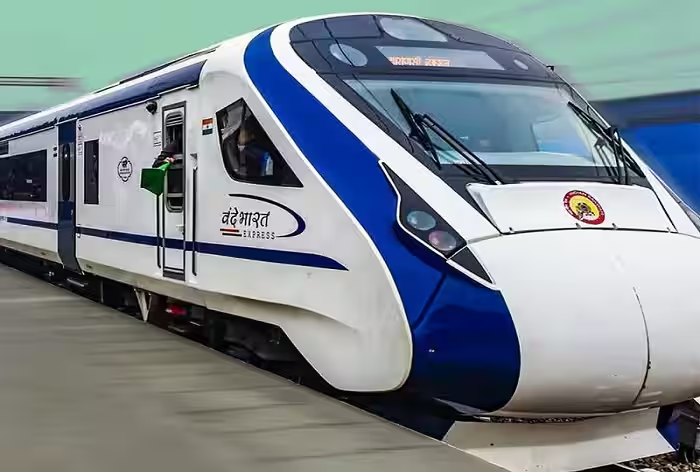
In 2026, the Vande Bharat Express is no longer just a prestige project. It is a functioning, expanding network of semi-high-speed trains that is genuinely reshaping how urban India travels. Whether you are a working professional rushing between metros, a family heading to a pilgrimage site, or a weekend traveller chasing the mountains — this guide is for you.
Let’s break it all down. Honestly.
🚆 What is Vande Bharat Train?
Vande Bharat Express is India’s first indigenously designed semi-high-speed, modern train system operated by Indian Railways. It is a fully air-conditioned, self-propelled electric multiple unit (EMU) train built under the Make in India initiative by the Integral Coach Factory (ICF) in Chennai.
Unlike older trains that depend on a single locomotive at the front, Vande Bharat distributes its motors across multiple coaches. This gives it faster pick-up speed, smoother braking, and quicker overall travel times. It connects cities up to 800 km apart, making it ideal for same-day and short overnight trips.
🌟 Why is Vande Bharat Train So Popular in India?
Simple. It hits the sweet spot between speed, comfort, and national pride.
When the first service ran between New Delhi and Varanasi in February 2019, people were genuinely surprised. The train was clean. The seats were good. It felt… different. Not like the trains most of us grew up with.
Here is why passengers keep choosing it:
- Speed: Cuts travel time by 25–45% on most routes compared to conventional express trains
- Comfort: Aircraft-style seating with rotating chairs in Executive Class, sealed coaches, and far less noise
- Brand Trust: Being a Make in India product, it carries a sense of ownership and national confidence
- Rapid Expansion: From 2 routes in 2019 to 82+ routes across India in 2026 — the growth speaks for itself
- Safety Tech: Factory-fitted with KAVACH, India’s indigenous anti-collision system
The government has set an ambitious target of 4,500 Vande Bharat trains by 2047. That is a bold number — but the momentum is real.
🗺️ Vande Bharat Train Routes (Updated 2026 List)
As of April 2026, 79 Vande Bharat trains are in active service across 82+ routes, covering 274+ districts and 16 railway zones. Here is a regional breakdown of key routes:
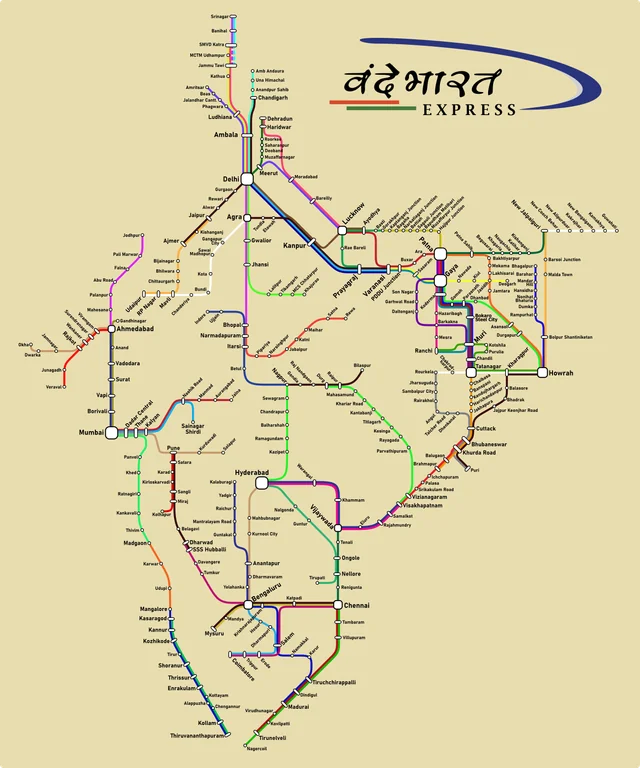
🏙️ North India
| Route | Distance | Approx. Travel Time |
|---|---|---|
| New Delhi – Varanasi | 759 km | ~8 hrs |
| New Delhi – Katra (Vaishno Devi) | 655 km | ~8 hrs |
| New Delhi – Ajmer | 441 km | ~6 hrs |
| New Delhi – Dehradun | 314 km | ~4.5 hrs |
| Rani Kamalapati – Hazrat Nizamuddin | 696 km | ~7.5 hrs |
| New Delhi – Patna | 1,000 km | ~12 hrs (longest chair car route) |
🌴 South India
| Route | Distance | Approx. Travel Time |
|---|---|---|
| Chennai – Bengaluru | 362 km | ~5 hrs |
| Chennai – Coimbatore | 497 km | ~6.5 hrs |
| Mysuru – Chennai Central | 491 km | ~6 hrs |
| Mangalore – Thiruvananthapuram | 575 km | ~8 hrs |
| Secunderabad – Visakhapatnam | 716 km | ~8.5 hrs |
| Tirunelveli – Chennai Egmore | 630 km | ~7.5 hrs |
🌊 West India
| Route | Distance | Approx. Travel Time |
|---|---|---|
| Mumbai Central – Gandhinagar | 522 km | ~6.5 hrs |
| Mumbai – Shirdi | 296 km | ~5 hrs |
| Jodhpur – Sabarmati | 476 km | ~7 hrs |
| Udaipur – Ahmedabad (Asarva) | ~260 km | ~4 hrs |
🏔️ East India
| Route | Distance | Approx. Travel Time |
|---|---|---|
| Howrah – New Jalpaiguri | 564 km | ~7.5 hrs |
| Patna – Howrah | 532 km | ~6.5 hrs |
| Nagpur – Bilaspur | 295 km | ~4 hrs |
| Howrah – Kamakhya (Sleeper) | ~460 km | ~6 hrs |
📌 Pro Tip: Always verify current routes on IRCTC’s official website as new services are being added regularly.
⚡ What is the Speed of Vande Bharat Train?
Here is where I need to be straight with you — because a lot of travel content online hypes this up unfairly.
Design Speed vs. Reality:
| Parameter | Speed |
|---|---|
| Trial / Design Speed | Up to 183 km/h |
| Maximum Operational Speed | 160 km/h |
| Average Speed (Most Routes) | 100–130 km/h |
| Average Speed on Best Corridors | ~130–140 km/h |
The 160 km/h top operational speed is currently achieved on select sections — notably the Rani Kamalapati–Hazrat Nizamuddin service on the Tughlakabad–Agra stretch.
On most other routes? The train runs between 100–130 km/h. Why? Because India’s rail infrastructure is still catching up. Curves, older signals, level crossings, and shared tracks with slow-moving freight trains all act as speed limiters.
The honest verdict: Vande Bharat is significantly faster than most conventional trains, but it is not a bullet train. It saves you time — just not always as dramatically as the marketing suggests. On a route like Mumbai–Shirdi or Delhi–Agra, the time savings are very real. On longer routes with more stops, results vary.
💰 Vande Bharat Train Ticket Price (2026 Updated)
This is the question I get asked most often. Here is the current fare structure:
Chair Car (CC) vs Executive Chair Car (EC)
| Class | Fare Range | Best For |
|---|---|---|
| Chair Car (CC) | ₹700 – ₹1,800 | Budget-conscious travellers, short to medium routes |
| Executive Chair Car (EC) | ₹1,300 – ₹3,200 | Business travellers, long routes, those wanting premium comfort |
Route-Wise Sample Fares (2026)
| Route | CC Fare | EC Fare |
|---|---|---|
| Delhi – Varanasi | ~₹1,605 | ~₹2,995 |
| Delhi – Katra | ~₹1,570 | ~₹2,875 |
| Mumbai – Gandhinagar | ~₹1,125 | ~₹2,095 |
| Chennai – Bengaluru | ~₹1,075 | ~₹2,020 |
| Howrah – NJP | ~₹920 | ~₹1,750 |
Vande Bharat Sleeper Class (2026 — Howrah–Kamakhya Route)
| Class | Estimated One-Way Fare |
|---|---|
| 3AC (AC 3 Tier) | ~₹2,435 |
| 2AC (AC 2 Tier) | ~₹3,145 |
| 1AC (First Class AC) | ~₹3,855 |
Sleeper fares are based on Railway Board Circular No. CC 03/2026. Final prices may vary.
💡 Per-Kilometre Cost Insight
At roughly ₹2.2 – ₹3.5 per km in Chair Car, Vande Bharat costs more than Shatabdi but less than most budget airlines on a per-km basis. For distances under 600 km, it often beats flights on total door-to-door cost when you factor in cab fares to the airport, check-in time, and luggage charges.
Important: Unlike Rajdhani and Shatabdi, Vande Bharat uses fixed pricing — no dynamic surge pricing in Chair Car class. What you see is what you pay.
📲 How to Book Vande Bharat Train Tickets (Step-by-Step Guide)
Booking via IRCTC is the most reliable method. Here is how:
- Go to www.irctc.co.in or open the IRCTC Rail Connect app
- Log in to your account (create one if you haven’t — it’s free)
- Enter From and To stations, travel date, and class preference
- Search for trains — filter by “Vande Bharat” or train type
- Select your preferred train and class (CC or EC)
- Enter passenger details (name, age, gender, ID proof)
- Verify your mobile number via OTP
- Pay via UPI, debit/credit card, net banking, or wallet
- Done — your e-ticket is generated instantly
🔑 Pro Booking Tips
- Book 60 days in advance: Vande Bharat quota fills fast, especially on popular routes and weekends
- Tatkal Quota: Available 1 day before departure. Expect a surcharge of ₹400–₹500 on CC class. Worth it if you’re stuck without tickets
- Agent booking: If IRCTC frustrates you, authorized IRCTC agents can book for a small fee
- Wait for cancellations: Check availability again 24–48 hours before departure as cancellations often open up seats
- Fixed pricing advantage: No need to obsess over booking windows for price surges — Vande Bharat CC fares don’t fluctuate
🛋️ Vande Bharat Train Features & Facilities
Here is what you actually get on board:
| Feature | Details |
|---|---|
| Seating (CC) | Ergonomic, cushioned, reclining seats with ample legroom |
| Seating (EC) | Rotating seats (180° swivel), wider, premium cushioning |
| Air Conditioning | Fully sealed coaches with centralized AC and dust filtration |
| Food | On-board pantry service via IRCTC; catering is now optional on most routes |
| Wi-Fi | Available on board; speed is functional, not blazing fast |
| Toilets | Bio-vacuum toilets — significantly cleaner than conventional trains |
| Safety | KAVACH anti-collision system, CCTV cameras, fire detection & suppression |
| Information | GPS-based Passenger Information System (speed, next station, announcements) |
| Doors | Fully automatic sliding doors — a first for Indian trains |
| Gangways | Sealed gangways that reduce dust, noise, and external heat |
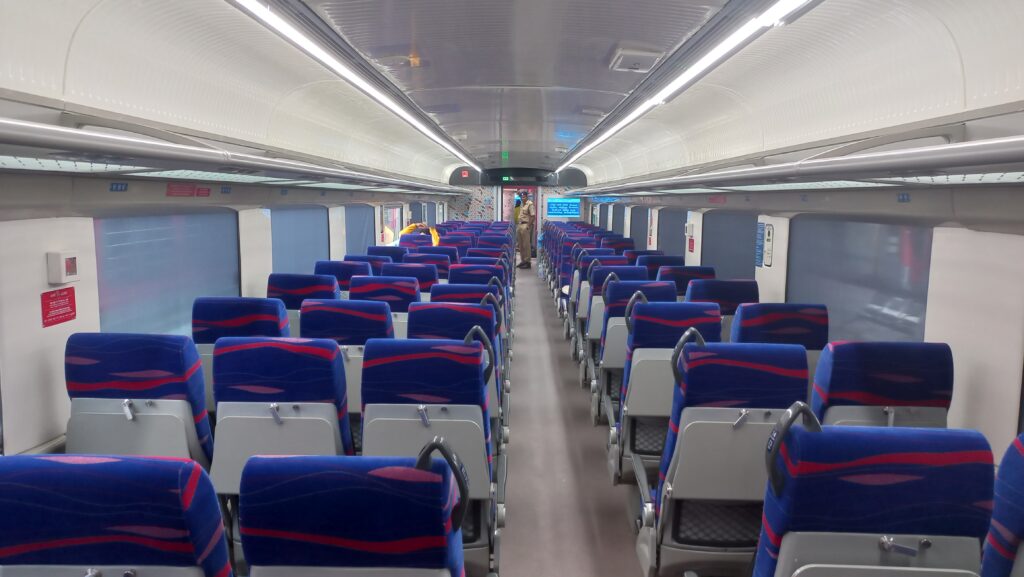
On food: Meals have improved considerably over the past two years. The IRCTC catering on Vande Bharat now offers regional options on many routes. That said, consistency varies. I personally recommend carrying your own snacks for routes under 4 hours.
⚖️ Vande Bharat vs Rajdhani vs Shatabdi – Which is Better?
Here is the no-nonsense comparison you have been looking for:
| Parameter | Vande Bharat Express | Rajdhani Express | Shatabdi Express |
|---|---|---|---|
| Type | Semi-high-speed, Chair Car / Sleeper | Long-distance, Overnight | Daytime intercity |
| Max Speed | 160 km/h | 130–140 km/h | 130–150 km/h |
| Avg Speed | 100–130 km/h | 90–110 km/h | 90–120 km/h |
| Comfort | ⭐⭐⭐⭐⭐ (Modern, aircraft-style) | ⭐⭐⭐⭐ (Good, overnight berths) | ⭐⭐⭐ (Functional, older coaches) |
| Food Included | Optional (separate charge) | ✅ Yes (included) | ✅ Yes (included) |
| Sleeper Available | Yes (new Sleeper version, select routes) | ✅ Yes (1AC, 2AC, 3AC, SL) | ❌ No (Chair Car only) |
| Pricing (CC/3AC) | ₹700 – ₹3,200 | ₹1,590 – ₹4,000+ | ₹700 – ₹2,500 |
| Best For | Short/medium trips, speed lovers | Long overnight journeys | Budget daytime trips |
| Technology | 🏆 Most modern | Traditional LHB | Traditional LHB |
| Dynamic Pricing | ❌ Fixed fares | ✅ Dynamic | ✅ Dynamic |
Bottom Line: If your route is under 800 km and you want the cleanest, fastest daytime experience — Vande Bharat wins. For overnight long-haul? Rajdhani still holds its own, though the new Vande Bharat Sleeper is changing that conversation.
🏆 Is Vande Bharat Train Worth It in 2026? (The Honest Verdict)
I’ve heard the Reddit debates. “It’s overpriced.” “It doesn’t even reach top speed.” “My old Shatabdi was just as fast.” Let me address this honestly.
✅ Pros
- Significantly faster than most conventional trains
- Cleanest train experience in Indian Railways right now
- Fixed fares — no last-minute price spikes
- KAVACH safety — your life is not a variable
- Excellent seat comfort, especially EC class
- Great on-time performance on most routes (priority track access helps)
- No locomotive hassle — faster turnaround, quicker departure
❌ Cons
- Premium pricing can sting for budget travellers or large families
- Food is charged separately — unlike Rajdhani and Shatabdi where it’s included
- Only Chair Car on most routes — no sleeper berth option yet for most corridors
- Wi-Fi is inconsistent on several routes
- Speed doesn’t always match expectations due to track limitations
- Seats cannot be fully reclined for sleeping on long journeys (Chair Car version)
Who Should Book Vande Bharat?
- ✅ Business travellers doing Delhi–Lucknow, Mumbai–Ahmedabad type runs
- ✅ Weekend tourists on scenic or pilgrimage routes
- ✅ Families who want a clean, safe, comfortable daytime journey
- ❌ Not the best fit if you’re travelling on a tight budget or need an overnight sleeper on a route not yet covered
🌄 Best Routes to Travel Using Vande Bharat (The Xplore Heaven Travel Angle)
After 20 years of planning trips, these are my personal top picks:
🗓️ Best for Weekend Trips
- Mumbai → Shirdi (~5 hrs) — Perfect for a Friday evening departure. Back by Sunday night. Explore our weekend trip guides on Xplore Heaven
- Delhi → Agra (~2 hrs on fastest service) — One of the best value day trips in North India
- Howrah → New Jalpaiguri (~7.5 hrs) — Gateway to Darjeeling and Sikkim
🏔️ Scenic Routes Worth Taking
- Mangalore → Thiruvananthapuram — The Western Ghats coastline from a train window is something else
- Chennai → Coimbatore — Beautiful Tamil Nadu countryside, misty hills in the distance
🕌 Pilgrimage Routes
- Delhi → Katra — For Mata Vaishno Devi darshan; comfortable and fast
- Delhi → Varanasi — The original Vande Bharat route, now a spiritual-cultural journey by itself
🌙 New Vande Bharat Sleeper Train (Latest 2026 Update)
This is the biggest development in Indian rail travel in years. And I mean that.
India’s first Vande Bharat Sleeper Express was launched on January 17, 2026 — flagged off by PM Narendra Modi on the Howrah–Kamakhya route. The prototype was first unveiled by BEML in September 2024.
What makes it different?
- Three AC classes: 1AC, 2AC, and 3AC — just like Rajdhani, but with a modern twist
- Base fare pegged at ~1.1x Rajdhani — premium, but the ride quality justifies it
- Designed for sustained 160 km/h on upgraded corridors — faster than most Rajdhani runs
- Catering is optional — you choose what you eat and pay accordingly
- Modern berths with better cushioning and privacy features than old LHB coaches
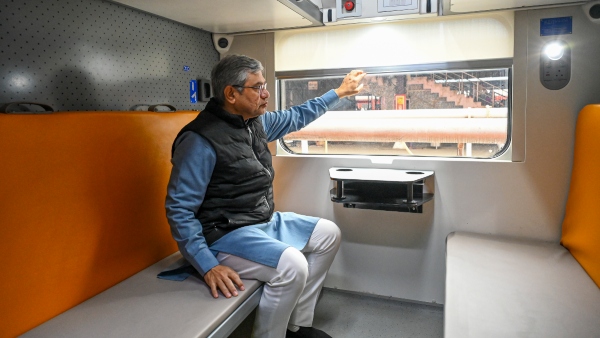
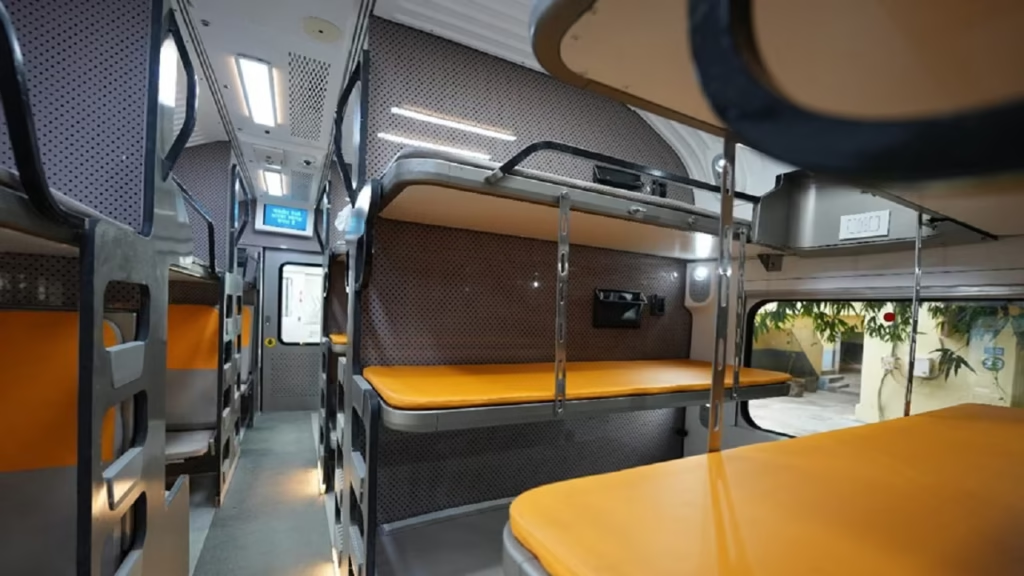
The Bengaluru–Mumbai Vande Bharat Sleeper route was approved in April 2026 and is expected to launch soon. This will be a genuine Rajdhani-killer on that corridor.
For overnight travel enthusiasts, this is the train to watch in 2026–2027.
⚠️ Problems & Limitations of Vande Bharat Train (Reality Check)
I’m not going to pretend everything is perfect. Here’s what you should know before booking:
1. Track Infrastructure Hasn’t Caught Up
The train can do 160 km/h. Most Indian tracks can’t safely support that for long stretches. So average speeds on many routes hover around 100–115 km/h. The full speed potential is there — the tracks are the bottleneck.
2. Premium Pricing Isn’t For Everyone
A family of four travelling CC class on a 700 km route could pay ₹5,000–₹6,000 one way. For that money, some budget flyers can get airfares. For solo professionals? Absolutely worth it. For large families on a budget? The math gets harder.
3. Tatkal & Booking Availability
Vande Bharat seats — especially EC class on popular routes — sell out fast. If you’re a last-minute booker, be ready to pay Tatkal premium or get nothing.
4. No Unreserved Travel
Vande Bharat is fully reserved. If you miss your train, there is no jumping into a general coach. Plan accordingly.
5. Limited Sleeper Coverage
The Sleeper version is still very new — currently only the Howrah–Kamakhya route is active. If you need an overnight sleeper option beyond that corridor, Rajdhani remains your go-to for now.
💡 Travel Tips for Vande Bharat Train
After countless trips, here are the tips I give my own clients:
- Window seats are worth it: Opt for window seats — especially on scenic corridors like the Konkan Coast or Ghats sections. Book early to grab them
- Travel in the direction of your destination: If you’re travelling to a hilly destination, check which side of the train faces the mountains. Fellow travellers on forums often share this info
- Skip the food if your journey is under 4 hours: Save ₹100–₹200 and carry home-made snacks or pick up food at the station
- Choose EC class for journeys over 5 hours: The rotating seats and extra legroom genuinely reduce fatigue on long rides
- Avoid peak holiday dates on popular routes: Tickets disappear in minutes on Republic Day, Diwali, and summer holidays — book 45–60 days ahead
- Download the IRCTC app: Real-time PNR status, live train tracking, and push notifications for cancellations — all in one place
- Check coach position before boarding: Large stations have coach position boards — save yourself the last-minute sprint
❓ Frequently Asked Questions About Vande Bharat Train
Is Vande Bharat faster than Rajdhani?
Yes, on most comparable routes Vande Bharat is faster than Rajdhani. Its distributed power system accelerates quicker and it often holds priority on upgraded track sections. On some corridors, it has recorded an average speed of over 100 km/h — beating Rajdhani and Shatabdi on the same route. That said, on very long routes with many halts, the difference narrows.
Why is Vande Bharat so expensive?
Building one 16-coach Vande Bharat trainset costs approximately ₹115–120 crore — about 30–40% more than a conventional Rajdhani or Shatabdi rake. The distributed power system, aircraft-grade interiors, KAVACH safety tech, bio-vacuum toilets, and regenerative braking all add to the cost. Higher manufacturing cost leads to higher ticket pricing to recover investment.
Does Vande Bharat have sleeper class?
Yes — but only on select routes in 2026. The Vande Bharat Sleeper Express launched in January 2026 currently operates on the Howrah–Kamakhya route. More sleeper routes, including Bengaluru–Mumbai, are approved and expected to launch soon. The standard Chair Car version does not have sleeper berths.
Is food included in ticket price?
No, not anymore — catering on Vande Bharat is optional and charged separately. You can choose to pre-order an IRCTC meal during booking or buy from the pantry car onboard. This is different from Rajdhani and Shatabdi where meals are bundled into the fare.
Which is better: Vande Bharat or flight?
For distances under 600 km, Vande Bharat often wins on total cost and convenience when you account for airport travel time, security queues, and baggage fees. For distances above 800 km, a budget flight often makes more sense on time-value. The sweet spot for Vande Bharat is the 400–750 km range.
Can I sleep in Vande Bharat train?
On the Chair Car version — technically yes, but it’s not comfortable for deep sleep. Seats recline slightly but are not flat berths. The Vande Bharat Sleeper Express (currently Howrah–Kamakhya) has proper AC berths for overnight journeys. If sleeping comfortably matters, the sleeper version is what you want.
What are disadvantages of Vande Bharat?
The main drawbacks: premium pricing that may not suit budget travellers, food not included in the fare, no unreserved travel option, sleeper coverage still limited to one route in 2026, Wi-Fi quality is inconsistent, and average speeds fall short of maximum design speed on many routes due to track limitations. It is excellent — but it is not perfect.
The Vande Bharat train is not just a train. It is proof that India can build world-class travel infrastructure from scratch. Is it perfect? Not yet. But is it a genuine leap forward for Indian rail travellers? Absolutely, yes.
My advice: Try it once on a route that matters to you. Book EC class if you can. Travel on a weekday morning. Carry your own chai and something to read. And look out the window — because some of these routes are genuinely beautiful.
If you found this guide useful, I would love to hear your Vande Bharat experience. Drop a comment below and tell me your favourite route. And if you’re planning a longer trip, head over to Xplore Heaven for full destination guides, itineraries, and honest travel advice — built by people who have actually been there.
Happy travelling! 🚆
— Wahid Ali Operations Lead, Astamb Holidays, Mumbai Lead Travel Expert, Xplore Heaven
📚 References & Citations
This article is backed by authoritative sources and research.
- Vande Bharat Express – Wikipedia — Operational history, technical specifications, speed data
- IRCTC Official Website — Ticket booking, PNR status, official fare information
- Vande Bharat Express Route & Fare Directory – VandeBharatExpress.co.in — Updated 2026 route and fare data
- Vande Bharat Train Routes & Ticket Price 2026 – vBooking.in — Class-wise fare breakdowns and sleeper pricing
- Vande Bharat Express Route List – Ixigo — Route-wise timetable and distance data
- Vande Bharat Sleeper Fare Structure 2026 – Railway Board Circular CC 03/2026 via Central8thPayCommission.com — Official Vande Bharat Sleeper pricing circular
- Vande Bharat Express 2026: Routes, Review & Expansion – RoadRailInfra.com — Expansion plans and sleeper train details
- All Vande Bharat Express Trains List – Trayaan.com — March 2026 verified route list and train numbers
- Vande Bharat vs Rajdhani vs Shatabdi 2026 – DevPathshala — Comparative analysis of premium Indian trains
- Vande Bharat vs Rajdhani Shatabdi: Which Is Better? – Trak.in — Expert technical comparison
- Vande Bharat vs Shatabdi – Zee News — Food, comfort and price comparison
- Cost of Vande Bharat vs Rajdhani and Shatabdi – News24 — Manufacturing cost breakdown
Published on Xplore Heaven | Written by Wahid Ali | Last Updated: April 2026