By Mr. Imran Mulla | Founder, TravelJunctions.in | Contributing Expert, XploreHeaven.com
Quick Answer: Is Albania safe to visit? Yes — Albania is genuinely safe for tourists in 2026. Violent crime against visitors is extremely rare. The real risks are petty theft in crowded spots, chaotic driving, and the occasional taxi overcharge. With basic travel awareness, most visitors leave with nothing but great stories and an urge to return.
I get asked this question almost every week. Someone planning their summer, a solo female traveler looking for something off the beaten track, or a budget backpacker who has already done Greece and Croatia and is wondering where to go next. The answer I always give is the same — stop overthinking it and go.
I have been in the travel industry for 17 years. I have worked with thousands of travelers across South Asia, Europe, and the Balkans. And I can tell you with full confidence that Albania — sitting quietly on the Adriatic Sea along the Balkan Peninsula — is one of the most underrated, genuinely welcoming destinations on the planet right now. The media gave it a rough reputation for decades. That reputation belongs to a different era. 2026 Albania is not the Albania of the 1990s, and it is time travelers understood that difference.
Is Albania Safe to Visit for Tourists in 2026?
Albania is safe to visit for tourists in 2026. Violent crime against foreigners is nearly non-existent, tourism is growing fast, and locals are known for their deep-rooted code of hospitality. Most travelers have completely trouble-free experiences from the moment they land to the moment they fly out.
Tourism numbers tell the story. Albania welcomed record visitor arrivals in 2024–2025, with travelers from Germany, Italy, the UK, and the United States making up a growing share. The government has actively invested in tourist infrastructure, and cities like Tirana and Sarandë are increasingly polished, walkable, and traveler-friendly.
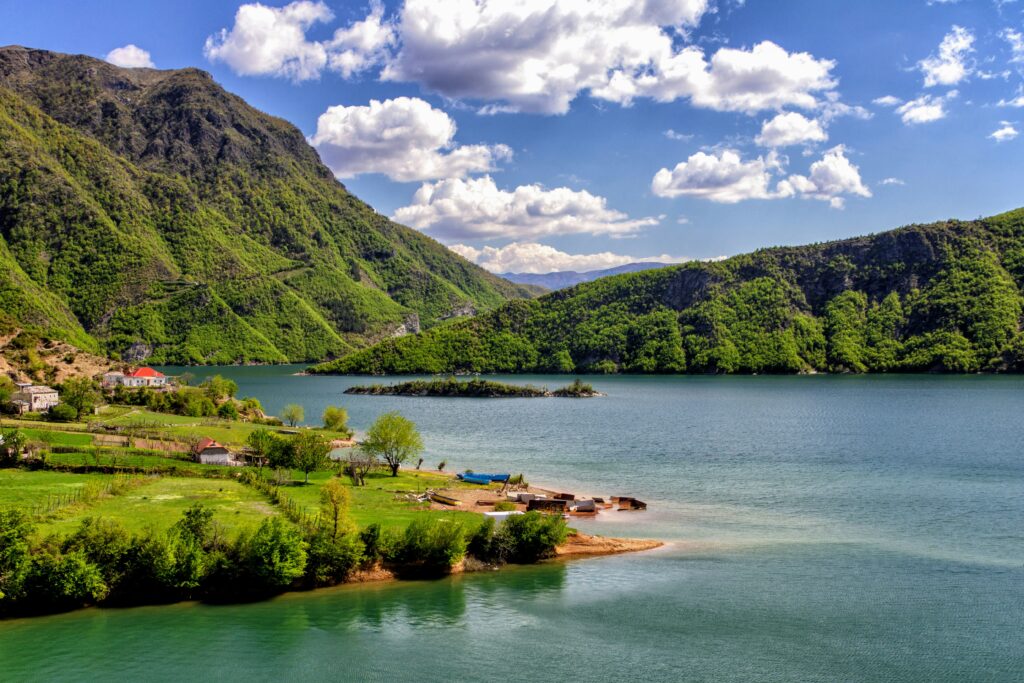
There is a deeply embedded cultural concept here called Besa — an ancient Albanian code of honor that essentially means a guest is sacred. You are not just tolerated as a tourist. You are protected. That is not marketing language. I have seen it in action — locals going out of their way to walk a confused traveler to their destination, guesthouse owners staying up to sort out travel issues. It is real, and it shapes the entire traveler experience.
Quick Albania Safety Score — 2026
| Safety Category | Risk Level | Notes |
|---|---|---|
| Violent Crime | 🟢 Very Low | Rare; tourists almost never targeted |
| Petty Theft / Pickpocketing | 🟡 Low–Moderate | Mainly in busy markets & bus stations |
| Solo Travel Safety | 🟢 Low | Welcoming culture; community-protective attitude |
| Solo Female Safety | 🟡 Low–Moderate | Generally safe; some cultural awareness needed |
| Night Safety (Cities) | 🟢 Low | Blloku district, Tirana & coastal towns are lively and safe |
| Road Safety | 🔴 Moderate–High | Biggest real risk; erratic drivers, poor mountain roads |
| Scam Risk | 🟡 Low–Moderate | Taxi overcharging is the most common issue |
| Public Transport | 🟡 Low | Safe but unorganized; furgons run on their own schedule |
| Natural Hazards | 🟡 Low–Moderate | Wildfires (Apr–Oct), winter flooding in the north |
Why Albania’s Safety Reputation Is Often Misunderstood
Albania’s bad reputation comes from the 1990s — not from today. After the fall of communism in 1991, the country went through a chaotic period of economic collapse and social instability. That era — combined with Hollywood’s portrayal of “Albanian crime” in films like Taken — burned a negative image into the Western imagination. That image simply does not reflect modern Albania.
Here is the critical distinction that travelers need to understand: organized crime networks in Albania are internal and targeted. Disputes happen between rival groups — not between criminals and tourists. The U.S. State Department currently lists Albania as a Level 2: Exercise Increased Caution destination, primarily because of organized crime activity. But — and this matters enormously — that same advisory notes that tourists are not widely targeted as crime victims. <br>
📌 Expert Note: A Level 2 advisory from the U.S. State Department is the same rating given to France, Germany, and Italy. It does not mean “don’t go.” It means “be aware.”
The UK Foreign, Commonwealth & Development Office (FCDO) gives standard travel safety guidance for Albania, noting that while crime and violence exist in some areas, reports of crime specifically targeting foreigners are rare.
Albania had just 34 homicides in 2023 — a record low — in a country of approximately 2.8 million people. That translates to a homicide rate of roughly 1.39 per 100,000, which is lower than the United States, Mexico, and many Western European cities.
What Are the Biggest Safety Risks in Albania?
Honest travel writing means telling you what actually goes wrong — not just what could theoretically go wrong. Here is the real breakdown.
Pickpocketing in Tourist Areas
Pickpocketing is the most common crime tourists encounter in Albania, though it remains far less prevalent than in cities like Rome, Barcelona, or Paris. It tends to happen in busy markets, bus stations, and crowded public spaces rather than on the street.
Keep your phone in a front pocket. Use a crossbody bag. Do not wave your wallet around in a market. Standard stuff — the same precautions you would take anywhere in Europe.
Taxi Overcharging Scams
Unofficial and metered taxis in Albania are the number one scam tourists encounter. Drivers — particularly near airports and ferry terminals — may quote inflated prices or run a tampered meter.
The fix is simple. For Tirana Airport, the official fixed rate to the city center is 2,500 ALL (approximately €25). Look for the official yellow airport taxis operated by Auto Holiday Albania. Better yet, download Lux Taxi or Bee Taxi — Albania’s reliable ride-hailing apps — and book via WhatsApp for rates of 1,100–1,500 ALL (€11–€15). Always agree on the price before you get in.
Dangerous Mountain Roads
Mountain roads in Albania — particularly in the north, around Theth and Valbona, and on the coastal Vlorë–Sarandë pass — require careful driving and should be avoided at night. Roads can be narrow with sharp bends, few barriers, and poor lighting after dark.
Rent a car only if you are comfortable with assertive, sometimes chaotic traffic. If you are not, hire a local driver. Seriously. A local driver for a full-day mountain trip costs around €50–€80 and is worth every cent for peace of mind.
Public Transport Delays
Albania’s public bus and furgon (shared minibus) network is safe but not well-organized. Furgons — the backbone of budget travel between cities — leave when full, not on a fixed schedule. Drivers can be fast and unpredictable. Factor in extra time for any journey, especially to more remote areas.
Nightlife & Drinking Safety
The nightlife in Tirana’s Blloku district is genuinely good — lively bars, rooftop venues, cheap cocktails. It is also generally safe. Standard precautions apply: keep your drinks in sight, do not accept drinks from strangers, and use a registered taxi to get back to your accommodation after a late night out.
Political Demonstrations in Tirana
Political protests in Tirana are not uncommon and can occasionally turn disruptive. As of February 2026, there were active demonstrations around Dëshmorët e Kombit Boulevard near Skanderbeg Square, with some incidents involving tear gas. Tourists are not targets of these protests, but it is worth checking local news before heading into the city center and giving any crowd a wide berth.
Is Tirana Safe to Visit for Tourists?
Tirana is safe for tourists. The city center — particularly the Blloku district — is walkable, lively, and safe even late into the evening. Albanians socialize outdoors long after dark, which naturally keeps streets active and safer.
Areas to be more careful in after dark include poorly lit alleys away from the main squares and the outskirts of the city. Stick to the central areas — around Skanderbeg Square, the Grand Park, and Blloku — and you will have no issues.
One thing I always tell first-time visitors to Tirana: the city is more modern and cosmopolitan than most people expect. Good coffee, excellent restaurants, a growing art scene — it surprises people every time.
Is Albania Safe to Visit for Solo Travelers?
Albania is a very good destination for solo travelers, including backpackers and digital nomads. The cost of living is low, English is increasingly spoken in tourist areas, and locals are genuinely helpful toward solo visitors.
Reddit travel communities (/r/solotravel, /r/albania) consistently reflect positive experiences. The recurring themes: friendly locals who go out of their way to help, cheap and tasty food, and a refreshing lack of tourist-trap fatigue. The most common complaint? Not staying longer.
Digital nomads are finding Tirana in particular to be a strong base — reliable Wi-Fi in most cafés, a growing coworking scene, and cost of living that is a fraction of Lisbon or Tbilisi. A comfortable month in Tirana can cost under €800–€1,000 all-in.
Is Albania Safe to Visit for Solo Female Travelers?
Albania is generally safe for solo female travelers. Street harassment is significantly less common than in many Southern European countries, and the cultural tradition of Besa means locals feel a genuine sense of responsibility toward guests.
That said, some cultural nuance is worth knowing:
- In cities and coastal resorts (Tirana, Sarandë, Ksamil, Dhërmi), solo women travel freely and comfortably. Bars, restaurants, and nightlife venues are mixed-gender and relaxed.
- In rural and northern areas, more conservative attitudes exist. Women traveling alone may attract curious looks — not threatening, but noticeable. Dressing modestly (covering shoulders and knees) in village areas shows respect and reduces unwanted attention.
- At night, use registered taxis rather than walking long distances in unfamiliar areas — not because Albania is dangerous, but because it is smart practice anywhere.
- Spring (April–June) and autumn (September–October) are the best seasons for solo female exploration — good weather, smaller crowds, and easier logistics.
Multiple solo female travelers from the UK, Germany, and Australia report feeling far safer in Albania than they expected, frequently more so than in popular destinations like Morocco, Egypt, or even parts of Italy. The warmth is genuine, and it tends to catch first-timers off guard in the best way.
Which Are the Safest Places to Visit in Albania?
| Destination | Why It Is Safe | Best For |
|---|---|---|
| Berat | UNESCO city, low crime, tight-knit community | Culture, history lovers |
| Ksamil | Small beach village, family-friendly, tourist-aware | Beach holidays |
| Sarandë | Coastal city, well-policed, busy with tourists | Base for the Riviera |
| Shkodër | Gateway to the Alps, relaxed atmosphere | Cycling, day trips |
| Theth | Remote mountain village, community-based tourism | Hiking, nature |
| Albanian Riviera | Popular, relatively well-organized for tourists | Scenic drives, beaches |
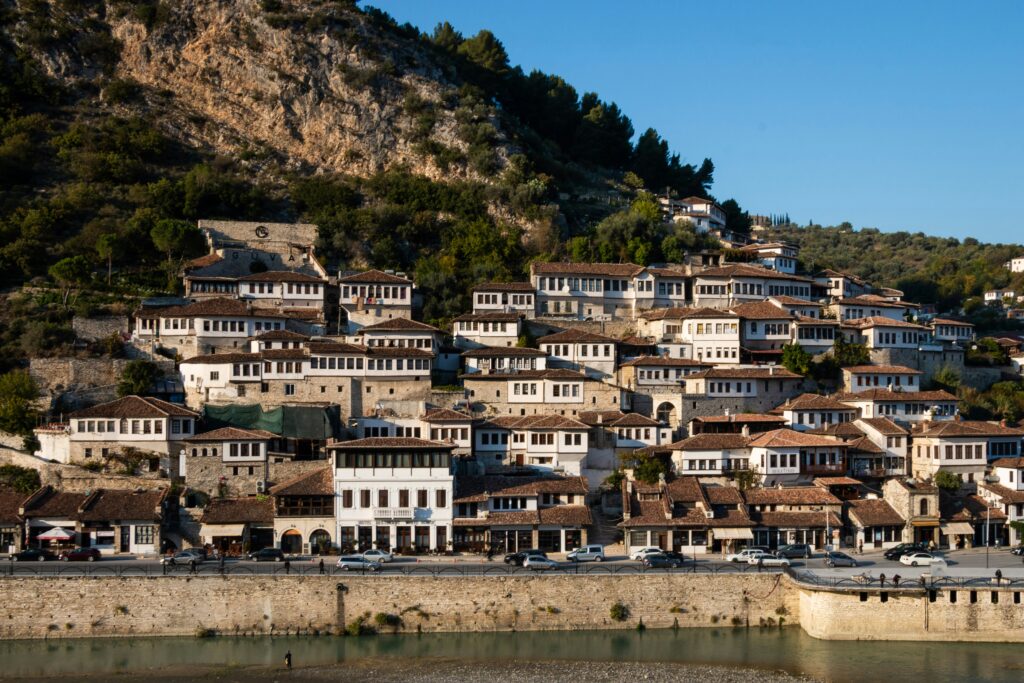
Berat — nicknamed “the City of a Thousand Windows” — is one of the most charming and safest spots I have recommended to clients. The UNESCO old town is compact, very walkable, and full of guesthouses run by local families who take hospitality personally.
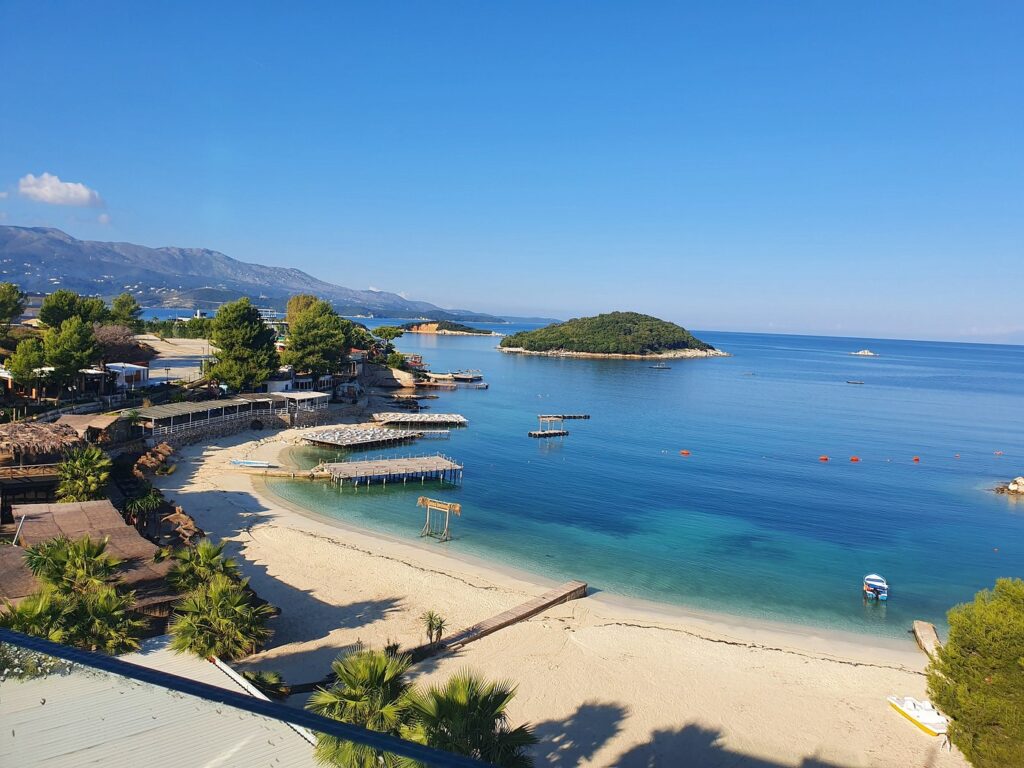
Ksamil is arguably the most-photographed beach in the country — think turquoise water and small offshore islands — and remains genuinely relaxed even in peak summer, though July and August do get busy. September is my personal recommendation for the same beauty with far fewer people.
Which Places in Albania Require More Caution?
- Isolated northern mountain roads — not dangerous in terms of crime, but physically hazardous. 4×4 vehicles are strongly recommended for routes into Theth via the Komani–Valbona corridor. Snow and ice are real concerns from November to March.
- Night driving anywhere outside cities — unmarked roadworks, livestock on roads, and vehicles without lights make after-dark driving genuinely risky. Avoid it.
- Remote border areas — not militarized or dangerous, but infrastructure and emergency services are limited. Keep a fully charged phone and let someone know your route.
Is Albania Safer Than Other Balkan Countries?
Albania is comparable in safety to Montenegro and Serbia for tourists, and slightly behind Croatia and Greece in terms of infrastructure and organized tourism services — but it is not significantly less safe in terms of violent crime.
Here is a straight comparison:
| Country | GPI Rank (2024) | Tourist Crime Risk | Road Safety | Overall for Tourists |
|---|---|---|---|---|
| Croatia | 15th globally | Very Low | Good | Excellent |
| Greece | ~60s range | Low | Moderate | Very Good |
| Montenegro | ~50s range | Low | Moderate | Good |
| Albania | ~68th | Low–Moderate | Moderate–High | Good |
| Serbia | ~70s range | Low | Moderate | Good |
The honest truth? Croatia is statistically safer, but it is also significantly more expensive. As one traveler put it perfectly: “Albania is where Croatia was 10–15 years ago — go now before prices catch up.” Albania wins on value, authenticity, and crowd levels. Croatia wins on infrastructure and predictability. Neither is a dangerous choice.
What Should Tourists Avoid in Albania?
- Unofficial taxis without meters or fixed prices, especially at the airport and ferry terminals
- Night driving on mountain or rural roads — it is simply not worth the risk
- Flashing expensive jewelry, cameras, or large amounts of cash in crowded areas
- Drinking tap water outside of Tirana — stick to bottled water in rural and coastal areas
- Discussing politically sensitive topics — particularly regarding Kosovo — with strangers
- Ignoring weather alerts — wildfires are common April to October; northern floods occur December to February
- Hiking long routes alone without informing your guesthouse — some trails are genuinely remote with poor signage
- Exchanging money with unofficial street changers — always use ATMs attached to banks
Essential Albania Safety Tips for First-Time Visitors
- Get a local SIM card immediately. At Tirana International Airport, grab an Albtelecom or Vodafone Albania SIM. A data-heavy plan costs roughly €5–€10 for 15–30GB. Maps, translation, ride-hailing — everything depends on connectivity.
- Download offline maps before you go. Maps.me or Google Maps offline for your specific regions. Mountain areas have poor signal.
- Carry cash (Albanian Lek — ALL). Outside of Tirana and coastal cities, many places are cash-only. Euros are accepted in tourist areas, but you will get better rates paying in Lek. ATMs attached to major banks (Raiffeisen, BKT) are the safest withdrawal option.
- Get travel insurance with medical evacuation cover. This is non-negotiable. Public hospitals outside Tirana are limited. Private clinics in the capital are affordable and decent, but rural emergencies may require evacuation to Greece or Italy. Do not skip this.
- Use registered ride-hailing apps — Lux Taxi and Bee Taxi are reliable, have transparent pricing, and eliminate the overcharging risk entirely.
- Book accommodation in advance for July–August, especially in Ksamil and Sarandë. The Albanian Riviera fills up fast in peak summer.
- Learn 5–10 Albanian words. Faleminderit (thank you), Mirë se vini (welcome/hello), Ju lutem (please). Albanians genuinely appreciate any attempt, and it opens doors.
Emergency Numbers & Healthcare in Albania
| Service | Number |
|---|---|
| General Emergency | 112 |
| Police | 129 |
| Ambulance | 127 |
| Fire | 128 |
| British Embassy Tirana | +355 4 223 4973 |
| U.S. Embassy Tirana | +355 4 224 7285 |
Healthcare reality check: Private hospitals in Tirana — such as American Hospital Tirana — are modern, affordable, and handle tourist emergencies competently. Outside the capital, facilities drop off sharply. For anything beyond minor injuries or illness in rural areas, plan for transfer to Tirana or across the border. This is why travel insurance with evacuation cover is not optional — it is essential.
Tap water in Tirana is technically treated, but most locals and long-term visitors drink bottled water to be safe. In rural and coastal areas, always stick to sealed bottles.
Best Time to Visit Albania Safely
The safest and most enjoyable months to visit Albania are May–June and September–October.
| Period | Conditions | Crowd Level | Best For |
|---|---|---|---|
| May–June | Warm, clear, low wildfire risk | Low–Moderate | All-round travel |
| July–August | Hot (35°C+), peak season | High (coastal areas) | Beach holidays |
| September–October | Pleasant, cooling down | Low | Hiking, cultural travel |
| November–March | Cold, mountain roads may close | Very Low | Budget travel only |
July and August bring the biggest crowds to Ksamil, Sarandë, and the Albanian Riviera — but even then, Albania is far less crowded than Croatia or the Greek islands. September is genuinely the sweet spot: warm water, cheaper rooms, and a country that breathes out a little.
Final Verdict — Is Albania Safe to Visit?
Yes. Albania is safe to visit in 2026, full stop.
It is not perfect. The roads require real caution. Taxi scams are a nuisance. Healthcare outside the capital is limited. These are real considerations, not scaremongering.
But violent crime against tourists? Nearly nonexistent. Street harassment? Far lower than most European tourist destinations. Cultural warmth? Among the highest I have personally encountered anywhere on the continent.
Albania is not just safe — it is one of the most rewarding travel experiences available in Europe right now. Beaches that rival Greece at a fraction of the price. Mountains that rival the Alps without the crowds. History that goes deep and runs authentic. And people who will treat you like a guest of honor from the moment you arrive.
My honest advice after 17 years in this industry: Stop hesitating. Go.
FAQs About Albania Safety
Is Albania safe for Americans?
Yes. Americans are welcomed warmly and face no specific safety concerns. The U.S. State Department rates Albania at Level 2 (Exercise Increased Caution) — the same rating as France and Germany — primarily due to organized crime that does not target tourists. Enroll in the STEP program (Smart Traveler Enrollment Program) before you go.
Is Albania safe for solo female travelers?
Yes, with standard precautions. Street harassment is low by European standards. The cultural code of Besa means locals feel personally responsible for guests’ wellbeing. Dress modestly in rural areas, use registered taxis at night, and travel with the same awareness you would bring to any unfamiliar destination.
Is Tirana safe at night?
Generally yes. The Blloku district and main squares stay lively until late, with locals socializing openly. Stick to well-lit central areas, avoid poorly lit alleys, and use a registered app-based taxi for late-night returns to your accommodation.
What scams should tourists avoid in Albania?
The most common are taxi overcharging (fix: use Lux Taxi or Bee Taxi apps), restaurant overcharging (fix: always check menus for prices and confirm the bill), and currency confusion (fix: confirm whether prices are in Lek or Euros before paying). None of these are aggressive or dangerous — just annoying if you’re not prepared.
Is Albania safer than Greece?
Both are safe for tourists. Greece has stronger infrastructure and a more organized tourism system. Albania has lower rates of petty theft in many areas and is dramatically cheaper. For budget travelers and those wanting a less crowded experience, Albania often feels safer because it is less chaotic and less touristy.
Can tourists drink tap water in Albania? In Tirana, tap water is treated, but most travelers and locals drink bottled water. Outside the capital — especially in rural and coastal areas — always stick to sealed bottled water to be safe.
Is Albania good for families? Very much so. Family travel is warmly received — Albanians love children and will go out of their way to accommodate families. Berat, Sarandë, and Ksamil are particularly family-friendly. Avoid driving mountain roads with young children unless you are an experienced driver.
Is Albania safe for Black travelers? Yes. Albania is not a country with significant racial tensions. Travelers of all backgrounds report being treated with genuine curiosity and warmth. As with anywhere in Europe, occasional stares in smaller villages come from unfamiliarity rather than hostility. In cities and coastal towns, you will blend in without issue.
Do people speak English in Albania?
Increasingly, yes — especially in Tirana, Sarandë, and coastal tourist areas. Younger Albanians (under 35) often speak solid English. In rural areas, Italian is frequently more useful than English due to decades of Italian TV influence. A translation app is helpful but rarely essential in tourist hubs.
References & Sources
This article is backed by authoritative sources. All safety data, travel advisories, and statistics have been verified against the following reputable references:
- U.S. Department of State — Albania Travel Advisory (Level 2) https://travel.state.gov/content/travel/en/traveladvisories/traveladvisories/albania-travel-advisory.html
- UK Foreign, Commonwealth & Development Office (FCDO) — Albania Safety & Security https://www.gov.uk/foreign-travel-advice/albania/safety-and-security
- INSTAT (Albanian Institute of Statistics) — Crime Statistics 2023 https://www.instat.gov.al
- Global Peace Index 2024 — Institute for Economics and Peace https://www.visionofhumanity.org/maps/#/
- Transport Community — Road Safety Report: Albania (2022) https://www.transport-community.org
- WHO — Global Status Report on Road Safety (Albania Profile) https://www.who.int/publications/i/item/9789241565684
- Numbeo — Crime Index: Albania 2025 https://www.numbeo.com/crime/country_result.jsp?country=Albania
- Albania Visit — Albania Safety Statistics for Tourists (Updated May 2025) https://albaniavisit.com/travel-guide/albania-safety-statistics-for-tourists/
- Smart Traveler Enrollment Program (STEP) — U.S. Embassy Tirana https://step.state.gov
- OurWorldInData — Homicide Rate per 100,000 Population: Albania https://ourworldindata.org/homicides