By Wahid Ali | Operations Lead & Travel Professional, Astamb Holidays | Mumbai Published on XploreHeaven.com | Updated: May 2026
Running holiday operations out of Mumbai, I spend a good part of my day helping travelers choose destinations that will genuinely stay with them. Most clients start by asking about Kenya or Tanzania — the familiar names, the ones they’ve seen on travel shows. But the clients who trust me enough to try a Namibia tour? They come back different. Quieter. Like they’ve seen something the rest of the world hasn’t quite caught up to yet.
And honestly — they have. Namibia is vast, unhurried, and strikingly beautiful in a way that’s hard to prepare for. No traffic jams on safari roads. No crowds at a sunrise dune. Just wide-open desert, ancient landscapes, and wildlife living entirely on their own terms.
In 2026, Namibia is finally getting the global attention it has always deserved. If you’ve been thinking about this trip, this guide will help you plan it right — with honest logistics, cultural context, and the kind of ground-level detail that only comes from years of crafting itineraries for destinations like this one.
Why Is a Namibia Tour So Popular in 2026?
Quick Answer: A Namibia tour is popular in 2026 because it offers self-drive freedom, world-class wildlife, extraordinary photography opportunities, and some of the darkest skies on Earth — all with far fewer tourists than East Africa. It’s the go-to destination for adventure travelers who want a genuine, uncrowded African experience.
The numbers tell the story. Namibia recorded 863,872 tourist arrivals in 2023, an 87.4% increase from 2022 — a clear signal that the world is discovering what serious travelers have known for years. That momentum hasn’t stopped.
Here’s what’s driving the surge in 2026:
- Self-drive safari culture: Namibia’s tourism model heavily relies on self-drive tourism because of the country’s modern highways and low-density travel infrastructure. That’s a dream for independent travelers.
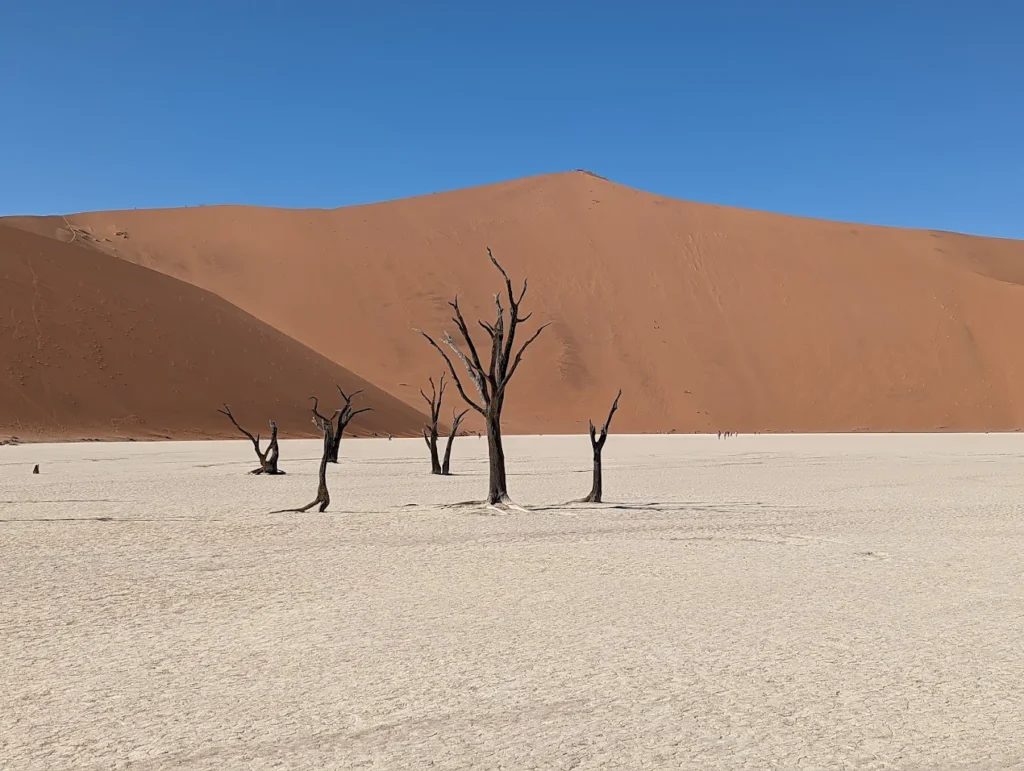
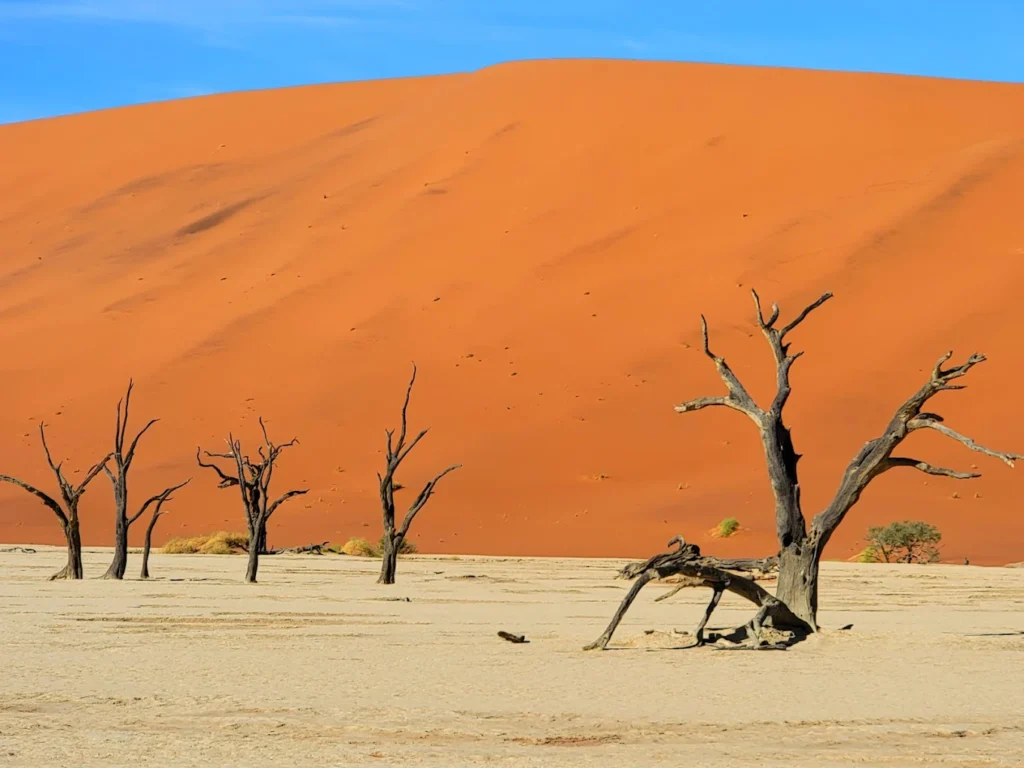
- Photography tourism: The light in Namibia — especially at Deadvlei and Sossusvlei — is unlike anywhere else in the world. Photographers are booking months in advance.
- Dark sky tourism: Namibia has NamibRand Nature Reserve, one of only a few certified Gold Tier Dark Sky Reserves on the planet. Stargazers are flying in specifically for this.
- Conservation travel: Namibia leads in conservation-integrated tourism, with lodges integrating guests into wildlife monitoring and rewilding initiatives.
- Exclusivity: Unlike the Masai Mara or Serengeti, you won’t have 30 jeeps around a lion kill here. Space is a luxury Namibia gives you for free.
Africa’s safari tourism market generated USD 18 billion in 2023, with forecasts predicting it will nearly double to USD 34.5 billion by 2033, growing at a solid CAGR of 6.7%. Namibia is one of the biggest beneficiaries of this shift.
What Are the Best Places To Visit on a Namibia Tour?
Quick Answer: The must-visit stops on a Namibia tour are Sossusvlei, Deadvlei, Etosha National Park, Swakopmund, Skeleton Coast, Fish River Canyon, and Damaraland. Each offers something completely different — from red dunes and salt pans to desert wildlife and coastal fog.
1. Sossusvlei & Deadvlei
This is the icon. The image most people associate with Namibia — those towering red-orange dunes against a white clay pan and black, dead camel thorn trees.
- Best time to visit: Arrive at the Sesriem gate at sunrise (gate opens at first light). The dunes glow red before 7 AM. By 10 AM, the heat is brutal and the light is flat.
- Photography tip: Shoot from Dune 45 for the classic sunrise shot. For Deadvlei, get in before the tourist buses arrive. Use a wide-angle lens for scale and depth. Drones are allowed but require a permit from the Namibia Civil Aviation Authority (NCAA) in advance — do not fly without one.
- Insider note: Most travelers do a single morning. Book two nights at Sesriem so you can shoot sunrise two days in a row. The second day, you’ll know exactly where to stand.
2. Etosha National Park
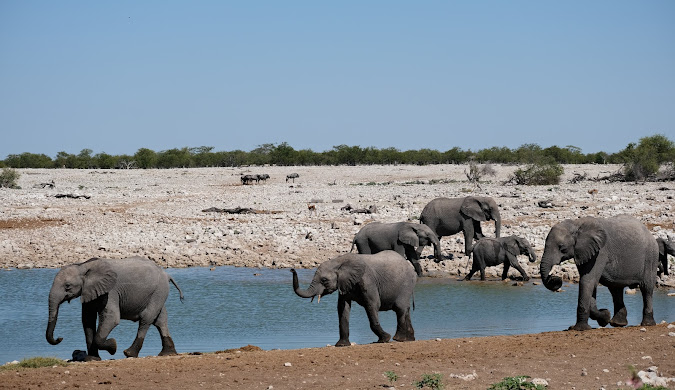
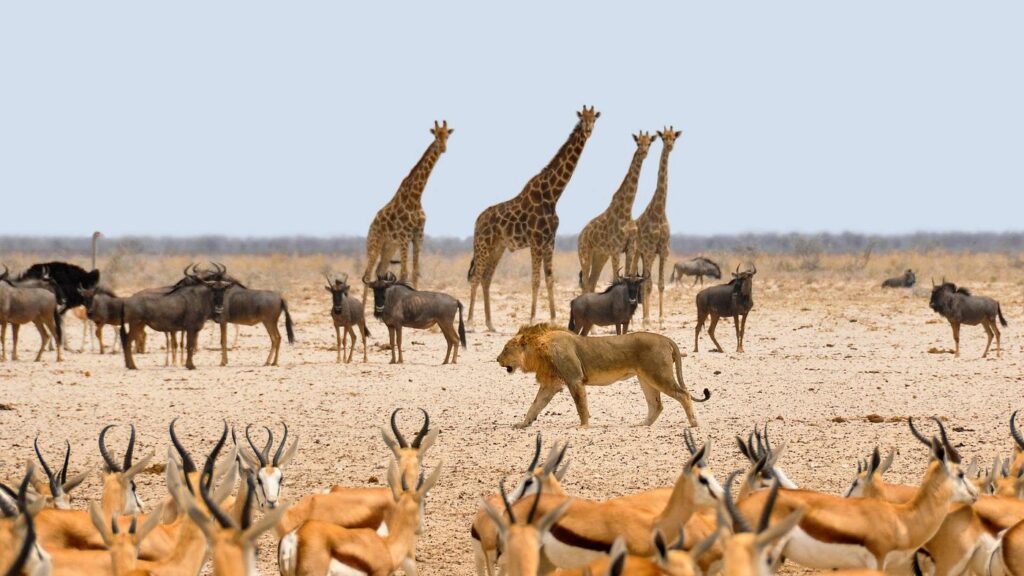
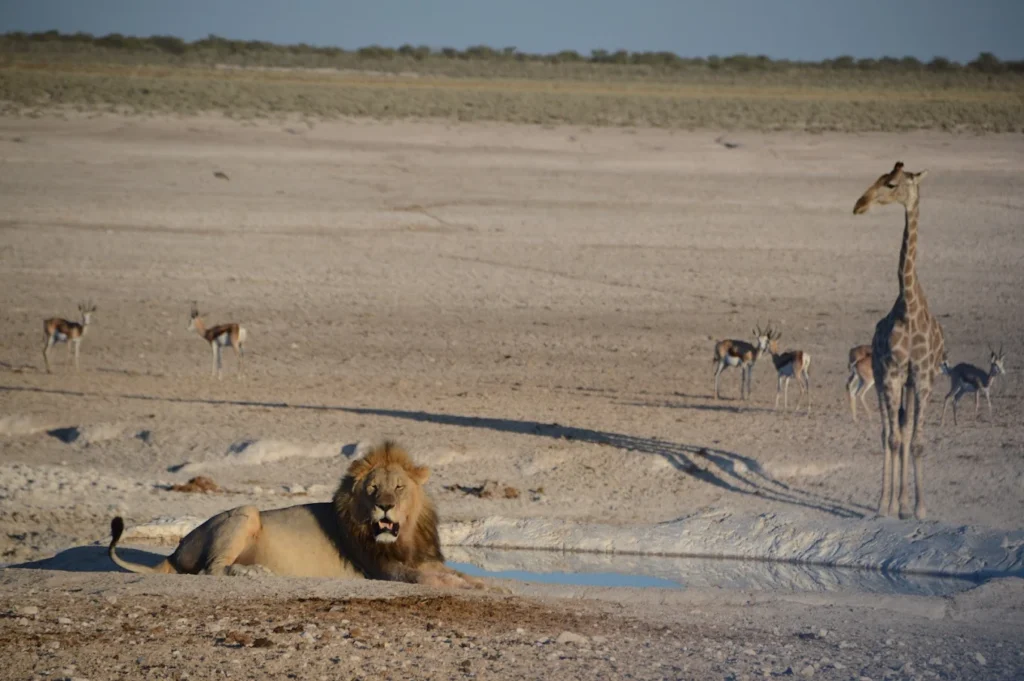
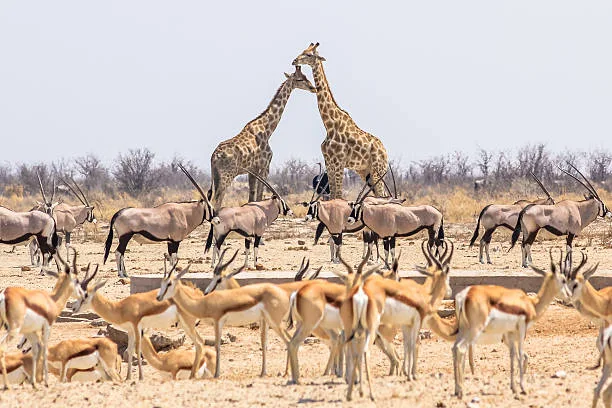
Namibia’s wildlife crown jewel. Etosha is centered around a massive salt pan — during dry season, animals gather at waterholes in extraordinary numbers.
- Best time: July to October for dry season. The waterhole at Okaukuejo camp is floodlit at night — lions, elephants, and black rhinos come to drink literally 10 meters from the fence.
- Photography tip: Stay inside the camp after dark. Night waterhole photography here is world-class and completely free.
- Drone tip: No drones allowed in Etosha. Don’t even try.
3. Swakopmund
A quirky coastal town that feels like a German village dropped into a desert. It’s the adventure hub of Namibia — sandboarding, quad biking, kayaking with seals, and the best seafood in the country.
- Best time: Year-round, but September to November offers the clearest skies and warmest days.
- Hidden gem: Take the Rossmund Desert Golf Course detour — one of the few golf courses built entirely on gravel. Unusual, but fascinating.
4. Skeleton Coast
One of the most remote and culturally haunting stretches of coastline I’ve ever built an itinerary around. Shipwrecks, whale bones, massive Cape fur seal colonies, and desert-adapted lions. This isn’t a polished tourist attraction — it’s a raw, almost otherworldly edge of the continent.
- Best time: May to September — the Benguela Current keeps temperatures mild and fog rolls in dramatically in the mornings.
- Photography tip: The seal colonies at Cape Cross smell like nothing you’ve ever experienced, but the photographic drama is extraordinary.
5. Fish River Canyon
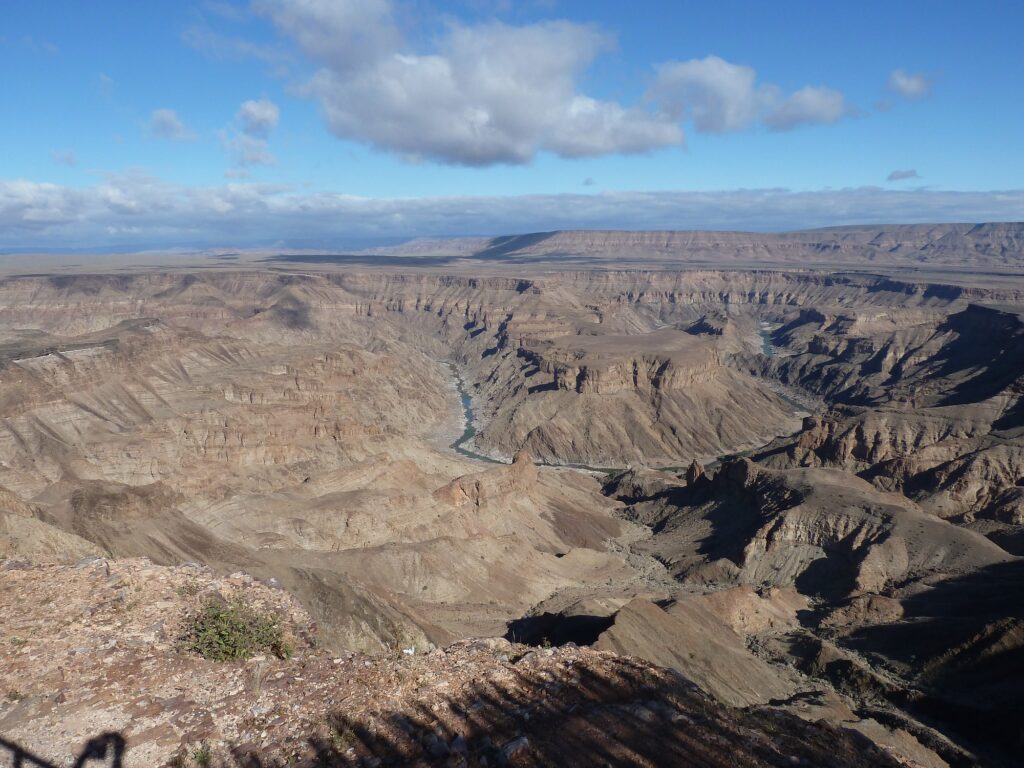
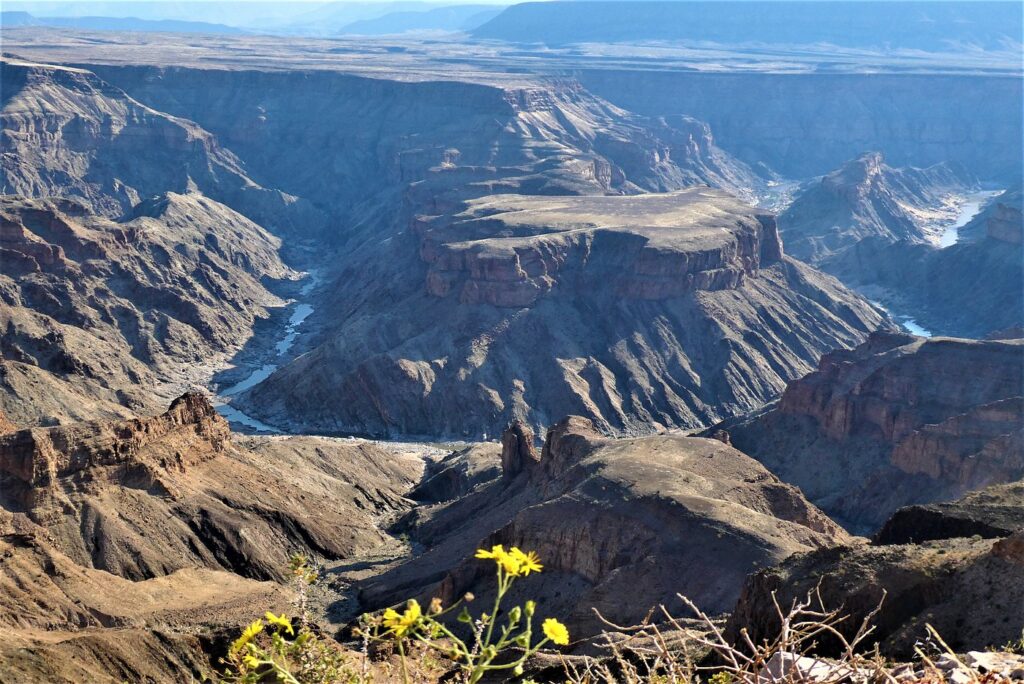
The second-largest canyon in the world after the Grand Canyon, and criminally undervisited.
- Best time: May to September for the famous Fish River Canyon Hiking Trail (5 days, 85km). Permits sell out — book 6 months in advance.
- Hidden gem: The viewpoint at Hobas at sunrise gives you a canyon almost entirely to yourself.
6. Damaraland
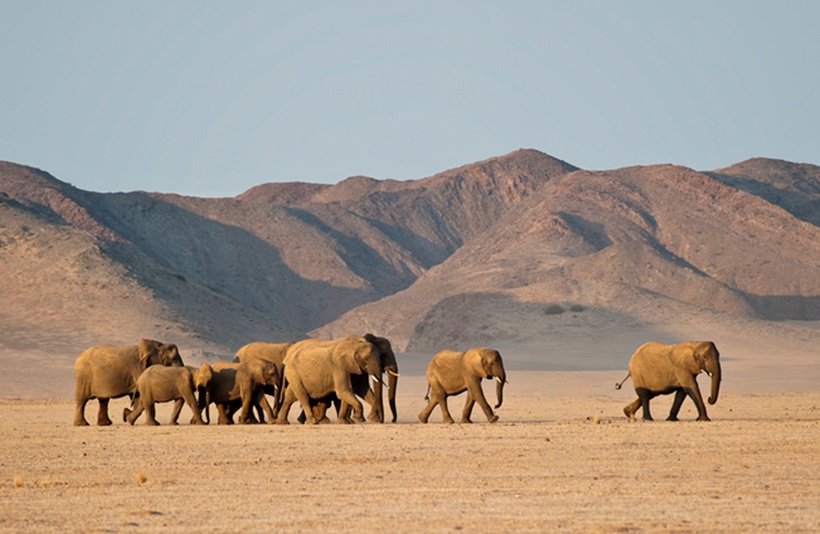
This is where you find desert-adapted elephants and ancient rock engravings at Twyfelfontein (a UNESCO World Heritage Site). The landscapes are Mars-like. Completely surreal.
- Best time: April to October.
- Photography tip: Twyfelfontein engravings photograph best in the late afternoon when the light rakes across the rock surface.
7. Spitzkoppe
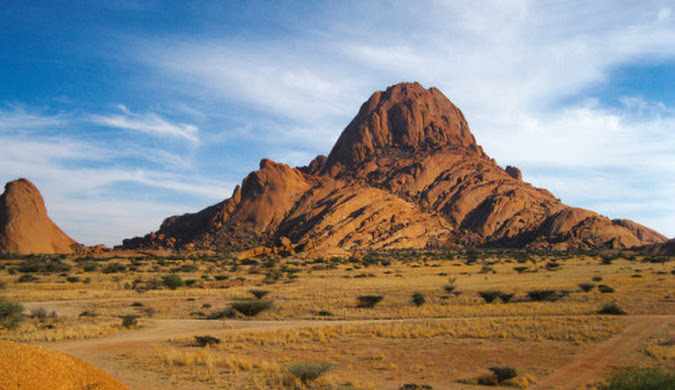
Often called the “Matterhorn of Namibia.” A granite inselberg rising out of the flat desert. Incredible for bouldering, rock art, and camping under a sky so full of stars you’ll feel dizzy.
- Hidden gem: The Bushman’s Paradise archway inside Spitzkoppe. Most visitors miss it because it requires a short hike.
What Is the Best Namibia Tour Itinerary?
Quick Answer: The ideal Namibia tour itinerary is 10 to 14 days. A 7-day trip is possible but rushed. A 14-day itinerary lets you cover the south (Sossusvlei), coast (Swakopmund/Skeleton Coast), and north (Etosha) without the stress of long daily drives.
7-Day Namibia Tour Itinerary (Fast-Paced — Best for Time-Limited Travelers)
| Day | Route | Driving Time |
|---|---|---|
| Day 1 | Arrive Windhoek → Drive to Sesriem | ~5 hours |
| Day 2 | Sossusvlei & Deadvlei (sunrise) → Sesriem night | — |
| Day 3 | Sesriem → Swakopmund via Solitaire | ~4.5 hours |
| Day 4 | Swakopmund activities (sandboarding, seals) | — |
| Day 5 | Swakopmund → Etosha South Gate | ~5 hours |
| Day 6 | Full day Etosha game drive | — |
| Day 7 | Etosha → Windhoek (fly home) | ~5 hours |
10-Day Namibia Tour Itinerary (The Sweet Spot)
| Day | Route | Highlights |
|---|---|---|
| Day 1 | Arrive Windhoek, stock provisions | Rest, groceries |
| Day 2 | Windhoek → Sesriem | Solitaire detour |
| Day 3 | Sossusvlei & Deadvlei (sunrise + sunset) | Two photo sessions |
| Day 4 | Sesriem → Swakopmund | Welwitschia Drive stop |
| Day 5 | Swakopmund | Adventures + Walvis Bay |
| Day 6 | Swakopmund → Spitzkoppe | Sunset at the rocks |
| Day 7 | Spitzkoppe → Damaraland/Twyfelfontein | Rock art + elephant tracking |
| Day 8 | Damaraland → Etosha (south) | Afternoon game drive |
| Day 9 | Full day Etosha | Waterhole night session |
| Day 10 | Etosha → Windhoek | Depart |
14-Day Namibia Tour Itinerary (The Full Circuit)
Add Fish River Canyon (Days 1–3), then work north through Lüderitz, Sossusvlei, Swakopmund, Skeleton Coast, Damaraland, and Etosha. This is the itinerary I personally recommend for first-timers who want to do it properly.
Realistic driving note: Gravel roads in Namibia average 60–80 km/h max. Tarmac is rare outside main routes. Always add 30% more time than Google Maps tells you.
Is a Self-Drive Namibia Tour Worth It?
Quick Answer: Yes — absolutely. A self-drive Namibia tour saves you $100–$200 per person per day versus a guided tour. The roads are well-signed, the distances are manageable with planning, and the freedom you get is worth every kilometer.
Here’s the honest breakdown:
4×4 vs SUV — What Do You Actually Need?
| Vehicle Type | Best For | Roads Covered | Cost (per day) |
|---|---|---|---|
| Standard 4×4 (e.g., Toyota Hilux) | Full Namibia circuit | All roads including sand | ~$100–$150 USD |
| High-clearance SUV | Main routes only | Tarmac + good gravel | ~$80–$120 USD |
| Budget sedan | Windhoek only | Tarmac only | ~$40–$60 USD |
My honest advice? Get the 4×4. Sossusvlei’s deep sand tracks will defeat a regular SUV. Self-driving in Namibia saves $100–$200 per person per day versus guided tours. You get complete schedule control, privacy, and can camp affordably with rooftop tent vehicles.
Gravel Road Reality
Most people underestimate this. There are very few highways in Namibia and most other roads are gravel — you will literally need to slow down. Speed kills on gravel. Corrugations (washboard ripples) at high speed will shake your vehicle — and your spine — apart.
Fuel Planning
- Fill up every time you see a fuel station. Gaps of 200–300 km between stations are normal.
- Carry a 20-liter jerry can as backup.
- Never drive after dark. This is non-negotiable. Wildlife danger multiplies at night, visibility drops, and help is hours away.
Two Spare Tyres — Non-Negotiable
Most rental companies include one spare. Insist on two. Gravel roads eat tyres. I’ve seen travelers stuck for hours because they had one flat and no backup. Repair the puncture at the next town immediately.
Best Time To Visit Namibia
Quick Answer: The best time to visit Namibia is July to October for wildlife and dry season. For photography, March to May offers green landscapes and dramatic skies. For stargazing, April to September gives the clearest nights.
| Travel Goal | Best Months | Why |
|---|---|---|
| Wildlife (Etosha) | July – October | Animals crowd waterholes in dry season |
| Photography (Dunes) | May – August | Cool mornings, long golden hours |
| Stargazing | April – September | Low humidity, zero cloud cover |
| Budget travel | November – March | Green season, lower rates |
| Birdwatching | November – April | Migratory birds present |
| Skeleton Coast | May – September | Mild temps, dramatic fog |
| Hiking (Fish River Canyon) | May – September | Mandatory by park rules |
My personal pick: August. The air is crisp, the wildlife is thick around waterholes, the dunes are at their most photogenic, and you get 12–13 hours of daylight. It’s peak season for a reason — book 6 months ahead for lodges.
Namibia Tour Cost Breakdown 2026
Quick Answer: A Namibia tour costs roughly $50–$70 USD per day for budget travelers (camping), $100–$150 per day for mid-range (guesthouses and lodges), and $200+ per day for luxury lodges.
A two-week trip to Namibia typically costs between $1,600 and $2,500 per person, with accommodation being the biggest expense, followed by transportation.
Budget vs. Luxury Namibia Cost Comparison Table (2026)
| Expense Category | Budget Traveler | Mid-Range Traveler | Luxury Traveler |
|---|---|---|---|
| Accommodation (per night) | $15–$30 (camping) | $80–$150 (lodge) | $250–$600+ (luxury lodge) |
| Car Rental (per day) | $80 (basic 4×4) | $100–$150 (4×4 with tent) | $180+ (premium 4×4) |
| Fuel (per day avg.) | $25–$40 | $25–$40 | $25–$40 |
| Food (per day) | $10–$20 (self-catering) | $40–$70 (restaurants) | $80–$150 (lodge meals) |
| Park Fees (per day) | $8–$15 per person | $8–$15 per person | $8–$15 per person |
| Activities | $0–$30 | $50–$100 | $150–$400 |
| Daily Total (per person) | $50–$70 | $100–$150 | $200–$500+ |
International flights: Budget $900–$1,400 USD from Europe, $1,200–$1,800 USD from the USA. Book early — seats fill up fast for peak season.
Wildlife Highlights on a Namibia Tour
This is what makes the Namibia tour truly special — the wildlife you see is different from anywhere else in Africa.
- 🦁 Desert-adapted lions — Found in Kaokoland and around the Skeleton Coast. These lions are genetically distinct. They hunt Cape fur seals on the beach — one of nature’s most extraordinary behaviors.
- 🐘 Desert elephants — Damaraland and Kaokoland are home to elephants that walk up to 70 km per day across desert terrain. Seeing one in that landscape is humbling.
- 🦏 Black rhinos — Namibia has the world’s largest wild population of black rhinos. You can track them on foot in Damaraland with a specialist guide.
- 🦒 Giraffes, zebras, springbok — Common throughout, especially Etosha.
- 🦈 Marine wildlife — Cape Cross Seal Reserve has over 100,000 Cape fur seals. It’s chaotic, loud, and completely breathtaking.
- 🦅 Birdlife — Over 600 bird species, including the Dune Lark (found only in the Namib Desert) and Lappet-faced vultures in Etosha.
[Link to: Best Safari Destinations in Africa]
Biggest Mistakes Travelers Make on a Namibia Tour
These come straight from conversations with travelers who’ve done the trip — and from my own hard lessons.
1. Underestimating drive times Google Maps will say 3 hours. Budget 5 hours. Gravel roads, fuel stops, wildlife sightings, and photo stops all add up. Start driving by 7 AM every day.
2. Arriving at Sossusvlei after 9 AM The gate opens at sunrise. The best light is the first 90 minutes. I’ve seen tourists arrive at 11 AM, shoot a completely blown-out dune, and wonder why their photos look nothing like the ones online.
3. Not booking accommodation far enough ahead Namibia’s top lodges fill fast. For July–October travel, book accommodation at least 6 months in advance. The best campsites inside Etosha especially book out.
4. Skipping the tyre inspection Check your spare before you leave Windhoek. Check it again before you head into remote areas. A flat tyre on a track in Damaraland with one spare is a very long, very hot wait.
5. Driving at night I can’t stress this enough. Animals — including cattle and donkeys — on the road in the dark. No streetlights. No phone signal. It is genuinely dangerous.
6. Not carrying enough cash Many remote lodges, campsites, and fuel stations are cash only. Carry Namibian Dollars (or South African Rand — they’re accepted at par). Don’t rely on your card.
7. Underestimating the cold at night Namibia’s desert gets very cold after sunset, especially in June–August. Temperatures can drop to near zero in the desert. Pack a proper sleeping bag and warm layers — even in “summer.”
Travel Tips Most Guides Don’t Tell You
Here’s what I wish someone had told me on my first Namibia trip:
Sunrise timing at Sossusvlei: The gate at Sesriem opens at sunrise — not a fixed time. Arrive the night before and sleep at the Sesriem campsite to be at the gate the moment it opens.
SIM card and internet: Buy a MTC or Telecom Namibia SIM at Windhoek airport on arrival. Coverage is decent on main routes but disappears in Damaraland and Skeleton Coast. Download offline maps on Maps.me or Gaia GPS before you leave Windhoek.
Fuel: The Namibian Dollar (NAD) is pegged to the South African Rand. Both are accepted everywhere. Cards work in towns; carry cash in remote areas.
Water: Tap water is safe to drink in most towns. In remote areas, carry 5+ liters per person per day.
Etiquette: Namibia is a conservative country. Ask before photographing Himba people or any local communities. Respect goes a long way.
Packing essentials for your Namibia tour:
- Polarized sunglasses (the desert glare is intense)
- SPF 50+ sunscreen (reapply every 2 hours)
- Headtorch with extra batteries
- A printed paper map (signal-free zones are vast)
- Dust-proof camera bag (gravel roads create constant fine dust)
- Lightweight down jacket (for cold desert nights)
- Lip balm — the dry air is brutal on skin
Is Namibia Safe for Tourists?
Quick Answer: Yes. Namibia is one of the safest countries in Africa for tourists. Violent crime against tourists is rare. The main safety concerns are road-related — wildlife on roads at night and long distances between help.
- Solo travel: Very safe, including for solo female travelers. Namibians are known for being warm and respectful.
- Night driving: The most serious safety risk in Namibia. Do not drive after dark. Full stop.
- Urban safety: In Windhoek, exercise normal city precautions. Avoid walking alone in unfamiliar areas after dark. Use your lodge’s parking (never street park overnight).
- Petty theft: Low by international standards, but don’t leave valuables visible in your vehicle.
- Medical: Namibia has decent medical facilities in Windhoek. In remote areas, you’re hours from a hospital. Travel insurance with emergency evacuation is non-negotiable.
Namibia expanded visa-on-arrival and e-visa access to 50+ countries in 2025–2026, making entry smoother than ever for most international visitors.
Frequently Asked Questions About Namibia Tours
Q1: How many days do you need for a Namibia tour?
A minimum of 10 days is recommended. Seven days is doable but rushed. Fourteen days lets you explore properly without daily stress.
Q2: Do I need a 4×4 for a Namibia self-drive?
For a full circuit including Sossusvlei’s deep sand tracks and Damaraland, yes — a 4×4 is highly recommended. A high-clearance AWD may work on some routes, but you’ll be limited.
Q3: What is the best time to visit Namibia?
July to October for wildlife. May to August for photography. April to September for stargazing.
Q4: Is Namibia expensive to visit?
It’s moderately expensive by African standards. Budget travelers can manage on $50–$70 USD per day (camping + self-catering). Mid-range runs $100–$150 per day.
Q5: Can I see the Big Five in Namibia?
Not all five in one location. Etosha has lions, elephants, rhinos, leopards, and buffalo — but sightings require patience. Namibia is better known for desert-adapted wildlife than traditional Big Five.
Q6: Do I need a visa for Namibia?
Namibia offers visa-free access to 22–25 countries and e-visa access to 50+ countries. Check current requirements at the official Namibia Ministry of Home Affairs website.
Q7: What currency does Namibia use?
The Namibian Dollar (NAD). South African Rand is accepted at par across the country. USD and EUR are accepted at lodges and hotels but at poor exchange rates.
Q8: Is a guided tour or self-drive better for Namibia?
Both work well. Self-drive gives you freedom and saves money. Guided tours suit those uncomfortable with long solo drives or unfamiliar with gravel roads. A hybrid approach — self-drive with one or two guided activities — is often best.
Q9: What vaccinations do I need for Namibia?
No mandatory vaccinations (unless arriving from a yellow fever zone). Recommended: Hepatitis A, Typhoid, and updated routine vaccinations. Malaria prophylaxis is recommended for the Kavango and Zambezi regions (north). Consult your doctor 6–8 weeks before travel.
Final Thoughts on Planning the Perfect Namibia Tour
Here’s what I tell every client sitting across from me at Astamb Holidays when we’re planning their Namibia tour: there is no single “perfect” itinerary. The country is too big, too layered, and too personal for a one-size-fits-all answer. A photographer needs very different days than a wildlife enthusiast. A family traveling with children has completely different priorities than a solo adventurer chasing solitude.
What I always recommend? Book more nights than you think you need. The real magic of Namibia reveals itself when you’re not in a rush. When you sit quietly at an Etosha waterhole for two hours and watch a black rhino approach through the dust. When you’re standing alone at Deadvlei at 5:30 AM, before anyone else has arrived, and the silence feels almost physical.
Long-haul destinations like Namibia continue to attract travelers who want something more meaningful than a beach break — and once you experience it, the reason becomes obvious.
Start your planning now. Lock in Etosha campsites and Sesriem accommodation first — they fill fastest. Then build your route outward from there.
And if you’d like help crafting an itinerary that works not just on paper but in the real, dusty, beautiful logistics of Namibia — explore our [Link to: Custom Africa Safari Itinerary Planning] service or browse the full [Link to: Best Safari Destinations in Africa] guide collection on XploreHeaven.com.
Namibia is patient. It has been waiting millions of years. But once you go — you’ll wish you hadn’t waited at all.
— Wahid Ali, Operations Lead – Astamb Holidays, Mumbai Connect on LinkedIn
About the Author
Wahid Ali is a seasoned travel professional and operations lead in the tourism industry with extensive experience in crafting travel experiences and destination insights. Based in Mumbai, he heads operations at Astamb Holidays, where he combines practical travel logistics expertise with engaging storytelling to help travelers explore hidden gems across India and beyond. His work blends expert travel planning with a passion for culturally rich and nature-oriented destinations. Connect with Wahid on LinkedIn →
Data Sources & References
This article is backed by authoritative sources, government reports, and verified travel research. All data has been cross-checked for accuracy as of May 2026.
- Namibia Ministry of Environment, Forestry and Tourism — Tourist Statistical Report 2023 Tourist arrivals data, 87.4% growth figure. 🔗 https://www.meft.gov.na/files/files/TOURIST%20STATISTICAL%20REPORT%202023.pdf
- Travel and Tour World — African Safari Tourism 2026 Trends Safari 2.0, luxury travel trends, Namibia conservation-integrated tourism. 🔗 https://www.travelandtourworld.com/news/article/rwanda-joins-namibia-kenya-south-africa-tanzania-botswana-zimbabwe-and-zambia-lead-2026-safari-2-0-boom/
- Travel and Tour World — Namibia Visa Expansion 2026 Visa-on-arrival access for 50+ countries, tourism statistics. 🔗 https://www.travelandtourworld.com/news/article/namibia-joins-germany-france-italy-spain-uk-united-states-canada-australia-and-50-visa-on-arrival-nations-in-2026-tourism-expansion/
- Future Market Insights (via Travel and Tour World) — Africa Safari Tourism Market USD 18 billion market in 2023, projected USD 34.5 billion by 2033, CAGR 6.7%. 🔗 https://www.travelandtourworld.com/news/article/kenya-tanzania-south-africa-botswana-namibia-safari-tourism-explodes/
- Grand View Research — Southern Africa Safari Tourism Market Report Market projected to reach USD 29.84 billion by 2033, CAGR of 9.3%. 🔗 https://www.grandviewresearch.com/press-release/southern-africa-safari-tourism-market-analysis
- CoiTraveler — Namibia Travel Cost 2026 (First-Hand Budget Breakdown) Daily budget ranges, self-drive savings data, accommodation costs. 🔗 https://coitraveler.com/namibia-travel-cost-budget-breakdown/
- CoiTraveler — Self-Drive Namibia Complete Road Trip Guide 2026 Gravel road reality, night driving rules, savings vs. guided tour. 🔗 https://coitraveler.com/self-drive-namibia-guide/
- Namibia Tours & Safaris — Namibia Safari Costs Explained 4×4 rental costs, park fees, fuel costs, lodge board options. 🔗 https://www.namibia-tours-safaris.com/travel-guide/namibia-safari-costs-explained-how-to-budget-for-your-trip
- Full Suitcase — Ultimate Namibia Itinerary (Self-Drive Road Trip) Driving times, gravel road reality, route planning for 4-week Namibia circuit. 🔗 https://fullsuitcase.com/namibia-itinerary/
- Getaway Magazine — African Destinations Travel Boom 2026 Long-haul travel trends, Namibia vs. Mediterranean destination shifts. 🔗 https://www.getaway.co.za/travel-news/african-destinations-travel-boom-2026/
- World Data Info — Namibia Tourism Development Tourism revenue USD 435.82 million in 2024, revenue per tourist USD 343. 🔗 https://www.worlddata.info/africa/namibia/tourism.php
- Nomadic Matt — How to Travel Around Namibia on a Budget 2026 Daily budget breakdown, transport options, self-drive route suggestions. 🔗 https://www.nomadicmatt.com/travel-blogs/travel-around-namibia-budget-2/