Every year, I field calls from travelers asking me the same thing: ‘Wahid bhai, is Kashmir really worth it?‘ And every time, my answer is the same — it isn’t just worth it, it’s unlike anywhere else in India. Planning a Kashmir tour is equal parts excitement and practical decision-making. The valley rewards those who plan well and humbles those who show up without a clue.
I’ve been coordinating Kashmir tours out of Astamb Holidays in Mumbai for years. I’ve seen families stranded because they didn’t know about local taxi unions. I’ve seen honeymoon couples book Gulmarg in January without checking Gondola closure windows. And I’ve watched solo travelers miss places like Bangus Valley and Gurez entirely because no one told them those places exist.
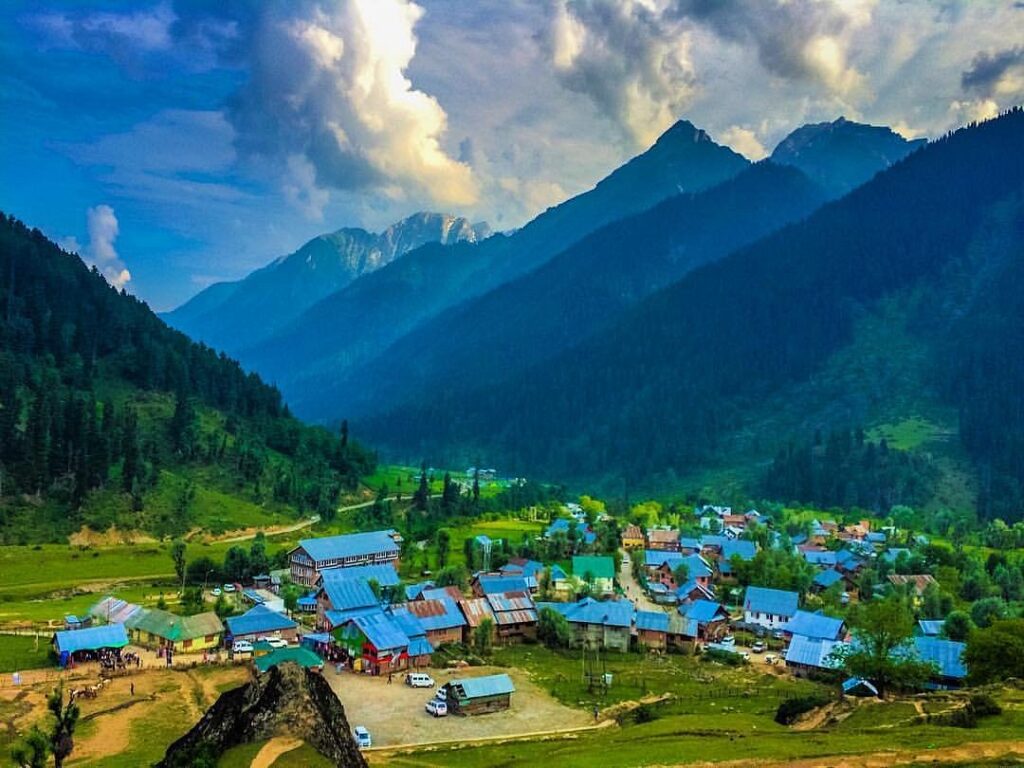
This guide fixes all of that. Whether you have 4 days or 10 days, a budget of ₹15,000 or ₹1,00,000, whether you’re coming with family, a partner, or solo — you’ll leave this page knowing exactly what to do, what to skip, and what to expect.
🏔️ Why Choose a Kashmir Tour?
Kashmir isn’t a destination you pick because it’s trending. You pick it because nothing compares — not Himachal, not Uttarakhand, not the Northeast. The scale of the valley, the diversity of its landscapes, and the depth of its culture make it a category of its own.
The valley sits between two great mountain ranges — the Himalayas and the Pir Panjal Range — creating a bowl of green meadows, still lakes, and rivers fed by glaciers. In spring, the Indira Gandhi Memorial Tulip Garden — the largest in Asia — turns Srinagar into a sea of color. In winter, Gulmarg becomes one of Asia’s premier ski destinations.
And then there’s the food. A proper Wazwan — a Kashmiri feast with 36 courses — is a cultural event in itself. Rogan Josh, Dum Aloo, Yakhni, Tabak Maaz — Kashmiri cuisine deserves a trip on its own.
From a logistics standpoint, Kashmir is also now far more accessible. Srinagar’s airport connects directly to Delhi, Mumbai, Bangalore, Kolkata, and several other cities. Roads have improved significantly post-2019. And the tourism infrastructure — hotels, houseboats, taxis, adventure operators — has expanded considerably.
📍 Best Places to Visit on a Kashmir Tour
Kashmir isn’t one destination. It’s a cluster of worlds — urban Srinagar, alpine Gulmarg, pastoral Pahalgam, glacial Sonamarg, and a string of offbeat valleys most tourists never see. Here’s a thorough breakdown.
| Destination | Distance from Srinagar | Best For | Crowd Level | Best Season |
| Srinagar | 0 km (base) | Culture, Dal Lake, gardens | High | Mar–Oct |
| Gulmarg | 54 km / 2 hrs | Skiing, Gondola, snow | Very High | Dec–Feb, May–Jun |
| Pahalgam | 90 km / 3 hrs | Trekking, valleys, rivers | Very High | May–Sep |
| Sonamarg | 84 km / 2.5 hrs | Glacier, road trip, rivers | High | Jun–Oct |
| Doodhpathri | 42 km / 1.5 hrs | Meadows, peace, day trips | Low | Apr–Oct |
| Gurez Valley | 123 km / 6 hrs | Offbeat, culture, trekking | Very Low | Jun–Sep |
| Bangus Valley | ~110 km / 4 hrs | Camping, large meadows | Very Low | May–Aug |
| Aharbal | 75 km / 3 hrs | Waterfall, photography | Low | Apr–Oct |
| Lolab Valley | 95 km / 3 hrs | Orchards, quiet walks | Very Low | Apr–Oct |
Srinagar — The Soul of the Valley
Srinagar is your base for almost any Kashmir tour. It’s where you arrive, rest, and plan. But it’s far more than a transit hub.
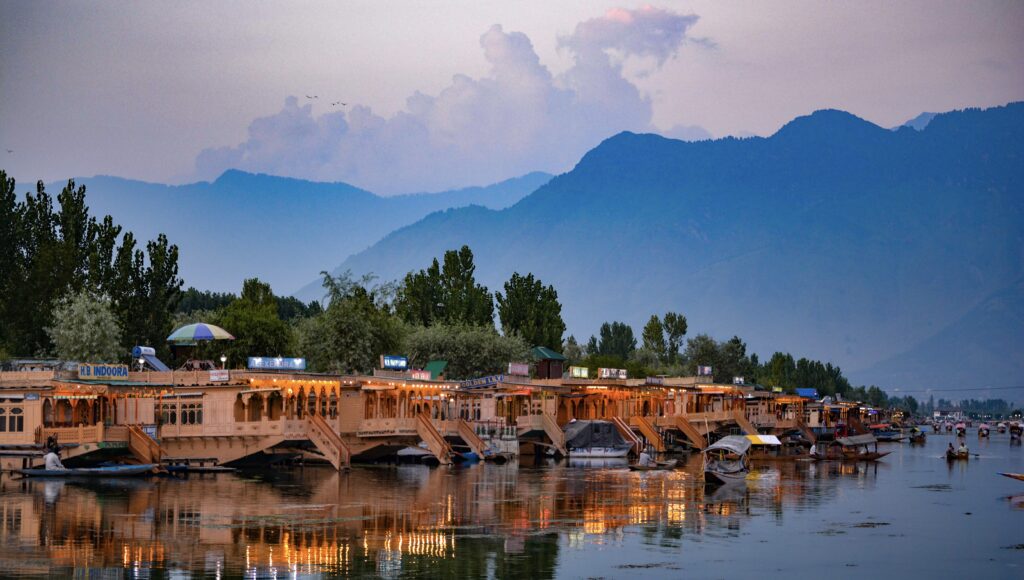
Dal Lake is the iconic centrepiece — a 18-square-kilometre sheet of water lined with houseboats, floating gardens, and the Zabarwan Mountains as a backdrop. A Shikara ride at dawn — when the lake is still and the mist sits low — is the kind of morning that stays with you for years.
The Mughal Gardens — Shalimar Bagh, Nishat Bagh, and Chashme Shahi — are terraced Persian-style gardens laid out in the 17th century. Shalimar Bagh was commissioned in 1619 by Emperor Jehangir for his wife Nur Jahan. These gardens are beautiful year-round but peak in spring and autumn.
Old Srinagar — particularly around Jama Masjid in Nowhatta — is the city’s cultural heart. The mosque, built in 1394 AD, is supported by 370 deodar wood pillars and can hold over 33,000 worshippers. The surrounding lanes are full of artisan workshops for Kashmiri shawls, papier-mâché, and walnut wood crafts.
| 💡 Local Insight: Srinagar Shikara Book your Shikara directly at the Dal Gate ghat rather than through hotel touts. Government-fixed rates are ₹300–500/hour. Early morning rides (5–7 AM) give you the floating vegetable market and a completely different, quieter Dal Lake experience. |
Gulmarg — The Gondola and Beyond
Gulmarg sits at 2,650 metres above sea level, 54 km from Srinagar. Its name means ‘Meadow of Flowers’ and in summer, the landscape earns that description fully.
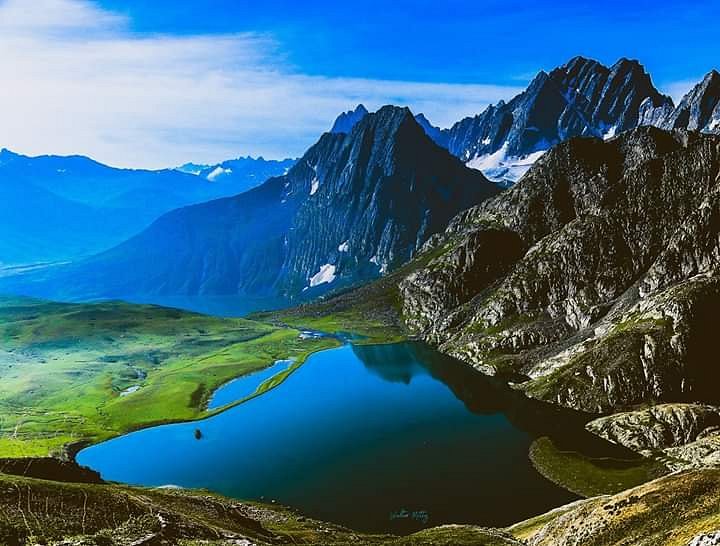
The Gulmarg Gondola — the world’s second-highest operating cable car — is the biggest draw. Phase 1 goes from Gulmarg to Kongdori (3,080 m); Phase 2 continues to Apharwat Peak (4,200 m). On clear days, you can see Nanga Parbat, the world’s ninth-highest mountain.
In winter (December–February), Gulmarg transforms into a ski resort. The ski slopes around Apharwat are accessible, and the Pakistan-occupied peaks visible across the border add a strange, surreal beauty to the scene. Gondola tickets can book out fast — always reserve 2–3 days in advance online.
| 💡 Local Insight: Gulmarg Gondola Phase 2 (Apharwat) is weather-dependent and can shut without notice. Book Phase 1 first and confirm Phase 2 availability at the station on the day. A Srinagar taxi cannot take you for local Gulmarg sightseeing — you’ll need to hire a local Gulmarg union taxi separately for spots like Khilanmarg. |
Pahalgam — Valleys, Rivers, and Trails
Pahalgam is 90 km from Srinagar and sits at 2,700 metres on the banks of the Liddar River. It’s the kind of place where families, trekkers, and honeymooners all find something that fits.
The big draws are Betaab Valley (15 km from Pahalgam, named after the 1983 Bollywood film shot there), Aru Valley (12 km away, a trekking base and wildflower meadow), and Chandanwari (16 km, the starting point for the Amarnath Yatra).
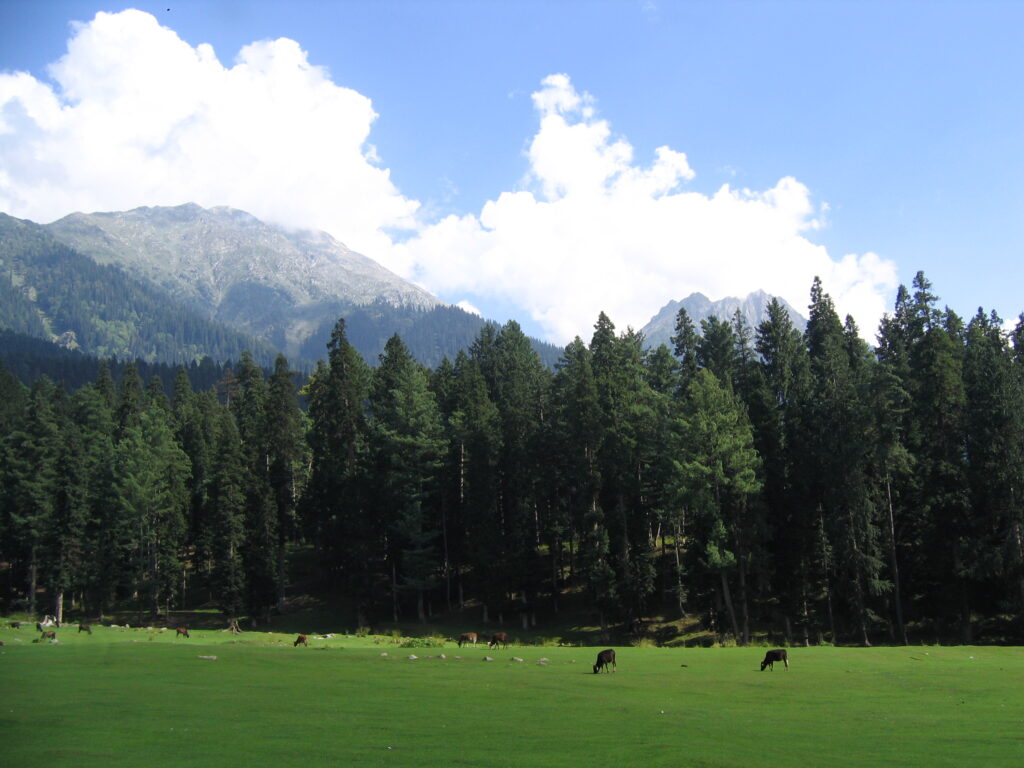
Baisaran Valley — known as ‘Mini Switzerland’ — is 5 km from Pahalgam town and accessible only by pony or on foot. No vehicles are allowed. It’s a big grassy meadow surrounded by pine trees and snowy peaks, and it’s genuinely stunning.
| 💡 Local Insight: Pahalgam Local Taxis Your Srinagar taxi cannot do inner sightseeing in Pahalgam. You must hire local Pahalgam union taxis at the main stand near the bus depot for Betaab Valley, Aru Valley, and Chandanwari. Negotiate in advance and confirm all spots you want to cover. |
Sonamarg — Glaciers and Road-Trip Magic
Sonamarg (‘Golden Meadow’) is 84 km northeast of Srinagar, en route to Leh. At 2,730 metres, it’s the last major town before the famous Zoji La Pass that leads to Ladakh.
The main attraction is Thajiwas Glacier — accessible by pony ride or on foot. The glacier sits at 9,186 feet and the walk to it through pine forests and meadows is genuinely beautiful. River rafting on the Sindh River and trout fishing are popular summer activities.
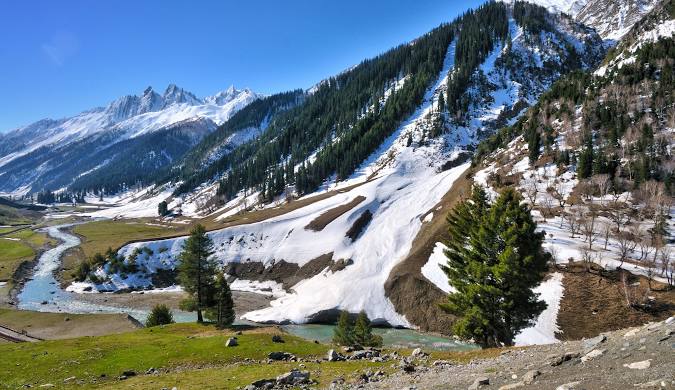
Sonamarg in October has a special character — the foliage turns golden-brown, the crowds thin out, and the air has a crisp clarity. It’s one of my favourite months to recommend it.
| 💡 Local Insight: Sonamarg Zero Point Zero Point is a seasonal destination, accessible only from roughly June to early October, weather permitting. For the glacier excursion, hire a pony at the Sonamarg pony stand — rates are around ₹600–1,000 for a return ride. |
Doodhpathri — The Valley Most Tours Skip
Doodhpathri (‘Valley of Milk’) is just 42 km from Srinagar in Budgam district. The drive takes about 90 minutes. And yet, most Kashmir tour packages completely ignore it.
The valley is a vast meadow with crystal-clear streams running through it. Locals say the water looks milky white when it flows over certain rocks — hence the name. Unlike Gulmarg or Pahalgam, there are no cable cars, no ski runs, no major commercial setups. Just grassland, pine trees, grazing sheep, and extraordinary quiet.
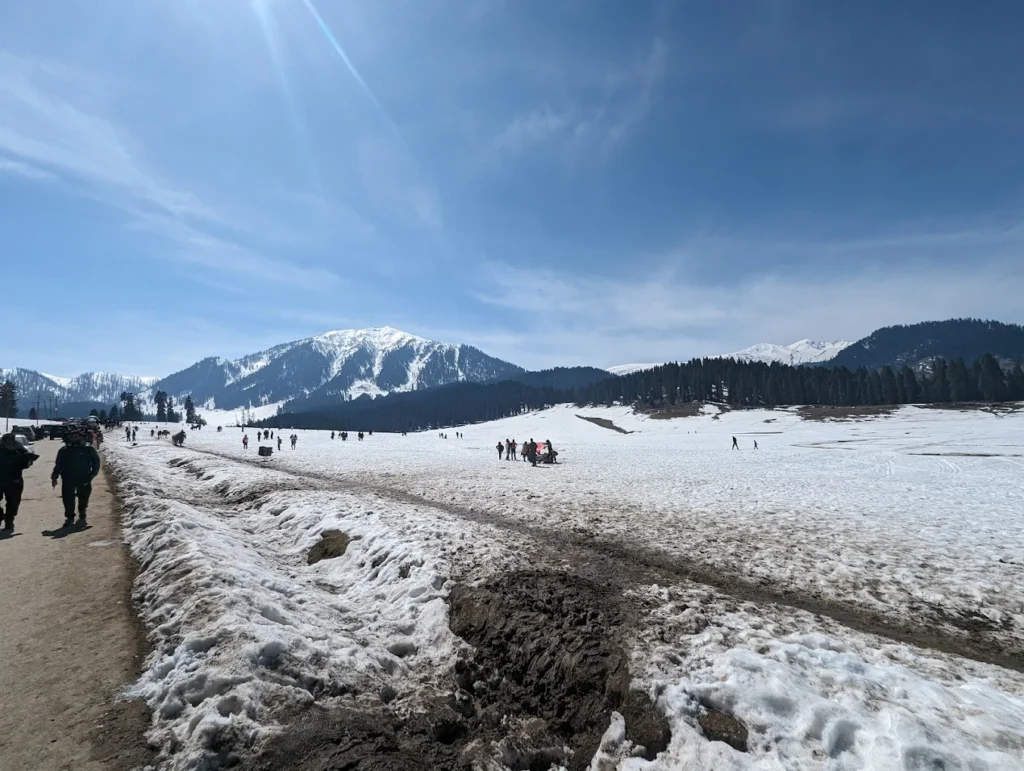
It’s ideal as a day trip from Srinagar and works perfectly for anyone who wants to experience genuine Kashmiri countryside without the tourist crowd. Best season is April to October.
| 💡 Local Insight: Doodhpathri Carry your own food or snacks — dhabas here are limited. The road conditions after recent rains can be patchy. Hire a Srinagar-based taxi (₹2,000–2,500 sedan return) rather than wait for shared transport at this less-travelled destination. |
Gurez Valley — Off the Beaten Path, Completely
Gurez is 123 km from Srinagar, tucked near the Line of Control. The drive takes 5–6 hours, crosses the Razdan Pass (3,450 m), and is only open roughly May to September. In winters, Gurez is completely cut off.
The valley is home to the Dard-Shina tribe, one of Kashmir’s oldest ethnic communities. The Kishanganga River flows through the valley, wooden homes dot the hillsides, and the dominant peak — Habba Khatoon — is named after a legendary 16th-century Kashmiri poetess.
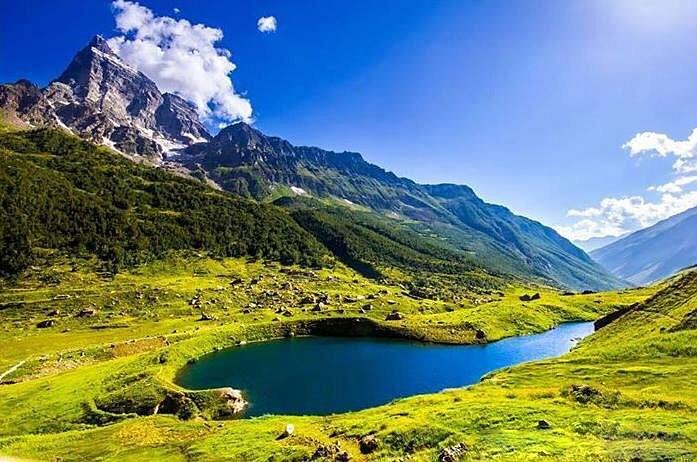
In 2022, Gurez received the gold award for Best Offbeat Tourist Destination in India from Outlook Traveler Magazine. It’s worth every hour of that mountain drive.
| 💡 Local Insight: Gurez Valley The road over Razdan Pass can be rough, especially after rains. Carry cash — there are no ATMs in Gurez. Homestays in Dawar (the main village) cost ₹1,200–2,500 including basic meals. If you’re planning an overnight stay, book ahead through a Srinagar operator. |
Bangus Valley — Kashmir’s Largest Meadow
Bangus Valley in Kupwara district is arguably Kashmir’s largest high-altitude meadow and one of its most isolated. Until a few years ago, it was off-limits to civilians entirely.
The valley has two sections: Bodh Bangus (Big Bangus) and Lakut Bangus (Small Bangus). Both are surrounded by dense forests and towering peaks. Streams run through the meadow floor. The drive from Srinagar via Handwara to Reshwari (the nearest village base) takes about 4 hours.
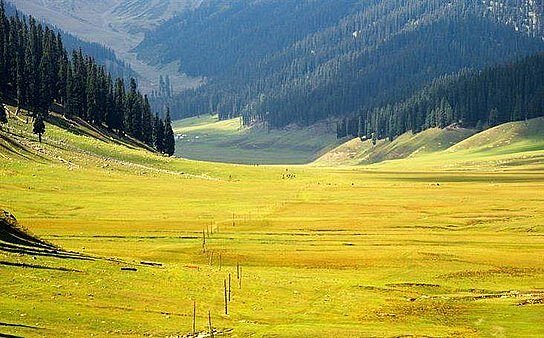
Camping is the primary accommodation option here. It’s not for casual visitors — but for those who want absolute solitude and a sense of discovery, Bangus is unmatchable.
| 💡 Local Insight: Bangus Valley There are no hotels in the valley itself — plan camping or stay at guesthouses in Reshwari/Handwara. Check road and permit conditions before going, especially if you plan to visit in early or late season. Best months: May to August. |
Aharbal — Kashmir’s Niagara
Aharbal sits 75 km from Srinagar in Kulgam district. The Veshaw River drops about 25 metres over a rocky ledge, creating a roaring waterfall that locals call ‘Kashmir’s Niagara.’ Pine forests surround the falls on both sides.
Beyond the waterfall, a trail leads to Kounsarnag Lake — a high-altitude alpine lake that’s part of a serious trekking route. For day-trippers, just reaching Aharbal and spending time by the falls is more than enough. April through October is the ideal window.
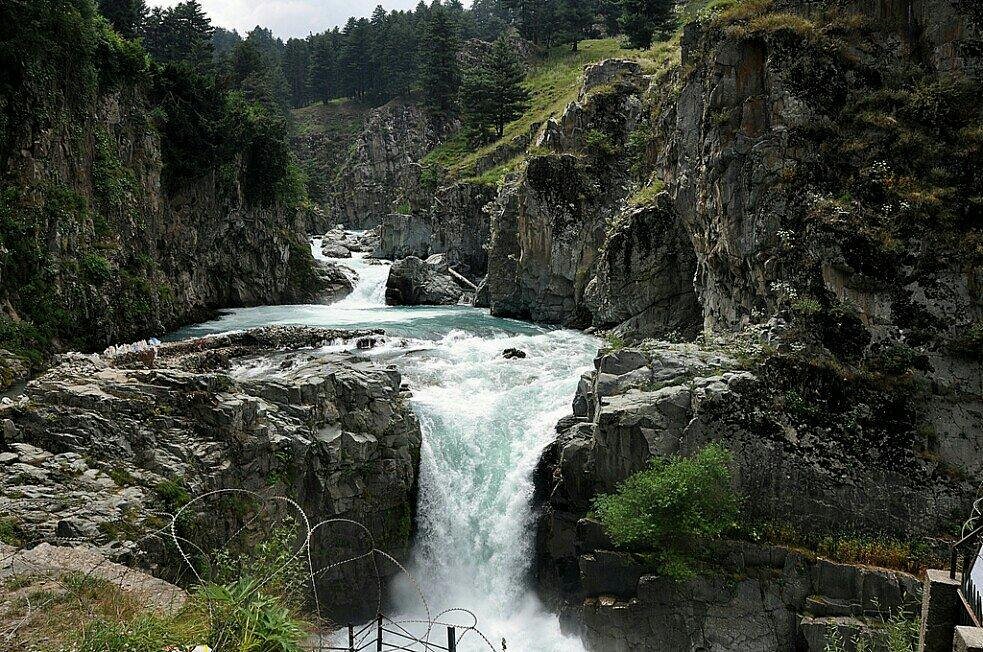
| 💡 Local Insight: Aharbal The ₹2,500–3,000 sedan taxi from Srinagar is fair for a day trip. The falls are most dramatic in April–June when snowmelt swells the river. Trout fishing is permitted in designated areas — carry your own equipment or ask your hotel in Srinagar to arrange it. |
👥 Which Kashmir Tour Is Right for You?
One of the most common mistakes I see is people copy-pasting an itinerary they found online without asking whether it actually fits their travel style. A honeymooner’s Kashmir and an adventure trekker’s Kashmir are two completely different trips.
| Traveler Type | Must-Visit | Skip | Stay Recommendation | Budget Estimate (5D) |
| Honeymoon Couple | Dal Lake, Pahalgam, Gulmarg Gondola | Over-packed itinerary | Deluxe houseboat + resort | ₹60,000–90,000 (couple) |
| Family with Kids | Betaab Valley, Shikara, Baisaran | Gurez (road risk) | 3-star hotel, Srinagar base | ₹40,000–60,000 (family 4) |
| Solo Traveler | Gurez, Doodhpathri, Trekking | Overcrowded April-May | Hostels/guesthouses | ₹15,000–25,000 |
| Senior Travelers | Mughal Gardens, Shikara, Pahalgam town | High-altitude treks | Comfortable 4-star hotel | ₹35,000–55,000 (couple) |
| Budget Traveler | Doodhpathri, Sonamarg, Nishat Bagh | Peak April-June | Guesthouses + shared taxis | ₹12,000–20,000 |
| Adventure Seeker | Gurez, Bangus, Kashmir Great Lakes Trek | Tulip Garden season crowd | Guesthouses + camping | ₹20,000–35,000 |
📅 Best Time for a Kashmir Tour
There’s no single ‘best time’ for Kashmir — it entirely depends on what you want to see. Kashmir is genuinely a four-season destination, each with its own personality.
| Month | Crowd Level | Budget Impact | Snow/Weather | Best For |
| January | Low-Medium | Peak pricing (snow) | Heavy snowfall | Winter sports, honeymoon |
| February | Medium | High (Valentine’s) | Snow & cold | Couples, skiing |
| March | Medium | Moderate | Tulips begin | Gardens, spring walks |
| April | High | Peak (+20-30%) | Tulip festival | Gardens, pleasant weather |
| May | Very High | Peak (+30%) | Green & sunny | Trekking, sightseeing |
| June | Very High | Peak (+30%) | Warm, lush | Pahalgam, Sonamarg |
| July | High | Peak | Occasional rain | Valleys, adventure |
| August | High | Moderate-High | Amarnath Yatra | Pilgrimage, trekking |
| September | Medium | Moderate | Clear, golden | Best overall month |
| October | Medium-High | Moderate | Autumn foliage | Photography, foliage |
| November | Low | Budget-friendly | First snows | Offbeat, budget trips |
| December | Low-Medium | High (Christmas) | Heavy snow | White winter stays |
My personal pick: September is the sweet spot. Crowds are dropping, weather is crisp and clear, autumn colors are just starting in Sonamarg and Pahalgam, hotel prices ease down from peak, and the valley is still fully accessible. April and May are ideal if you want tulips and green meadows — just book far in advance.
❄️ Weather by Season
Spring (March–May)
Temperatures: 8°C–22°C. The famous Indira Gandhi Memorial Tulip Garden in Srinagar opens from late March to April. Mughal Gardens are at their most vibrant. Pahalgam is lush green. Gulmarg has a mix of lingering snow and new flowers.
This is peak season — book everything 2–3 months ahead.
Summer (June–August)
Temperatures: 15°C–30°C. The most popular travel window for Indian tourists. Gulmarg, Pahalgam, and Sonamarg are fully accessible. Trekking conditions are at their best. Amarnath Yatra runs from July to August, adding significant crowds on routes through Pahalgam and Sonamarg.
Gondola Phase 2 at Gulmarg is fully operational. Rivers are swollen and beautiful.
Autumn (September–November)
Temperatures: 5°C–20°C. This is the photographer’s season. Chinar trees turn deep red and gold. Sonamarg is at its most dramatic. Dal Lake is calm. Crowds thin out through October–November, and prices drop.
Some high-altitude routes start closing from late October. Gurez and Bangus are typically closed by mid-October.
Winter (December–February)
Temperatures: -10°C to 5°C. Gulmarg becomes the skiing capital. Srinagar’s Dal Lake occasionally freezes. Houseboats are heated, cozy, and atmospheric. Most trekking routes are closed, and many mountain roads become inaccessible.
Book Gondola tickets and ski equipment well in advance. Carry serious winter gear — this is not casual cold.
💰 How Much Does a Kashmir Tour Cost?
The price range for a Kashmir tour is genuinely wide — anywhere from ₹12,000 to ₹1,00,000+ per person for 5 days, depending on how you travel. Here’s an honest breakdown.
| Category | Budget (₹) | Mid-Range (₹) | Luxury (₹) |
| Accommodation / night | 800–2,000 | 3,000–7,000 | 8,000–25,000+ |
| Food / day / person | 400–800 | 1,000–2,000 | 2,500–5,000 |
| Local transport / day | 500–1,000 | 2,000–4,000 | 4,000–8,000+ |
| Gondola (both phases) | 900 + 1,400 | 900 + 1,400 | Pre-booked |
| Shikara ride / hour | 300–500 | 500–800 | 800–1,500 |
| Total 5 days (per person) | ₹15,000–25,000 | ₹30,000–50,000 | ₹60,000–1,00,000+ |
Key cost drivers: accommodation type (guesthouse vs. luxury hotel vs. houseboat), season of travel, whether you hire a private cab vs. shared transport, and how many extra activities you do (Gondola rides, skiing, rafting, pony rides).
Gondola ride costs: Phase 1 (Gulmarg to Kongdori) = ₹900/person; Phase 2 (Kongdori to Apharwat) = ₹1,400/person. These are not included in most standard packages — confirm before booking.
Budget tip: Traveling in September–October or November can reduce package prices by 20–30% compared to peak summer rates.
🗺️ 4, 5, 7 & 10-Day Kashmir Tour Itineraries
4-Day Kashmir Itinerary (Classic Quick Trip)
Best for: First-timers, long weekenders from Mumbai or Delhi.
- Day 1: Arrive Srinagar. Check into houseboat on Dal Lake. Evening Shikara ride at sunset. Dinner in Srinagar.
- Day 2: Srinagar sightseeing — Mughal Gardens (Nishat Bagh, Shalimar Bagh), Shankaracharya Temple, Old City (Jama Masjid, Hazratbal Shrine).
- Day 3: Day trip to Gulmarg. Gondola ride (both phases if clear). Return to Srinagar by evening.
- Day 4: Day trip to Doodhpathri or Pahalgam. Airport drop. Depart.
5-Day Kashmir Itinerary (Most Popular)
Best for: Families, couples, first-timers wanting a complete experience.
- Day 1: Arrive Srinagar. Houseboat check-in. Shikara ride. Floating market in morning.
- Day 2: Srinagar local sightseeing — Mughal Gardens, Tulip Garden (March–April), Hazratbal, Shankaracharya.
- Day 3: Drive to Pahalgam (~3 hrs). Local sightseeing — Betaab Valley, Aru Valley, Baisaran by pony.
- Day 4: Return via Srinagar. Drive to Gulmarg. Gondola ride. Stay in Gulmarg or return to Srinagar.
- Day 5: Drive to Sonamarg. Thajiwas Glacier pony ride. Return to Srinagar. Airport drop.
7-Day Kashmir Itinerary (Complete Valley)
Best for: Those who want depth, variety, and one offbeat stop.
- Day 1: Arrive Srinagar. Houseboat. Shikara ride.
- Day 2: Srinagar sightseeing — Mughal Gardens, Old City, Shankaracharya, local market.
- Day 3: Doodhpathri day trip. Back to Srinagar.
- Day 4: Drive to Pahalgam. Betaab Valley, Aru Valley, Baisaran.
- Day 5: Pahalgam to Sonamarg. Thajiwas Glacier. Overnight in Sonamarg.
- Day 6: Return to Gulmarg. Gondola (both phases). Evening in Gulmarg.
- Day 7: Return to Srinagar. Shopping at Lal Chowk. Airport.
10-Day Kashmir Itinerary (Deep Dive + Offbeat)
Best for: Repeat visitors, offbeat travelers, photographers, trekkers.
- Day 1–2: Srinagar. Dal Lake, Mughal Gardens, Old City. Houseboat stay.
- Day 3: Doodhpathri day trip.
- Day 4–5: Gurez Valley. Drive via Razdan Pass. Village walks, Kishanganga River, Habba Khatoon views.
- Day 6: Return to Kupwara. Bangus Valley visit or Lolab Valley orchard walk. Overnight Handwara.
- Day 7: Aharbal Waterfall day trip via Srinagar.
- Day 8: Drive to Pahalgam. Betaab Valley, Aru Valley, Chandanwari.
- Day 9: Gulmarg. Gondola. Snow activities or alpine walk.
- Day 10: Sonamarg. Thajiwas Glacier. Return to Srinagar. Depart.
✈️ How to Reach Kashmir
By Air
Sheikh ul-Alam International Airport (SXR) in Srinagar is the main gateway. Direct flights operate from Delhi, Mumbai, Bangalore, Kolkata, Hyderabad, Chandigarh, Jammu, and several other cities. IndiGo, Air India, SpiceJet, and Vistara cover major routes.
From Mumbai, flight time is roughly 2.5–3 hours. Book 6–8 weeks in advance for peak months (April–June, December–January). Flight prices from Mumbai to Srinagar range from ₹4,000–12,000 one-way depending on timing.
By Train + Road
Train to Jammu Tawi (or Banihal, on the Udhampur–Srinagar–Baramulla Rail Link), then road to Srinagar. The highway route (NH44) via Jawahar Tunnel is the most common road option. Drive time from Jammu to Srinagar is 7–9 hours, more in winter or during convoy days.
Private taxi from Jammu to Srinagar costs ₹3,500–5,000 (sedan) or ₹5,000–7,000 (Innova). Luxury buses run from Delhi to Srinagar at ₹2,500–5,000 per seat.
🚕 Getting Around Kashmir
This is where most tourists get confused — and where good planning saves both money and frustration.
The Union Taxi System
Kashmir operates a regional taxi union system. This means your Srinagar taxi cannot do inner sightseeing in Gulmarg, Pahalgam, or Sonamarg. Each town has its own local taxi union, and sightseeing within that destination requires hiring from that local union stand.
Uber and Ola are not operational in Kashmir. Always hire from registered taxi stands — the main ones are at Lal Chowk, Dal Gate, Batmaloo Stand, and Srinagar Airport.
Taxi Fare Matrix (2025–26)
| Route | Distance | Drive Time | Sedan (₹) | Innova (₹) | Tempo (₹) |
| Srinagar → Gulmarg | ~54 km | 1.5–2 hrs | 2,500–3,000 | 3,500–4,000 | 5,500–6,500 |
| Srinagar → Pahalgam | ~90 km | 2.5–3 hrs | 3,000–3,500 | 4,000–4,500 | 6,000–7,000 |
| Srinagar → Sonamarg | ~84 km | 2.5–3 hrs | 2,800–3,200 | 3,300–3,800 | 5,500–6,500 |
| Srinagar → Gurez | ~123 km | 5–6 hrs | 4,500–5,500 | 6,000–7,000 | N/A |
| Srinagar → Doodhpathri | ~42 km | 1.5 hrs | 2,000–2,500 | 2,800–3,200 | 4,500 |
| Srinagar → Aharbal | ~75 km | 2.5–3 hrs | 2,500–3,000 | 3,500 | 5,000 |
| Gulmarg → Pahalgam | ~140 km | 3.5–4 hrs | 5,000 | 6,000 | 12,000 |
| Pahalgam → Sonamarg | ~130 km | Double day rate | 6,500–7,000 | 8,000–9,000 | N/A |
| Airport → Dal Gate | ~18 km | 30–40 min | 700–1,100 | 1,200–1,500 | 2,000 |
Key notes: Rates above are standard non-AC rates. AC adds ₹400–500 for sedans, ₹500 for Innovas. Driver meal allowance (₹200–300/day) is customary but not mandatory. During peak season (May–June), expect 10–15% higher rates.
Shared Cabs
From TRC (Tourist Reception Centre) and Batmaloo Bus Stand in Srinagar, shared cabs leave throughout the morning for Gulmarg, Pahalgam, and Sonamarg. Prices are ₹500–900 per seat. These are slower and less flexible but significantly cheaper for solo or budget travelers.
🏠 Houseboat vs Hotel — Which Should You Choose?
This is the most-asked question I get from Kashmir-bound travelers. The answer depends entirely on what you prioritize.
| Factor | Houseboat | Hotel |
| Experience | Iconic, on-water, cultural | Conventional, consistent |
| Privacy | Very high | Moderate–high |
| Price Range | ₹3,000–15,000/night | ₹1,000–25,000/night |
| Facilities | Variable; some lack hot water | Standard amenities |
| Best For | Couples, honeymoon, experience-seekers | Families, seniors, comfort travelers |
| Location Advantage | Dal Lake view, boat rides at door | City/market access, flexible |
| Noise Level | Quiet, calm | Varies by property |
| Booking | Negotiate directly at Dal Gate | OTA platforms, direct booking |
My recommendation: If you’re on honeymoon or visiting Kashmir for the first time, do at least one night on a houseboat. The experience of waking up on Dal Lake, having a Shikara-delivered breakfast, and watching the morning mist lift off the mountains is worth it. For families with young children or senior travelers, a hotel may offer more practical comfort.
Houseboat categories run from Doonga (budget) to Deluxe A/B/C class. Always check the category — a ‘Deluxe A’ houseboat should have hot water, proper meals, and clean linen. Visit before committing, or book through a certified operator.
🎒 What to Pack for a Kashmir Tour
| Category | Summer (Apr–Sep) | Winter (Oct–Mar) |
| Clothing | Light layers, rain jacket, trekking wear | Heavy woolen jacket, thermals, gloves, snow boots |
| Footwear | Trekking shoes, sandals | Waterproof snow boots, warm socks |
| Accessories | Sunscreen SPF 50+, sunglasses, hat | Balaclava, muffler, hand warmer |
| Gear | Trekking poles, daypack | Snow gaiters, layered sleeping bag |
| Documents | Govt. ID (mandatory), travel insurance | Govt. ID, inner line permit for border zones |
| Medical | Basic first aid, altitude sickness tablets | Warm patches, extra medication |
| Electronics | Powerbank, offline maps (Google Maps) | Powerbank (cold drains faster), torch |
| Cash | Keep ₹5,000+ in cash; ATMs rare in villages | ₹8,000+; ATMs may be offline in heavy snow |
One thing most travelers underpack: warm layers, even in summer. At altitudes like Gulmarg (2,650 m) and Sonamarg (2,730 m), evenings get cold regardless of the month. Always carry a medium-weight jacket even in July.
🛡️ Is Kashmir Safe for Tourists?
This is the question every Mumbai family calls me about. My answer, based on years of sending clients there: yes, Kashmir is safe for tourists — specifically in the major tourist zones of Srinagar, Gulmarg, Pahalgam, and Sonamarg.
The security situation in Kashmir has improved substantially since 2019. Tourism numbers have consistently increased year-on-year. Srinagar is a cosmopolitan city with functional police presence, active security, and a tourism ecosystem that depends on visitors feeling safe. Major sightseeing areas are well-patrolled.
Practical advisories I give every group:
- Always carry a valid government-issued photo ID (Aadhaar card or passport) — it’s mandatory at many checkposts
- Follow local security advisories and avoid areas flagged in official travel alerts
- Don’t venture to areas near the Line of Control without permits and a registered local guide
- Register your arrival at the Tourist Reception Centre (TRC) in Srinagar
- Keep your hotel or tour operator’s number saved at all times
- Avoid political gatherings or protests — these can escalate unpredictably
- Buy a local SIM on arrival (Jio, Airtel, BSNL work in most areas) — mobile connectivity is mostly reliable in tourist zones
Foreign nationals require standard Indian visa and should check their country’s travel advisory before visiting. Some nationalities require special inner line permits for certain border-adjacent areas.
💎 Hidden Gems Beyond Gulmarg
If you’ve already done the standard Kashmir tour, or if you’re the kind of traveler who actively avoids the crowd, here are the places worth planning your entire trip around.
Lolab Valley
Lolab Valley in Kupwara district is 95 km northwest of Srinagar. It’s a quiet, orchard-lined valley with apple trees, walnut groves, and small farms. The drive through Handwara passes through some genuinely scenic countryside that most tourists never see.
Lolab is ideal for slow walks, birdwatching, and experiencing a version of rural Kashmiri life untouched by tourism infrastructure. Local homestays here are warm, food-forward, and cost ₹1,200–1,800 with meals.
| 💡 Local Insight: Lolab Valley Pair Lolab with a trip to Bangus Valley — both are in Kupwara district and can be combined in a 2-night detour from Srinagar. Best months: April–October. |
Chatpal
Chatpal in Anantnag district, South Kashmir is about 80 km from Srinagar. It’s a small village ringed by pine forests, meadows, and mountains. Many travel writers have described it as a ‘fairytale’ — the description, while predictable, is accurate.
The area around Chatpal includes several small waterfalls and streams. Day-trippers from Srinagar can combine it with Aharbal Waterfall and Kokernag gardens into a rewarding South Kashmir loop.
| 💡 Local Insight: Chatpal The road from Srinagar to Chatpal is via Anantnag — allow 2.5–3 hours. A sedan taxi for the day trip from Srinagar costs ₹2,800–3,200. Basic dhabas are available but carry snacks. |
Aharbal Waterfall (Full Section)
Already mentioned as a top destination, Aharbal deserves a separate spotlight in this section because most tours skip it. It’s genuinely one of Kashmir’s most dramatic natural sites — the Veshaw River crashing 25 metres into a rocky gorge, surrounded by Himalayan forest.
For photography, spring (April–June) is peak — the river is full, the surrounding trees are green, and the mist from the falls creates soft light. The short trail to the base of the falls takes about 20 minutes from the parking area.
💡 Practical Travel Tips from Travel Experts
Booking Strategy
- Book flights and houseboats 6–8 weeks ahead for peak months
- Confirm Gondola Phase 2 availability by calling ahead — never assume it’s open
- Use government-certified operators listed on the J&K Tourism website for permits
- Check convoy schedules for the Jammu–Srinagar highway if traveling by road
On the Ground
- Carry ₹5,000–8,000 in cash — ATMs in villages and offbeat areas are unreliable
- Don’t accept rates from touts outside the official taxi union counters
- Negotiate pony ride prices before starting — always confirm the full route charge
- Keep hotel receipts; these may be checked at checkposts
- Local SIM cards are available at Srinagar Airport — buy one on arrival
### Cultural Etiquette
- Dress modestly, especially when visiting mosques and shrines
- Ask before photographing local residents, particularly women
- Remove footwear before entering shrines and religious sites
- Friday prayers at Jama Masjid draw large gatherings — plan around it if you want to visit calmly
❌ Common Mistakes Tourists Make on a Kashmir Tour
Logistics Mistakes
Not understanding the local taxi union system. This is the single biggest operational error I see. Travelers hire a Srinagar taxi and expect it to take them inside Gulmarg or Pahalgam for sightseeing. It can’t — union rules prohibit it. Budget for two separate taxi hires: one from Srinagar to the destination, and a local union taxi for sightseeing at the destination.
Assuming Gondola Phase 2 is always open. Phase 2 (Apharwat Peak) closes frequently due to weather, high winds, or technical issues. Never build your entire Gulmarg day around Phase 2 alone. Check conditions the morning of your visit.
Overpacking the itinerary. Roads in Kashmir take longer than Google Maps suggests. Srinagar to Pahalgam is 90 km but takes 2.5–3 hours minimum. Pahalgam to Sonamarg is effectively a full-day drive. Plan no more than one major destination per day.
Planning Mistakes
Visiting in April–May without advance bookings. Peak season means houseboats, hotel rooms, and Gondola tickets all book out weeks ahead. Arriving without reservations in these months is a recipe for disappointment.
Ignoring offbeat alternatives. If you’re in Kashmir for 7 or more days and you’re only visiting Gulmarg, Pahalgam, and Sonamarg, you’re missing the valley’s genuine personality. Add at least one offbeat stop — even a day trip to Doodhpathri completely changes the experience.
Underestimating winter logistics. Winter travel to Kashmir is stunning but requires different planning. Chains on vehicles for Gulmarg, potential road closures, limited restaurant options, and Gondola weather-dependence all need to be factored in. Don’t go to Gulmarg in January without a backup plan for a snow-closed Gondola.
Money & Safety Mistakes
Not carrying cash. Digital payments are becoming more common in Srinagar, but outside the city — in Gurez, Bangus, Chatpal, or even Doodhpathri — cash is king. ATMs in villages can be offline for days at a time.
Paying hotel-quoted rates for activities without checking. Shikara rides, pony rides, and Gondola tickets are government-regulated at published rates. Hotel concierges sometimes inflate these — check the official rates at the activity point before paying.
❓ Frequently Asked Questions About Kashmir Tours
### What is the best time to visit Kashmir?
September is the overall best month — mild weather, thinning crowds, and autumn colors beginning in the higher valleys. April–May is ideal for tulips and green meadows but comes with peak crowds. December–February is best for skiing in Gulmarg. Avoid late July–August if you prefer lighter crowds, as the Amarnath Yatra adds significant traffic.
How many days is ideal for a Kashmir tour?
5–7 days is the most practical window. 5 days covers Srinagar, Gulmarg, and Pahalgam comfortably. 7 days allows Sonamarg and one offbeat destination. 10 days gives you genuine depth — Gurez, Bangus, or a trekking leg are possible.
Is Kashmir safe for solo female travelers?
Yes, with standard precautions. Srinagar, Gulmarg, Pahalgam, and Sonamarg are all relatively safe for female travelers. Dress modestly, avoid isolated areas after dark, stay in well-reviewed properties, and share your itinerary with someone at home. The J&K Tourism Police has a dedicated tourist helpline.
What is the total budget for a Kashmir tour from Mumbai?
For a 5-day trip from Mumbai including flights: Budget ₹25,000–40,000 per person, Mid-Range ₹50,000–75,000, Luxury ₹1,00,000+. Flights from Mumbai to Srinagar add ₹6,000–15,000 depending on timing and booking lead time.
Do I need a permit to visit Kashmir?
Indian nationals: No permit required for standard tourist destinations (Srinagar, Gulmarg, Pahalgam, Sonamarg). A valid photo ID is mandatory. For areas near the LoC (Gurez, Karnah, Bangus), some zones may require entry registration. Foreign nationals may need Inner Line Permits for certain restricted areas — check with J&K Tourism before visiting.
Is the Gulmarg Gondola worth it?
Yes, absolutely — especially Phase 2 to Apharwat Peak. The views at 4,200 metres are extraordinary on clear days. Phase 1 alone (to Kongdori) is also worth it. Book tickets online in advance during peak season. Total cost: ₹900 (Phase 1) + ₹1,400 (Phase 2) per person.
Can I do a Kashmir tour in 3 days?
Yes, but it’s very limited. A 3-day Kashmir trip from Mumbai (given flight time) typically covers Srinagar houseboat, Mughal Gardens, and a day trip to either Gulmarg or Pahalgam. It’s a taste, not a full experience. For a complete Kashmir trip, 5–7 days is the minimum.
Is a houseboat stay worth it?
For first-time visitors and couples, yes — very much so. The experience of staying on Dal Lake is unique to Kashmir and something no hotel can replicate. Choose a certified Deluxe A or B class houseboat for reliable amenities. Budget around ₹4,000–12,000 per night depending on class and season.
What should I absolutely not miss on a Kashmir tour?
Don’t miss: Shikara ride at dawn on Dal Lake, Gulmarg Gondola (both phases), Betaab Valley in Pahalgam, Thajiwas Glacier in Sonamarg, and a Wazwan meal at a local Srinagar restaurant. If time allows, Doodhpathri for an offbeat day.
How do I book a Kashmir tour from Mumbai?
Options: (1) Book through a registered travel agency like Astamb Holidays for a customized package with flights, hotel, and cab coordinated; (2) Book flights independently and arrange the rest on the ground; (3) Use MakeMyTrip, Thomas Cook, or Thrillophilia for packaged deals. For first-time visitors, a package from a reputed operator is strongly recommended — it eliminates the taxi union confusion and pre-books critical activities like the Gondola.
About the Author
Wahid Ali is a seasoned travel professional and Operations Lead at Astamb Holidays, Mumbai. With extensive experience in crafting travel experiences and destination insights, Wahid combines practical travel logistics expertise with engaging storytelling to help travelers explore hidden gems across India and beyond. His work blends expert travel planning with a passion for culturally rich and nature-oriented destinations.
Connect with Wahid Ali on LinkedIn | xploreheaven.com
References
This article is backed by authoritative sources and research.
- J&K Tourism Official Portal — jammuandkashmir.gov.in
- India Tourism Development Corporation — incredibleindia.org/kashmir
- Gulmarg Development Authority — Official Gondola Information
- MakeMyTrip Kashmir Tour Packages — Pricing Reference 2025
- Thrillophilia Kashmir Packages — Budget Breakdown
- Srinagar Taxi Rates 2026 — Vargis Khan (Verified)
- JagNish Tours — Kashmir Taxi Fare Chart 2026-27
- Kashmir Tourism — eTourismKashmir.com — Hidden Gems Guide
- Outlook Traveler — Gurez Valley Best Offbeat Destination in India 2022
- TripAdvisor — Top Attractions in Kashmir (User-Verified 2025)
- SOTC — Jammu & Kashmir Tour Packages, Pricing Reference
- Lonely Planet — Kashmir Travel Guide
- Government of India — India Tourist Visa Information
- Brown Chinar Kashmir — Offbeat Places in Kashmir 2026
- Thomas Cook India — Kashmir Package Pricing

Read More Articles;