Looking for an unforgettable adventure? Madagascar, the “Eighth Continent”, boasts extraordinary wildlife found nowhere else on Earth and stunning landscapes from rainforests to beaches.
To truly plan your Malagasy journey and discover everything from the best time to visit and transportation options to cultural insights and must-see locations, keep reading for in-depth information drawn from a variety of travel guides and resources.
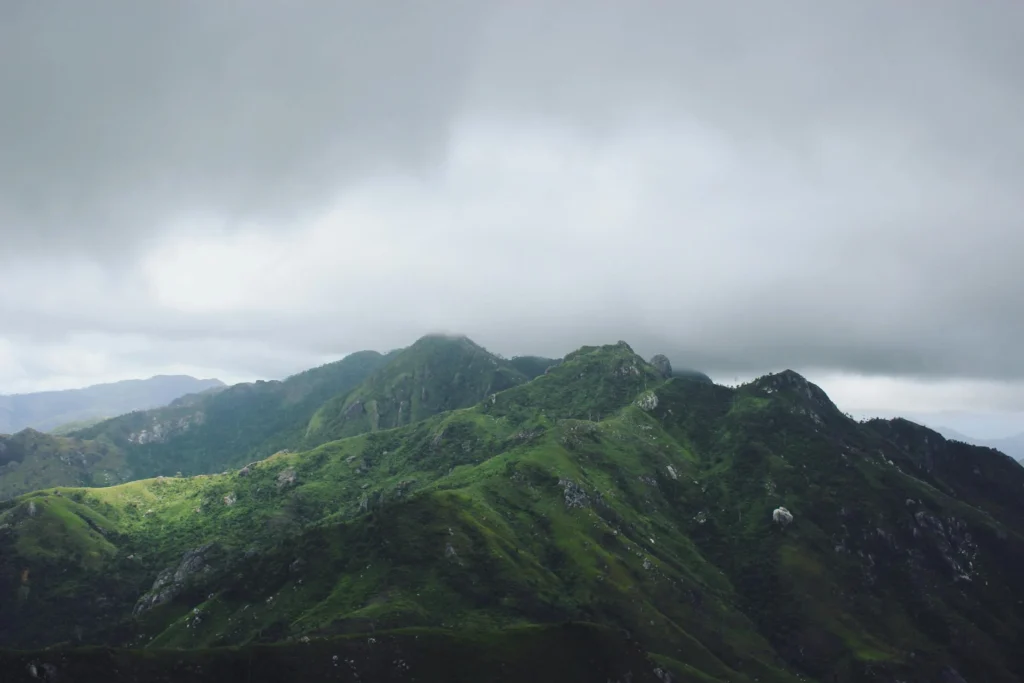
Madagascar, often lauded as the “Eighth Continent” owing to its extraordinary biodiversity, presents travellers with an unparalleled adventure that seamlessly blends pristine beaches, unique wildlife encounters, lush rainforests, and a rich tapestry of cultural heritage. Nestled off the south-eastern coast of Africa in the vast expanse of the Indian Ocean, this remarkable island nation holds the distinguished title of the world’s fourth-largest island, serving as a sanctuary for thousands of plant and animal species that exist nowhere else on Earth. With approximately 3,100 miles of captivating coastline, a remarkable diversity of landscapes, and a fascinating fusion of African, Arab, and French influences, Madagascar stands as a destination truly unlike any other, beckoning intrepid travellers to explore its wonders. This comprehensive travel guide aims to equip you with essential information for planning an unforgettable journey through this captivating country, from navigating transportation options and discovering must-visit destinations to immersing yourself in its vibrant culture and savouring its culinary delights.
Why Visit Madagascar? Key Highlights:
Madagascar’s singular geographic position, forged through millions of years of isolation, has nurtured the evolution of extraordinary ecosystems and a wealth of wildlife, establishing it as a premier destination for nature enthusiasts and adventure seekers.
- Exceptional Biodiversity and Endemic Species: Madagascar reigns as a true biodiversity hotspot. An astounding 90 percent of its plant and animal species are endemic, meaning they are found nowhere else on the globe. The island is particularly famed for its iconic wildlife, most notably the over 100 species of lemurs, the majority of which are endemic. Beyond lemurs, Madagascar shelters a fascinating array of unique fauna, including vibrant chameleons, elusive aye-ayes, and the cat-like fossa. Indeed, Madagascar’s extraordinary ecological diversity lends the country an atmosphere that feels “forgotten by time“.
- Breathtaking and Diverse Landscapes: The island showcases a captivating tapestry of landscapes, ranging from lush rainforests and enigmatic spiny forests to expansive dry deciduous forests, rolling grasslands, arid deserts, majestic mountains, and vast plateaus. Iconic landscapes such as the mesmerising Avenue of the Baobabs and the otherworldly Tsingy de Bemaraha, with its dramatic limestone pinnacles, stand as testament to Madagascar’s unique natural beauty.
- Rich and Cosmopolitan Culture: Madagascar’s cultural fabric is a fascinating blend, with origins deeply rooted in both Asia and Africa, further enriched by European influences. Travellers are consistently greeted by the welcoming and friendly Malagasy people, whose heritage and traditions are an integral part of the island’s allure.
- Ecotourism and Responsible Travel: Madagascar embraces its identity as a “green” destination and actively promotes sustainable development within its tourism sector, spearheaded by the Madagascar National Tourism Board (ONTM). Opportunities for engaging in ethical ecotourism products that directly involve and benefit local communities are abundant.
- Diverse Activities: Madagascar caters to a wide spectrum of interests, offering a multitude of activities. These include unparalleled nature and wildlife observation, invigorating hiking and trekking adventures, thrilling water sports such as snorkelling, diving, surfing, kitesurfing, and kayaking, enriching opportunities for cultural immersion, and breathtaking prospects for photography.
Planning Your Madagascar Adventure:
Careful planning is paramount to ensure a smooth and rewarding travel experience in Madagascar.
- Best Time to Visit: Madagascar experiences distinct seasons. The hot rainy season, from November to April, is characterised by monsoons and the potential for cyclones. The cooler dry season, spanning from April to October, is generally considered the optimal time for travel, offering more favourable weather conditions.
- Getting There: The primary gateway for international visitors is Ivato International Airport, located near Antananarivo, the capital city.
- Visa Requirements: (Please note that the provided sources do not contain specific information regarding visa requirements for Madagascar. It is advisable to consult the official website of the Malagasy government or your local embassy for the most up-to-date visa regulations.)
- Transportation Options within Madagascar: Navigating Madagascar presents unique challenges, making it an integral part of the adventure.
- Organized tours offer a convenient and often safer method for exploring the island, providing structured itineraries and knowledgeable local guides.
- Bush taxis (shared vans) serve as the primary mode of local public transportation, offering an authentic glimpse into daily life.
- Limited train services operate on certain historic routes, providing a nostalgic travel experience.
- Domestic flights connect major cities across the island, offering a time-saving option for covering longer distances.
- Car rentals are available, with the option of hiring a driver. However, it’s crucial to note that road conditions can be unpredictable, especially during the rainy season, necessitating flexibility in travel plans. Hiring a car with a driver is often advised due to road conditions and safety concerns.
- The scenic Pangalanes Canal, an inland waterway stretching along the east coast, offers unique boat transport options, providing access to remote locations and picturesque views.
- Accommodation Options: Madagascar offers a diverse range of places to stay to suit various budgets and preferences. These include luxurious hotels often situated on heavenly beaches or near national park borders, standard hotels found along the coast, near parks, or in cities, budget-friendly hotels, hostels, cabins, and bungalows, immersive homestays offering a chance to connect with the Malagasy people, and charming lodges nestled along private beaches or within the heart of the forest.
Exploring Madagascar’s Natural Wonders:
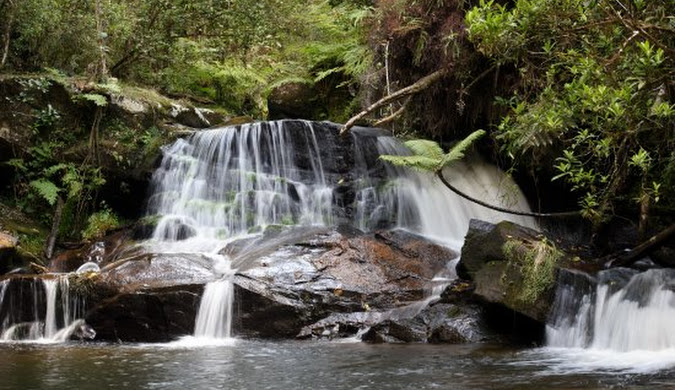
Madagascar’s long isolation has fostered unique ecosystems, protected within its numerous national parks and reserves.
![A [Species of Lemur, e.g., Ring-tailed Lemur] perched on a branch in a Madagascar rainforest.](https://xploreheaven.com/wp-content/uploads/2025/03/2023-05-16.jpg)
![Turquoise waters lapping onto a pristine white sand beach in [Location, e.g., Nosy Be, Madagascar], with palm trees swaying in the breeze.](https://xploreheaven.com/wp-content/uploads/2025/03/licensed-image-14-1.jpeg)
![Turquoise waters lapping onto a pristine white sand beach in [Location, e.g., Nosy Be, Madagascar], with palm trees swaying in the breeze.](https://xploreheaven.com/wp-content/uploads/2025/03/licensed-image-13-2.jpeg)
![A [Species of Lemur, e.g., Ring-tailed Lemur] perched on a branch in a Madagascar rainforest.](https://xploreheaven.com/wp-content/uploads/2025/03/free-photo-of-ring-tailed-lemurs-in-singapore-zoo-1024x683.jpeg)
- National Parks and Reserves:
- Ranomafana National Park, situated in the south-eastern region, is renowned for its breathtaking eastern section with streams and forested hills, and is home to the endangered golden bamboo lemur. It forms part of the Rainforests of the Atsinanana, a UNESCO World Heritage Site.
- Masoala National Park in north-east Madagascar counterbalances rainforest and marine parks, exhibiting 10 lemur species including the nocturnal aye-aye, as well as the brightly coloured tomato frog. It is also part of the Rainforests of the Atsinanana.
- Andasibe-Mantadia National Park in eastern Madagascar is a habitat for 11 lemur species, including the country’s largest, the indri, and is relatively accessible from Antananarivo.
- The Royal Hill of Ambohimanga, a historical village and former residence of Malagasy royalty, is considered the country’s most sacred location and a UNESCO World Heritage Site.
- Ifaty, located on the south-west coast, encompasses dusty fishing villages, a 60-mile long coral reef ideal for snorkelling, diving, and fishing, and a desert inland area famous for its spiny forest and ancient baobab trees.
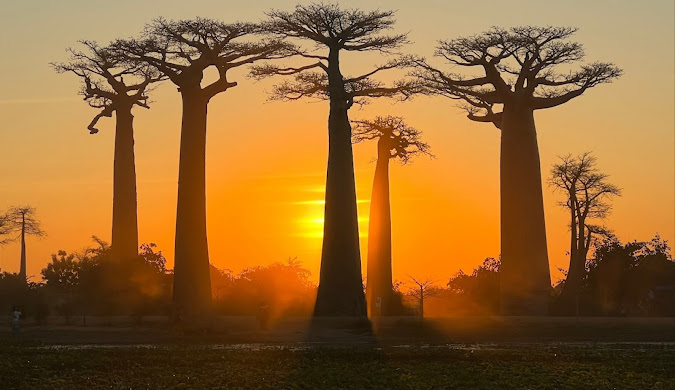
- The Avenue of the Baobabs in western Madagascar is a striking landmark featuring a concentration of these ancient trees.
- Tsingy de Bemaraha, lying south of Madagascar’s largest natural reserve, features distinctive limestone pinnacles (tsingy) and mangrove forests, providing a natural habitat for seven lemur species, including the elegant Decken’s sifaka. It is a UNESCO World Heritage Site.
- Isalo National Park in the central southern region is noteworthy for its varied terrain, including grassland, steep canyons, and unique sandstone formations dotted with pools and palm trees. Tourist guides are often required within the park.
- Other notable natural areas include the Lokobe Nature Special Reserve, Ankarana Special Reserve, and Kirindy Forest.
- Wildlife Viewing: Observing Madagascar’s unique fauna differs from traditional African safaris, often involving patiently spotting smaller, camouflaged creatures within the dense vegetation.
Coastal Delights and Marine Activities:
![Turquoise waters lapping onto a pristine white sand beach in [Location, e.g., Nosy Be, Madagascar], with palm trees swaying in the breeze.](https://xploreheaven.com/wp-content/uploads/2025/03/licensed-image-12.jpeg)
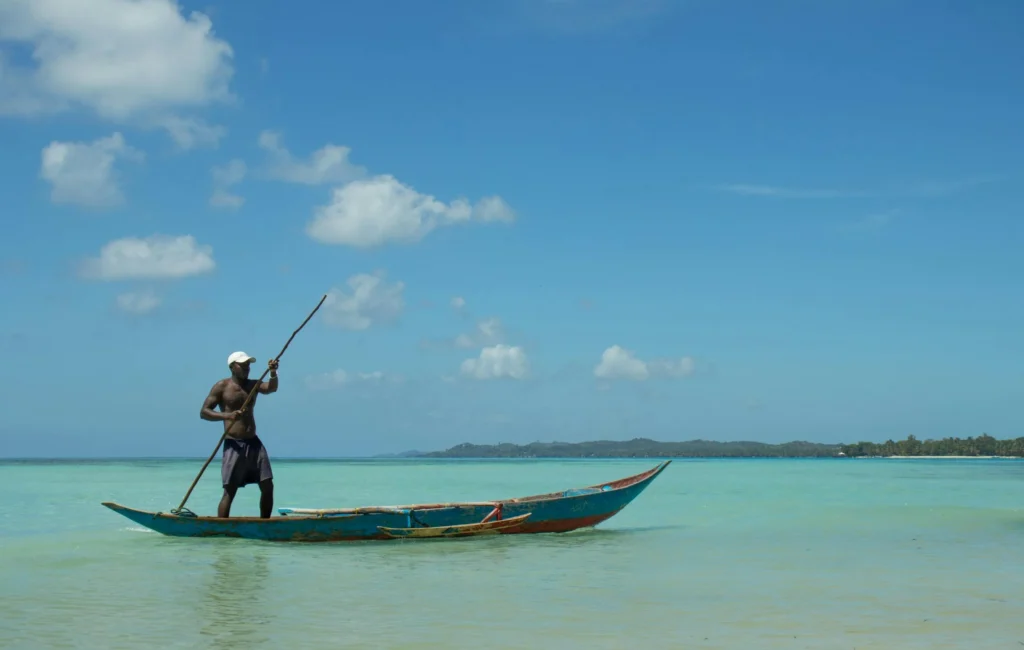
Madagascar’s extensive coastline offers a paradise for beach enthusiasts and water sports aficionados.
- Nosy Be, a tiny island off the north-west coast, stands as one of Madagascar’s premier tourist spots, attracting visitors with its clear turquoise waters perfect for exploring the natural ambience, and mouth-watering seafood restaurants serving dinner on the sand. It is also known as “Perfume Island” due to its ylang-ylang plantations. Nosy Tanikely is particularly renowned for its incredible seabed, making it ideal for snorkelling and diving.
- Ile Sainte Marie, situated off the east coast, boasts protected bays and inlets that historically attracted pirates. Today, it is a top tourist attraction with crystal clear waters ideal for snorkelling, and serves as a prime location for observing migrating humpback whales during summer and early fall.
- Ifaty, beyond its spiny forests, presents a stunning stretch of beach bordered by a coral reef, offering excellent snorkelling, diving, and fishing opportunities.
- The pristine white-sand beaches of Anakao on the south coast provide perfect settings for relaxation.
- The Mitsio Archipelago north of Nosy Be invites snorkellers and divers to explore vibrant underwater ecosystems teeming with marine life.
- Sakalava Bay in the north is renowned for its year-round winds, making it an ideal spot for kite surfing.
- Lavanono in the south offers opportunities for surfing enthusiasts.
Immersing Yourself in Malagasy Culture and Heritage:
Madagascar’s cultural landscape is a rich tapestry woven from diverse influences.
- Antananarivo, the bustling capital city nestled on hillsides, showcases this cultural fusion through its traditional royal palaces, such as the Queen’s Palace (Rova), alongside French colonial architecture and vibrant local markets where artisans display their crafts.
- The Royal Hill of Ambohimanga holds immense historical significance and continues to be a centre for spiritual traditions.
- In Antsirabe, travellers can witness skilled craftsmen creating traditional toys, jewellery, and textiles, gaining insights into the island’s artisanal heritage.
- Traditional Customs and Values: A deep reverence for ancestors permeates Malagasy culture, evident in the widespread tradition of tomb building and the unique famadihana ceremony, often described as the “turning of the bones,” an elaborate celebration honouring ancestors and strengthening family bonds. Adherence to fady (various taboos that can differ by region) also demonstrates respect for ancestors. Core cultural values such as fihavanana (solidarity) are central to the Malagasy worldview.
- Arts and Entertainment: Traditional operettas known as hira gasy, combining storytelling, music, and dance, offer vibrant glimpses into Malagasy culture. Traditional music, often featuring instruments like the valiha (a type of zither considered the national instrument), enlivens village gatherings. Local crafts and bustling markets provide opportunities to appreciate Malagasy artistry.
A Taste of Madagascar: Culinary Exploration:
Malagasy cuisine is a delightful reflection of the island’s history and cultural crossroads.
Malagasy cuisine
Madagascar’s food is a tasty mix. You’ll find African, Asian, and European flavors. Romazava is a meat stew with greens. Ravitoto is stewed pork with manioc leaves. Rice is served with almost every meal. It’s a unique food experience.
Malagasy food relies on rice, a main food served with most meals. Zebu, or humped cattle, is a key meat source. It shows up in stews and grilled dishes. Fish is easy to find near the coast. Many recipes use it. Common vegetables include spinach and local greens. Spices such as ginger, garlic, and chili add flavor. Romazava, the national dish, mixes zebu, greens, and tomatoes. People eat it with rice. Ravitoto is pork stewed with manioc leaves, a local favorite. Don’t miss eel with pork or pork with butter beans. Kitoza, dried and smoked meat or fish, is also worth a try.
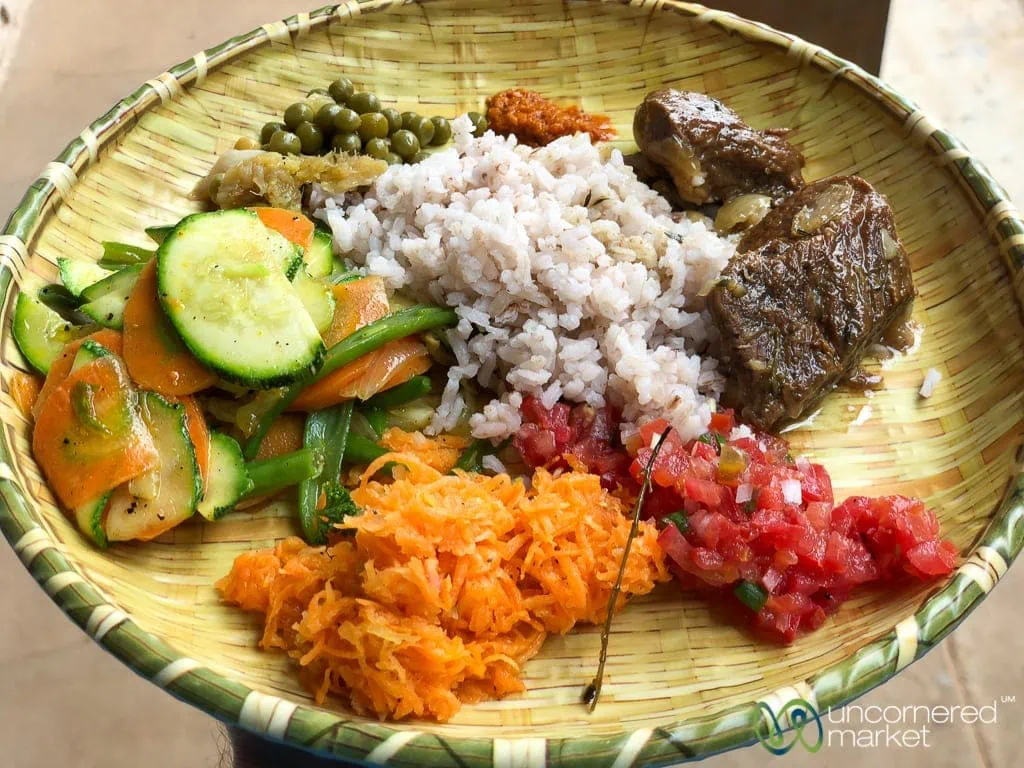
- Staple Foods: The foundation of nearly every Malagasy meal is rice (vary), typically served with flavourful laoka (side dishes) consisting of meat, fish, or vegetables.
- Key Ingredients and Flavours: Dishes are often seasoned with aromatic spices and herbs such as ginger, onion, garlic, tomato, vanilla, coconut milk, and curry powder.
- Must-Try Dishes: The national dish of Madagascar, Romazava, a rich and aromatic meat stew often prepared with zebu beef and incorporating various leafy greens (anana) and fragrant herbs, is a must-try for an authentic culinary experience. The island’s world-renowned vanilla, considered among the finest globally, features in numerous sweet preparations and sometimes even in savoury dishes.
- Local Beverages: Popular local beverages include refreshing fruit juices, locally grown coffee, various herbal teas and teas, and alcoholic drinks such as locally produced rum, wine, and the widely enjoyed Three Horses Beer.
Practical Tips for Your Madagascar Trip:
Preparation is key for a smooth and enjoyable journey through Madagascar.
- Currency: The local currency is the Malagasy Ariary (MGA). While ATMs can be found in major cities like Antananarivo, it is advisable to carry sufficient cash, especially when venturing into rural areas, as credit card acceptance is limited. Bank transfers are common for larger transactions.
- Language: The official languages of Madagascar are Malagasy and French.
- Health: It is recommended to consult with a travel medicine specialist before your trip to discuss necessary malaria prevention medications and vaccinations.
- Safety: For safety reasons, it is generally advisable to avoid travelling at night, particularly on rural roads, and to utilise reputable transportation services or engage local guides when exploring unfamiliar areas.
- Communication: Mobile phone coverage can vary significantly throughout the country, with better service generally available in urban areas and potential gaps in more isolated locations.
Travelling Responsibly in Madagascar:
Given Madagascar’s exceptional biodiversity and environmental challenges, responsible tourism practices are crucial.
- Support conservation efforts by paying entrance fees to national parks and nature reserves.
- Prioritise eco-friendly accommodations and tour operators that demonstrate a commitment to environmental sustainability and community involvement, such as employing local staff and supporting conservation initiatives.
- Minimise plastic waste by bringing reusable water bottles and properly disposing of any rubbish.
- Practice cultural sensitivity by always asking permission before photographing local people and respecting traditional customs, including fady.
- Consider purchasing souvenirs directly from local artisans to support their livelihoods.
Conclusion:
Madagascar stands as a truly unique travel destination, where extraordinary biodiversity, distinctive landscapes, rich cultural traditions, and the warm hospitality of its people combine to create unforgettable experiences far from typical tourist routes. The island’s remarkable evolutionary history has gifted the world with plant and animal species found nowhere else, from the iconic lemurs to the ancient baobab trees. Beyond its natural wonders, Madagascar enchants visitors with its immersive cultural experiences, evident in its vibrant festivals, traditional villages, and culinary heritage. While travel within Madagascar may present certain challenges, these become part of the adventure, attracting those seeking authentic and off-the-beaten-path experiences.
For travellers embracing flexibility, patience, and cultural openness, Madagascar offers remarkable rewards: pristine beaches, unparalleled wildlife encounters, genuine cultural exchanges, and breathtaking natural landscapes of immense ecological significance. As you explore this “true eighth continent“, remember the importance of responsible tourism, contributing to the preservation of its natural and cultural treasures for generations to come. Whether tracking lemurs through misty rainforests, snorkelling in crystal-clear waters, wandering through historic towns, or sharing meals with local families, a journey through Madagascar will undoubtedly leave you with lasting memories of a place unlike anywhere else – a land waiting to be explored with respect, wonder, and deep appreciation for its remarkable riches.
Here is a comprehensive list of frequently asked questions and answers to help with your search intent about travelling to Madagascar:
Frequently Asked Questions About Visiting Madagascar
- What makes Madagascar such a unique destination? Madagascar is renowned for its exceptionally high levels of biodiversity, with approximately 90% of its plant and animal species being endemic, found nowhere else on Earth. This has earned it the nickname “Eighth Continent”. You can expect to encounter unique wildlife like over 100 species of lemurs and distinctive flora such as baobab trees and the traveller’s palm. The island also boasts breathtaking scenery and a rich cultural heritage influenced by African, Arab, and French traditions.
- What are the main attractions and activities for tourists in Madagascar? Madagascar caters to a wide range of travellers. Nature and wildlife enthusiasts are drawn to its numerous national parks and reserves, such as Isalo National Park, Ranomafana National Park, and the Tsingy de Bemaraha Strict Nature Reserve, to witness unique ecosystems and endemic species like over 100 species of lemurs. Adventure seekers can enjoy hiking and trekking in remote regions. Culture-minded travellers can engage with local communities, explore traditional customs, gastronomy, and art, and visit historical sites like the Royal Hill of Ambohimanga. The coastline offers opportunities for beach getaways, snorkelling along coral reefs (such as in Ifaty), kayaking and paddleboarding in calm bays and lagoons, and observing traditional fishing practices. Whale watching is also a popular activity along the coasts between June and September at locations like Ile Sainte-Marie.
- When is the best time to visit Madagascar? Madagascar experiences a hot rainy season from November to April, which can include destructive cyclones. The relatively cooler dry season, from May to October, is generally considered the best time to visit, offering more favourable conditions for outdoor activities and wildlife viewing.
- What are the official languages spoken in Madagascar? The official languages of Madagascar are Malagasy and French. Malagasy, a language of Malayo-Polynesian origin with various mutually intelligible dialects, is spoken throughout the island. French is also used in administration, education, and business.
- What is the currency used in Madagascar? The currency used in Madagascar is the Ariary (MGA).
- How do I get around Madagascar? What are the transportation options? Getting around Madagascar can be an adventure in itself. Options include organized tours which offer structured itineraries and guides. For independent travel, there are bush taxis (shared vans), limited train services on historic routes, domestic flights connecting major cities, and car rentals with or without drivers. Road conditions can be unpredictable, especially during the rainy season. The Pangalanes Canal on the east coast offers scenic boat transport. Hiring a car with a driver is often advised due to road conditions and safety concerns.
- What is the cultural heritage of Madagascar like? Malagasy culture is a fascinating blend of influences from Southeast Asia, Africa, Oceania, India, China, and Europe. This is evident in the Malagasy language, which has Malayo-Polynesian origins with Malay and Javanese loanwords. Traditional beliefs centre around a creator god and the veneration of ancestors, with practices like tomb building and the famadihana (re-wrapping of the dead). Core cultural values include fihavanana (solidarity) and vintana (destiny). Traditional arts include oratory, poetry (hainteny), proverbs (ohabolana), music (with the valiha as the national instrument), and the weaving of the lamba (national dress). Cuisine features rice as a staple, accompanied by flavourful vegetable or meat dishes influenced by various cultures.
- Are there any important customs or etiquette I should be aware of? When visiting Malagasy homes, it’s customary to enter with the right foot first. Avoid pointing directly at people or objects as it is considered disrespectful. It’s always wise to ask permission before photographing local people and to respect traditional customs including taboos known as “fady” that may vary by region.
- What is the cuisine like in Madagascar? Are there any must-try dishes? Malagasy cuisine blends African, Arab, and French culinary traditions with local ingredients. The foundation of most meals is vary (rice), typically served with laoka (side dishes) of meat, fish, or vegetables with aromatic spices and herbs. Zebu beef features prominently, especially in the interior. Seafood is abundant in coastal areas. Must-try traditional dishes include Romazava, a rich meat stew often considered the national dish. Ravitoto, a dish with earthy flavours, is also significant. Madagascar’s vanilla, considered among the finest, is used in many sweet and sometimes savoury dishes.
What are some of the environmental concerns in Madagascar, and how can I travel sustainably? Madagascar faces significant environmental challenges including deforestation, habitat loss, and climate change impacts. To travel sustainably, support conservation efforts through park entrance fees. Choose tour operators and accommodations committed to environmental sustainability and community involvement. Bring reusable water bottles and minimize single-use plastics. Respect traditional customs and purchase souvenirs directly from artisans.
By understanding these frequently asked questions, you can begin to plan your adventure to Madagascar. For more in-depth information on any of these topics, please continue reading our travel blogs and updates.

More Travel Blogs & Updates
-
Pampore Kashmir: The Definitive Travel Guide to India’s Saffron Capital
Pampore Kashmir is not a place you stumble upon by accident — you plan for it. In my experience managing tours at Astamb Holidays, this small town near Srinagar gets left off most Kashmir itineraries simply because travelers don’t know when to time their visit. Get the timing right, and you walk into fields carpeted…
-
Best Time to Visit Kashmir: The Complete Guide for Families, Couples, and Adventurers
The best time to visit Kashmir isn’t a single month circled on a calendar. It’s four completely different valleys stacked on top of each other, each one showing up depending on when you land. Fly in during April and you’ll catch melting snow lines and tulip fields. Land in July and you’ll find alpine meadows…
-
Dubai Tour 2026: The Ultimate Travel Guide to Itineraries, Budgets & Hidden Gems
You feel Dubai before you see it. The airport doors slide open and a wall of warm, dry air hits you, carrying faint traces of oud and jet fuel. Somewhere past the arrivals hall, a taxi queue winds toward a skyline that looks almost unreal against the haze. In my experience planning tours at Astamb…
-
Vietnam Tourism: The Ultimate 2026 Travel Guide & Itinerary
The smell hits you before the immigration officer even stamps your passport — star anise and charred pork drifting in from some roadside pho stall near the airport exit, mixed with two-stroke engine exhaust. Step outside Noi Bai or Tan Son Nhat and you’re immediately swallowed by a river of motorbikes, moving in a pattern…
-
Vietnam Visa for Indians (2026): Step-by-Step E-Visa Guide & Rules
I still remember the WhatsApp message from a client three summers ago: “My flight is in nine days and my Vietnam visa is stuck in processing. What do I do?” That one message changed how our team at Astamb Holidays handles every Vietnam booking now. We build the visa timeline before we even finalise the…
-
The Best Time to Visit Vietnam: A Complete 2026/2027 Seasonal Guide
I get some version of the same question almost every week at Astamb Holidays: “What’s the weather actually going to be like?” And every time, my honest answer is — it depends which Vietnam you mean. Vietnam isn’t one climate. It’s three. I’ve had clients land in Phu Quoc to flip-flops-and-sunscreen weather, while a friend…
-
Kashmir Tour Guide: Best Places, Budget, Itinerary & Expert Travel Tips
Every year, I field calls from travelers asking me the same thing: ‘Wahid bhai, is Kashmir really worth it?‘ And every time, my answer is the same — it isn’t just worth it, it’s unlike anywhere else in India. Planning a Kashmir tour is equal parts excitement and practical decision-making. The valley rewards those who…
-
Things to Do in Kyoto: The Ultimate Guide to the Cultural Capital
Kyoto in 2026 is not the Kyoto most travel blogs describe. The city is actively rewriting its own rulebook, and anyone researching things to do in Kyoto right now needs the updated version, not the one written three years ago. In my experience managing tours at Astamb Holidays, I’ve watched Kyoto shift from a city…
-
Places to Visit in Kashmir: The Ultimate 2026 Travel Blueprint
I have been sending clients to Kashmir for years through Astamb Holidays, and I can say this without hesitation — 2026 is shaping up to be one of the best years yet to plan a trip. New highway tunnels have cut travel time between major towns. More importantly, several valleys that were off-limits for safety…
-
Best Places to See Autumn Leaves in Japan: The Ultimate Regional Guide to Koyo Season
The best places to see autumn leaves in Japan stretch from volcanic peaks in the far north to lantern-lit temple gardens in the old capital. Every region colors at a different time, which is exactly why most first-time visitors end up booking the wrong dates for the wrong city. I’ve spent years building autumn itineraries…
- Pampore Kashmir: The Definitive Travel Guide to India’s Saffron Capital
- Best Time to Visit Kashmir: The Complete Guide for Families, Couples, and Adventurers
- Dubai Tour 2026: The Ultimate Travel Guide to Itineraries, Budgets & Hidden Gems
- Vietnam Tourism: The Ultimate 2026 Travel Guide & Itinerary
- Vietnam Visa for Indians (2026): Step-by-Step E-Visa Guide & Rules